


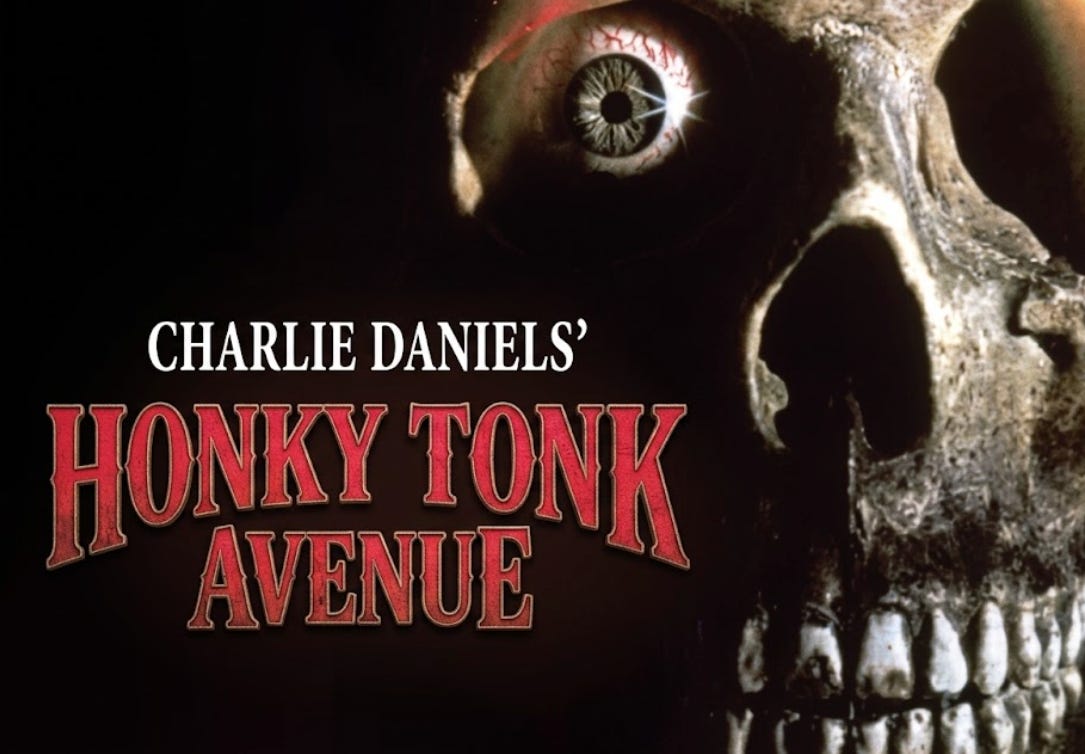
In 1984, Charlie Daniels went into Woodland Sound Studios in Nashville with a vision. He wasn’t chasing radio hits. I mean, sure - who doesn’t want that? But, he had already had hits. He had a concept album in mind—something like Willie Nelson’s Redheaded Stranger, where the songs tell a larger story. The album would be called Honky Tonk Avenue, loosely based on a short story Daniels had written. It would explore the lives and heartbreaks of people who lived on that street. Characters like Billy Joe Bonner, an outlaw trying to straighten himself out for the woman he loved. Like Joanna Brown, the woman who waited for him.
Daniels and producer John Boylan spent months getting it right. The same band that had played with him through his biggest successes. The same studio that had captured his voice countless times before. By the time they finished, Honky Tonk Avenue existed as a fully realized album—songs like “Peace on the River,” “O Precious Time,” “Bad Boys,” and “Wyoming on My Mind.” Professional country music. Mastered. Ready for release.
Then Rick Blackburn, the head of CBS/Epic Records’ Nashville office, heard it.
Blackburn rejected it — straight up. According to Charlie Daniels Jr.’s official account, Blackburn didn’t want a concept album. He didn’t care about Daniels’ vision. He wanted “the basic ten potential singles and B-sides”—formulaic radio product. Not this “cockamamie concept album” that Daniels had envisioned.
The album was scrapped. Gone. And normally, that would have been the end of the story—another artist’s vision killed on the boardroom table, another album that never existed, another cautionary tale about the industry destroying and shelving art.
Except Honky Tonk Avenue didn’t completely disappear.
The Fragmentation
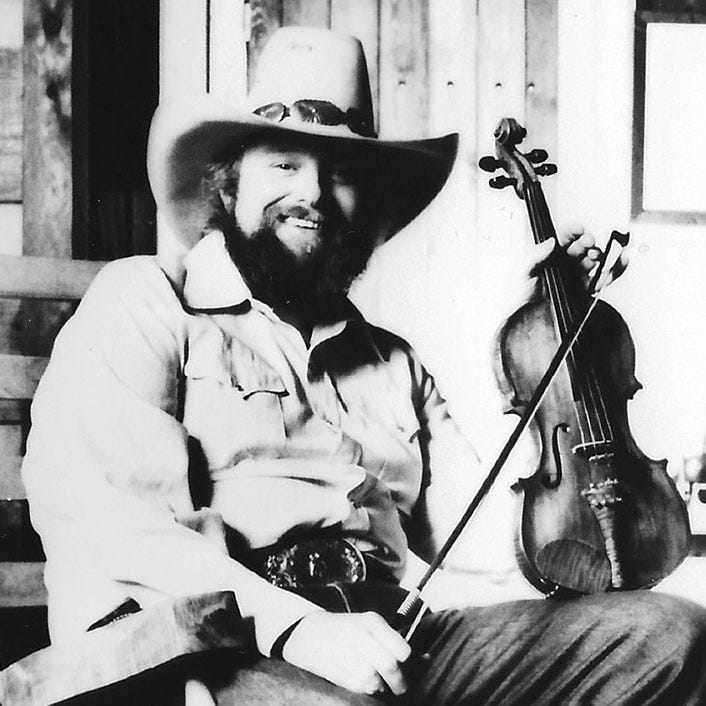
When Rick Blackburn canned Honky Tonk Avenue, the masters didn’t just go into a vault. Some of the songs found their way into the world through other routes. One track ended up on The Roots Remain, a Charlie Daniels box set released decades later. But two songs from the album—fully recorded, fully mastered, fully realized—ended up somewhere nobody would expect to find them.
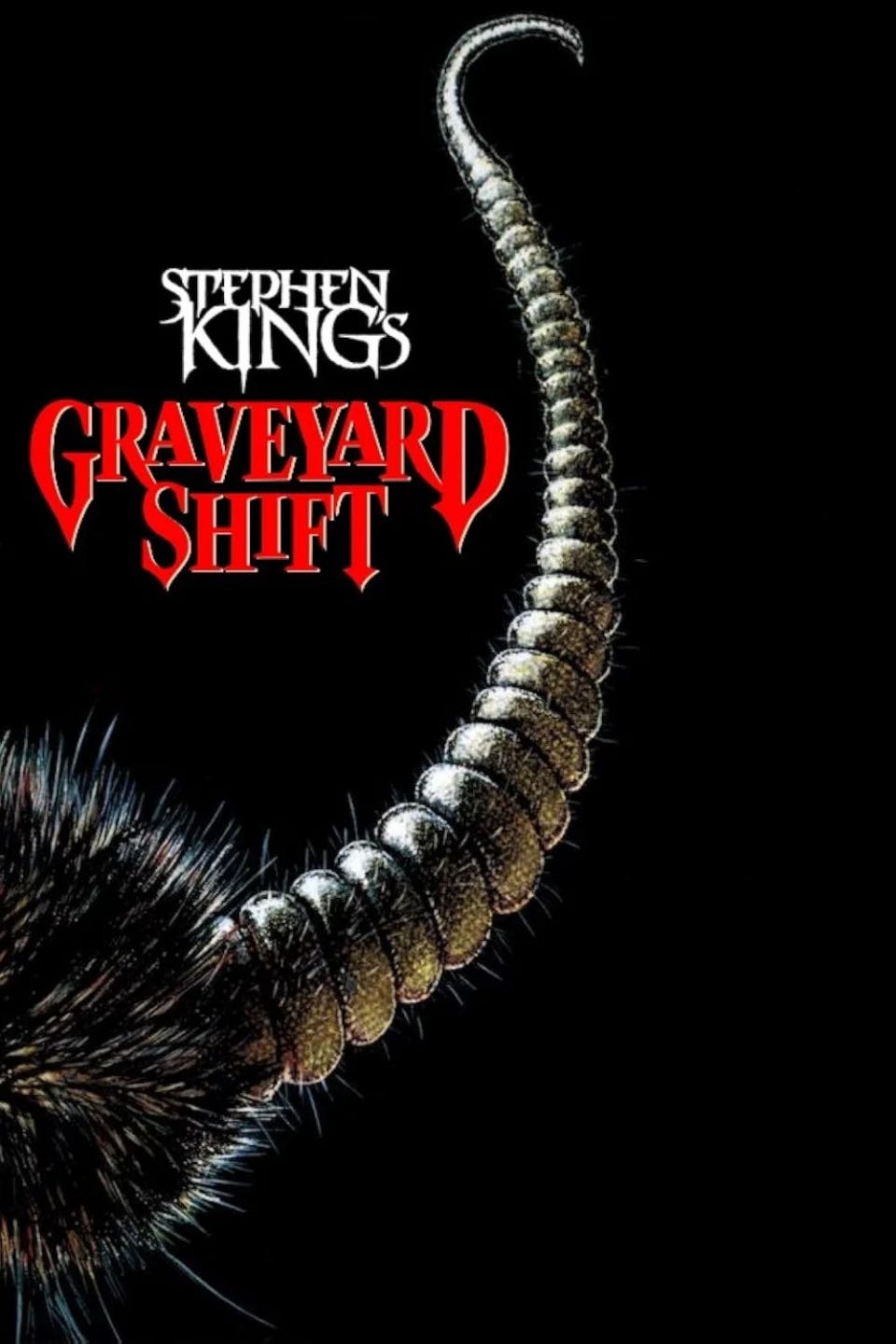
They ended up in a 1990 Stephen King horror film called Graveyard Shift.
According to the official IMDb soundtrack credits for the film, three Charlie Daniels Band recordings appear: “Joanna,” “Bad Boys,” and “Honky Tonk Dreams” (a duet with country singer Lacy J. Dalton). Charlie Daniels Jr. confirmed this in his detailed account of the lost album: “Bad Boys was featured in the Stephen King movie Graveyard Shift as background music, so I know this song was fully mixed and mastered. It’s a love story about an outlaw named Billy Joe Bonner who changes his ways so he can marry the love of his life, Joanna Brown.”
Think about that. The story Daniels had imagined—the narrative arc he’d built into Honky Tonk Avenue—got fragmented. One character’s name (”Joanna”) ended up as a standalone track in a movie about rats and underground monsters. “Bad Boys,” the centerpiece of that character’s story, became background music in a 1990 horror film. The connection between them was severed.
What “Bad Boys” Actually Was
This is where understanding the concept matters. According to Charlie Jr.’s documentation, “Bad Boys” isn’t just a country song. It’s a specific story:
Billy Joe Bonner is an outlaw. He falls in love with Joanna Brown. He tries to change his life to marry her—to put his lawless days behind him. He almost makes it. He actually gets to marry her.
But the law catches up with him on their wedding day. He gets taken away right after the ceremony. He tells Joanna to move on without him.
She refuses. She vows she’ll either be waiting for him when he gets out of prison or she’ll be dead.
Thirty years pass.
Billy Joe is finally released. Silver-haired Joanna is there to meet him. After three decades of remaining faithful, remaining a virgin, waiting for a man who was taken away on their wedding day, they finally consummate their marriage. A line from the chorus says it: “A good girl is mighty hard to find.”
Then there’s “To Be With Joanna Again”—the companion song, where Billy Joe laments from inside prison: “My life is empty and I’d give it all just to be with Joanna again.”
That’s the album Daniels built. That’s the vision Blackburn killed.
And now those songs exist only as background music in a 1990 horror film that too many don’t even remember.
The Push for Resurrection
For years, nobody did much about this. The songs sat in vaults. Charlie Daniels Jr. spent over six years trying to locate the masters from Sony Music (the successor to CBS Records). Nobody could find them. It seemed like maybe they’d been lost in the shuffle, destroyed, or simply misplaced in the chaos of decades of corporate mergers and office politics.
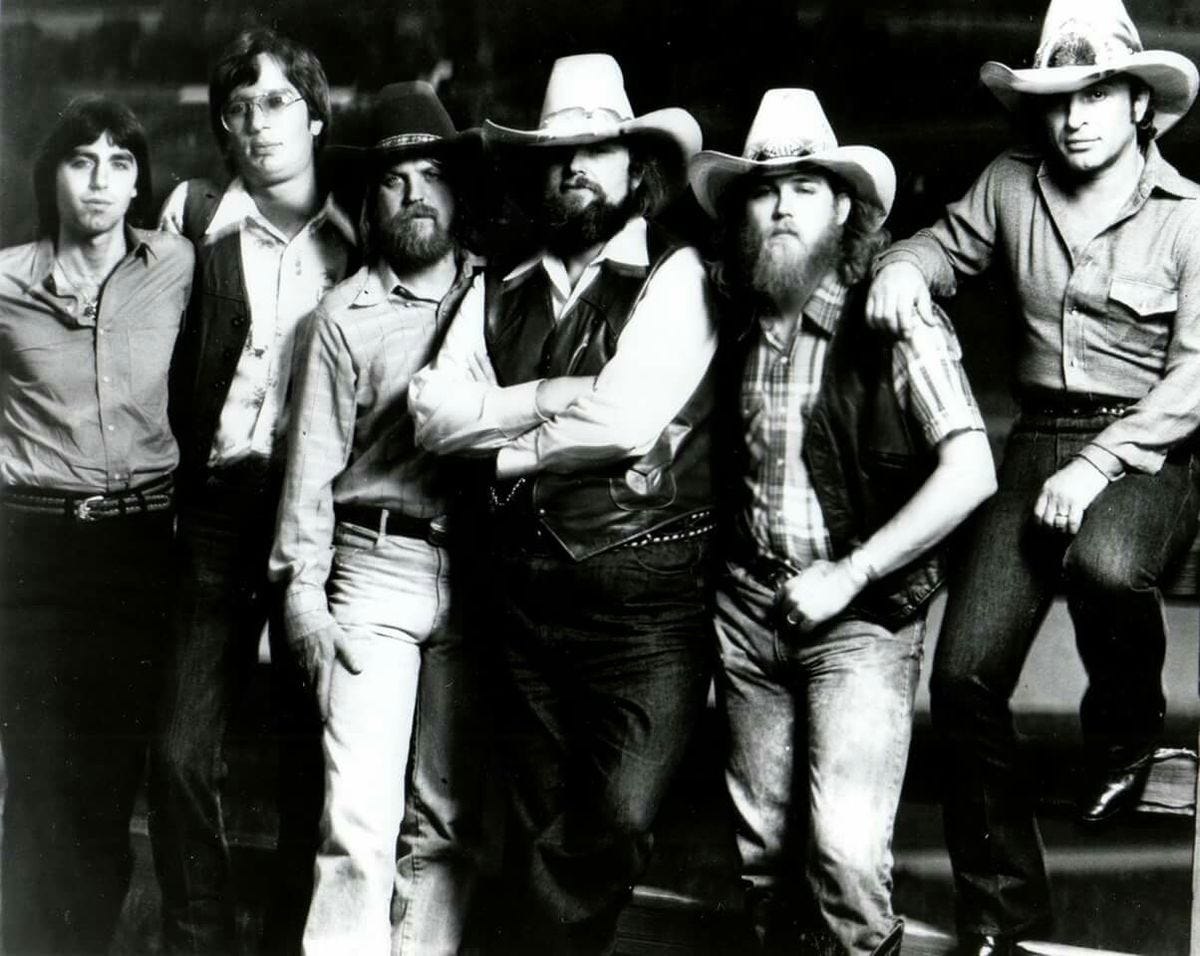
But Charlie Jr. didn’t give up. He received cassettes from Charlie Hayward, the band’s longtime bass player, containing rough mixes and notes from the original sessions. By piecing together that evidence, he reconstructed what he could about Honky Tonk Avenue. At least nine songs were recorded. Possibly ten if “Honky Tonk Dreams”—the duet with Lacy J. Dalton—was included. Some songs landed elsewhere. Three ended up in Graveyard Shift. One showed up on The Roots Remain.
And then Charlie Jr. launched a little social media campaign: #SonyReleaseHonkyTonkAve. He explicitly referenced the #ReleaseTheSnyderCut movement that had successfully pressured Warner Bros. into releasing Zack Snyder’s restored version of Justice League. If a hashtag could move a major studio to restore a film, maybe it could move Sony Music to release a lost country album from 1984.
We’re now in 2026. The campaign is still ongoing. The masters still haven’t been located or released.
The Real Story Here
Here’s what you need to understand: Honky Tonk Avenue was a concept album from a major artist at high point of his career. It was professionally recorded, professionally produced, and professionally mastered. I mean, it was finished.
And one executive decided it wasn’t gonna do CBS any favors.
This is one of those downsides they speak of when they talk about major label deals of the past.
Honky Tonk Avenue should have had a proper release. It should have had the chance to tell the complete story.
Three of its songs ended up as radio noise in a Stephen King horror classic.
There are several horrors in Graveyard Shift. But what happened to the music itself—was a death, a mutilation and a scattering. True crime in the old fashioned Nashville way.
ABOUT THE AUTHOR:
My name is Zachariah Malachi. I’m a full-time, self-employed honky tonk musician in Nashville, Tennessee. This Substack Publication was created for the purpose of sharpening my mind on more Nashville and Country Music history to share with the honky tonk patrons downtown during my shows—but I wanted more folks to benefit from the research, so it’s my gift to the country music fans of the world AND the people who WANT to be. Subscribe and come along for the ride.
Great piece of Americana Lost. When I was a newspaper columnist, I once complained that everything we wrote had to be strained through three neckties and a pair of pantyhose, so I can somewhat empathize on a low level. BTW, met Charlie Daniels in a sky box at a Tennessee football game. He was bigger'n life and twice as loud.
What happened to Blackburn? What a disgusting egomaniac. This is another tale of the industry flexing its muscle and what little regard so many executives had for their artists. I loved Charlie’s and the band’s music. Shameful.