


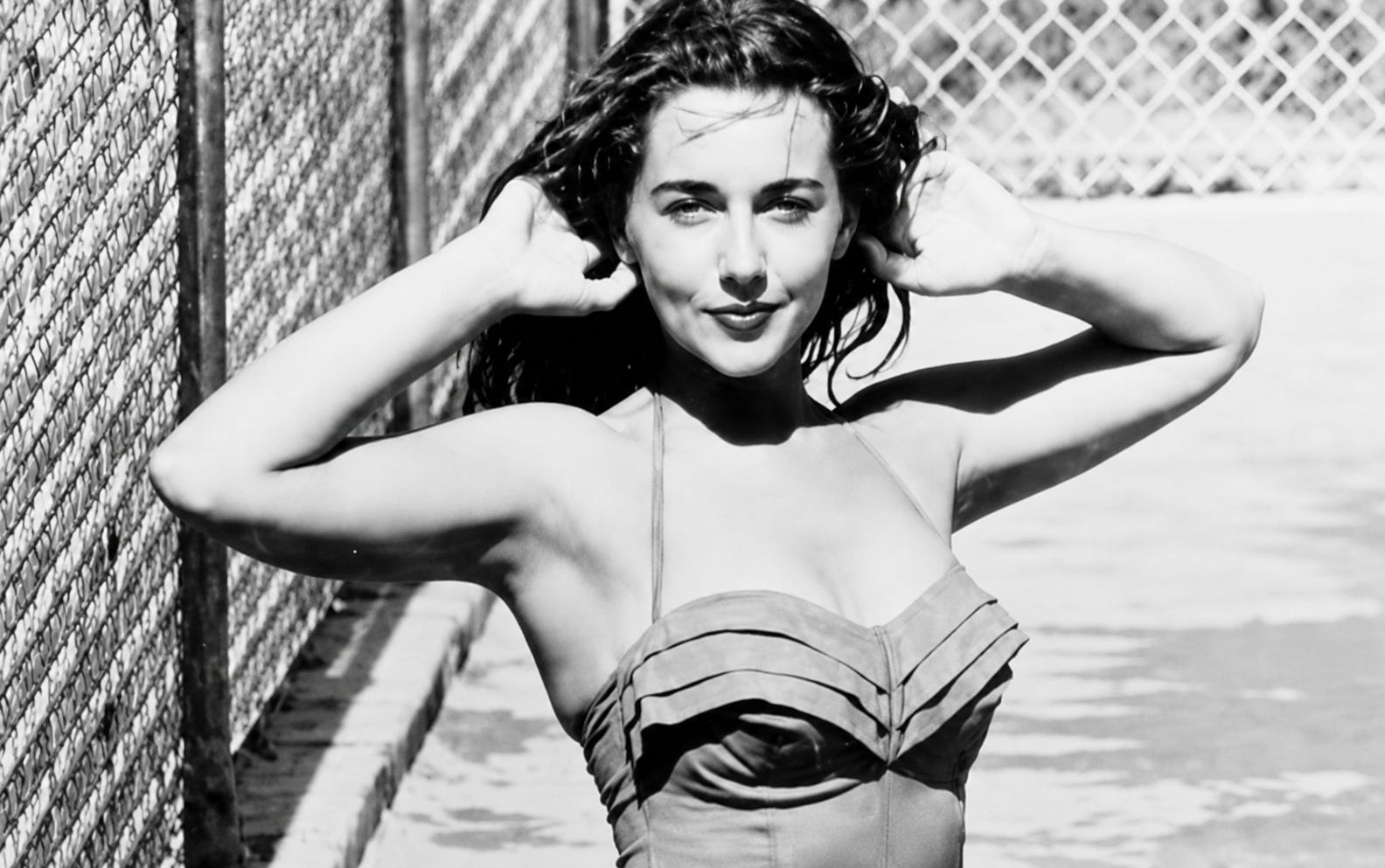
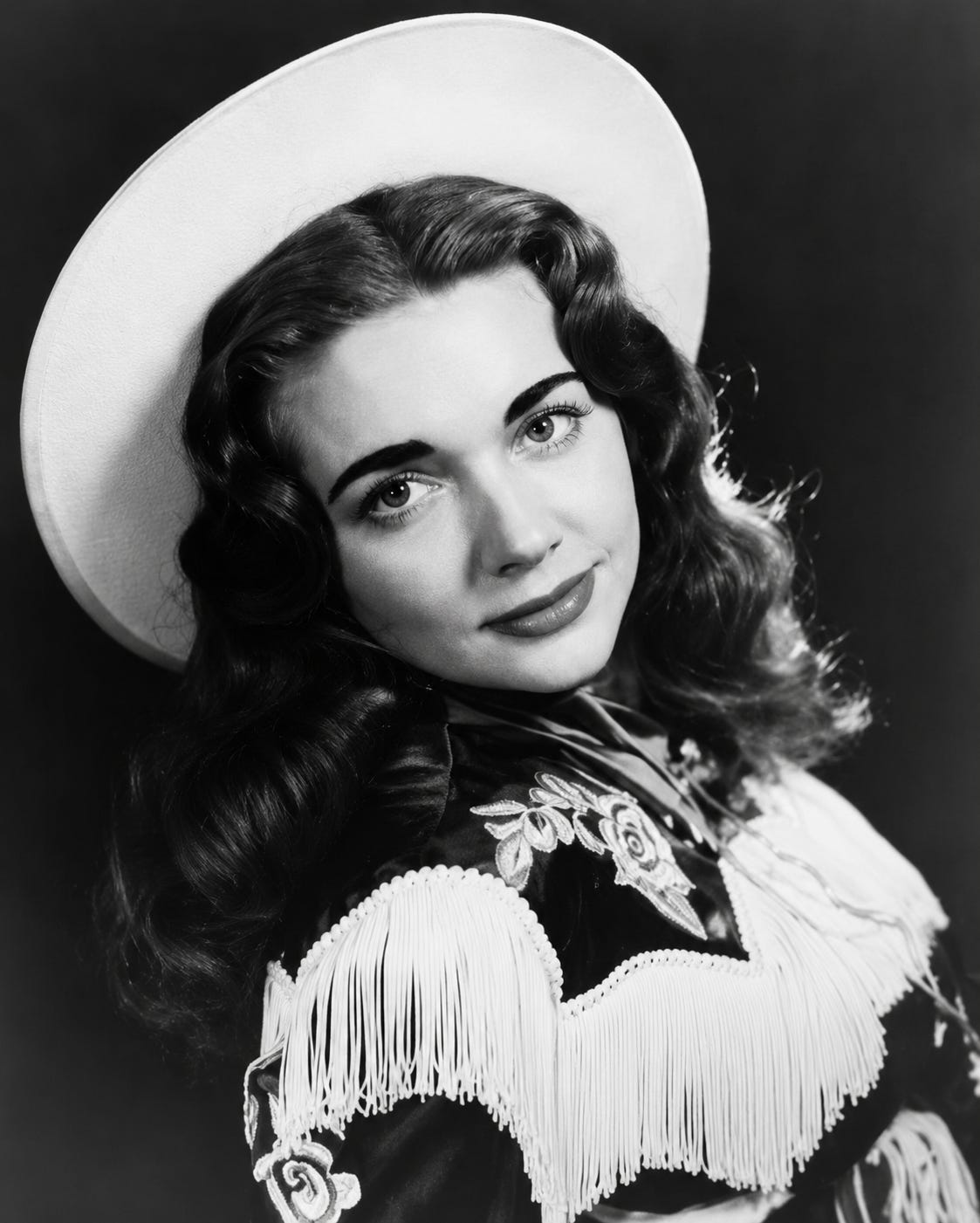
Merle Kilgore — the Louisiana songwriter who co-wrote “Ring of Fire” with June Carter, who managed Hank Williams Jr. for thirty-odd years, who lived next door to Johnny Horton in Springhill, Louisiana — used to tell people that when Billie Jean Jones walked down the street, cars would crash into each other. He said it the way a man says something he has personally seen. Because he had (Make sure you go back and read the article on Merle).
This is the woman the tabloids and country-music message boards still call the Black Widow of Country Music. The phrase is rather unfair, but it’s also why anyone outside Bossier Parish remembers her at all, so let’s start there and then put it down.
Billie Jean Jones Eshleman Williams Horton Berlin was nineteen years old when she married Hank Williams. He was dead seventy-five days later. Nine months after that she married Johnny Horton. He was killed by a drunk driver seven years on, on a stretch of Texas highway he had told friends, repeatedly, would kill him.
Two of the most consequential country singers of the twentieth century loved her, married her, and died young. You can see why people reached for a folk story to explain it. But what the folk story actually obscures is a more interesting question — the one Kilgore was answering with his cars-crashing line.
What does it do to a room, to a town, to an industry, when a girl that beautiful walks in?
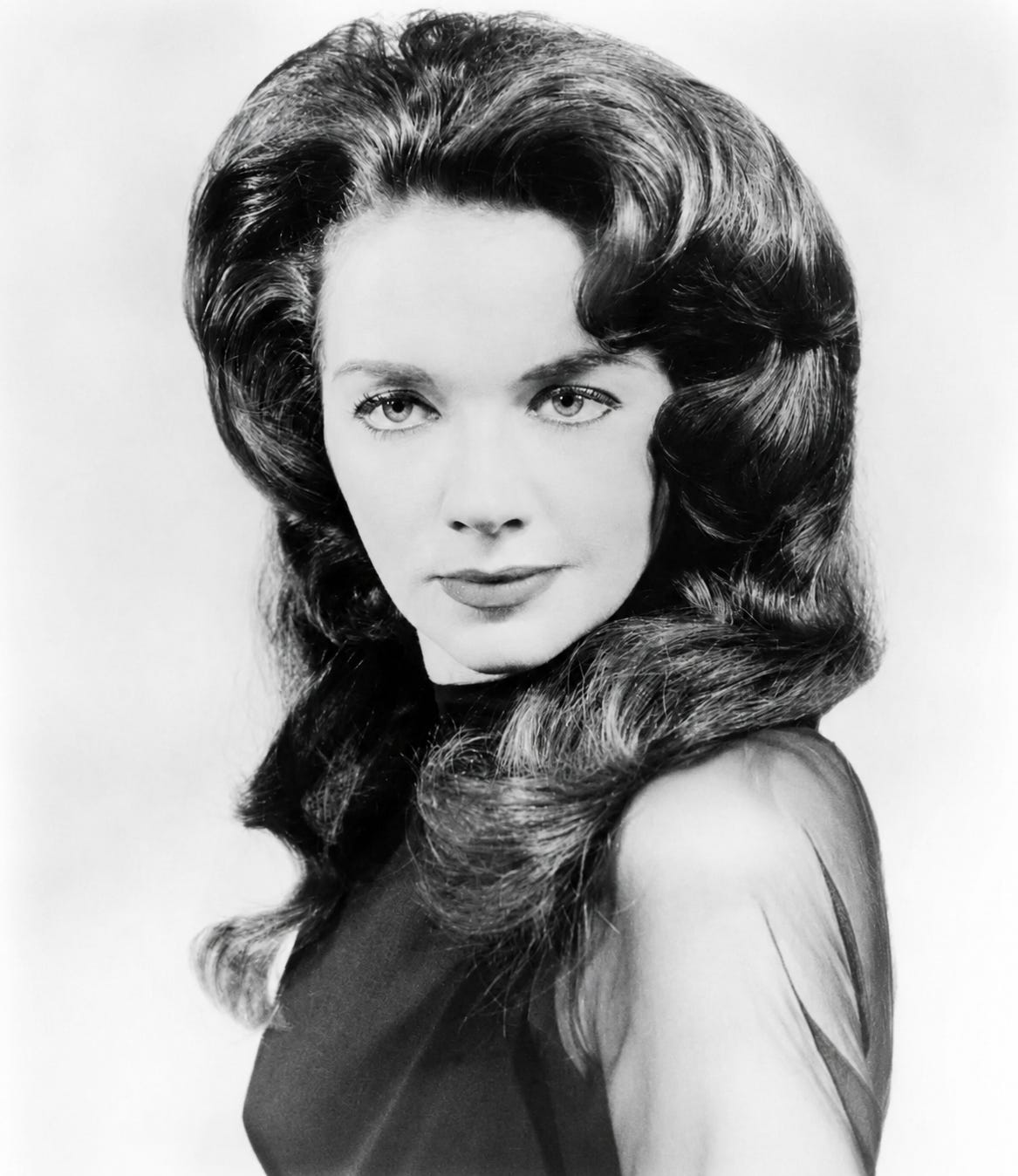
The beauty from Bossier City
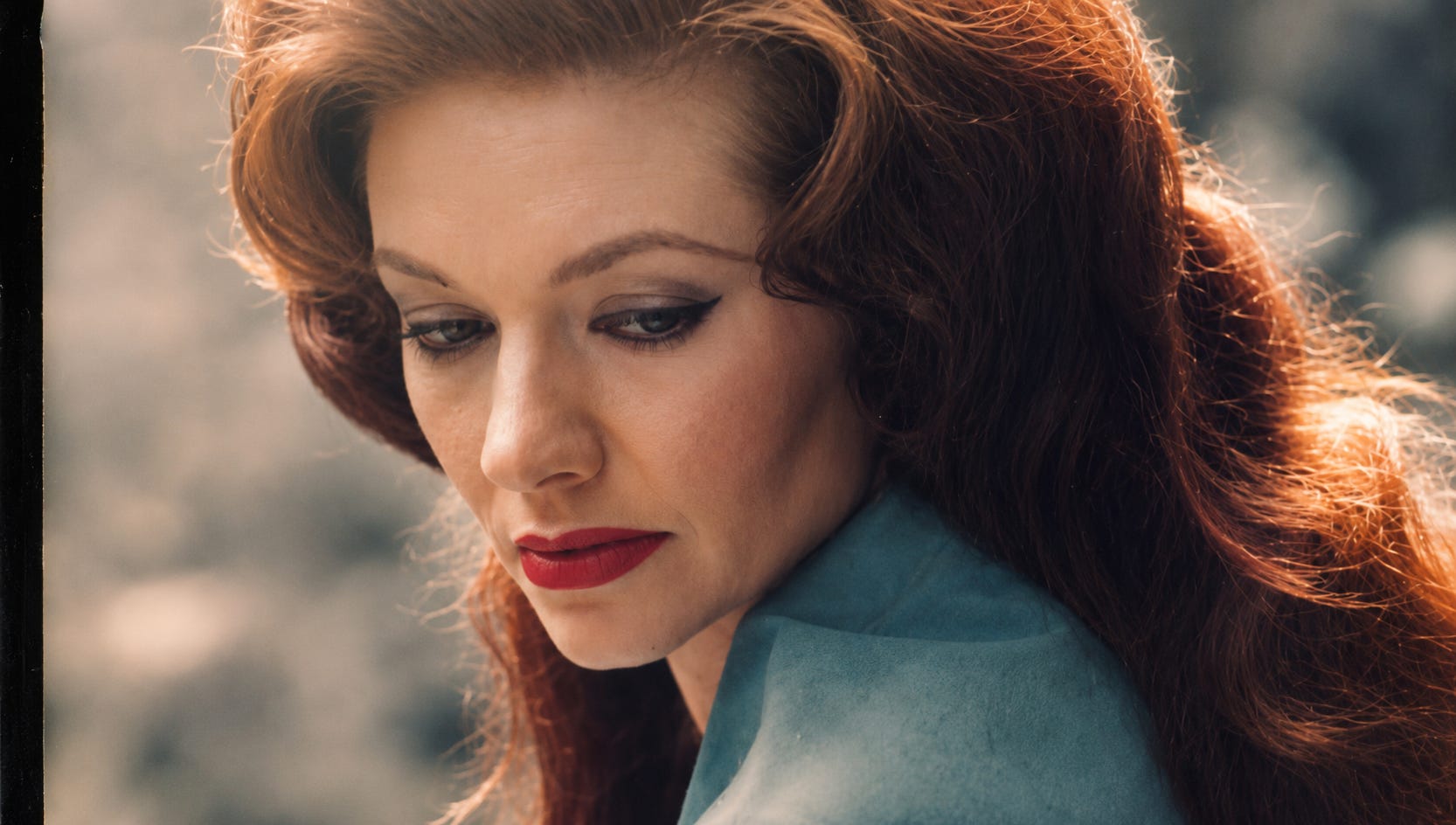
She was born Billie Jean Jones on June 6, 1933, the daughter of the Bossier City, Louisiana police chief. (This Saturday she turns 93.) She grew up across the Red River from Shreveport, in the orbit of the Louisiana Hayride — the Saturday-night radio barn dance on KWKH that became the second-most-important country music broadcast in America after the Grand Ole Opry, and the launching pad for Hank Williams, Johnny Horton, Webb Pierce, Faron Young, Slim Whitman, and a little-known nineteen-year-old named Elvis Presley.
By eighteen she had married a man named Harrison Eshleman (some sources spell it Eshlimar) and divorced him. By the summer of 1952 she was dating Faron Young — then twenty-two, then still understudying Webb Pierce on the Hayride, then not yet the honky-tonk star who would record “Hello Walls” and shoot himself in 1996.
In June 1952, Faron got the call every Hayride kid was waiting for: a guest spot at the Grand Ole Opry. Billie Jean rode up to Nashville with him. The way Hank Williams told the story afterward, he spotted her in the front row, in a red dress, waiting for her boyfriend to come off stage, and he walked over to Faron and said, more or less: Faron, that gal’s gonna be your gal, and Billie’s gonna be my gal.
Faron’s later version of the same moment was blunter. Hank told him, “Boy, I’m in love with that woman.” Faron said, “Man, you can have her.”
He had her. Within weeks. Hank — twenty-nine, divorced that May from Audrey Williams, fired in August from the Opry for being drunk and unreliable, back home in Shreveport playing the Hayride and trying to put a career back together — proposed. She said yes.
A wedding sold by the ticket
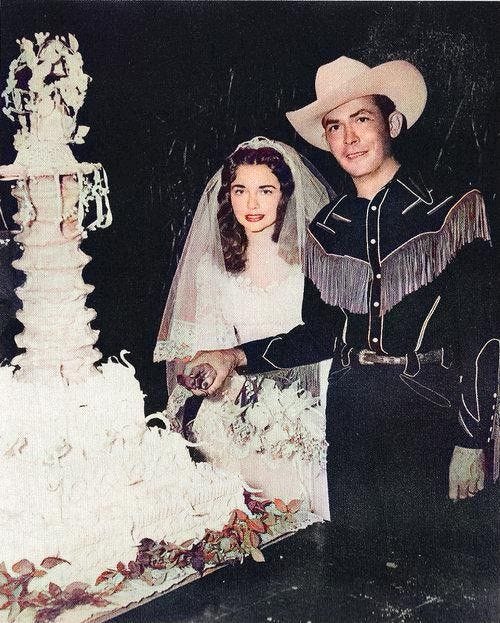
On October 18, 1952, Hank and Billie Jean were married by a justice of the peace in Minden, Louisiana. A normal wedding. That part was free.
The next day, his promoter Oscar Davis had a better idea. Hank had no Opry spot. Money was tight. Hank Williams in Louisiana could still draw a crowd. So they sold the wedding.
On October 19, 1952, Hank and Billie Jean walked out on the stage of the New Orleans Municipal Auditorium and got married, again, in front of a paying audience. Then they did it a second time the same day. Two ceremonies, 3 p.m. and 7 p.m., same bride, same groom, different crowd. Tickets ran a dollar to a dollar and a half for adults, fifty cents for kids. For another fifty cents you could buy a souvenir program. Roughly 14,000 fans paid to watch. There was also a Baton Rouge High School gymnasium staging in the run-up. It is, by some distance, the strangest wedding in the history of country music.
She was nineteen. He had ten weeks to live.
There’s a wrinkle no one in the auditorium knew about: Billie Jean’s divorce from Eshleman wasn’t actually final yet. The decree came through eleven days after she married Hank — which, two decades later, would become the central question in a federal courtroom in Atlanta.
What the men actually said
The thing worth sitting with — and the reason “Black Widow” is the wrong frame — is the language the men around her reached for, decades later, when they tried to describe what she looked like.
Kilgore’s line is the one everybody quotes: cars would crash when she walked by. It sounds like a tall tale until you remember he wasn’t a promoter spinning copy. He was her friend and neighbor in Springhill, Louisiana, where Billie Jean lived with Johnny Horton; he ate in her kitchen; the Kilgores named one of their sons after Johnny. He meant it as observation, not metaphor.
A Nashville reporter from the era called her “one of the most beautiful women ever to hit Nashville,” which in the city that produced Patsy Cline, Kitty Wells, and Skeeter Davis is not faint praise.
And then there’s the Faron Young coda — the one that tells you the most about her gravitational pull. Years after both of her husbands were dead, Faron — who had given her up to Hank in the first place — ran into her on a Nashville sidewalk. His first words, reportedly: God, I’m glad I didn’t marry you.
He meant it as a joke about superstition. But you can hear, in the joke, what every man who got close to her seemed to feel: that being loved by Billie Jean Jones was the kind of thing that bent the trajectory of a life.
The first Death.
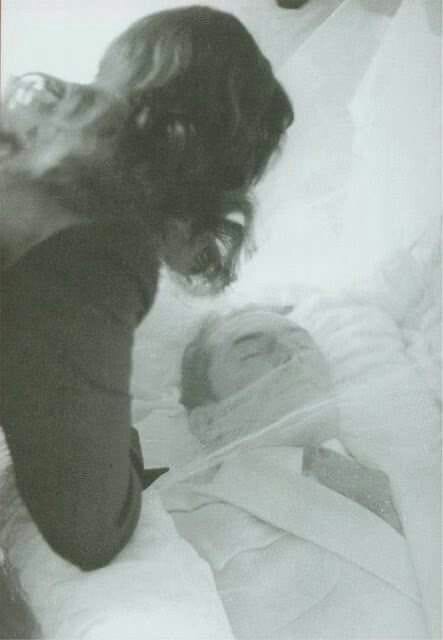
Hank Williams died of heart failure in the back seat of a powder-blue Cadillac on New Year’s Day, 1953, parked in Oak Hill, West Virginia. He was twenty-nine. He had been booked to play a New Year’s Eve show in Charleston, then a New Year’s Day show in Canton, Ohio. His driver, an eighteen-year-old college freshman named Charles Carr, pulled over at a service station and discovered he had been dead for hours. The coroner found chloral hydrate and morphine in his system.
Five days later, on January 6, 1953, a Nashville dancer named Bobbie Jett gave birth to Hank’s daughter — the girl Hank had agreed, in a signed contract two months earlier, to acknowledge as his. She was eventually named Jett Williams, though it would take her until 1989 and a ruling by the Alabama Supreme Court to be recognized as Hank’s legal heir.
Billie Jean was nineteen years old and one of two widows.
The other widow was Audrey Williams, Hank’s first wife, whom he had married in 1944 and divorced the previous May. Within months of the funeral, Audrey was in court demanding half the MGM and Acuff-Rose royalties. The fight over Hank Williams’s estate would last forty years and run through three Williams widows (Audrey, Billie Jean, and eventually Jett) and at least four courts. Billie Jean would spend much of her adult life inside it.
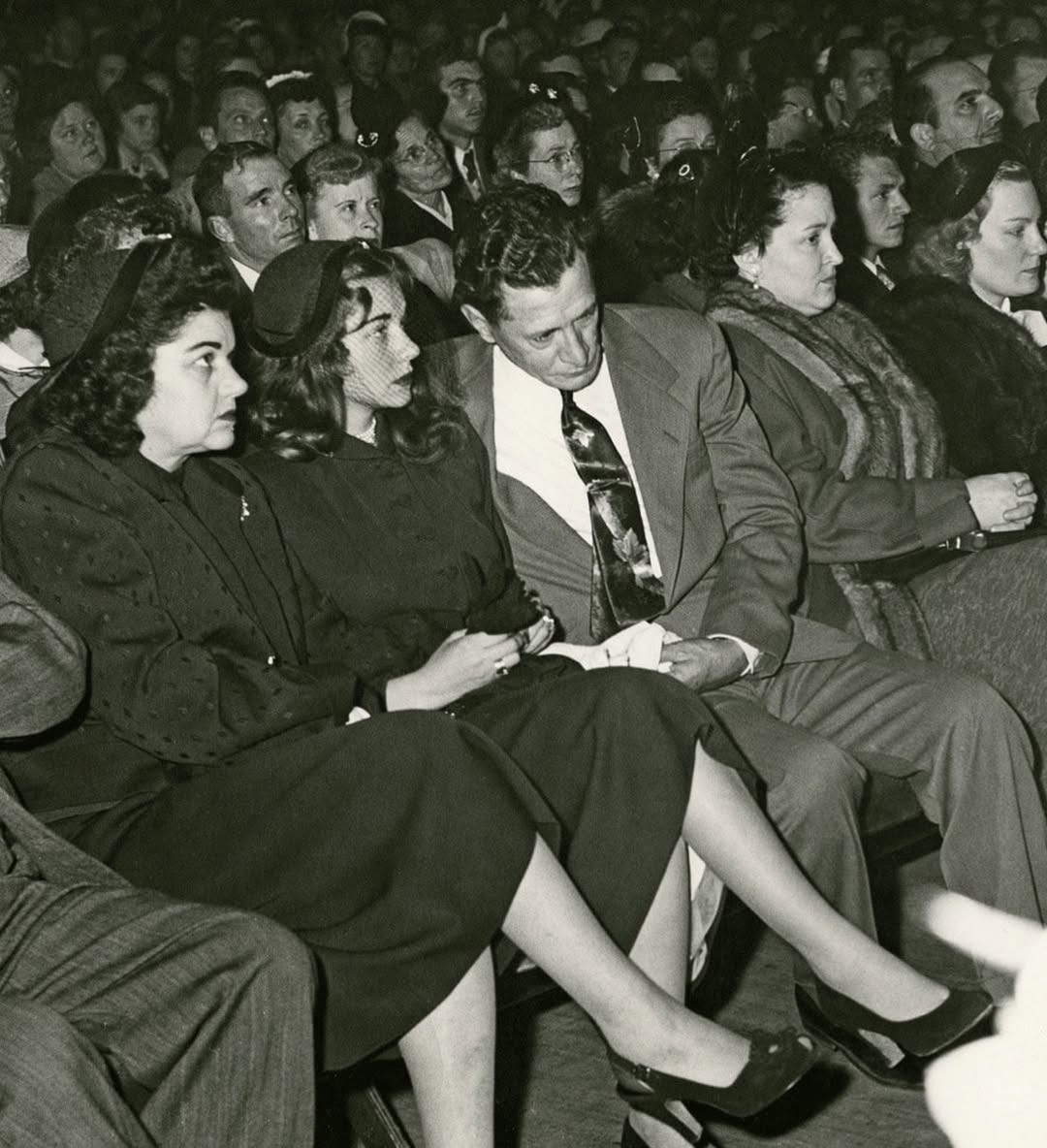
Johnny.
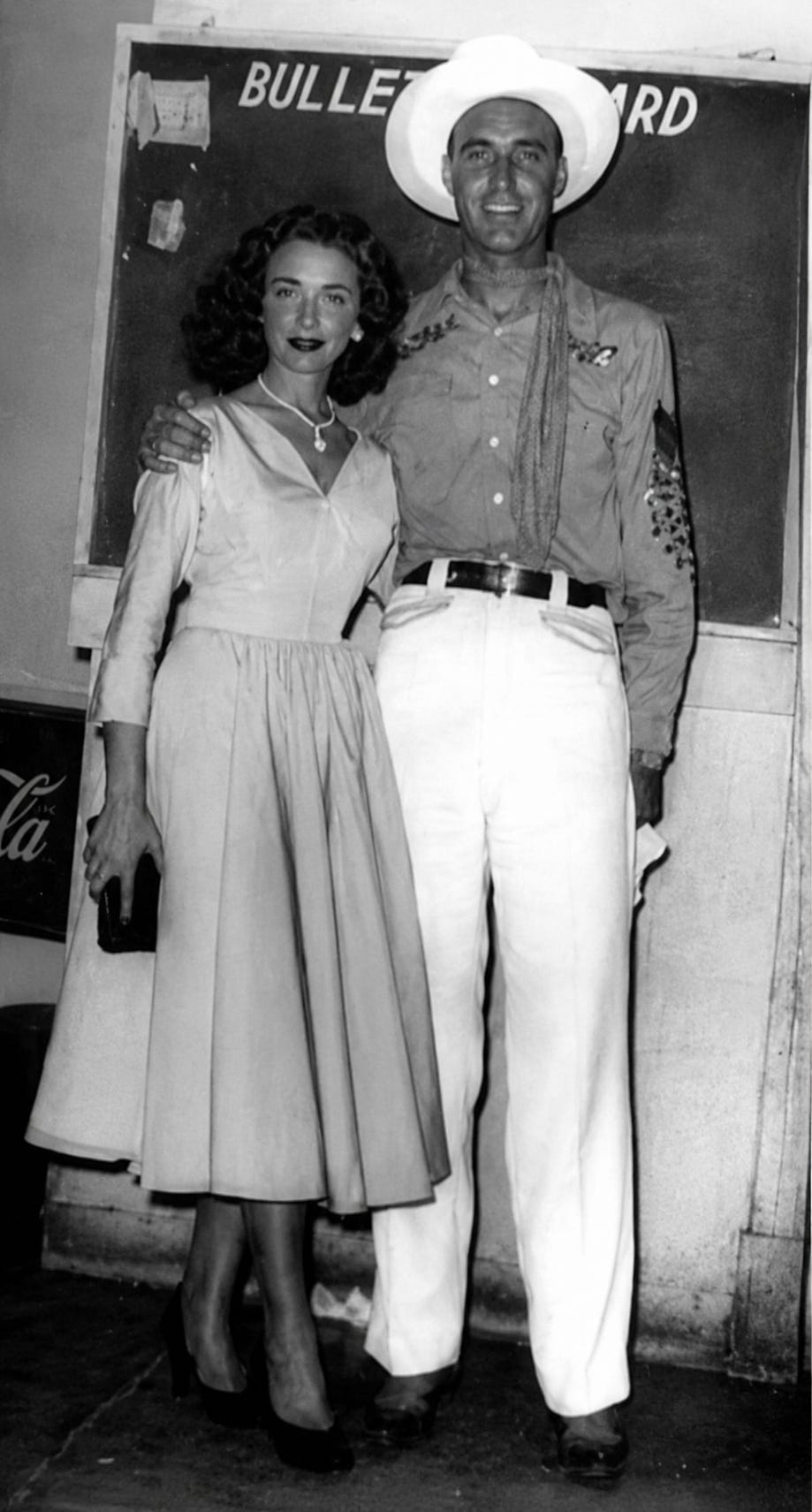
On September 26, 1953 — nine months after Hank’s funeral — Billie Jean married Johnny Horton, the Hayride star who had been at her wedding to Hank and at Hank’s funeral. It was his second marriage too. Horton, born in 1925 in Los Angeles and raised in East Texas, was an obsessive fisherman known on the Hayride as “the Singing Fisherman.” Within six years of marrying Billie Jean he would cut three of the biggest crossover country records of the era: “The Battle of New Orleans” (1959, a No. 1 pop hit, Grammy winner for Best Country & Western Performance), “Sink the Bismarck” (1960), and “North to Alaska” (1960).
Billie Jean wasn’t a bystander to this run. She helped run it. She promoted him, kept the books, handled the road, raised their kids. They had two daughters together — Yanina and Melody — and Johnny adopted Billie Jean’s daughter from a prior relationship, Jeri Lynn.
Johnny spent those seven years convinced he was going to die young at the hands of a drunk man. He told Billie Jean. He told Kilgore. He told Tillman Franks, his manager. He practiced evasive driving — actually pulled into ditches at speed, on purpose, to feel what it was. He refused to drink in honky-tonk bars after his shows. He and Johnny Cash held séances trying to reach Hank.
About six months before his death he came across the fence to Merle Kilgore’s yard with his custom mother-of-pearl guitar and pressed it into Merle’s hands. I’ve got the feelin’ Ol’ John’s not gonna be around much longer, and I want you to have this. They invented a secret code — the drummer is a rummer and he can’t hold the beat — so that if Johnny ever made contact from the other side, Merle would know it was really him.
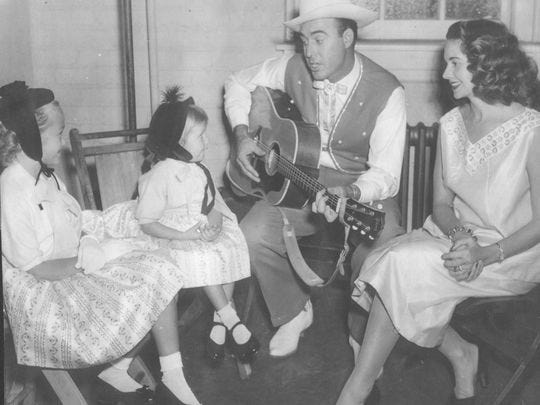
The second death
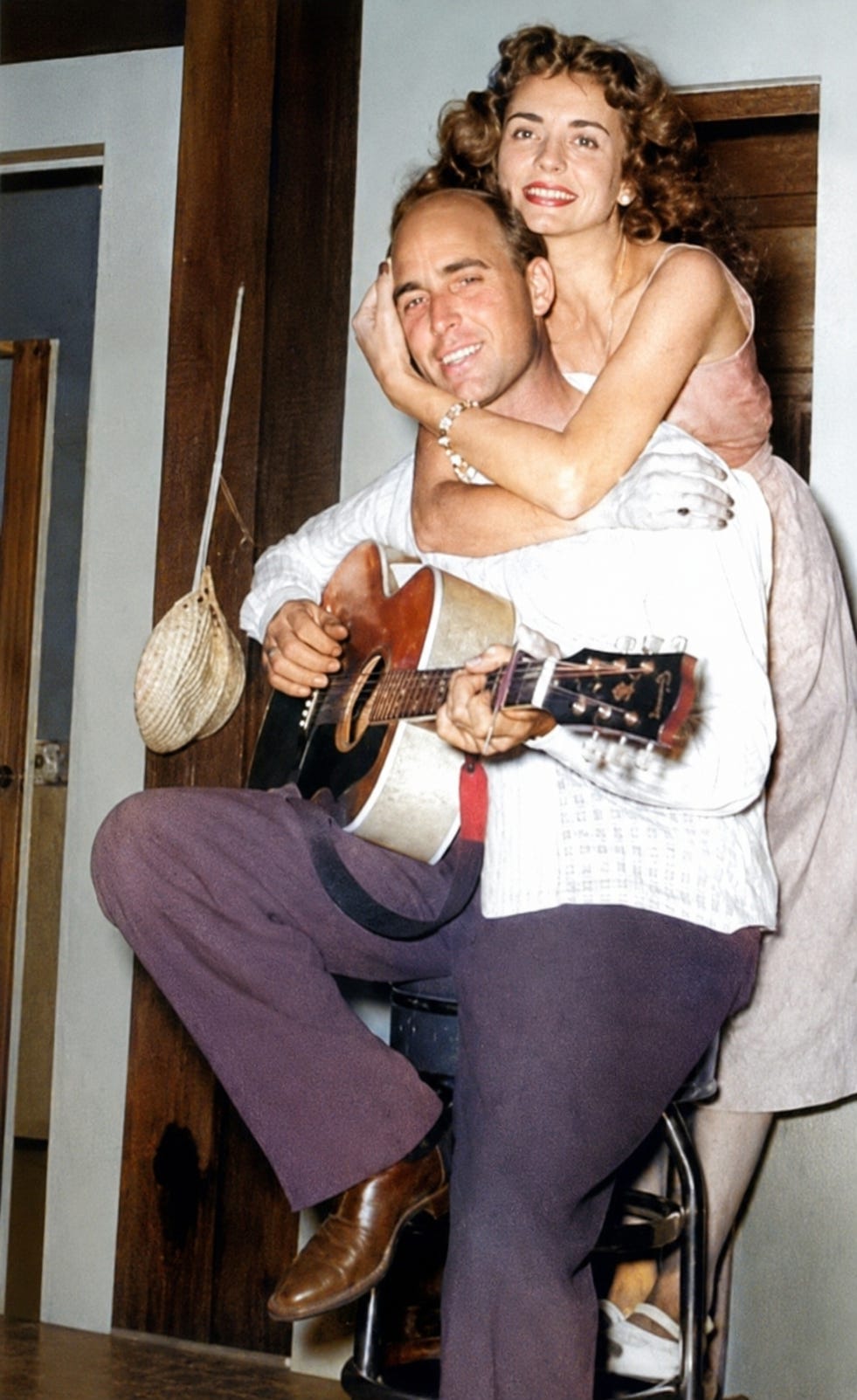
On Friday, November 4, 1960, Horton played a sellout at the Skyline Club in Austin, Texas — the same honky-tonk on North Lamar where, seven years earlier almost to the week, Hank Williams had played the last full show of his life. After the set, Horton refused to step into the club’s bar. He didn’t want to be in a room with drunks.
In the small hours of November 5, 1960, Horton was driving his Cadillac back toward Shreveport for a fishing trip with Johnny Cash. With him were his bass player Tommy Tomlinson and Tillman Franks. On a narrow bridge over a creek on Highway 79, near Milano, in Milam County, Texas, a nineteen-year-old college student named James Evan Davis, drunk, in a pickup truck, hit the Cadillac head-on. Tomlinson’s leg was so badly broken it had to be amputated. Franks fractured his skull. Horton died on the way to the hospital. He was thirty-five. Davis later pled guilty to “intoxication resulting in a fatality.”
Billie Jean was twenty-seven.
A reporter would later notice that both Hank and Johnny had kissed her on the same cheek the last time she saw either of them alive.
Her own voice
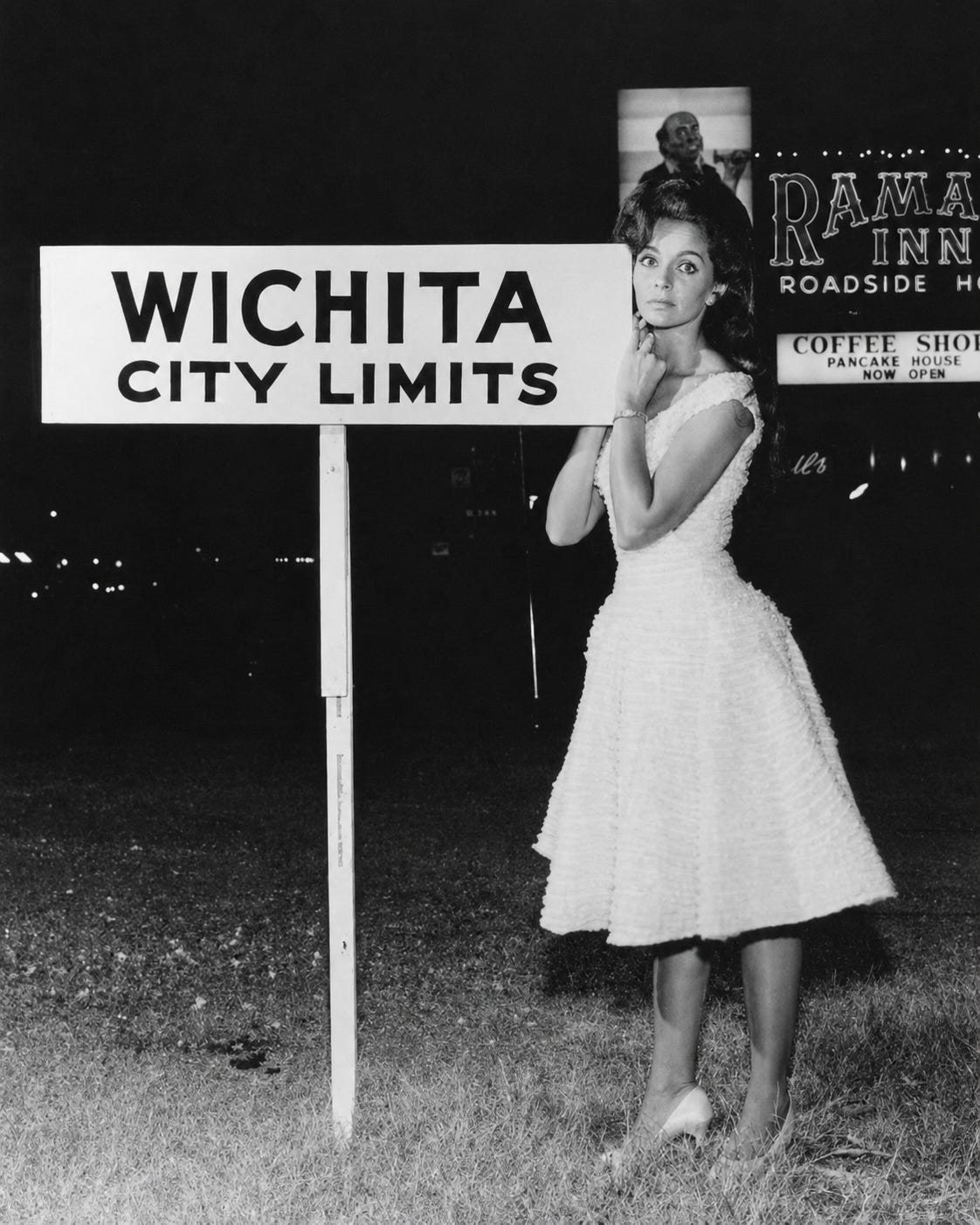
This is the part that gets left out of the Black Widow story, because it doesn’t fit.
People treat Billie Jean as if she were just an ornament beside two men with guitars. She was not. She had spent the seven Horton years running the office: bookings, contracts, road logistics, royalty statements. By the time the Cadillac was hauled off the bridge near Milano, she knew how a country music career was built better than most managers in Nashville. She just hadn’t run her own yet.
Within weeks of the funeral, she had a deal. Her debut single, “Angel Hands” b/w “I’d Give the World (To Have You Back Again),” came out on 20th Century Fox Records in January 1961 — less than ten weeks after Johnny died. It’s a torch song sung by a woman who had just buried her second husband, and you can hear it. The opening line of the B-side is the title.
Later that year came the record that matters: “Ocean of Tears” b/w “Don’t Take His Love.” It climbed to No. 29 on the Billboard country chart in 1961. That was the only Top 40 country hit of her career, but it was a real one — a charting single by a Hayride girl who had taught herself the trade by watching it kill the two men she had loved.
She kept going. Through the mid-1960s she cut a string of singles for ABC-Paramount and Atlantic Records, plus smaller imprints — Thunderbird, Jamie, Custom. “Tell Him I Can’t See Him Anymore” (1962). “Johnny Come Lately” (1964). Roughly seven singles all told, the last of them released on Atlantic in the summer of 1964. None of them charted. She stopped cutting records shortly after.
It is worth being honest about the ceiling she hit. Billie Jean was not Patsy Cline. She was a competent country singer with a pleasant, smoky alto and an ear for the kind of weepy heartbreak ballad the format had been built on. In another life — one where her name was, say, Billie Jean Smith of Tyler, Texas, with no famous husbands attached — she might have had a solid mid-card career on the Hayride circuit and a regional following. In the actual life she lived, she was always Hank Williams’s widow first, Johnny Horton’s widow second, and a singer a distant third, and the records reflect it. Nobody listening to “Ocean of Tears” in 1961 could hear it as anything except the woman from the funerals.
So she pivoted to the work she was already better at, which was promotion and estate management — and to the work she would become extraordinary at, which was suing people. Research tells us this.
The widow who fought back
In 1964, MGM released Your Cheatin’ Heart, a Hank Williams biopic starring George Hamilton. Audrey Williams was the technical advisor. In the film, Billie Jean essentially does not exist; when she does appear by implication, she’s a gold-digger who married Hank under a not-yet-final divorce decree. Billie Jean sued. The litigation dragged on for years. She has said she walked away with roughly a million dollars — a sum she earned, in her own telling, by being erased.
On June 11, 1971, a Louisiana court ruled that even though her divorce from Eshleman hadn’t been finalized on her wedding day, she’d entered the marriage in good faith and it carried a presumption of validity. On October 22, 1975, a federal judge in Atlanta went further: Billie Jean was Hank Williams’s common-law wife, and a share of the renewing song copyrights belonged to her. Those renewals were the real money — the songs were worth more in 1975 than they had been in 1953, and they kept appreciating. She continued to fight over the catalog into the 1980s, sometimes alongside Hank Williams Jr., sometimes against him, eventually alongside and against Jett Williams once Jett’s paternity was confirmed.
She also had a relationship, somewhere in there, with Johnny Cash, while he was still married to his first wife Vivian Liberto. She later married — and divorced — an insurance executive named Kent Berlin. Her Wikipedia entry lists her “years active” as 1952–1980s, and that’s the right frame: she stopped recording in 1964, but she kept working in country music — as a promoter, as an estate manager, as the keeper of two flames — for another twenty-plus years.
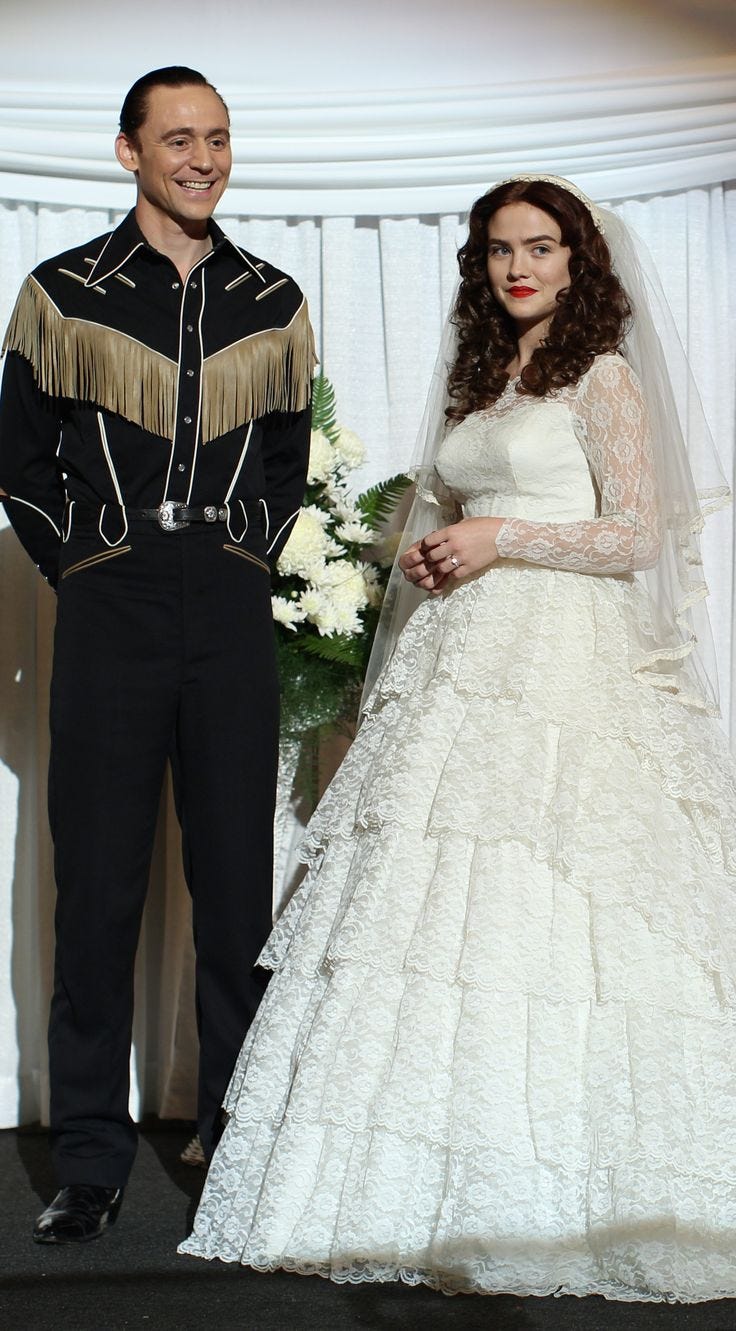
The actress Maddie Hasson played her in the 2015 Hank Williams biopic I Saw the Light, opposite Tom Hiddleston.
What happened to her?
She is alive, in Shreveport, Louisiana. She has, by most accounts, lived in some form of assisted living since the mid-2010s. The Shreveport Times profiled her in March 2016, when she was 82, under the headline “Billie Jean Horton, a true American classic.” She has given occasional interviews over the years — to the Associated Press, to the Los Angeles Times (the 1987 piece by John Andrew Prime, with the indelible standfirst “Merry widow of country legends”), to Shreveport’s local press, to country-music fan publications — and the through-line is that she is sharp, funny, and entirely unrepentant about having outlived everybody.
Her three daughters — Jeri Lynn, Yanina, and Melody — live nearby in Shreveport.
The Cadillac Johnny was driving the night he died is on display at the Pioneer Heritage Center at LSU Shreveport, dented bridge-side and all. The custom mother-of-pearl guitar Johnny pressed into Merle Kilgore’s hands six months before the crash is still in the Kilgore family. Hank’s catalog still pays out twice a year. Most of Billie Jean’s seven singles can be found on YouTube now, uploaded by collectors with grainy 45 labels visible.
She turned 93 on June 6th. I made sure to get a birthday letter out to her. We will see if she reaches back to me.
ABOUT THE AUTHOR:
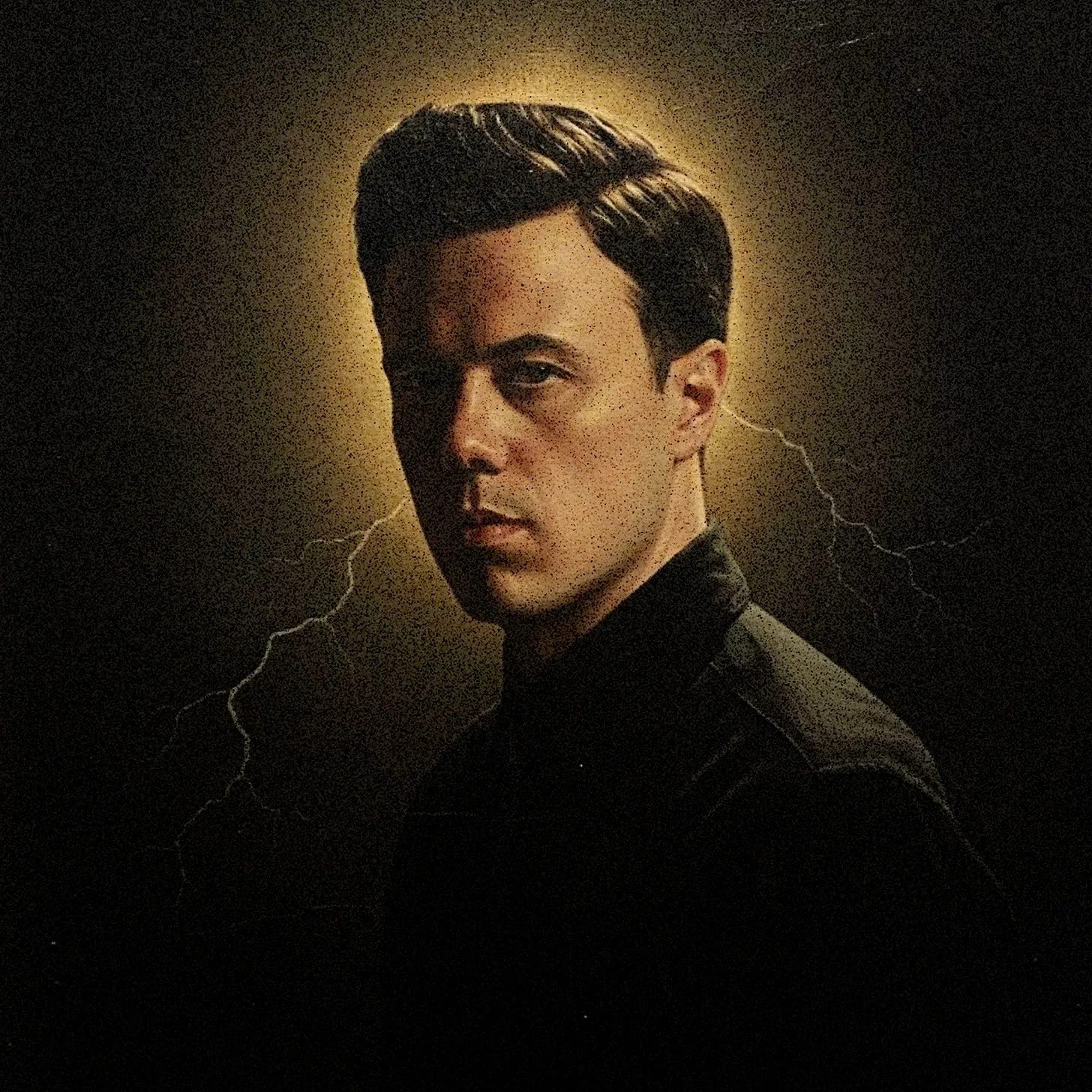
My name is Zachariah Malachi. I’m a full-time, self-employed honky tonk musician in Nashville, Tennessee. This Substack Publication was created for the purpose of sharpening my mind on more Nashville and Country Music history to share with the honky tonk patrons downtown during my shows - but I wanted more folks to benefit from the research so - it’s my gift to the country music fans of the world AND the people who WANT to be. Subscribe and come along for the ride.
I worked at Johnny’s Pizza in the 80s in Shreve Island neighborhood. She used to order pizzas from us all the time. I was always excited about it. And would make sure the delivery drivers knew she was a special person.
Loved reading this, and glad to learn about her.