


If you want to understand the real Gene Autry, the actual one, not the version on the postcards and the museum plaques, you have to start by unlearning the fairy tale. Wide-open Texas country. A kid on a horse. That whole postcard version of a childhood. It’s a nice story. It’s also mostly wrong.
The boy who erased himself
The real version starts with a father who couldn’t hold still. Delbert Autry was a horse trader and livestock dealer who kept vanishing on his family, and when he did, it was Orvon, not some hired hand, doing the farm labor to keep his mother and sisters fed.
He was born Orvon Grover Autry in Tioga, Texas, in 1907, and he hated that middle name so much he spent decades erasing it. When he applied to the Frisco Railroad as a teenager, he signed “Grover” so illegibly the company’s own paperwork lists him as “Grany” or “Gordon.” He shaved a year off his birth date on that same application, because he wasn’t eighteen yet and needed to look like he was.
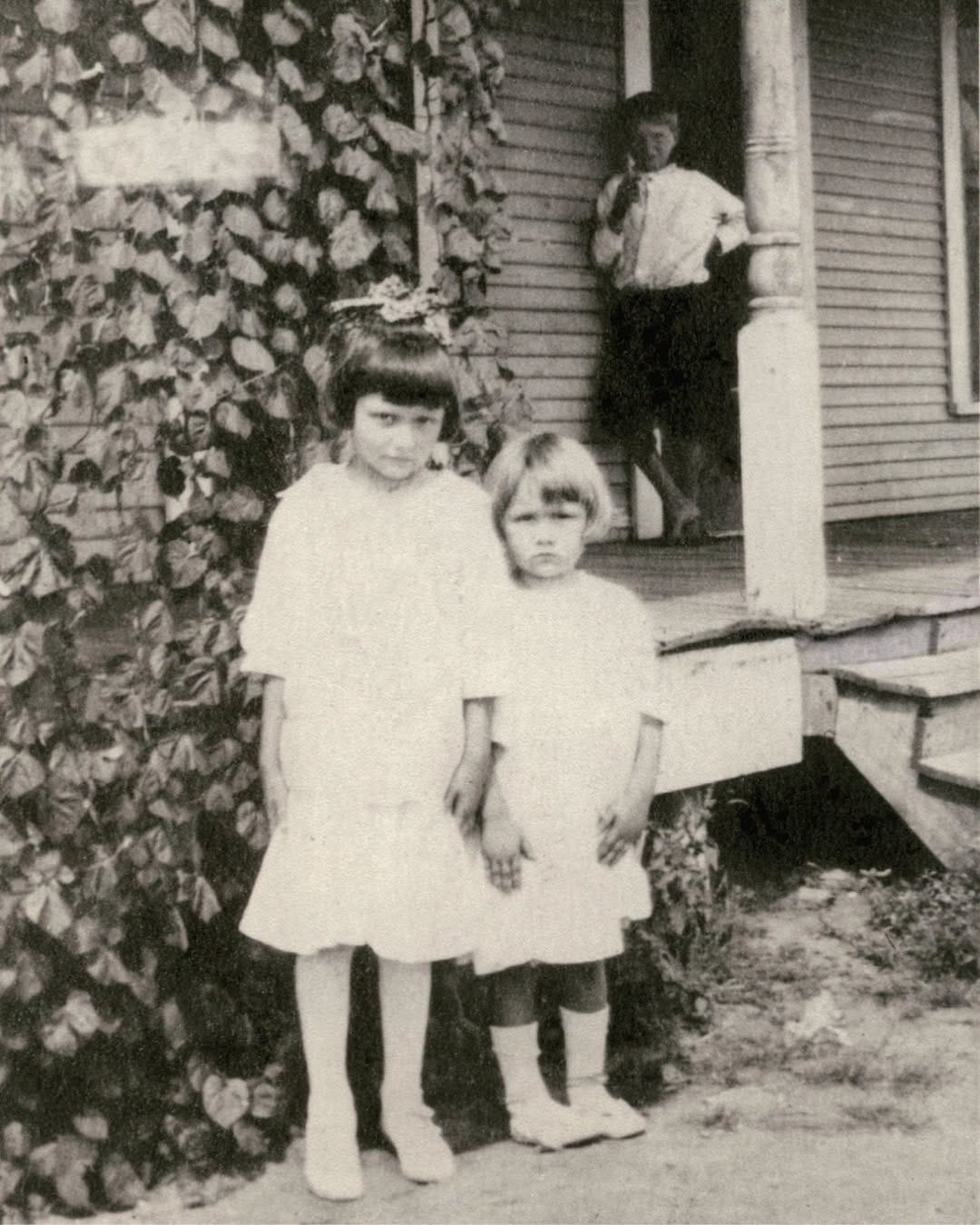
Eventually “Grover” disappeared from his driver’s license, his passport, his military records. Like he’d sanded it off himself. Which, in a sense, he had.
School ended for him in tenth grade. His father left again in early 1925, and Orvon dropped out to take a night depot job for $35 a month, a fact he kept quiet for the rest of his life. And here’s the detail that really undercuts the saddle-sore mythology: that job, and the one after it, put him indoors, in a heated building, working as a relief telegrapher and night dispatcher for the St. Louis and Frisco Railroad. Whatever Gene Autry’s pre-fame life was, it was not spent getting sunburned on a horse.
Even the origin story he told for fifty years doesn’t quite hold up. The famous version has Will Rogers wandering into the Chelsea, Oklahoma depot one night in 1927, hearing Autry pick out a tune on a Sears guitar, and telling him to go get on the radio in New York. It’s a great story.
Rogers never told it. Not once, not in print, not in an interview. The magazine profiles written about Autry before 1937 don’t mention Rogers at all. They credit random customers and cattlemen with talking him into music, which is a much less cinematic version of events, and probably a lot closer to what actually happened.
A suit, not a saddle
Even his early recording career doesn’t match the choir-boy image he’d later build his empire on. Years before he wrote the squeaky-clean Cowboy Code for kids, Autry was recording knockoffs of Jimmie Rodgers, blue yodels included, some of it as suggestive as anything else being cut at the time, often under names like Bob Clayton and Hank Bennett so nobody would connect the dots.
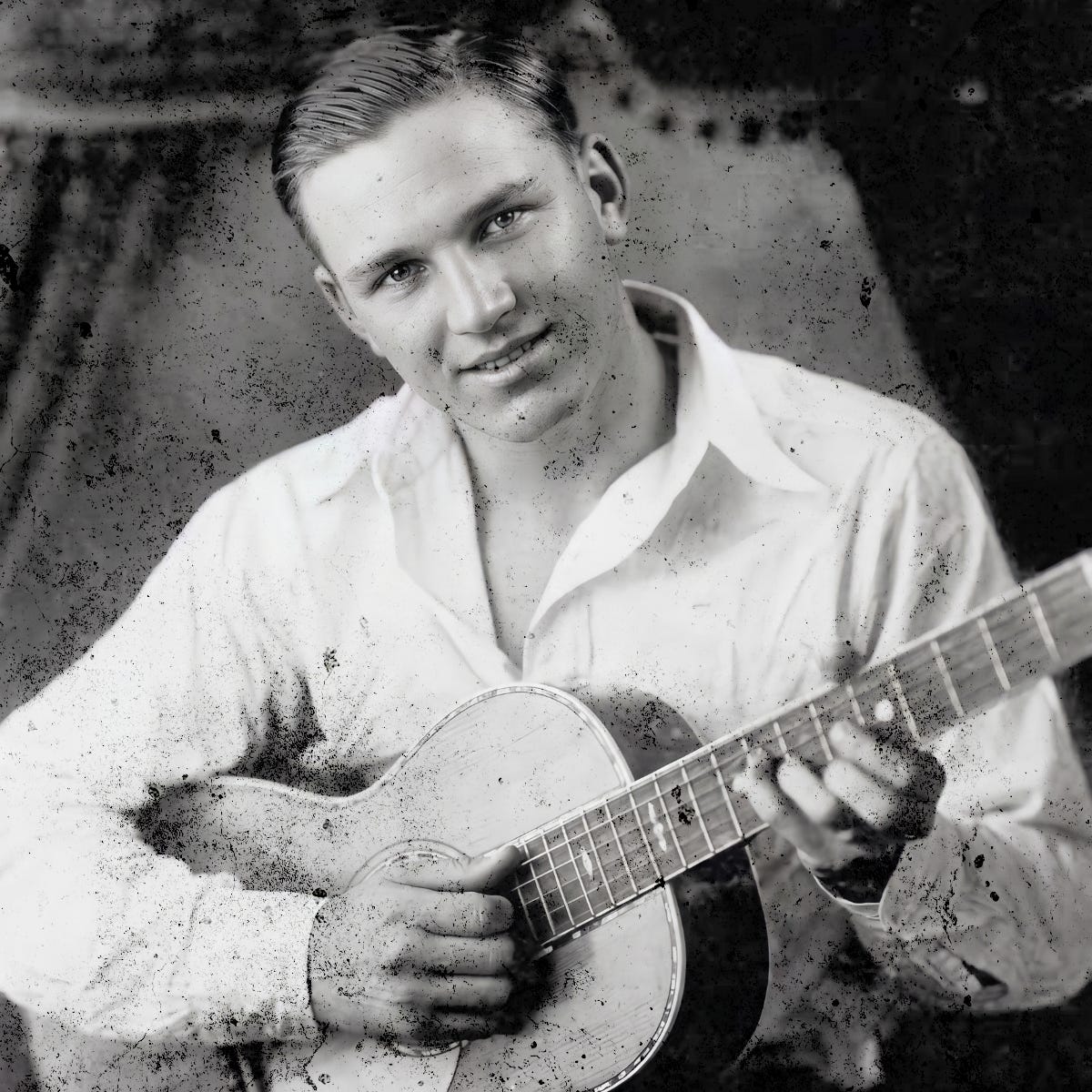
When he finally showed up at the WLS studios in Chicago in late 1931, he wasn’t dressed like a cowboy at all. A fellow performer, Karl Davis, remembered him as “nicely dressed in a regular suit, not western.” The hat, the boots, the whole silhouette: none of it existed yet. The station had to build it from scratch.
How Sears bought a cowboy
Building it turned out to be a business necessity, not an artistic choice. In 1932 the record industry collapsed under the Depression, sales dropping from 104 million units in 1927 down to 6 million. National advertisers wanted nothing to do with the overalls-and-straw-hat “hillbilly” image; to them it read as poor, backward, a dead end.
Arthur “Uncle Art” Satherley, the English A&R man running things at American Record Corporation, sent a test pressing of “That Silver Haired Daddy of Mine” to a Sears Roebuck buyer named Jeff Shay. Shay’s idea was WLS radio: put Autry on a free morning slot and let the airtime sell the records.
What happened next was, frankly, a little bit of fraud dressed up as folksy charm. WLS announcers Anne Williams and Sue Roberts invented Autry’s mornings out of whole cloth. He was probably still half asleep in his North Side apartment while Williams told listeners things like:
“Here he comes; he’s fence riding. I see he’s got a break. He’s repairing a fence right there. Now he’s got that done, and he’s very fast on his horse, and just as fresh as a daisy.”
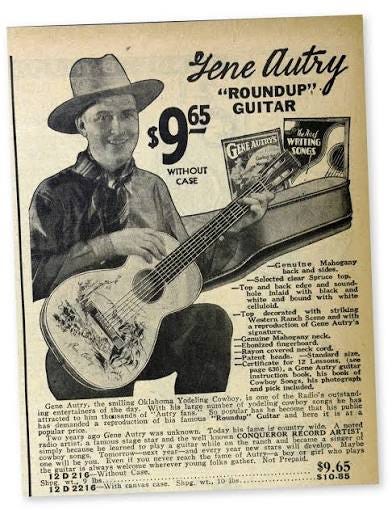
None of it happened. Sears then sold the fantasy directly to kids, marketing a Gene Autry “Roundup” guitar in its mail-order catalog for $9.95 and telling them he’d learned to play it “while on the ranch.”
The virility memo
Hollywood finished the job. In 1934, ARC owner Herbert Yates, who also controlled the company financing a lot of independent studios, introduced Autry to Mascot Pictures producer Nat Levine. Levine wasn’t impressed. He thought Autry looked awkward and soft next to the silent-era cowboys.
So on May 21, 1935, Mascot’s attorney sent director Armand Schaefer a memo with an instruction that still makes me laugh every time I read it: get Autry in touch with the Westmore Makeup Salon and have them give him “the appearance of a Western star... anything that will give him the appearance of virility.”
That’s a real internal memo. Somebody typed that sentence and mailed it.
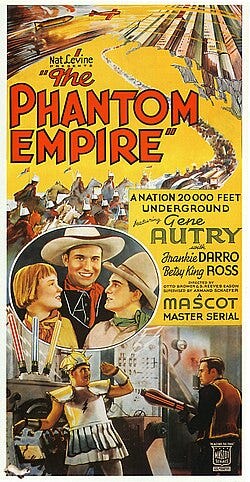
Mascot had actually launched the whole Singing Cowboy concept a few months earlier, in December 1934, with a twelve-chapter serial called The Phantom Empire, which is exactly as strange as it sounds. Autry played himself, broadcasting from a place called Radio Ranch, which happened to sit directly above an underground civilization called Murania, complete with ray guns and robots.
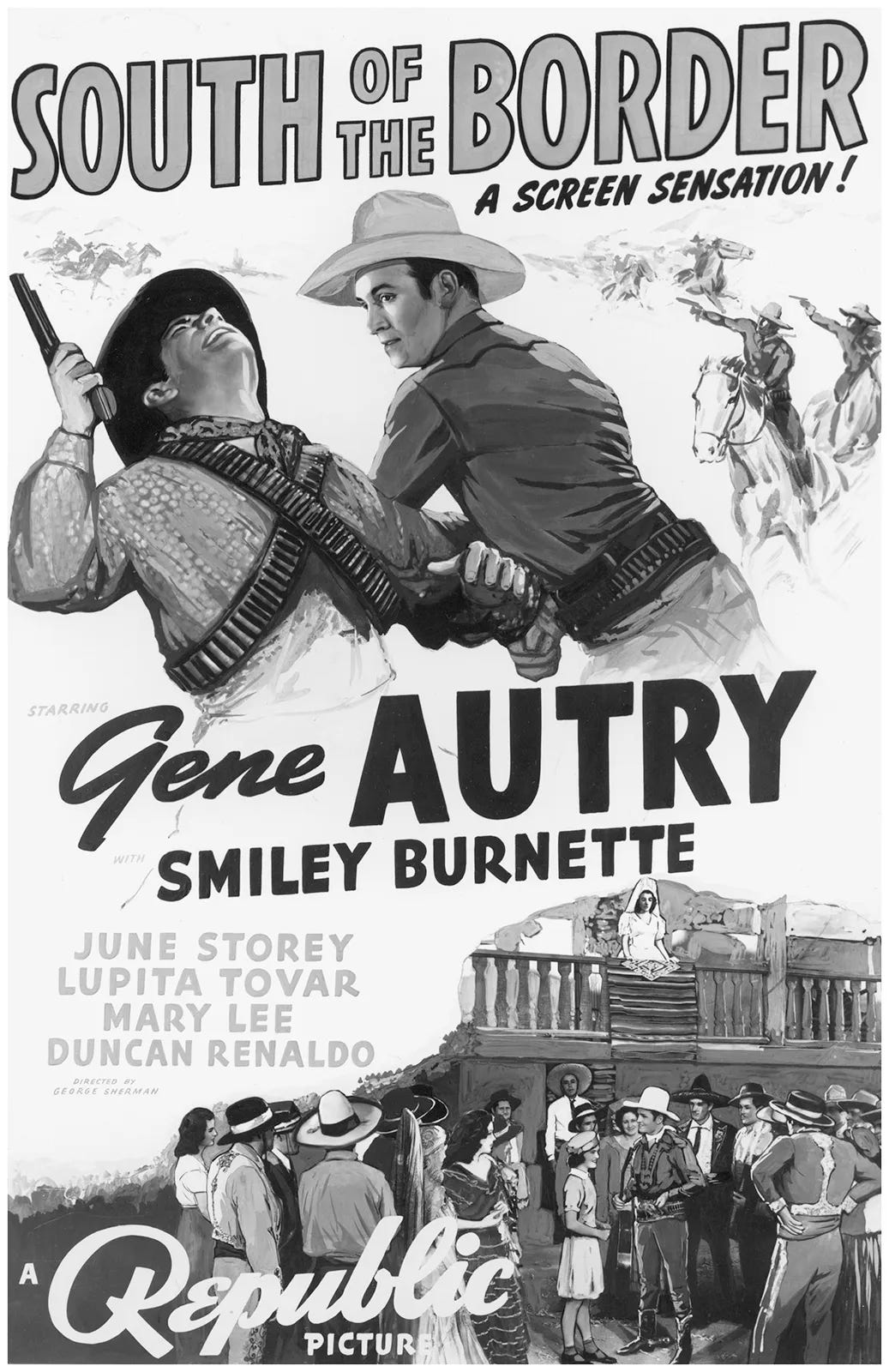
And even while selling this new singing-cowboy fantasy, the studios were quietly hiding that half their stars couldn’t actually sing. In Autry’s own debut film, In Old Santa Fe, Ken Maynard’s vocals were dubbed by Bob Nolan of the Sons of the Pioneers. Over at Republic, John Wayne’s singing voice in Westward Ho! came from a session man named Jack Kirk.
The rest of the rhinestone cast
Autry wasn’t unique in any of this. He was just the one who got really rich off it.
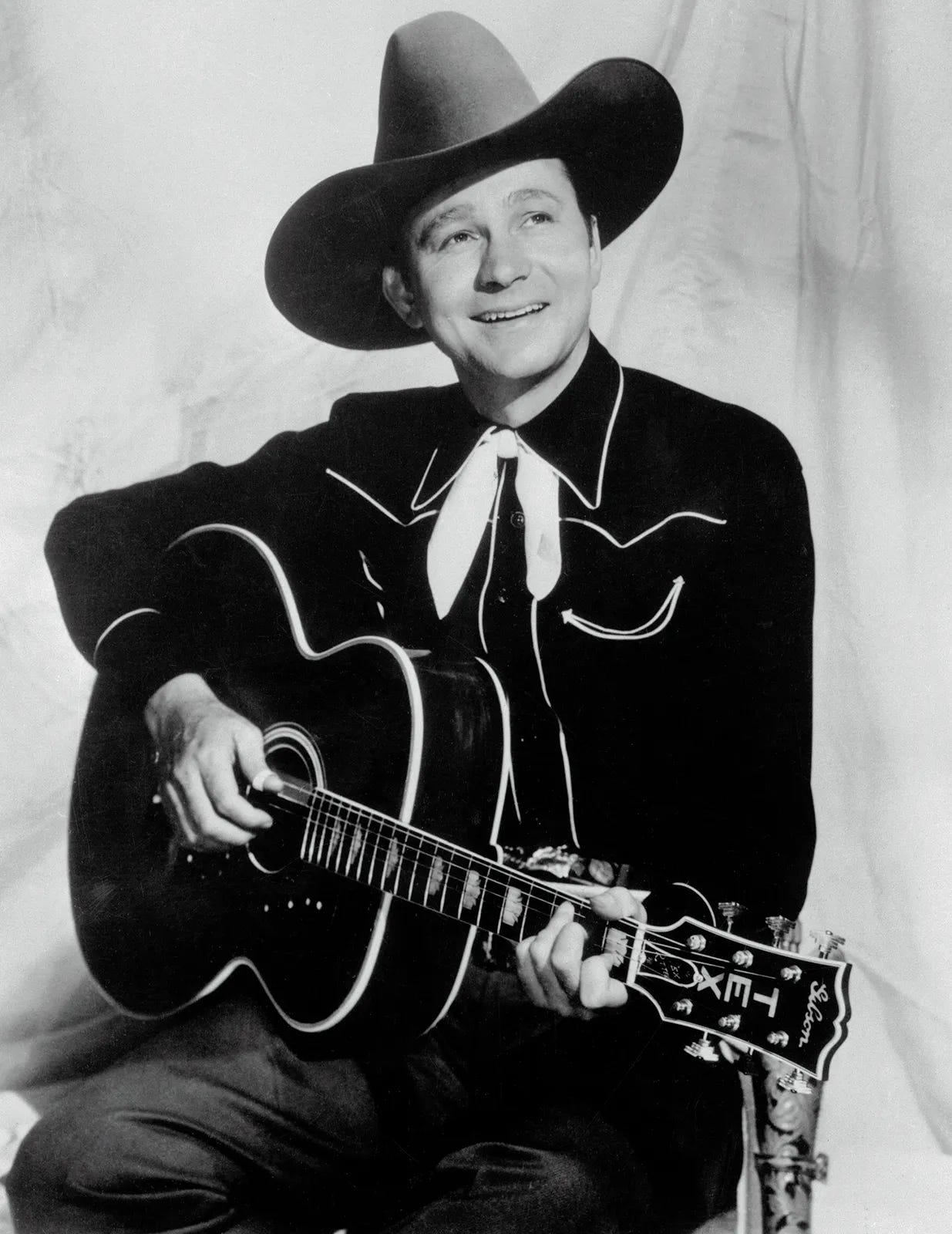
Tex Ritter, who audiences believed was a real hard-riding ranch hand, was actually a University of Texas political science major who did two years at Northwestern’s law school before dropping out to join an operetta company. His break came from a Broadway play, not a cattle drive. He later admitted he barely paid attention to what he was filming:
“We’d go out there and film all day, and we didn’t have any idea what the film was about... It wasn’t until I saw the movies in a theater that I knew what it was we were doing.”
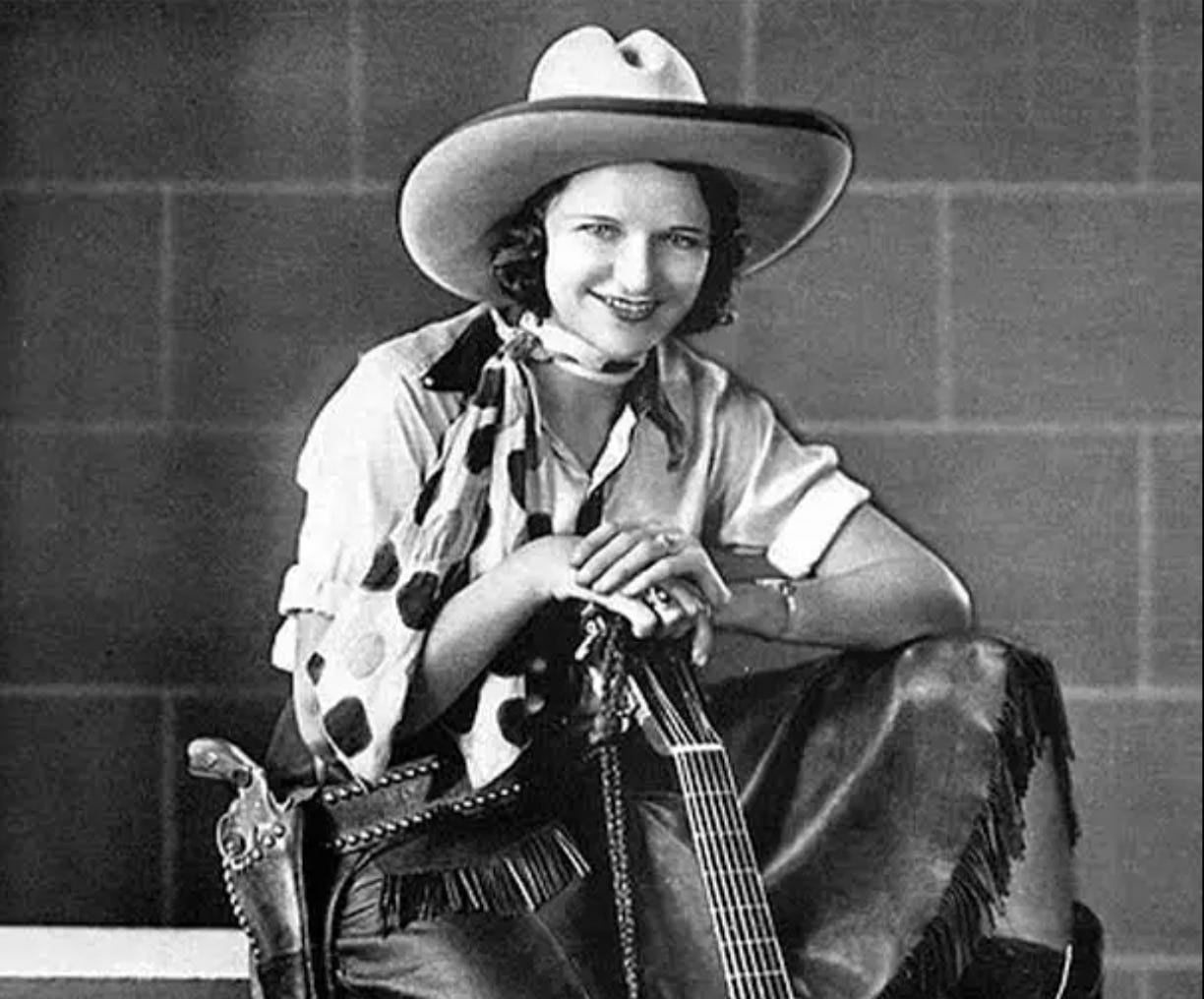
Patsy Montana, born Ruby Blevins in Hope, Arkansas, hadn’t set foot in California until she was college-age. Her signature song, “I Want to Be a Cowboy’s Sweetheart,” borrowed its melody from a 1933 novelty tune she’d heard Olive Oyl sing in a Popeye cartoon.
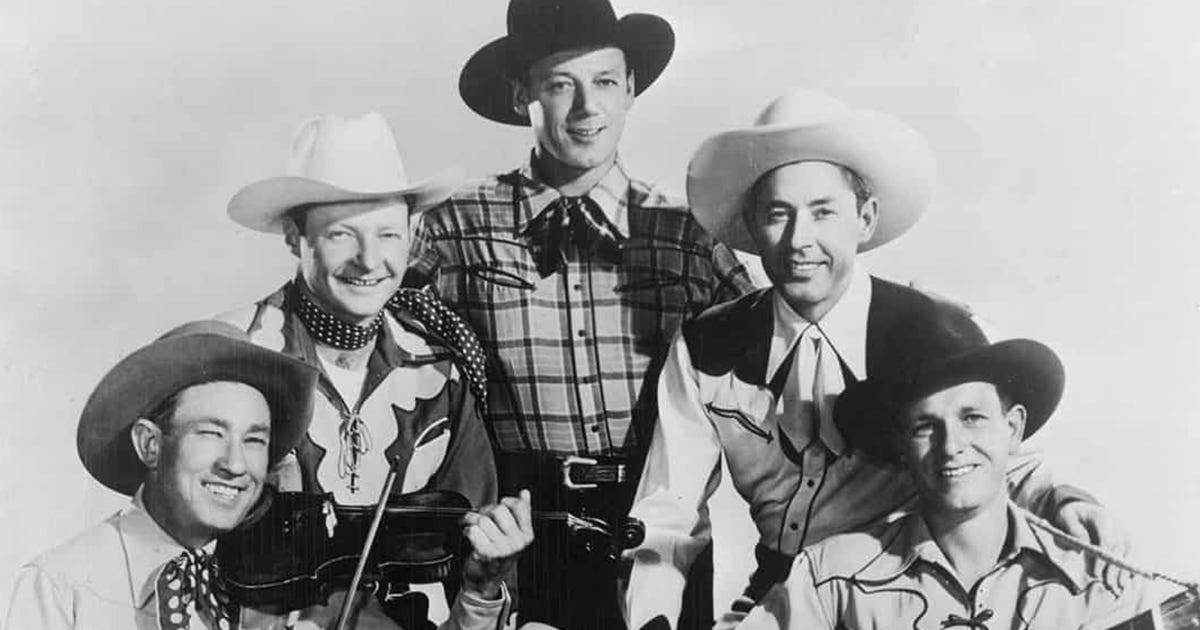
Even the Sons of the Pioneers, the group that basically invented the sound of the mythic West, was built by a Canadian and a shoe-factory kid from Cincinnati. Bob Nolan, their songwriter, later admitted the version of the West he’d spent his career singing about “never truly existed.”
Lavender cowboys and stuffed dogs
The genre leaned into its own absurdity more than people remember.
Autry himself got mocked onstage in his first starring feature, Tumbling Tumbleweeds, where ranch hands taunt his soft-voiced character as a “lavender cowboy.” Chicago publicity photographers once posed him holding a stuffed dog meant to represent a lost calf, cigarette lit, blowing smoke, despite the fact that Autry didn’t smoke and had never worked cattle in his life.
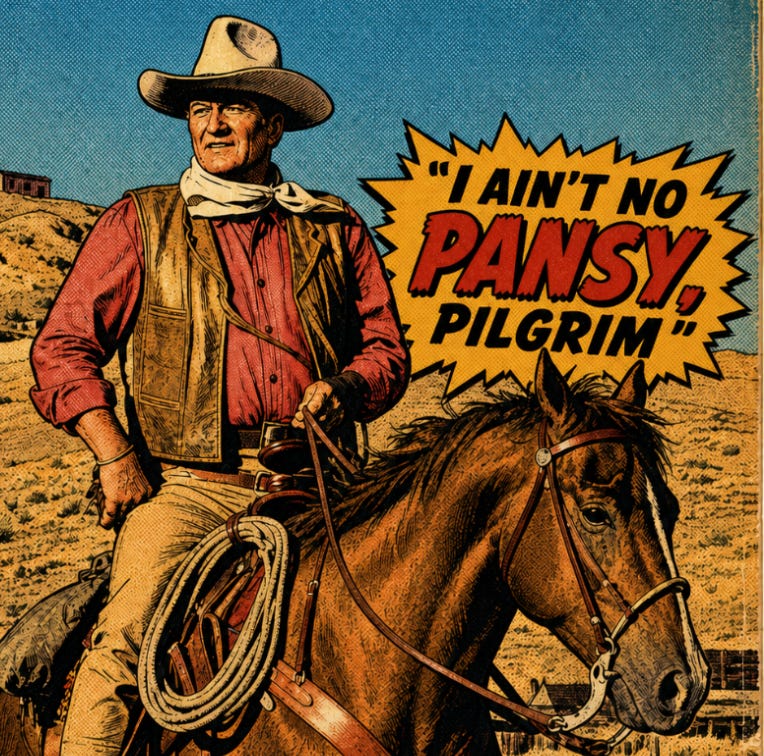
And John Wayne, forced into a singing gunfighter role in 1933 that got dubbed by another man’s voice, was so humiliated by it that he refused to touch a musical role again for the rest of his career, later saying the whole experience made him “feel like a goddamned pansy.”
What got buried
I’ll say this part upfront, because I don’t think I’ve ever hidden it: I love the rhinestones. The tailored satin, the piping, a suit that throws stage light back at the cheap seats from a hundred feet out. That’s not a guilty pleasure I’m confessing to. If you’ve ever tried to hold a room’s attention for an hour, you understand on a gut level why every one of these guys reached for the sparkle the second somebody handed them the option. Showmanship isn’t a betrayal of the music. It’s a skill. I’m not going to pretend otherwise just because this piece is busy debunking everything else about the era.
But loving the shine doesn’t mean pretending it came from nowhere, or that nobody paid for it.
Shifting the sound and imagery of country music away from the cotton mills, coal camps, and textile towns of the Southeast, and toward a romanticized open range, buried the real economic desperation the music had come out of. Overalls and work shirts, which stood for something real, got replaced with a really killer costume. But the costume stood for something just as real. I’ll reflect on this often in the future.
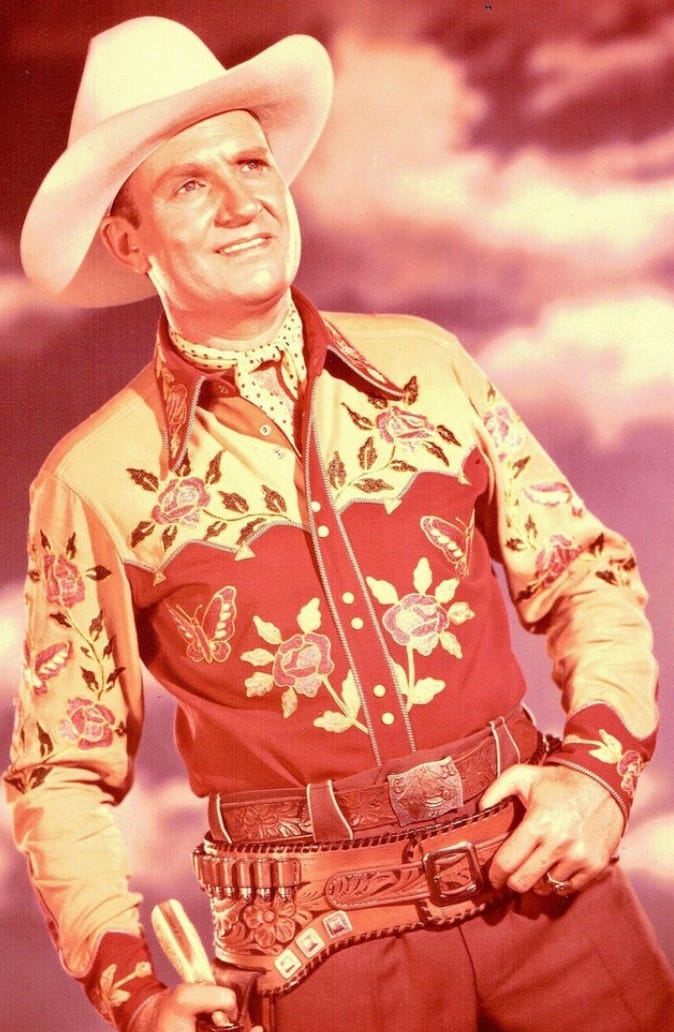
Gene Autry ended up owning a Major League Baseball team. That’s pretty cool. And though this article may have been started on the wrong note - Gene Autry was a gentleman and a legend. A great showman - something I have massive respect for.
But..
There’s one more story from this same stretch of road that I can’t stop thinking about: Tex Ritter, a drunk night outside New York, a Ford station wagon in a ditch, and a xylophone that ended up scattered across a stage in Worcester covered in mud.
That one deserves its own telling, though.
Later y’all, I’m tapped out on this one.
ABOUT THE AUTHOR:
My name is Zachariah Malachi. I’m a full-time, self-employed honky tonk musician in Nashville, Tennessee. This Substack Publication was created for the purpose of sharpening my mind on more Nashville and Country Music history to share with the honky tonk patrons downtown during my shows—but I wanted more folks to benefit from the research, so it’s my gift to the country music fans of the world AND the people who WANT to be. Subscribe and come along for the ride.
Thanks for doing this! I love country music and its history and really enjoy your work!
Love your posts. Luv em!!!!