


I. The Application
On Saturday night, February 15, 1997, around ten o’clock, a man walked into the Captain D’s on Lebanon Road in Donelson and asked about a part-time job.
He was tall and dark-haired, and by every later account he had an easy, friendly way of talking. He said he worked at a Shoney’s nearby. Two employees found him an application and told him the manager would be tied up until the middle of the next afternoon.
The man had one more question. Would anybody be there Sunday morning?
That is the whole scene. No thunder, no music cue. A seafood counter at closing time, a kid with a stack of job applications, and a stranger asking when the building would be nearly empty.
I have been around this town’s music business long enough to think I know the type on sight. New in town, or new enough. A day job in a kitchen and a stage name in his back pocket. Lower Broadway is full of them and so is every dish pit between here and Murfreesboro. I say that with love, because I have been some version of that guy. A lot of us have. You come to Nashville to be somebody else.
The man with the application had come here to be a country singer called Justin Parks.
His real name was Paul Dennis Reid Jr. By lunchtime the next day, two people would be lying dead on the floor of the walk-in cooler.
II. The First Life
He was born November 12, 1957, in Richland Hills, Texas, a suburb of Fort Worth, and the court record of his childhood reads like a list of things that can go wrong with a boy.
His parents split when he was three. His father repossessed cars for a living, drank, and was mostly gone. The boy landed with his father’s mother, who could not manage him. He was born with a deformed ear and bad hearing on that side. At five, another child hit him in the head with a brick. At eight, he was sent to a Catholic home in Houston for neglected boys. A mini-bike wreck fractured his skull in 1971. The Tennessee Supreme Court’s opinions also describe what he did, as a very small child, to his grandmother and to her dog. I read it. You can look it up. It is not the record of a child anybody was reaching.
At sixteen, his mother put him out of the house, after what the courts describe as attempted sexual assaults on members of his own family. From then on he was more or less on his own.
In 1982, Texas charged him with a string of armed robberies. He was found incompetent to stand trial and sent to a hospital. In 1984, he was tried anyway, convicted of aggravated robbery, and given twenty years. A Texas prosecutor testified later that Reid put on a show of craziness whenever the jury was in the room and dropped it the minute they filed out. Years after that - Reid bragged to a psychologist that he had fooled the doctors. Keep that in your pocket. It matters later, and nobody ever fully sorted it out.
Notice what he was robbing, too. Restaurants. That was the trade he learned in his twenties, long before he owned a cowboy hat.
Texas let him out in 1990 after seven years. He was paroled to Fort Worth and took a job driving a truck. Judith A. Yates, whose book When Nashville Bled is the fullest account of his life, puts the turning point at twenty past midnight on November 24, 1990, when a car struck his truck and sent it rolling. He drew workers’ comp into 1992 and came away with a settlement she puts at $25,000.
Here is what he did with the money. He went to Dallas and bought braces for his teeth. He had his nose done. He had his ears pinned back. He paid for a chemical peel to burn off the acne scars. A man who had spent his twenties in the Texas prison system was building himself a new face, because he had decided what the second life was going to be.
He was going to be a country star.
He had a name picked out. By Yates’s account, he gave his Fort Worth landlady a signed photograph of Justin Parks before there was any Justin Parks to speak of. He told her he would play the Grand Ole Opry someday. He sang at a little country bar in Chicago in 1993. He moved to Oklahoma City for a music school, worked in a bakery, cut a few demo tapes and bought expensive guitars.
Something else was going on in those years, and it belongs in the same paragraph as the guitars. Before he left Fort Worth, Yates writes, he wrote a thirteen-page letter explaining that the government had him under mind control and around-the-clock surveillance, stuffed copies into about four hundred envelopes, and handed them to strangers downtown.
So that is the man packing the truck. Straightened teeth, new nose, a stage name, a prison record, and a letter about the cameras in the walls. In the last week of September 1995, he pointed all of it at Tennessee.
III. Justin Parks
You have to remember what Nashville was in 1995. Country music was selling like it never had before and never would again. The labels were signing hat acts by the dozen, and every one of them was supposed to be the next Garth Brooks. The whole country had been told that a regular fella with a guitar could drive into this town and come out the other side a millionaire.
Paul Reid believed it. According to Yates, he had been telling people back in Texas that he was going to be the next Garth Brooks.
Her account of his arrival is the saddest thing in the whole file, if you can stand to feel sad about him. He answered a classified ad for a roommate and pulled up in a rented moving truck, ready to carry his things inside before anyone had said yes. He told the two men he had come to town to sing. Then he ran out to the truck, came back with a guitar, and played them a Garth Brooks song right there in the living room.
They did not take him as a roommate.
One of them did get him a job, though, cooking at the Shoney’s on Donelson Pike. That is where Justin Parks actually lived, when you get down to it. On the line at a Shoney’s, the first week of October 1995.
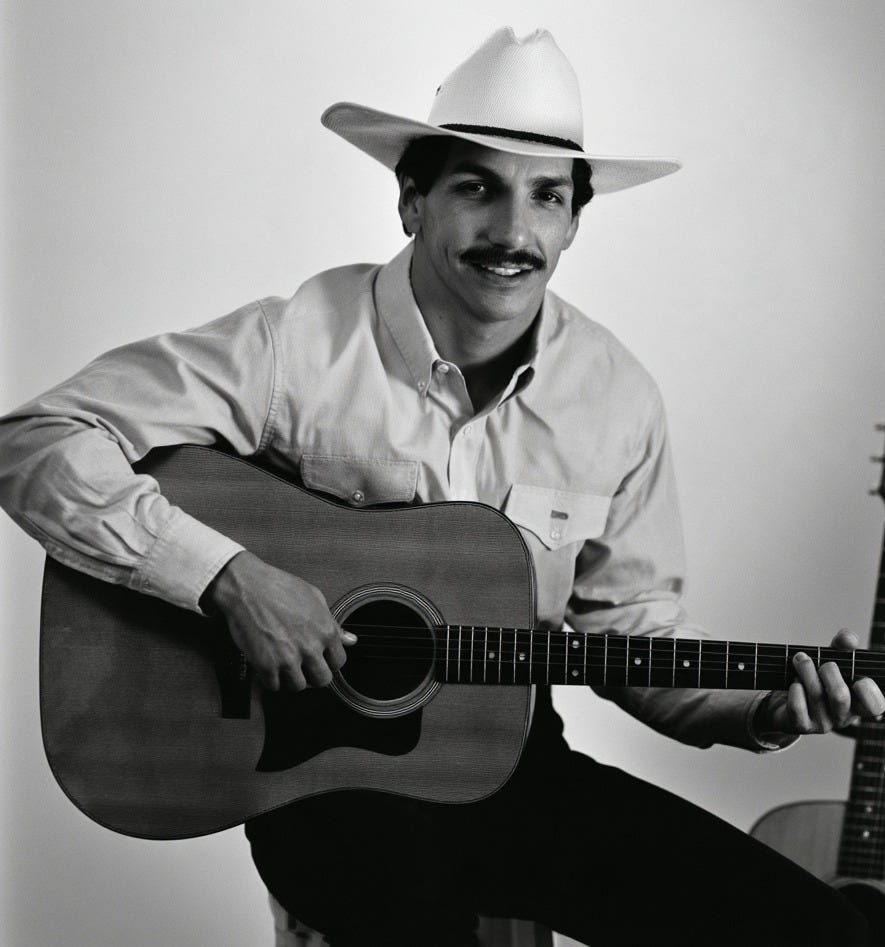
He worked at the dream. I will give him that much, because the record does. He had glossy eight-by-tens made: white cowboy hat, creased jeans, white shirt, an expensive Taylor guitar. He signed them Justin Parks. Yates noticed that in at least one of them you can read his real initials stitched on the shirt pocket. He rented time at a local studio and cut demos, including Garth’s “Rodeo.” He told the boss he had an audition out at Opryland and came to work a few days later with his head down, saying it had not gone well. Next time, he said.
There was not going to be a next time. Everybody who heard him says the same thing. The man was half deaf in one ear and could not find the note. Pat Postiglione, the Metro homicide detective who eventually put him away, told an interviewer years later that Reid could not carry a tune and still believed strangers recognized him in the grocery store.
In 2003, a reporter for the Associated Press sat across from Reid on death row, and Reid told him he had not understood how many other people were in Nashville chasing the same break, or how hard it was going to be.
That is the most ordinary sentence in the entire case.
Most people that move to town find out they are made of something decent. They go back to work. They write another song or they quit and go home, but either way nobody gets hurt.
Reid went back to Texas for most of 1996 and filed for bankruptcy. Yates reports the filing listed $2,150 in assets against $21,436 in debts. The settlement was gone. He came back to Nashville around New Year’s, slept at a coworker’s place, then took a room in an old cut-up house on Ordway Place in East Nashville with a shared bathroom down the hall. He moved in his guitars.
On paper, the second life now looked like this. He was thirty-nine. He took home about $120 a week from Shoney’s. His checking account ran between $134 and $803 that winter. He had enrolled at Volunteer State Community College in Gallatin, where he was making A’s in remedial reading and writing and telling people he was pre-law.
And in the kitchen, he had started to talk. His best friend there was a coworker named Danny Tackett, who called Reid’s money situation desperate. Reid asked Tackett and another cook how a man might go about robbing a fast-food place at night, when there would be no witnesses. He asked them to help him get a pistol. He went to a pawn shop and picked out a .32 revolver.
I set out to write this as the story of a failed music career, and I need to be straight with you about how far that takes us. The dream dying did not make Paul Reid a killer. He was sticking up restaurants in Houston before he ever owned a stage name. What Nashville’s indifference did was run out his money.. which it’s famous for doing, now.
When the money ran out, he went back to the one trade he had ever really practiced. This time he meant to leave nobody behind who could pick him out.
IV. The Cooler
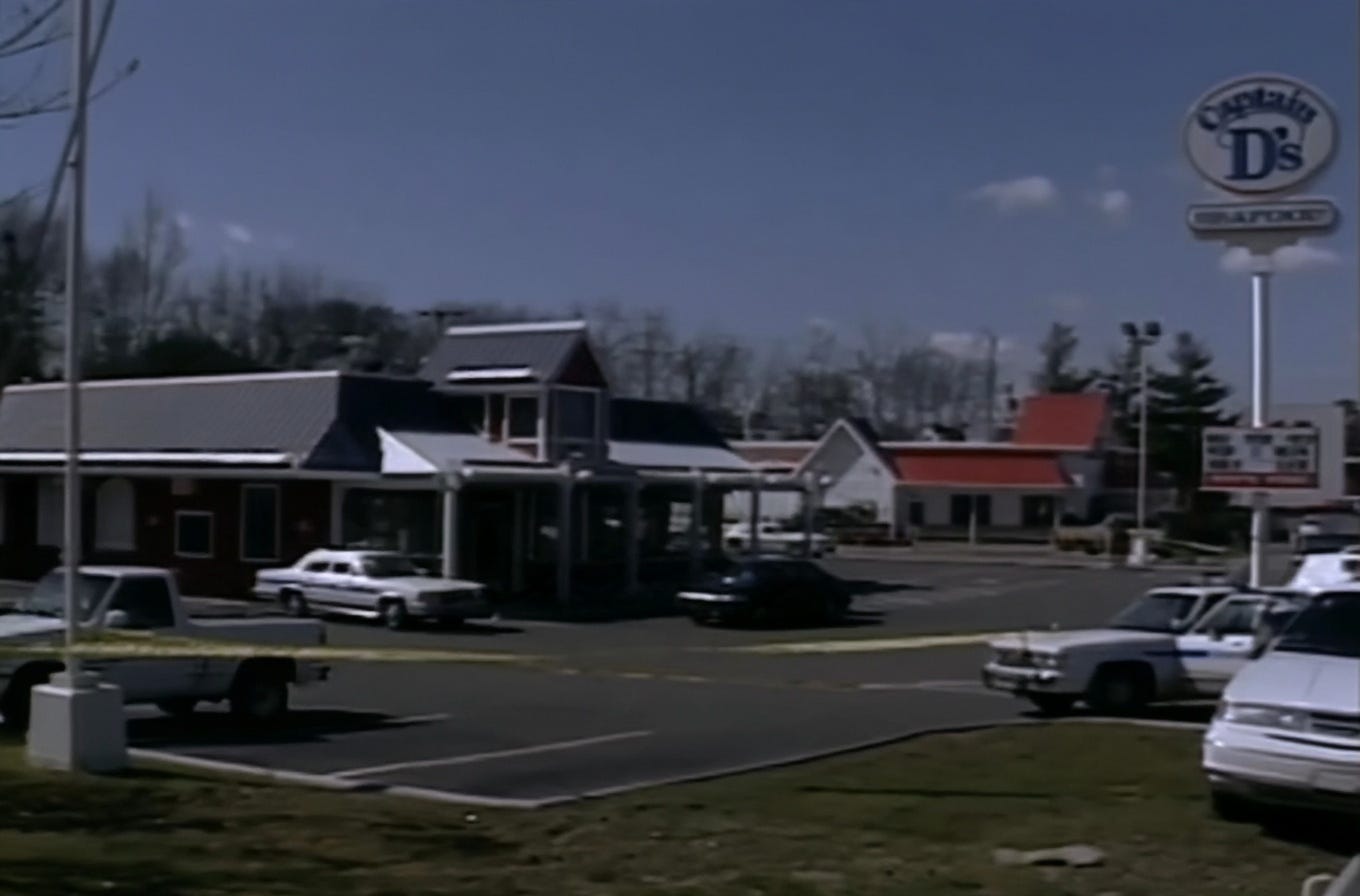
Steve Hampton was twenty-five and managed the Captain D’s on Lebanon Road. He had a wife named Deanna and three children, and on the morning of Sunday, February 16, 1997, he had six hundred dollars in his wallet that was supposed to be the rent.
Sarah Jackson was sixteen. She would have turned seventeen on Tuesday. She went to high school and worked part-time, and Yates, who talked to the people who loved her, says she was a first baseman other softball teams wanted to borrow, and that she had begged her parents for the job because she wanted a car.
The two of them were getting the place ready to open. The area director called the store sometime between a quarter past eight and eight-thirty and talked to Steve. Everything was fine.
Around ten minutes to nine a woman driving to church glanced over and saw Steve standing in the doorway, talking to a dark-haired man several inches taller than he was. The man was holding a sheet of white paper.
The application.
About nine-thirty another driver saw a man hurry out of the restaurant to a small car. Their eyes met and the man looked away. A little before ten an employee showed up for his shift and found the doors locked. He called the store and got a busy signal.
Sometime between eleven and noon a Metro officer went in. They were in the walk-in cooler, face down on the floor. I am not going to walk you through the medical examiner’s testimony. I will give you one piece of arithmetic from it. The gun was a .32 revolver, the kind that holds six rounds. Eight shots were fired. Somewhere in the middle of it, he stopped and reloaded.
He left with $7,140, including $250 in coins, and Steve Hampton’s wallet with the rent in it.
Now watch what the singer does with the money.
Two days later, on February 18, he walked into a car dealership and put down $2,000 in cash on a new red Ford Escort. Two days after that he paid the remaining $3,127.92, also in cash. He was carrying a lot of five-dollar bills. He told the salesman his father was helping him out. He mentioned to a man at his gym that he had a few thousand dollars he was looking to invest.
And there is this. On Monday, February 17, the day after the cooler, a mother was walking her boys around the lake at Dunbar Cave State Park in Clarksville, an hour northwest of Nashville. They passed a man in a cowboy hat pulled low and sunglasses. He was playing a guitar and singing country songs to nobody.
She and her son later picked Paul Reid out as that man. Neither would swear to it a hundred percent, and Reid’s lawyers produced a class roster that had him signed in at Vol State in Gallatin until ten past noon that day. I cannot tell you it was him. A jury heard it and you can weigh it yourself.
Remember the name of that park.
V. The Storeroom
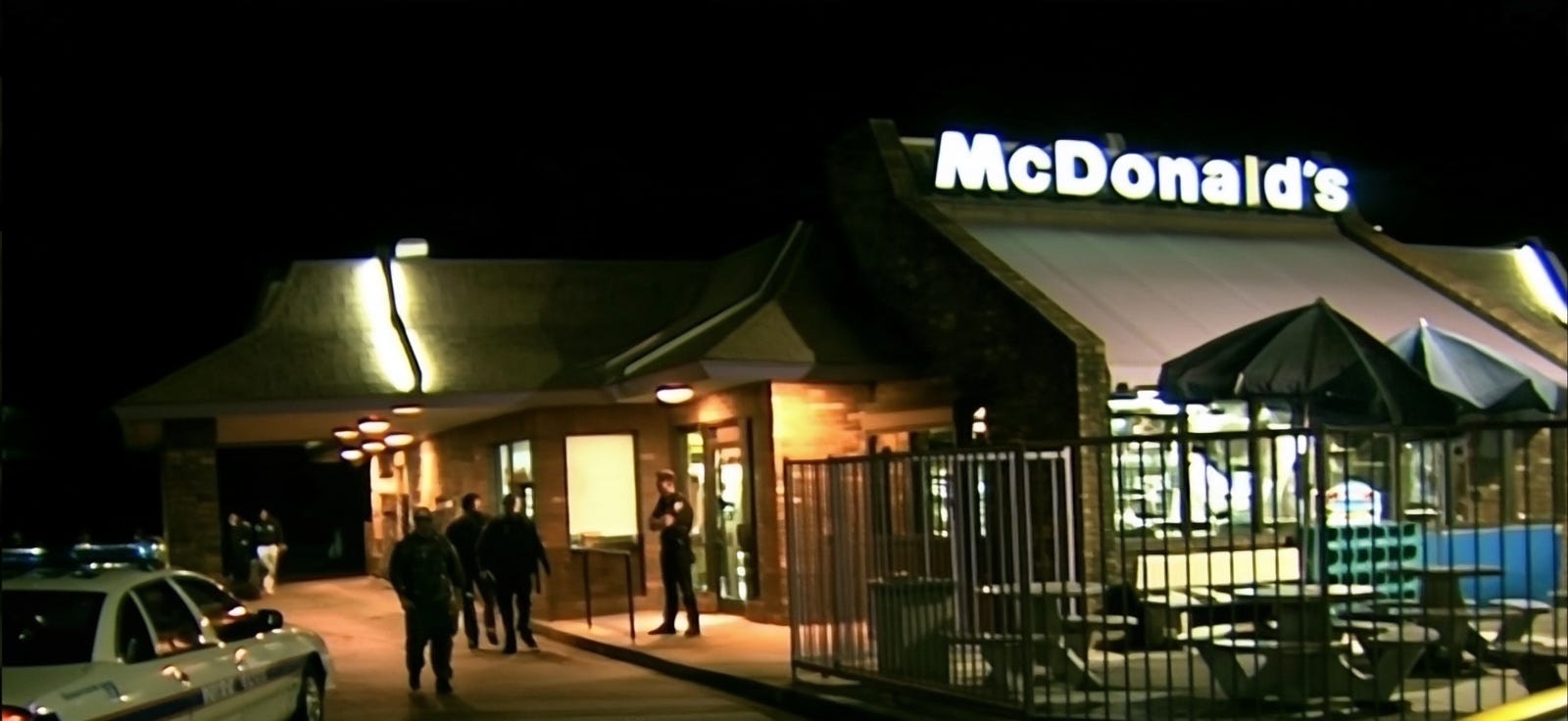
Five weeks later, Sunday night, March 23. A McDonald’s in Hermitage, a few miles up the road from the Captain D’s.
Ronald Santiago, twenty-seven, was not supposed to be there. By Yates’s account it was his day off, and he had come in to cover for a manager who was sick. Robert Sewell Jr., twenty-three, had thought about calling out himself and came in because he had a new man to train. He was planning to see Star Wars the next day. Andrea Brown was seventeen, a student at Hume-Fogg, working a spring break shift to pay for a used Honda. She was going to get the license plates for it Monday morning. The new man was Jose Ramirez Gonzales. It was his third day. He did not speak English.
They had clocked out and locked up. They were walking out the side door when a tall man with a gun was standing there.
He took them back inside. Ronald opened the safe and handed over the money, about three thousand dollars. Then the man walked all four of them into a storage room and told them to lie face down on the floor. He said he was going to leave.
He shot Ronald, Andrea and Robert. When he turned the pistol on Jose Gonzales, it jammed.
So he used a knife. Seventeen times. Then he kicked him. And Jose Gonzales, three days into a new job in a country whose language he could not yet speak, held his breath and lay still on that floor until the man was gone.
Then he dragged himself to a telephone. Yates has the 911 call logged at one minute past midnight. The operator could not understand him. They traced the line, and the first officer pulled in three minutes later.
He lived. He sat with a police sketch artist. He looked through more than three hundred photographs. Three years later he pointed across a courtroom.
VI. The Cave
One month later, on Wednesday, April 23 -A Baskin-Robbins on Wilma Rudolph Boulevard in Clarksville.
Angela Holmes was twenty-one and managed the store. Everybody called her Angie. Michelle Mace was sixteen. The last customer finished her ice cream while the two of them mopped, and she checked her watch on the way out the door. It was 9:58. She believed Angie locked the door behind her.
A few minutes after ten, Michelle’s brother Craig pulled into the lot. The outside lights were off. Angie’s car was still there. He tried the front door and it opened. Lights on in the back. The freezer door standing wide. Both of their purses sitting in the office. Both registers empty.
The store had taken in $1,165.58 that day.
The next morning a man walking his dog at Dunbar Cave found Angie Holmes at the edge of the lake. A police officer found Michelle Mace in the woods a short way off. He had used the knife on both of them, and that is all I am going to say about it.
It was the same park. The same lake where, two months before, a woman and her little boys had walked past a man in a cowboy hat who was singing.
Add it up. Seven people dead, three of them teenagers. An eighth cut to pieces and alive by his own nerve. The three tills together came to less than twelve thousand dollars. About sixty-six days, start to finish.
VII. The Man Who Wanted His Job Back
That spring, parents in Middle Tennessee made their kids quit their fast-food jobs. The Associated Press reported it and Yates heard the same from the people who lived it. Think about what that means in a town like this one. The closing shift at a burger place is where half of Nashville’s teenagers earn their first car and a good many of its songwriters earn their rent. For two months, nobody wanted to be the last one to lock that door.
A police sketch from the Captain D’s case got pinned to the break room bulletin board at the Shoney’s on Donelson Pike. Shoney’s owned Captain D’s. The crew stood around looking at it.
The ending came from that same Shoney’s.
Reid had lost the job there, and I have to tell you the sources do not agree on how or when. The Associated Press reported in 2003 that he was fired on February 15, the day before the Captain D’s murders, for throwing a plate that hit a coworker. Yates tells the same plate story but dates it February 27 in one chapter and February 15 in another. The Tennessee Supreme Court, summarizing sworn testimony, says only that he quit in early February with no other job lined up. I do not know which is right. Somebody threw a plate, and by the end of that month he no longer cooked at Shoney’s.
The manager was Mitch Roberts. On a Sunday night at the start of June, Roberts was at home in Joelton, out in Cheatham County, with his wife and kids. His little boy had the camcorder out, filming the family dog, which was old and sick. There was a knock.
The boy swung the camera toward the storm door. Paul Reid was on the porch, smiling through the glass. When he saw the lens he grinned and waved at it.
He said he had come to talk about getting his job back. Roberts walked him out toward his car to see him off. That is where Reid brought out a pistol, and a pair of handcuffs, and told Roberts to put them on. Roberts told a Nashville television station years later that Reid meant to cuff him and put him in the car.
Roberts did not put them on. He turned his back on a man holding a gun and a long knife and walked to his own front door. He got inside ahead of him, held the door shut, and hollered for his wife to hand him the gun.
There was no gun in that house. Reid ran anyway.
What happened next, by Yates’s account, is so strange I read it twice. While deputies were still in the living room taking statements, the telephone rang. It was Reid, calling to apologize. He said he had lost his head. He asked if Mitch could forgive him. With an officer mouthing instructions, Roberts told him to come on back and they would talk about the job.
Reid said great. He thanked him. He caught a ride with a neighbor from the rooming house, and forty-five minutes later he rode up Mitch Roberts’s driveway in the passenger seat of a pickup truck, into every deputy Cheatham County could find.
Once they had his picture and his fingerprints, it came apart fast. Witnesses from the Captain D’s recognized him on the television news. A thumbprint on Steve Hampton’s video rental card, found on the shoulder of Ellington Parkway about a mile from Ordway Place, was his. Fibers on Angie Holmes’s and Michelle Mace’s clothing were consistent with the seats and floor mats of the red Escort. There was blood on one of his shoes. A Texaco receipt with his signature put him at a gas pump near Clarksville at a quarter to ten on the night of April 23.
In his room, police found four one-gallon jugs holding more than a thousand dollars in coins.
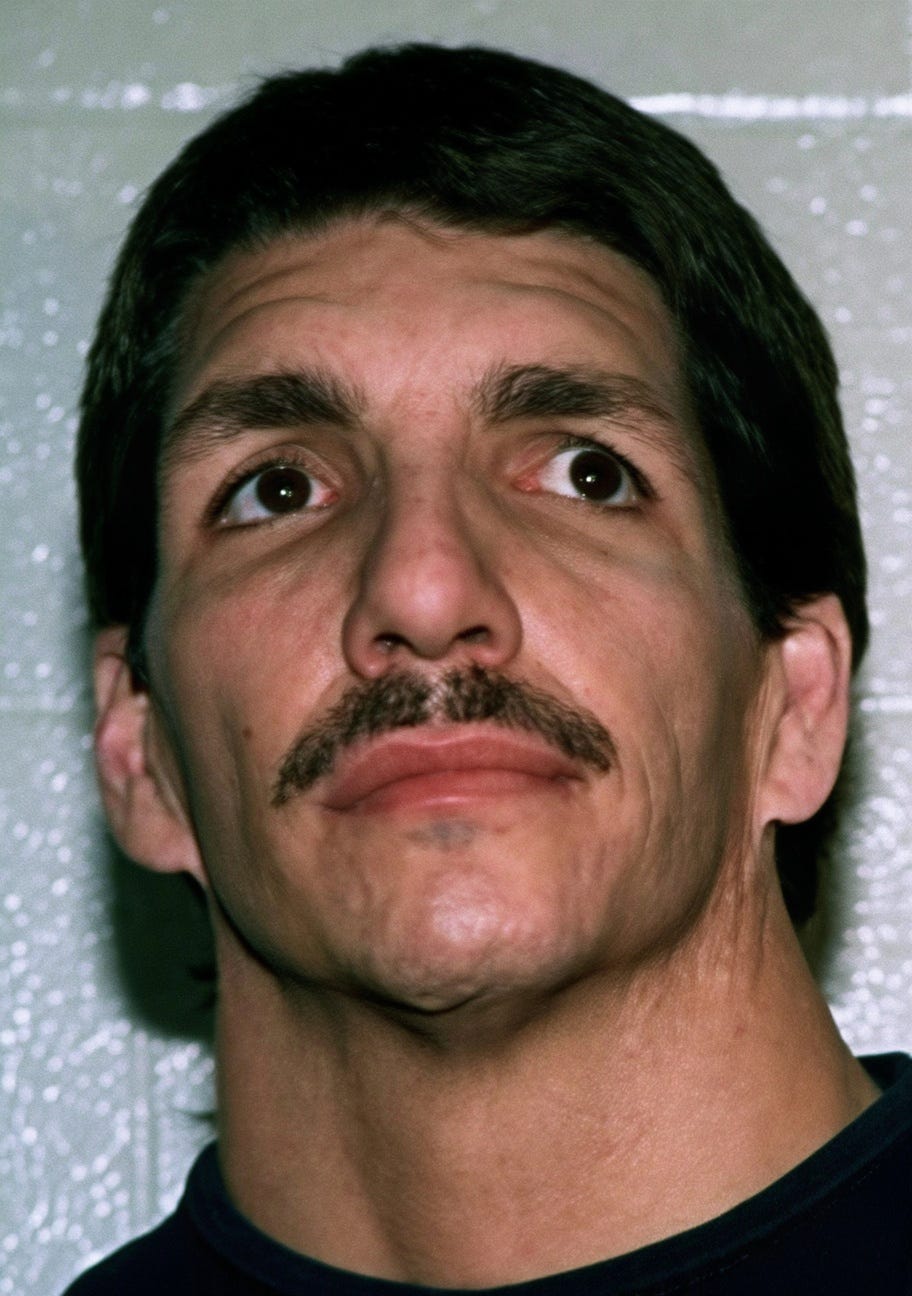
When the time came to walk him past the television cameras, the officers told him he could put a jacket over his head or turn his face to the wall. He declined. According to the court record he said, in effect, that this was going to be the Paul Reid trial. Postiglione says he took to calling it the trial of the century.
He had come to Nashville to get somebody to look at him. Now every camera in town was pointed at his face, and he held it up for them.
VIII. Scientific Technology
They tried him three times, once for each restaurant.
A Nashville jury convicted him of the Captain D’s murders in April 1999 and gave him death twice over on April 20. A Clarksville jury convicted him that September for Angie Holmes and Michelle Mace and returned two more death sentences on September 22. The McDonald’s trial came last. On May 27, 2000, with Jose Gonzales having looked him in the face from the witness stand, he got three more.
Seven death sentences.
The question that ate the next thirteen years was whether Paul Reid was insane, and I am not going to pretend the record settles it.
Here is one side. His brain scans showed damage to the left temporal lobe. Defense doctors diagnosed psychosis tied to that damage, and one called it paranoid schizophrenia. He said a government agency he called Scientific Technology had been watching him since his prison years in Texas, recording his thoughts and making his body itch and twitch. He said his trials were staged and his own lawyers were actors. He said his death sentence was secretly a term of ten or twelve years. He spoke of a fiancee named Susan whom the doctors concluded did not exist. And remember the four hundred envelopes in Fort Worth. Whatever this was, he had been saying it since before he ever saw Tennessee.
Here is the other side. The State’s expert diagnosed an antisocial personality and said Reid had planned these crimes and cleaned up after them. He scouted the Captain D’s the night before with a job application in his hand. Postiglione noticed that he locked the safes and locked the buildings behind him so the places would simply look closed. There was the Texas prosecutor’s story about the act he put on for a jury in 1984, and there was his own boast about fooling the doctors. More than one evaluator in Tennessee concluded he was faking at least some of it.
Maybe both things were true. A man can be sick and still know exactly what he is doing when he asks whether anybody will be there Sunday morning.
In April 2003, he announced he was done appealing. The State set the execution for one in the morning on April 29. Sarah Jackson’s mother, Gina, made plans to be there as a witness. A few hours before, one of his sisters got a federal court to stop it, and Reid signed papers to start his appeals back up. Gina Jackson told the Associated Press the families had been jerked around. I’d say she was right.
That was the next ten years. He would drop the appeals, a sister would file to say he was not competent to drop them, a date would be set and stayed. In January 2013, the Tennessee Supreme Court finally ruled that his family had not proved he was incompetent, and that nobody could appeal for him against his will.
It did not matter. On November 1, 2013, at 5:55 in the evening, Paul Dennis Reid Jr. died in a bed at Nashville General Hospital, eleven days short of fifty-six. The State listed it as natural causes.
Andrea Brown’s father, Doyle, the man who had promised her those license plates, gave the Associated Press three words. “Glad he’s dead.”
Yates adds one more thing about those prison years, and I believe it, because it is exactly who he was. When he first came onto the row, he sang for the other inmates. Country songs. The whole tier yelled at him until he quit.
IX. What the Town Hears
Nashville sells one product above all the others, and it is the second life. Come here and be somebody new. Leave the name your daddy gave you at the county line. We have a whole street of neon built on that promise, and I am not knocking it, because it worked on me and I do it. Again, and again.. and again.
But the town says no to nearly everybody. That is the part the brochures leave out. Go into any pawn shop in Davidson County and look at the wall of guitars, and understand that every one of those is somebody’s Justin Parks. Thousands of people come here, get told no, and take it. They go back to the grill. They close the store at eleven and drive home tired. The kitchens of this city have always been full of people the business did not want, working next to high school kids saving for a Honda.
That is who he killed. It was his own coworkers, more or less. The people on the closing shift.
I wanted there to be a clean line from the failed demo to the walk-in cooler, because it would make a better song. There is not one. The plain facts are that he robbed restaurants before he sang and he robbed restaurants after, and the singing was a costume he wore in between. New nose, white hat, his own initials showing under another man’s autograph. Nashville did not turn him into anything. It just declined to buy the disguise, and what was underneath it had been there since Texas.
What I cannot shake is the lake. A man in a hat and sunglasses, the day after, playing to the trees. If that was him, then the only real audience Justin Parks ever held was a woman hurrying her children past.
Justin Parks never got past a few cassettes cut in a rented booth. Nobody needs to hear them. The names worth knowing from the spring of 1997 are these:
Steve Hampton, 25.
Sarah Jackson, 16.
Ronald Santiago, 27.
Andrea Brown, 17.
Robert A. Sewell Jr., 23.
Angela Holmes, 21.
Michelle Mace, 16.
And Jose Ramirez Gonzales, who lay still, and lived, and told.
ABOUT THE AUTHOR:
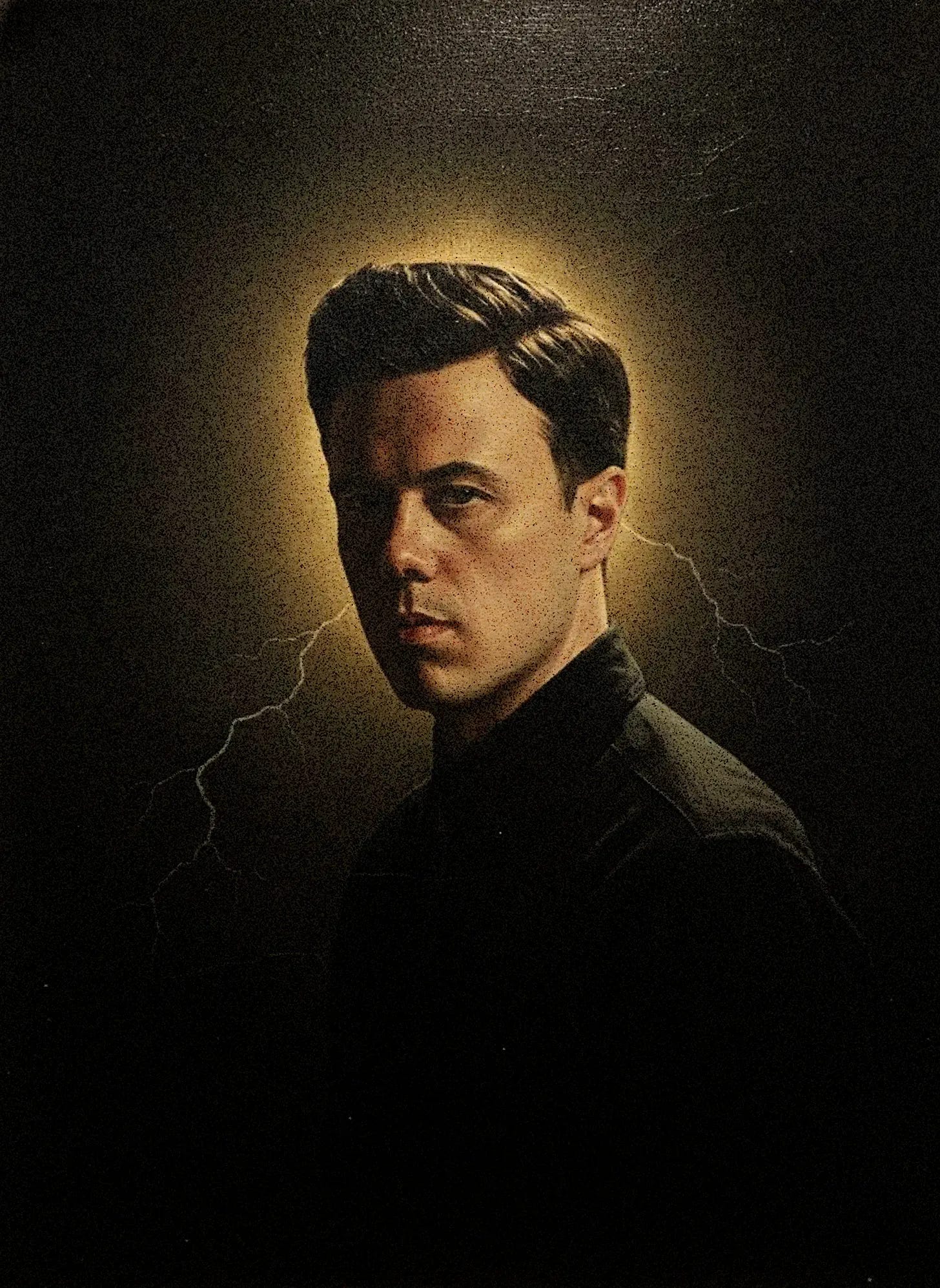
My name is Zachariah Malachi. I’m a full-time, self-employed honky tonk musician in Nashville, Tennessee. This Substack Publication was created for the purpose of sharpening my mind on more Nashville and Country Music history to share with the honky tonk patrons downtown during my shows—but I wanted more folks to benefit from the research, so it’s my gift to the country music fans of the world AND the people who WANT to be. Subscribe and come along for the ride.
At the risk of sounding heinous, I'm kind of surprised this doesn't happen more often.