


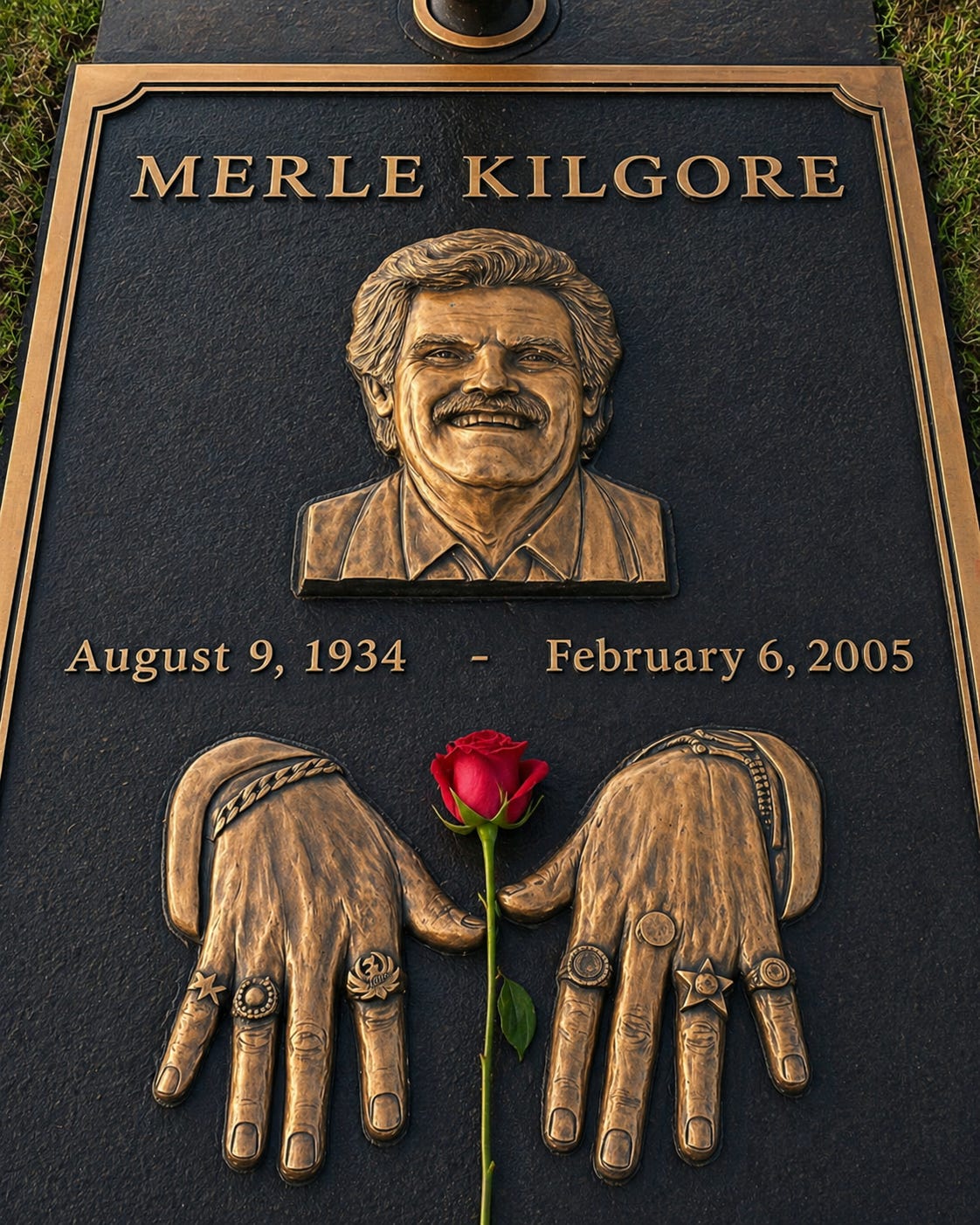
There is an obvious reason why this photo was chosen as the cover of this article - and it’s the same reason why they chose this to be Merle Kilgore’s monument at his place of rest. He was a special individual. Unique, cool, and forever memorialized as ONE-OF-A-KIND.
There’s a particular kind of country music figure who never quite becomes the headline but somehow ends up in every photograph. The guy at the edge of the frame, holding a guitar that isn’t his, laughing at something the star just said. The guy whose name shows up in the parentheses on the back of the record — (Carter–Kilgore) — and who you’d swear you’ve never heard of, even though you’ve been singing his songs since you were old enough to spin a radio dial.
Merle Kilgore was that guy. Then he kept being that guy for fifty years, until eventually being that guy made him one of the most quietly consequential figures in the history of country music.
I’ve loved Merle Kilgore’s presence in country music history for as long as I’ve been paying attention to country music history. He’s one of those figures I’ve always been fascinated by — every time he turned up in an interview, or somebody else turned up telling a story about him, I’d lean in. He seemed, by every account, like the coolest person you could possibly have around. The best demeanor. Warm, funny, loyal, unhurried. Some people just have an aura, and Merle had one.
This is the ballad of Wyatt Merle Kilgore — songwriter, sideman, Cadillac salesman of the Nashville dream, deputy sheriff of the Hank Williams legacy, and the man who turned a story about his own uncle into a number-one record about a fictional mountain in Arkansas.
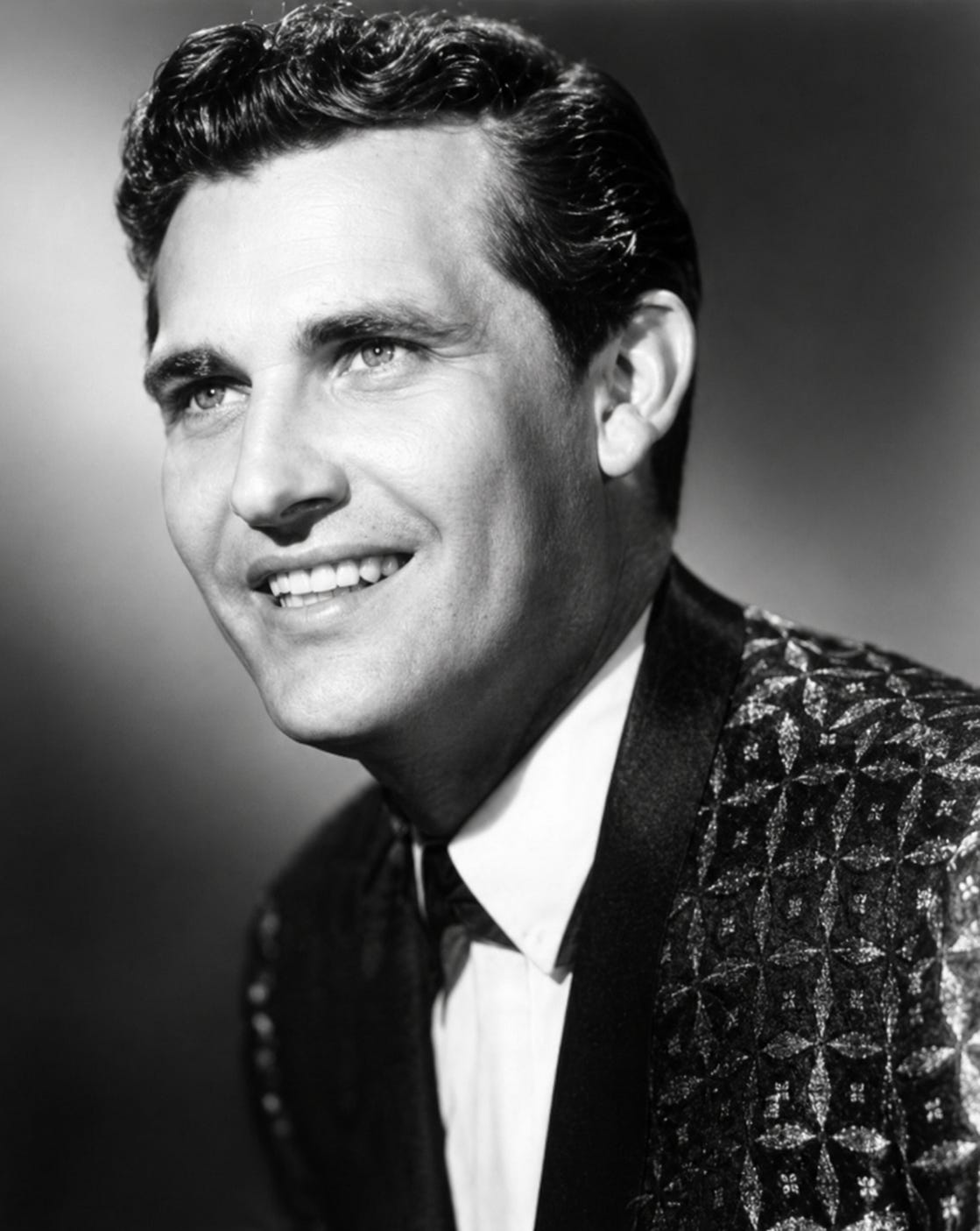
This image screams “Country Music Star”, really. Look at that jacket pattern and that million dollar grin.
A Shreveport boy with a guitar that wasn’t his
Kilgore was born in Chickasha, Oklahoma in 1934, but the city that made him was Shreveport, Louisiana. His family moved there when he was a kid, and Shreveport in the late 1940s was about as good a place to grow up country as has ever existed in this country. KWKH was beaming the Louisiana Hayride across the South every Saturday night, the Hayride was the place a young Hank Williams went to make himself before Nashville would have him, and a teenage Merle Kilgore was right there, standing in the wings.
The story everyone tells — and Kilgore told it often, because it was true and because it was the best opening line a country songwriter could ever have — was that at fourteen years old he carried Hank Williams’ guitar. He wasn’t a roadie, exactly. He was a kid who hung around the radio station, made himself useful, and one night was handed the most important six strings in country music and told to walk them to the stage. He never really put them down again. That single moment is the seed of almost everything that follows in his life. He spent the rest of it tracing a circle back to Hank.
By the time he was sixteen he was on the Hayride himself. He recorded for small labels through the 1950s. He cut sides for Imperial and then Starday, then signed with Mercury. He was a presentable, broad-shouldered baritone — the kind of voice that could fill a honky-tonk but never quite raise the hair on the back of your neck the way Hank’s could. He had a few minor regional hits. What he had in larger supply, and what would actually pay the bills for the rest of his life, was an ear for a song.
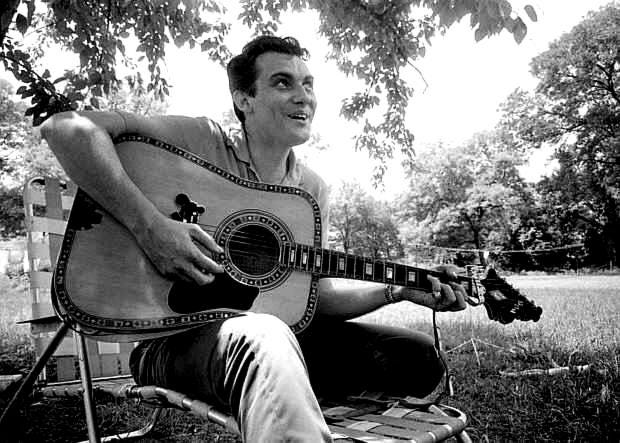
Any country music nerd would understand why I was nerd out about this photo. Look at that GAY guitar. No, that’s the name of the Canadian guitar luthier.. Frank Gay. But look at that wild guitar. Webb Pierce, Faron Young, Carl Smith, Johnny Horton, Johnny Cash, Hank Snow - and a few others had instruments made by Frank Gay.
The hits he wrote for other people
In 1958, a young Johnny Horton — also a Hayride alumnus — recorded a Kilgore song called “Johnny Reb.” It was the kind of Civil War narrative ballad that Horton was specializing in around then, and it became a top-ten country hit and a top-twenty pop hit. Kilgore had landed his first big one as a writer.
Two years later, Webb Pierce took Kilgore’s “More and More” up the country charts. It was the second proof that the kid from Shreveport could write for other people’s voices as well as his own. By 1960 he had decided, the way smart songwriters always decide eventually, that the bigger paycheck was on the back of the album, not the front.
Then came the mountain.
Wolverton Mountain (and the uncle who actually lived there)
In 1962, Kilgore’s cousin Claude King — a fellow Shreveport country singer — recorded a song called “Wolverton Mountain” that Kilgore had written with his frequent collaborator Claude King himself. It went to number one on the country charts, stayed there for nine straight weeks, and crossed over into the pop top ten. It was the biggest country record of the year. It made Claude King a star and made Merle Kilgore a name that publishers in Nashville started taking calls from.
The song was about a man warned not to go up Wolverton Mountain to court the daughter of Clifton Clowers, who would shoot any boy who dared. The arrows of the song are pretty squarely aimed at folk-ballad territory — there’s a frontier echo to it, a Davy Crockett warning. But here is the wonderful, very Merle Kilgore part: Clifton Clowers was real. He was Kilgore’s uncle, an actual man who lived on an actual mountain in Conway County, Arkansas. Wolverton Mountain itself isn’t a real geographic feature, but Woolverton Mountain is — Kilgore just changed a letter — and Uncle Clifton was up there, ornery and protective of his daughter, exactly as advertised.
This will turn out to be a Merle Kilgore signature: take something real, give it just enough lift to become a tall tale, and let everyone argue afterward over which parts were true. He once said his uncle, by then in his eighties, started getting fan mail.
Ring of Fire
If “Wolverton Mountain” was the hit that paid the rent, the song that paid for the house — and the house his children grew up in, and probably some of the houses after that — was “Ring of Fire.”
The story, in the version Kilgore liked to tell, was that he was on the road in 1962 with June Carter, who was at the time tangled up in the messy, painful, not-yet-public middle of falling in love with Johnny Cash. Cash was still married to someone else, was deep in pills, was the kind of love affair that scares the people around it. June was working through what she was feeling, the way songwriters do, by trying to put it into words. She and Kilgore were in a car, or a hotel room, or a backstage hallway — the version shifts depending on the year you got it — and “Ring of Fire” came out of that conversation. June’s image of love as a burning, consuming, falling-down thing; Kilgore’s craftsman’s instinct for the line that locks the verse into place.
The song was first recorded by June’s sister Anita Carter in 1962 as “(Love’s) Ring of Fire” and didn’t move much. Cash heard it, said he had a dream about it with mariachi horns, and recorded his now-iconic version in March of 1963. It hit number one country, top twenty pop, became the best-selling single of his career to that point, and is, by any reasonable measure, one of the half dozen most famous country songs ever written.
The credit on the label, then and now: Merle Kilgore and June Carter.
There has been, over the decades, an occasional revisionist whisper that Cash himself wrote more of the song than the credit suggests, or that June wrote it alone about him. Kilgore would politely roll his eyes at that. June Carter Cash, who was alive long enough to be asked directly many times, was unwavering: she and Merle wrote it. He was her co-writer; he was also one of her closest road friends, going back to the Hayride days. Nobody who knew the two of them doubted it.
That song alone would be a career. For Kilgore it was a third act.
Hollywood, briefly
Somewhere in here Kilgore figured out he had a face for movies. He was tall and warm and looked like exactly what a Hollywood casting director thought a country singer should look like. In 1966 he turned up in Nevada Smith opposite Steve McQueen. He had a small part in Five Card Stud. Later he played the part he was probably born to play: he portrayed Hank Williams Sr. in Coal Miner’s Daughter, the 1980 Loretta Lynn biopic with Sissy Spacek and Tommy Lee Jones. It is a small scene. He’s onstage at the Hayride. The kid in the audience, watching him, is supposed to be the future Loretta. Kilgore — who really had stood backstage at the real Hayride and watched the real Hank Williams thirty years earlier — got to put on the white suit and become him for a few minutes. There are not a lot of jobs in country music more poetic than that one.
He also turned up in Roadie with Meat Loaf, because the seventies were like that.
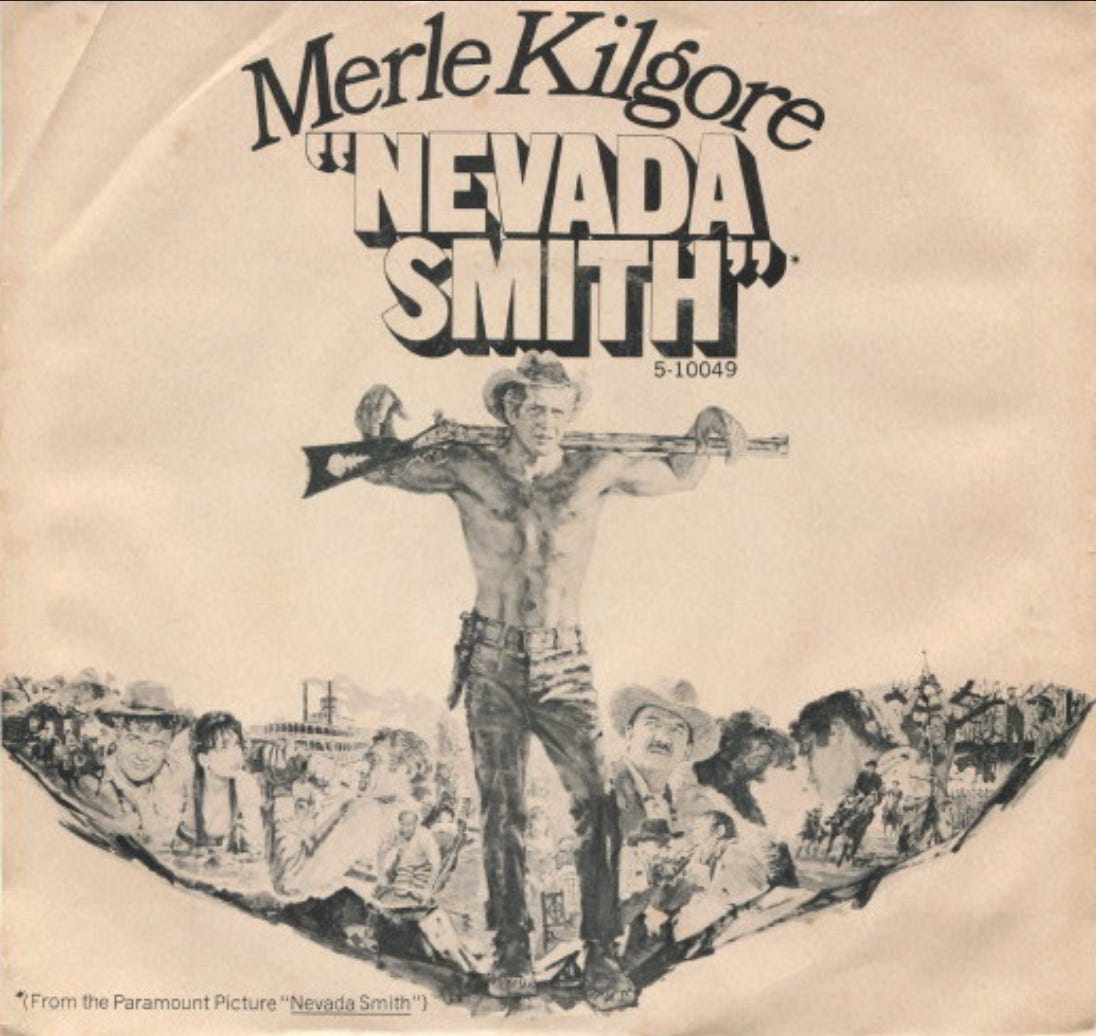
I’m curious if I can find a copy of this vinyl somewhere.
Managing Bocephus
The role that ended up taking the second half of his life began, like so many things in country music, as a favor to a friend’s family. Hank Williams Jr. — Bocephus — was the son of the man whose guitar Kilgore had carried as a teenager. By the late 1970s Hank Jr. was rebuilding himself after his near-fatal fall off Ajax Mountain in Montana, trying to escape the long shadow of his father’s catalog and become his own kind of southern-rock-tinged country star. He needed somebody he trusted to run the business of being Hank Williams Jr.
He hired Merle Kilgore.
Kilgore became Hank Jr.’s manager around 1980, and he stayed in that role for the rest of his life — roughly a quarter century. He ran the business, picked the openers, fielded the phone calls, signed the contracts, and on stage he played the part of court jester and master of ceremonies. If you went to a Hank Jr. show in the eighties or nineties, the warm-faced fellow in the cowboy hat working the crowd before Hank came out, telling stories, working a riff about Wolverton Mountain or Ring of Fire — that was Merle. Hank Jr. called him Uncle Merle. So did Hank III, eventually. He was, functionally, a member of the family. The kid who’d carried Hank Sr.’s guitar ended up running Hank Jr.’s company, and watching Hank III come up after that. Three Williams generations, one Kilgore.
He also kept writing. He had a hand in some of the biggest Hank Jr. records of the era, including “Dear Joel,” and never stopped doing the thing that had gotten him to Nashville in the first place.
If you want a small taste of what he was like in that role — the on-stage Merle, the laughing-with-Hank Merle, the keeper of the family — go look up Living Proof: The Hank Williams Jr. Story, the 1983 made-for-TV biopic. It’s on YouTube right now for free. I’m not going to make any promises about whether the movie is, by some objective standard, good. Don’t ask me. I’ll just say I find it entertaining, and Merle is in there being Merle, which is the point.
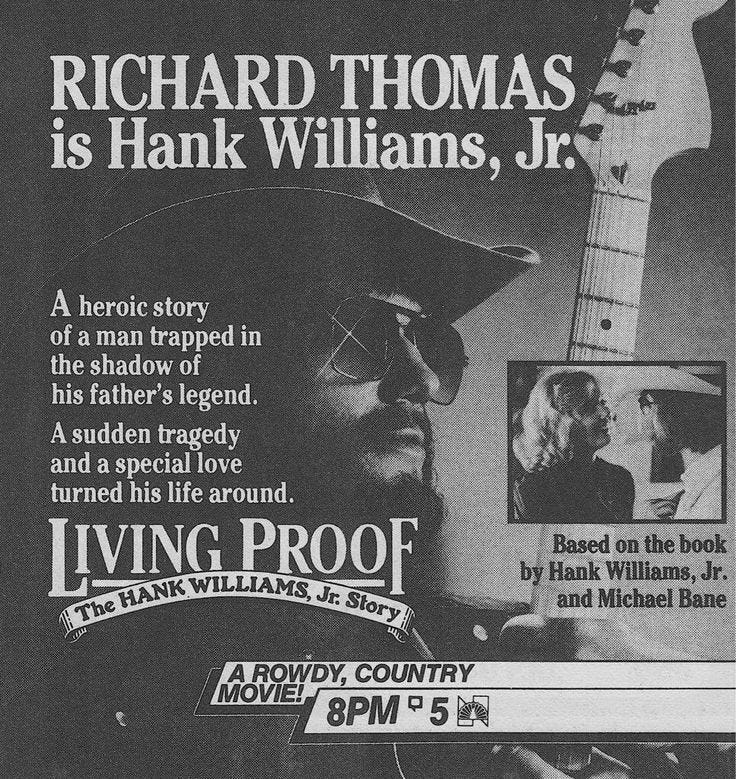
Use your own judgement - but I honestly love this movie. It’s not great. But I just love it and appreciate it for what it is.
The Hall, the trophies, the long road
The Nashville Songwriters Hall of Fame inducted him in 1998. By then he was the rare living country songwriter who had a number-one country hit in the 1960s, a top-ten pop crossover, a song on the Cash American Recordings arc, and a steady second career managing one of country’s biggest stars. He’d been on the road, in some capacity, since Truman was president.
Kilgore died in February 2005. He was seventy years old, and he was on the road when he went — being treated in Mexico for cancer, still in the middle of working. There was no retirement gig. Hank Jr. cried openly at the funeral. The condolences came in from Cash family, from Carters, from George Jones, from people whose careers Kilgore had quietly nudged forward and people whose careers had quietly nudged his.
Why Merle Kilgore matters
The reason to write a ballad about Merle Kilgore is not that he was the best singer of his generation, because he wasn’t, and he’d be the first to tell you so. It’s that his life is a near-perfect map of country music’s twentieth-century circulatory system. He stood at the Hayride when it was a launching pad. He wrote a 1962 number-one record about his actual uncle. He co-wrote one of the most recognizable songs in American popular music with the woman who would become Mrs. Johnny Cash. He acted in a movie playing the man whose guitar he’d carried as a child. He spent the back half of his career as the trusted right hand of that same man’s son.
There’s a Forrest Gump quality to it, except Kilgore wasn’t an accident in the room. He was a country music craftsman who made himself useful, kept his word, and could write a hook. The country music industry, for all its drama, tends to remember people like that. It remembered him. And I do, too.
If you want to hear him, the obvious place to start is the Cash recording of “Ring of Fire” — but listen to it knowing the writer is the Shreveport kid with the borrowed guitar, not the man with the deep voice on the microphone. Then put on Claude King’s “Wolverton Mountain” and picture old Clifton Clowers in Conway County, Arkansas, opening yet another piece of fan mail. Then put on a late-period Hank Jr. record and listen for the man laughing in the background.
That’s Merle.
The ballad is in the credits.
And if you’ll allow me one piece of sentiment to close on: Merle Kilgore may, in the end, have been God’s little gift to the Williams family. The boy who carried Hank Sr.’s guitar grew up to look after Hank Sr.’s son, and to be there for Hank Sr.’s grandson too. That’s not a career. That’s a calling.
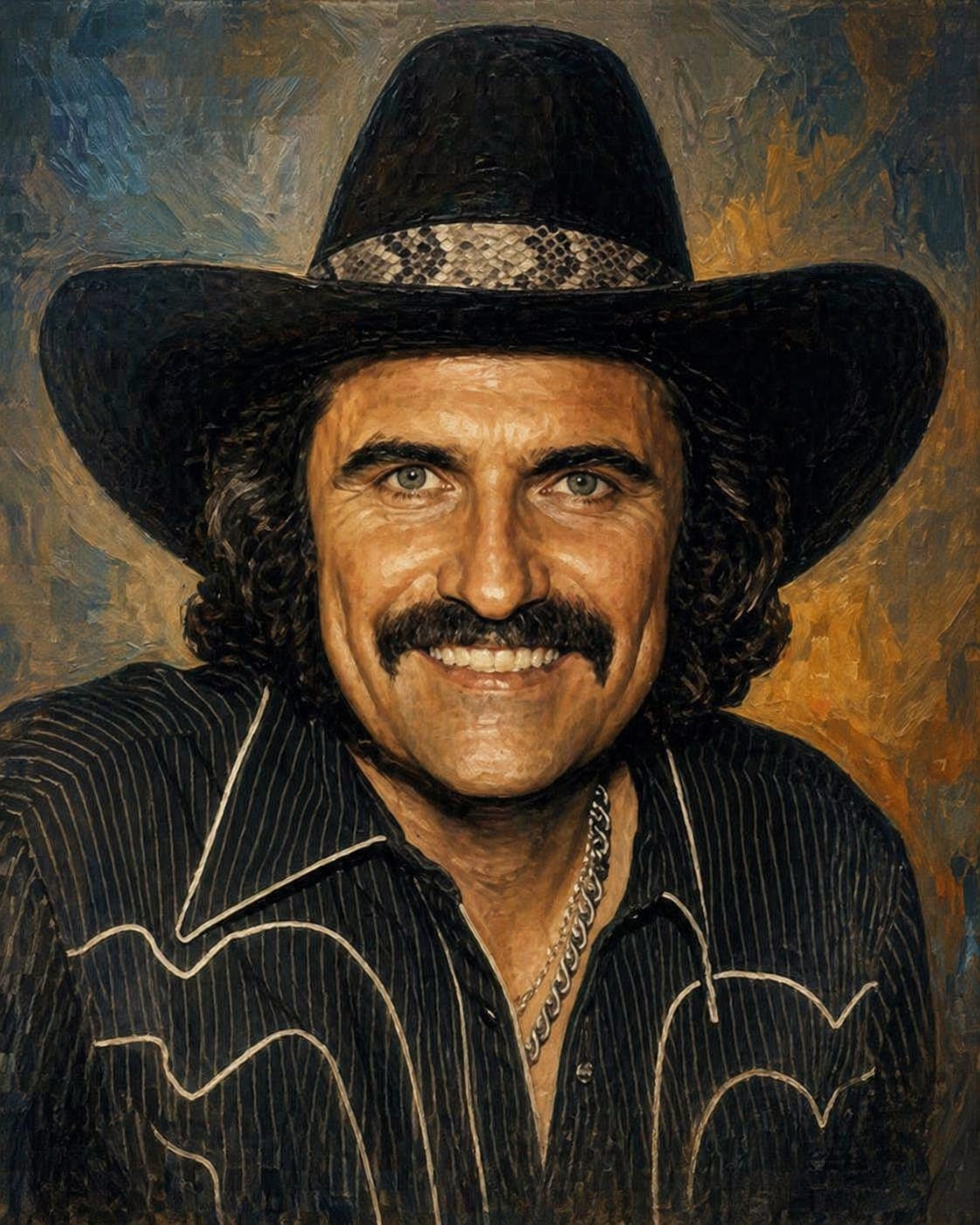
Merle Kilgore. A country legend in his own right. You did good!
ABOUT THE AUTHOR:

Zachariah Malachi probably has a few screws loose upstairs with his overenfatuation with country music history, but that’s his prerogative and your privilege. Outside of learning and being eagerly excited to share these lessons - Zachariah still writes a ton of music, plays at least 6+ live shows a week on Nashville’s Lower Broadway and performs as Jimmie Rodgers, Johnny Cash, Conway Twitty and more in Nashville’s very own live experience, CountryRoads USA. He is also an active member of SAG-AFTRA and The American Federation of Musicians. Stay tuned.