


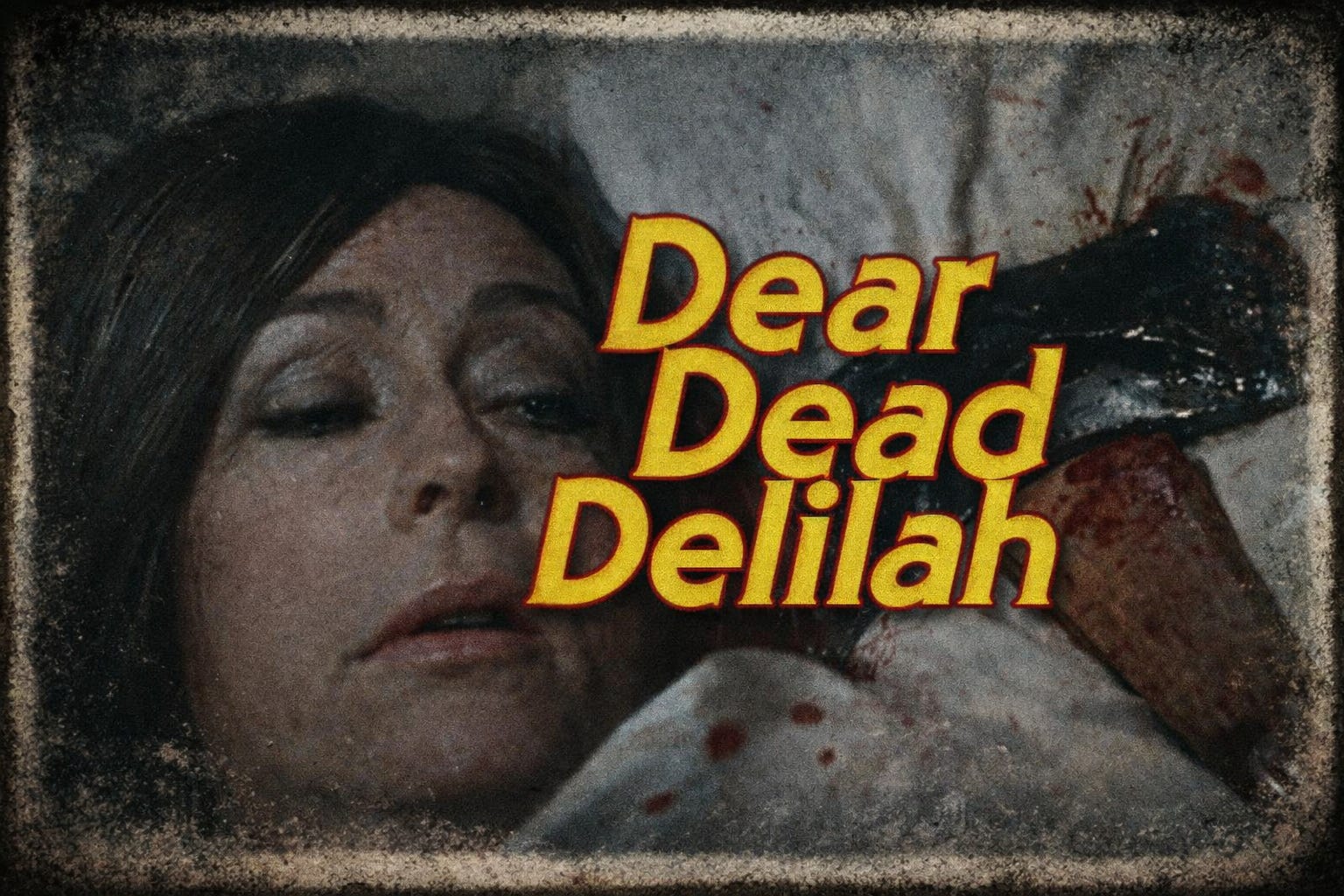
Let’s get one thing absolutely straight before we go any further: Cowboy Jack Clement had no business making a horror movie. He was a record producer. A songwriter. An engineer. A publisher. A label exec. A self-proclaimed visionary with the world’s most infectious laugh and a studio philosophy that essentially boiled down to let’s try it and see what happens. He had written hits for Johnny Cash. He had discovered Jerry Lee Lewis. He had his finger on the record button for one of the most legendary moments in all of American music. What he had absolutely zero experience in was producing a low-budget Southern Gothic slasher film in the Nashville suburbs. And yet — because Cowboy Jack was Cowboy Jack — he did exactly that.
The result was Dear Dead Delilah, a 1972 proto-slasher dripping with axe murders, mansions, exaggerated Southern drawls, hidden treasure, a heroin-addicted doctor, and one of the most iconic actresses in Hollywood history spending her final days in a wheelchair on a Brentwood, Tennessee estate. It bombed at the box office. It nearly bankrupted him. And it is absolutely, completely, one hundred percent worth talking about.
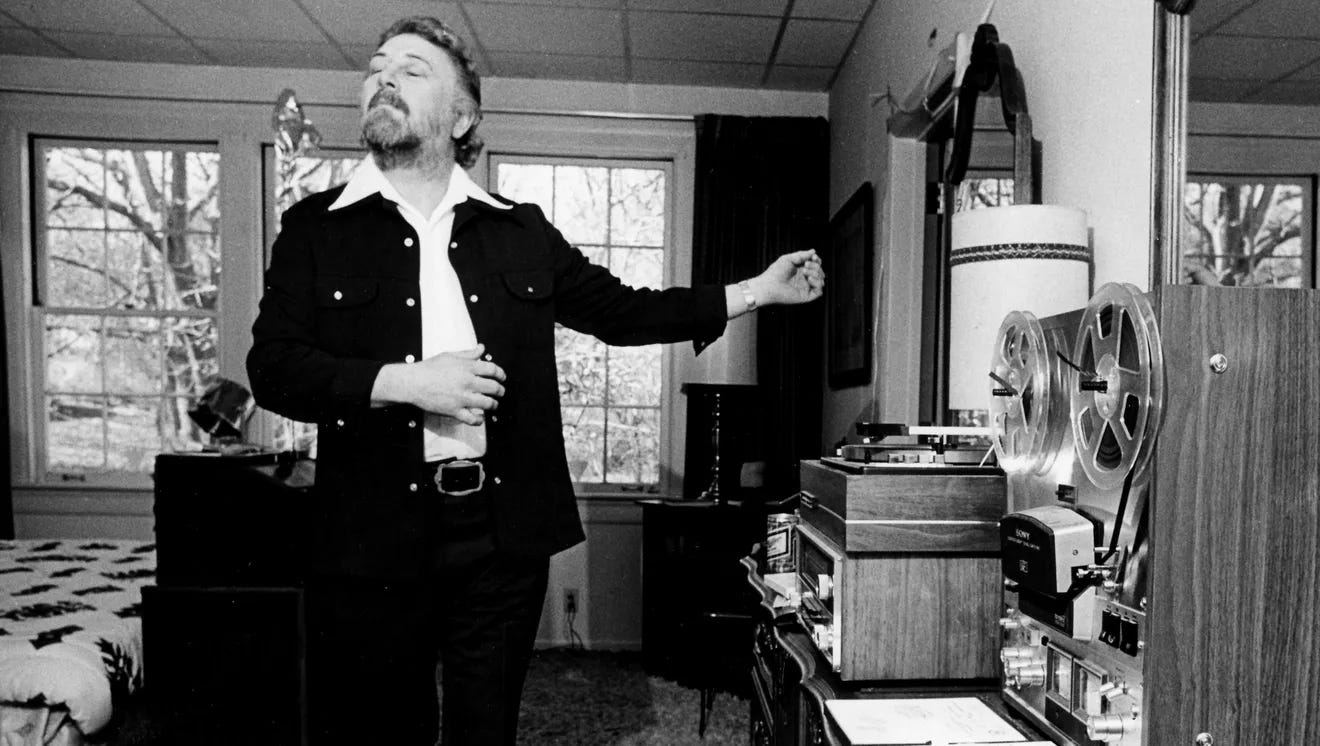
First, Let’s Talk About Who Cowboy Jack Actually Was
Because you cannot fully appreciate the lunatic genius of Jack Clement deciding to produce a horror film without first understanding just how cosmically important this man already was to American music. This is not a man who needed another career. This was a man whose existing career was already the stuff of legend.
Jack Henderson Clement was born on April 5, 1931, in the Whitehaven neighborhood of Memphis, Tennessee. He ran away from home at fifteen. He served in the Marine Corps. He played steel guitar. He studied at Memphis State, where a local band started calling him “Cowboy,” and the name stuck with a permanence that only great nicknames achieve. By 1956, he’d talked his way into a job at Sun Records working for Sam Phillips — the man who had already changed American music forever by recording Elvis Presley.
And then, almost immediately, Cowboy Jack started doing the impossible on a weekly basis.
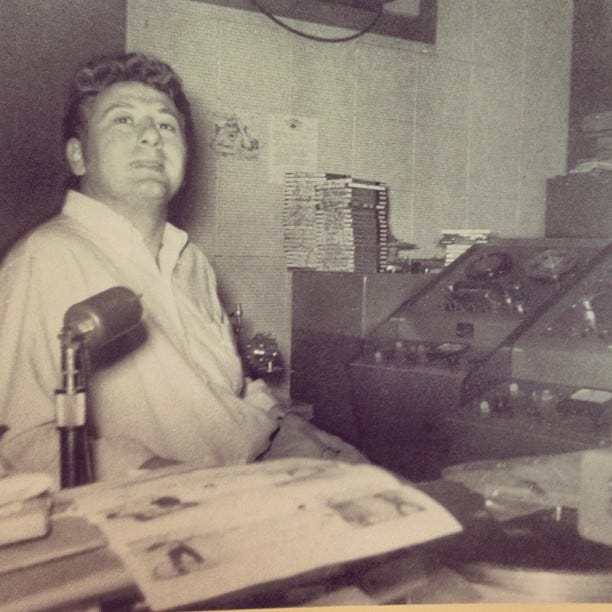
Within months of joining Sun, Sam Phillips left town on a trip to Florida. A young, wild-eyed piano player showed up at the studio. Most engineers would have told him to come back when the boss was around. Not Jack. He sat the kid down, pressed record, and cut a track called “Whole Lotta Shakin’ Goin’ On.” That kid was Jerry Lee Lewis, and that recording would go on to top both the R&B and country charts and be preserved permanently in the National Recording Registry at the Library of Congress. Jack discovered Jerry Lee Lewis because Sam Phillips took a vacation. That is the kind of life Cowboy Jack led.
“We’d just go in the studio and cut anything we could think of. The thing about him was he was totally uninhibited. He didn’t have any insecurities. He was just nuts.” — Cowboy Jack Clement on Jerry Lee Lewis
And then there’s the small matter of December 4, 1956. Carl Perkins was in the studio for a recording session. Johnny Cash had stopped by. Jerry Lee Lewis was on piano. And then a Cadillac pulled up outside 706 Union Avenue, and out stepped Elvis Presley, freshly signed to RCA but back to visit his old stomping grounds. The four men started jamming — gospel songs, country tunes, rockabilly howlers — and Cowboy Jack Clement had the presence of mind to press record. He later said he thought to himself, “I’d be remiss not to capture this.” That might be the greatest understatement in music history. What he captured would come to be known as the Million Dollar Quartet, and those recordings remain some of the most valuable and beloved documents in American music.
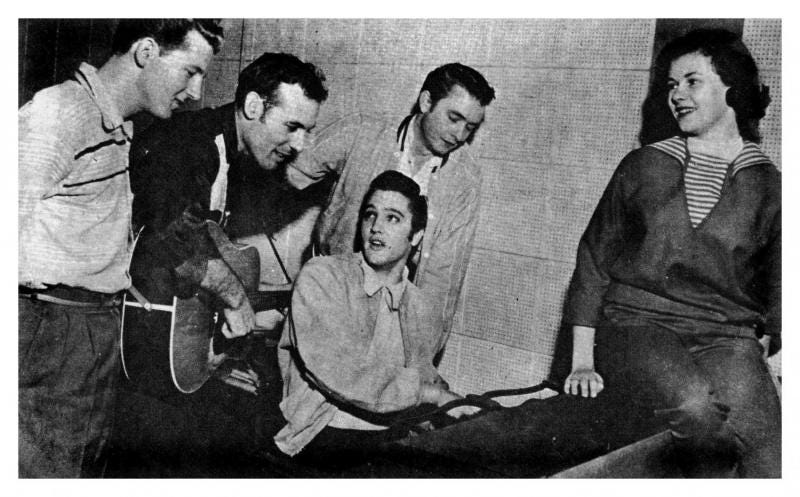
December 4, 1956. Jack Clement was behind the board. Without him, none of this exists.
After Sun, Jack moved through Nashville like a benevolent musical tornado. He wrote “Ballad of a Teenage Queen” and “Guess Things Happen That Way” for Johnny Cash — both monster hits. He wrote “It’ll Be Me” for Jerry Lee Lewis. He helped Cash craft the signature mariachi horn arrangement for “Ring of Fire.” He produced Waylon Jennings’ landmark 1975 outlaw album Dreaming My Dreams. He broke country music’s color barrier by discovering and championing Charley Pride, producing twenty albums for the man and getting him in front of Chet Atkins at RCA. He produced Don Williams, Townes Van Zandt, John Hartford, Doc Watson, Louis Armstrong. He later helped U2 record Rattle and Hum at Sun Studio. Bill Clinton and Michelle Obama came to his tribute concert.
This is the man who decided, in 1970, that what he really needed to do was produce a horror movie. And honestly? That tracks perfectly.
Enter: Dear Dead Delilah
The origin story here is almost too perfect. Jack had launched his J-M-I Records label in the early 1970s, and in a fit of expansion-minded ambition, he formed a Motion Picture Division before he’d ever produced a single frame of film. This was very on-brand for a man who once got hired as a dance instructor at an Arthur Murray studio before he had learned a single dance step. Jack Clement’s entire philosophy was: commit first, figure it out later, and trust that your instincts are better than your credentials.
The screenplay came from John Farris, a novelist and screenwriter who would later write The Fury for Brian De Palma. Farris wanted to direct. Jack would produce. And for the location, they didn’t need to look far. They had Nashville. They had a sprawling estate in Brentwood — the tony Nashville suburb that in 1970 was home to exactly the kind of crumbling Southern Gothic plantation house a horror movie required. They rolled cameras in September and October of 1970, on the grounds of a real Brentwood estate that would stand in for the fictional “South Hall,” home of the dying, wheelchair-bound, fortune-hiding matriarch Delilah Charles.
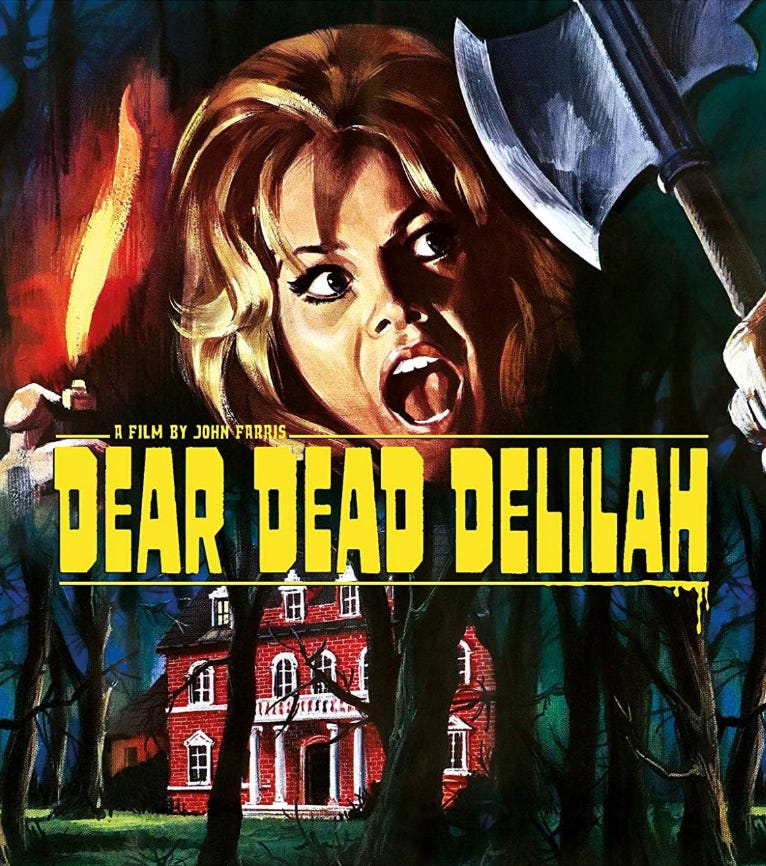
The Brentwood, Tennessee estate that became “South Hall” in Dear Dead Delilah (1972).
And to play Delilah? They landed Agnes Moorehead — one of the most celebrated actresses of the twentieth century. Four Academy Award nominations. Orson Welles’ Mercury Theater. Citizen Kane. Hush...Hush, Sweet Charlotte. Currently starring as the beloved witch Endora on Bewitched, for which she’d win Emmy recognition. Agnes Moorehead was not a small get. She was a titan, and she agreed to come to Nashville and spend time on a low-budget exploitation horror film with a country music producer who had never made a movie before.
What Moorehead — and perhaps even Clement — didn’t fully know at the time was that she was gravely ill. She was fighting advanced uterine cancer during production. Her character was written to be confined to a wheelchair specifically to accommodate her declining health. She would die less than two years after the film’s release. Dear Dead Delilah would be her final theatrical feature. It was a swan song wrapped in axe murders and Tennessee Gothic grandeur, and Agnes Moorehead delivered every single line like the absolute professional she was.
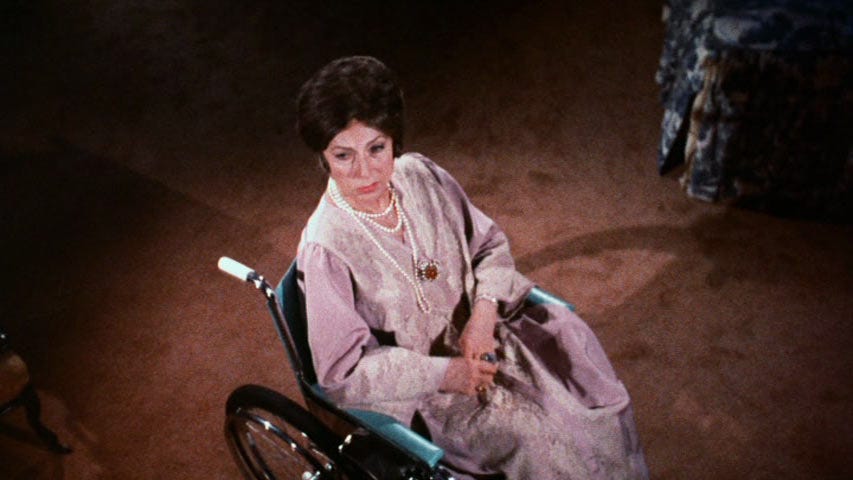
Agnes Moorehead as Delilah Charles. Four Oscar nominations. Endora on Bewitched. Final theatrical role. All of it happened in Nashville.
THE CAST — A WHO’S WHO OF TV GOLD
Beyond Moorehead, the film rounded up a genuinely impressive roster of recognizable faces. Will Geer — Grandpa Walton himself — plays cousin Ray Jurroe. Michael Ansara plays the antagonistic Morgan. Dennis Patrick, later of Dallas, plays the heroin-addicted Dr. Alonzo. And Patricia Carmichael, in her one and only film credit, delivers what has been described as an “unforgettably strange” performance as Luddy, the reformed axe murderess at the center of the whole bloody mess. The Waltons, Dallas, and a reformed killer. Only in Nashville, 1970.
The Plot, Which Is Absolutely Unhinged in the Best Way
Here is the premise of Dear Dead Delilah, delivered with appropriate gravity: In 1943, a teenage girl named Luddy murders her overbearing mother with an axe. Thirty years later, she’s released from a state mental institution, deemed cured of her violent impulses. Through a series of coincidences, she ends up employed as a housekeeper and caretaker on a vast Tennessee plantation estate, pushing the dying, wheelchair-bound Delilah Charles around the halls of South Hall mansion.
Now, Delilah has summoned her entire family — a cast of characters including a gambling addict brother, an alcoholic equestrian sister, a heroin-addicted doctor, and various scheming in-laws — to tell them two things. First: she’s leaving the estate to the state of Tennessee. Second: her late father hid $600,000 somewhere on the property, and whoever finds it gets to keep it. What follows is exactly what you’d expect: a descent into greed, betrayal, and a series of extremely enthusiastic axe murders, with poor Luddy always nearby but never quite remembering what happened.
There are decapitations. There are shotgun blasts. The MPAA initially slapped it with an X-rating for graphic violence before an appeal brought it down to R. And through it all, Agnes Moorehead sits in her wheelchair delivering “autocratic commands and withering sarcasm” with the precision of someone who had been nominated for four Academy Awards and was absolutely not going to let a low-budget Nashville horror film get the better of her.
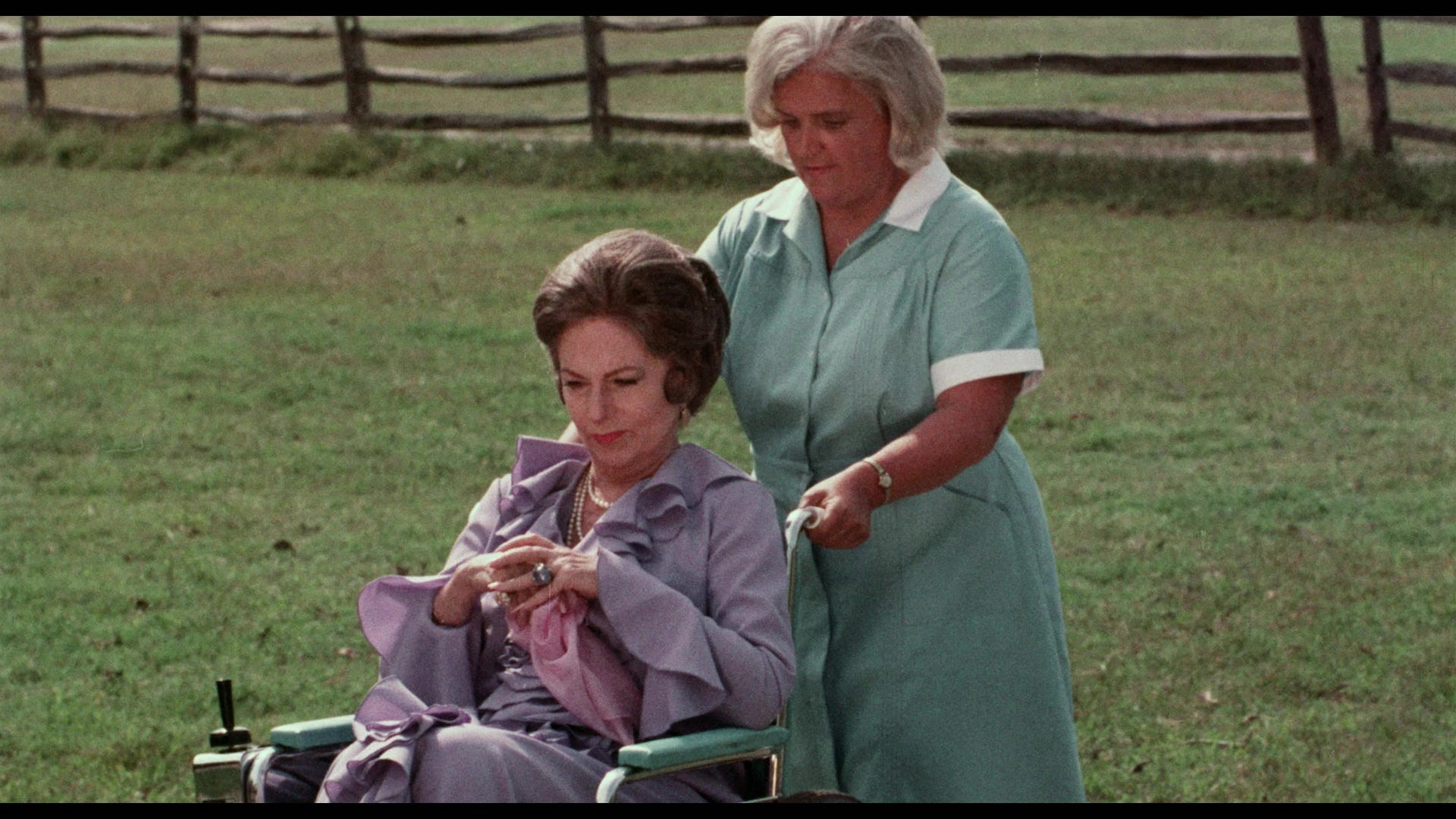
“A cheerfully grim blending of Southern Gothic stylings, murder mystery structure, and proto-slasher gore.” — Vinegar Syndrome on Dear Dead Delilah
Cowboy Jack: The Worst and Best Movie Producer in Nashville
Here is what Cowboy Jack Clement learned about being a film producer, in his own words, during an on-set interview with the Nashville Tennessean in 1970:
“Yesterday, I was running all over the place, hunting for a trailer house which would serve for Miss Moorehead’s dressing room. Then it was decided that she would do the part in a wig, so off I went again, scrounging up hair and dyeing it.”
This is the man who recorded the Million Dollar Quartet. He spent his days on a Nashville horror movie set hunting for trailer houses and dyeing wigs. Cowboy Jack Clement: the producer Nashville didn’t know it had.
To his credit, he threw himself into it entirely. The film was shot on real Nashville locations, giving it a grimy, sweat-soaked authenticity that no Hollywood backlot could replicate. The Brentwood estate dripped with genuine Southern decay. The humid Tennessee atmosphere practically wafts off the screen. Whatever Jack lacked in film production experience, he compensated for with sheer willingness to make it work.
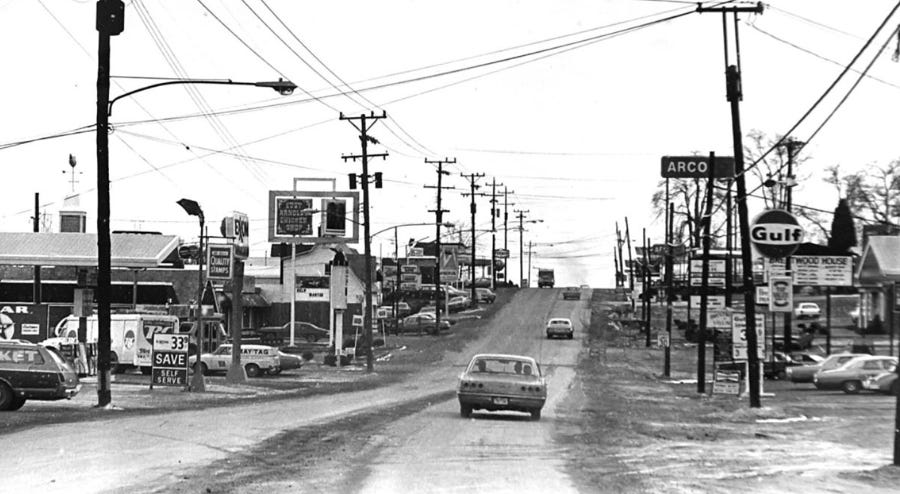
Brentwood, Tennessee in the early 1970s. Exactly the kind of place where axe murders happen in horror films.
The Premiere, The Disaster, The Cult Classic
On May 5, 1972, Dear Dead Delilah had its world premiere at Nashville’s downtown Paramount Theatre. The promotional ads promised: “You pay for the whole seat — you only use the edge!” Nashville turned out for it. After all, this was a local production, with Nashville locations, produced by one of Music Row’s most colorful characters. It was a genuine event.
The box office, however, did not cooperate. The film was a financial disaster, and the fallout was significant. Jack was forced to sell off several of his businesses to cover his losses. The man who had built a small empire in Nashville music had gotten a hard education in the difference between producing records and producing films.
But here’s the thing about Dear Dead Delilah: it didn’t die. The film played theaters and drive-ins across the country for the better part of a year — exactly the kind of sweaty, buttery-popcorn Southern Gothic horror that drive-in audiences in 1972 couldn’t resist. By mid-decade it had landed on television, albeit in heavily edited form that presumably removed most of the decapitations. And then it went underground, circulating in the kind of cult horror circles that treasure exactly this sort of grimy, regional, one-of-a-kind artifact.
In 2018, Vinegar Syndrome — the boutique Blu-ray label dedicated to rescuing forgotten exploitation cinema — released a newly restored Blu-ray and DVD edition, sourced from recently discovered 35mm vault elements. Suddenly, the film was available in better quality than it had ever been. Horror fans discovered it. Country music historians scratched their heads and loved it. The cult grew. The Cowboy had the last laugh.
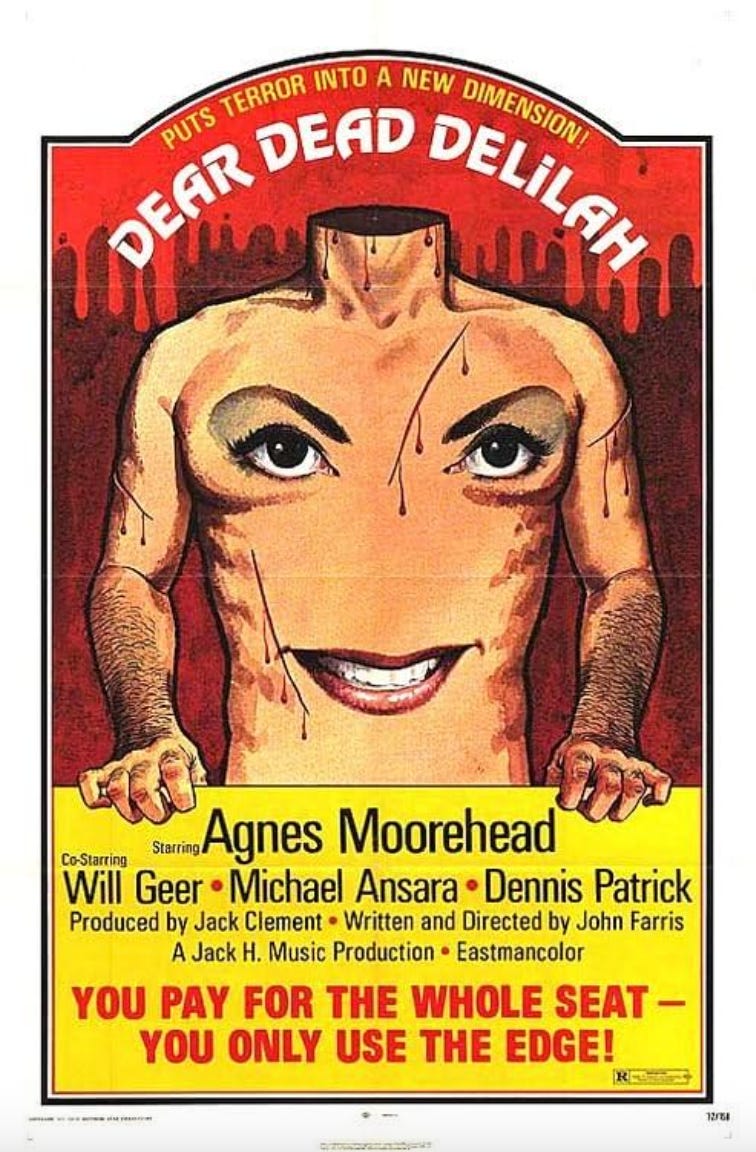
WHERE TO WATCH
If you want to see Dear Dead Delilah — and you absolutely should — the Vinegar Syndrome Blu-ray/DVD combo is the way to go. It features a clean restoration from original 35mm elements and includes a twenty-minute interview with director John Farris titled “Family Secrets: The Making of Dear Dead Delilah,” in which he speaks candidly about working with Jack Clement and the chaos of the production. The limited edition slipcover (1,500 copies) sold out immediately. The standard edition remains available.
The Country Music Connection: It’s Deeper Than You Think
On the surface, Dear Dead Delilah looks like a detour — an anomaly in Cowboy Jack’s otherwise music-focused career. But look closer and the country music DNA runs through every frame.
The film is set in Nashville, shot in Nashville, produced by a Nashville legend, and saturated with the kind of Southern Gothic atmosphere that had been at the heart of country music’s darkest tradition since Hank Williams howled about heartbreak and hellhounds. Country music has always had a horror streak — murder ballads, ghost trains, dark roads and darker decisions. Cowboy Jack wasn’t leaving his world behind when he made this film. He was extending it into new territory.
The music for the film was handled by Bill Justis, a Sun Records alumnus who had scored a top-ten hit with “Raunchy” in 1957 and was deeply embedded in the same Memphis-to-Nashville world that Jack had inhabited for twenty years. This was not Hollywood coming to Nashville — this was Nashville doing Hollywood on its own terms.
And consider the cast: Agnes Moorehead may not be a country music figure, but the film’s other faces — Will Geer, Dennis Patrick, Michael Ansara — were the television royalty of an era when country music and prime-time TV were deeply intertwined. Hee Haw, The Waltons, Dallas: these were the cultural touchstones of the same audience that bought country records. Jack Clement understood his audience’s world even when he was scaring them half to death.
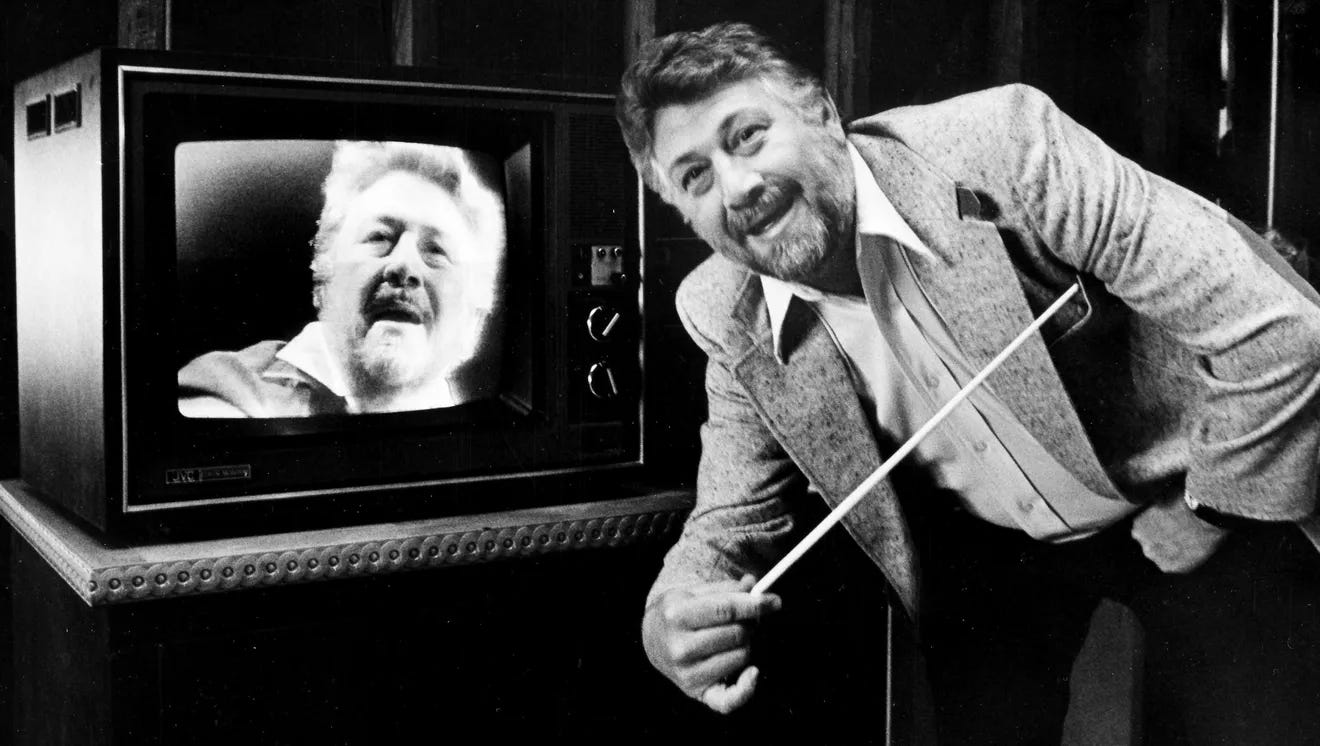
“Jack was a musical mastermind, in a sense, but what made him stand out to people was he had this sense of fun and a little bit of mischief in everything he did.” — Michael McCall, music historian
What This All Means
Here is the truth about Dear Dead Delilah, Cowboy Jack Clement, and what it all adds up to: it is a perfect portrait of a man who fundamentally refused to be defined by his credentials, his genre, or his previous successes. Jack Clement didn’t make horror movies. And then he did, because he thought it would be interesting, and because he had the resources, and because nobody told him he couldn’t, and because that was exactly the energy that had served him so spectacularly well in every other arena of his life.
He had walked into Sun Records without knowing how to work a board and helped invent rock and roll. He had pressed record on four legends in a room and preserved an irreplaceable piece of American history. He had written pop hits, country hits, outlaw anthems. He had signed and shaped Charley Pride, changed the color of country music, and helped Waylon Jennings find the sound that defined a generation of rebels. He had done all of this by showing up, committing fully, and trusting his ear. Why would horror movies be any different?
The film nearly broke him financially. He sold businesses. He lost money. And then he went back to his studio on Belmont Boulevard — the beloved Cowboy Arms Hotel and Recording Spa — and he kept making music. He produced more albums. He made more records. He eventually helped U2 recapture the spirit of Sun Records decades later. He never stopped. The mischief never left him.
Jack Clement died on August 8, 2013. He was 82 years old. He was inducted into the Nashville Songwriters Hall of Fame, the Rockabilly Hall of Fame, the Memphis Music Hall of Fame, and the Music City Walk of Fame. Not one of those honors mentions Dear Dead Delilah. But it should. Because that film — that gloriously unhinged, axe-drenched, Agnes Moorehead-commanded, Nashville-shot piece of Southern Gothic cinema — is the purest possible expression of who Cowboy Jack really was: a man for whom no door was too strange to open, and no room — not even one full of axe murderers — was too scary to walk into.
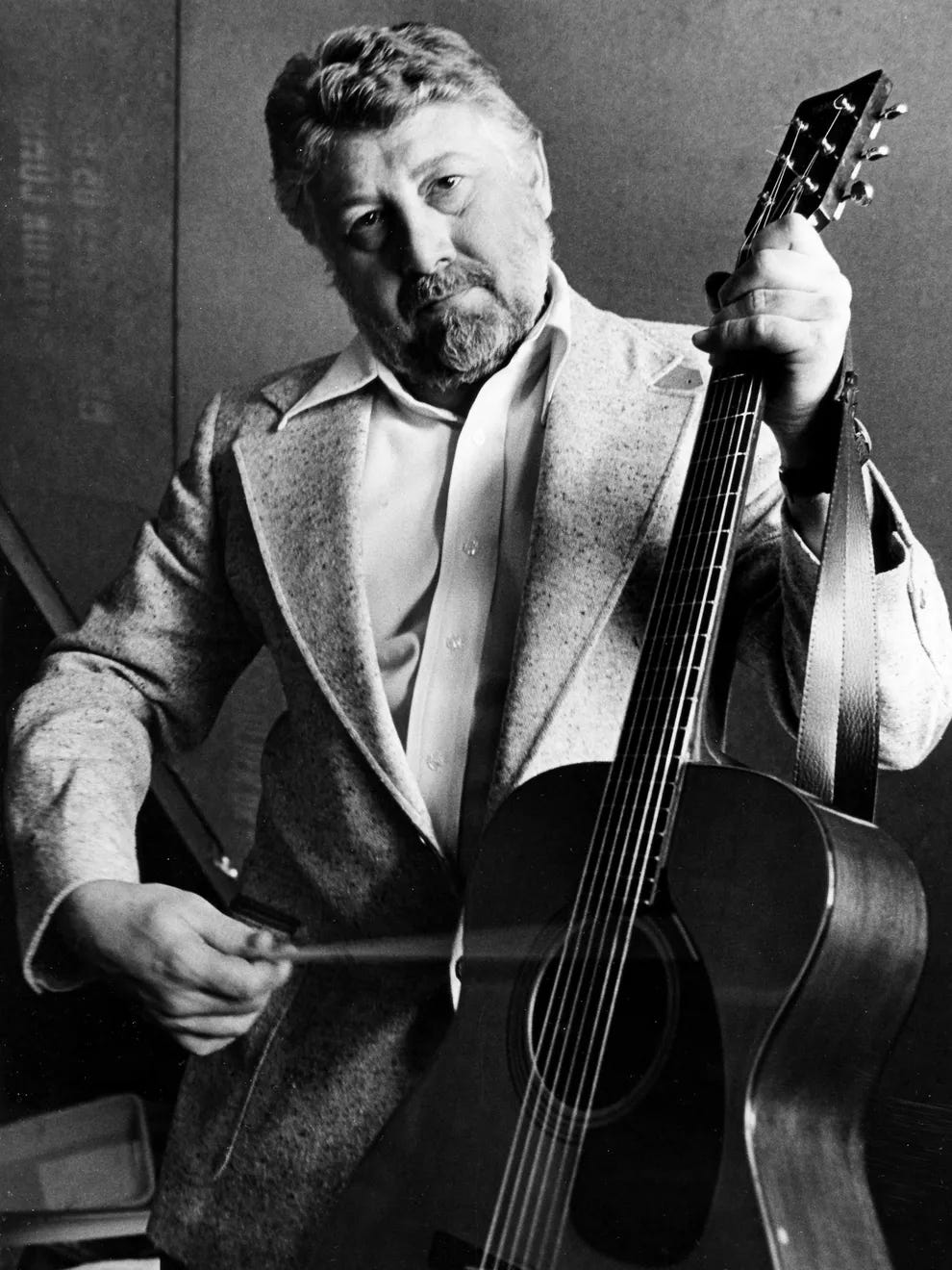
Cowboy Jack Clement. He lived like it was always someone’s birthday.
Dear Dead Delilah (1972) is available on Blu-ray and DVD from Vinegar Syndrome. It is essential viewing for anyone who loves country music history, Southern Gothic horror, or the endlessly wild story of Nashville in the early 1970s. Pour something good. Turn the lights down. Welcome to South Hall.
Further Listening & Watching
Start with the documentary Shakespeare Was a Big George Jones Fan (2005/2007), directed by Robert Gordon and Morgan Neville, pieced together from Jack’s own home movies with interviews from Jerry Lee Lewis, Bono, and more. Then queue up Waylon Jennings’ Dreaming My Dreams (1975) — produced by Jack — and just try not to feel something. Then go find the Vinegar Syndrome Blu-ray.