


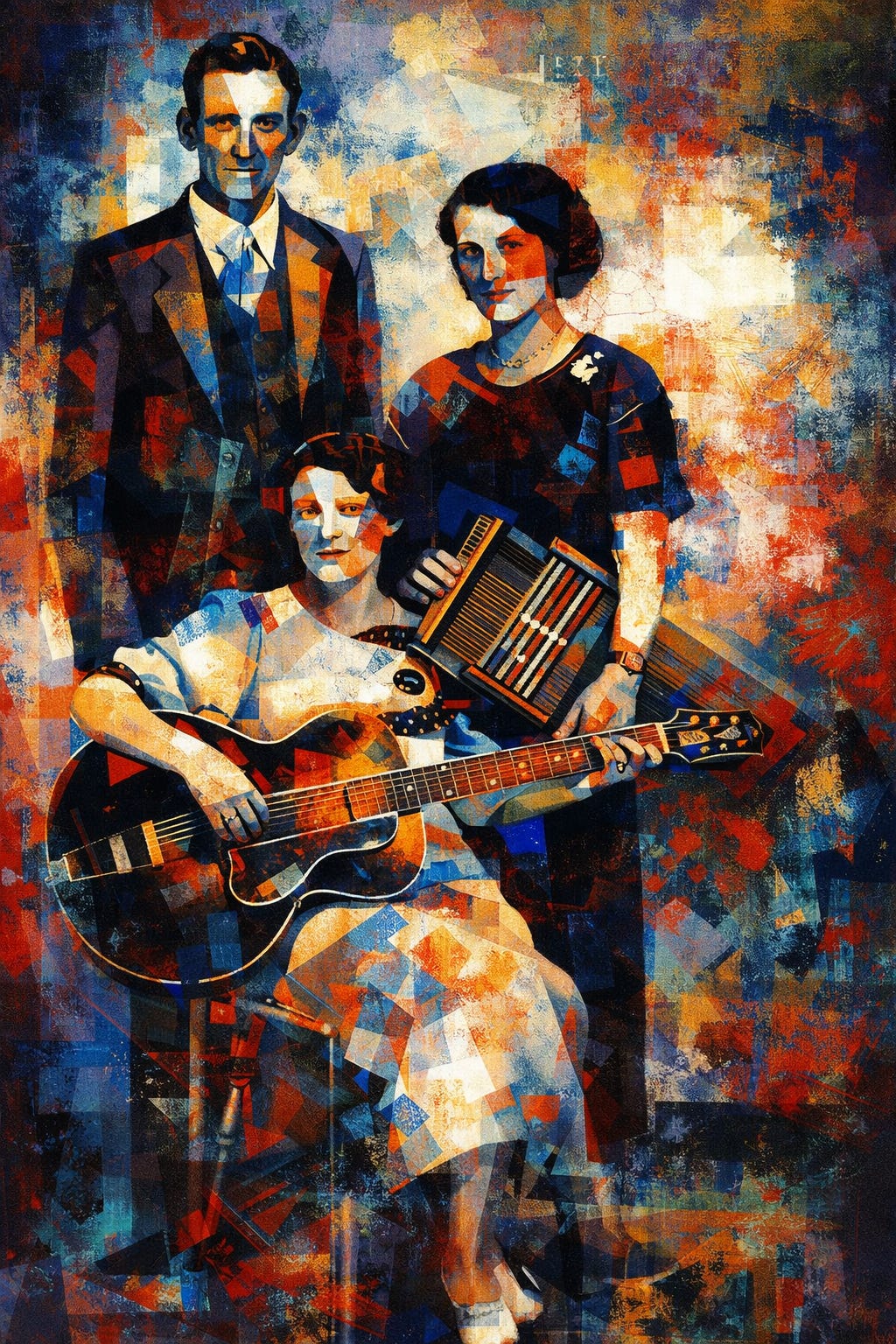
Here’s what they put on the posters: The First Family of Country Music. A.P., Sara, and Maybelle Carter — three people from the mountains of southwestern Virginia who walked into a makeshift recording studio in an abandoned hat factory in Bristol, Tennessee in August of 1927 and essentially invented country music as we know it. “Wildwood Flower.” “Keep on the Sunny Side.” “Will the Circle Be Unbroken.” Songs so fundamental to the American musical bloodstream that most people couldn’t tell you where they came from — they just feel like they’ve always existed, like mountains and weather.
That’s the poster version.
The real version is considerably darker, considerably stranger, and involves a man haunting his own life for twenty years, a love triangle that unraveled in real time on live radio, a woman leaving her children in the mountains while she followed her heart to California, and a broadcast tower in Mexico owned by a fake doctor who was surgically implanting goat testicles into men.
Let’s start at the beginning.
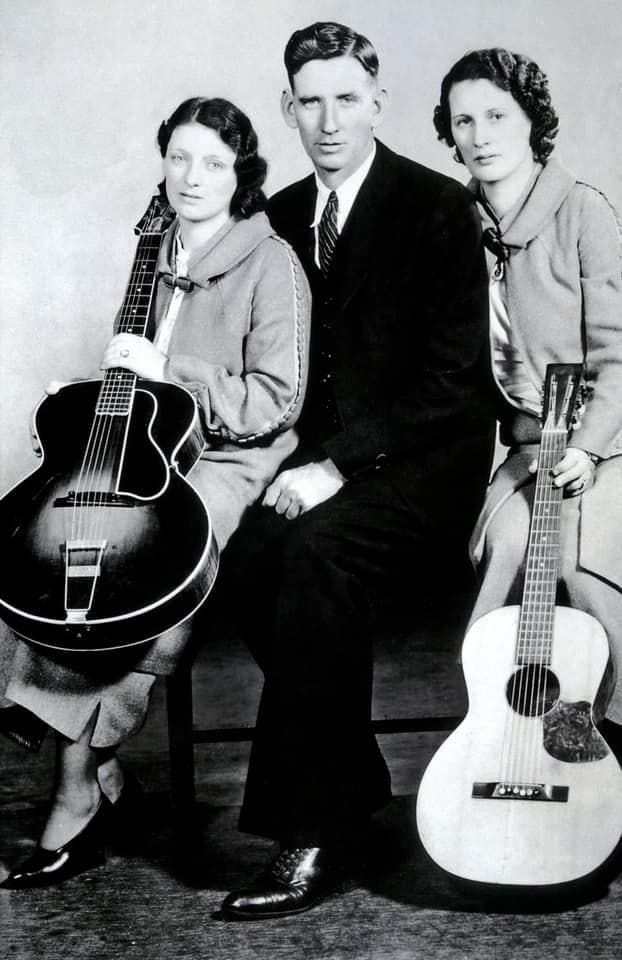
The First Family of Country Music. The poster version.
Part One: The Songcatcher Who Lost Everything He Caught
A.P. Carter was, by all accounts, a man who could not stay still.
Born in 1891 in a log cabin in Poor Valley, Virginia — and yes, it was really called Poor Valley — A.P. grew up restless in a way that his home, his family, and his era had no language for. He worked as a carpenter, a farmer, a foundryman, a sawmill operator, a fruit-tree salesman, a storekeeper. He had a tremor in his hands and a quaver in his voice that his mother forever blamed on a lightning storm she’d weathered while pregnant with him. He walked the railroad tracks when his wife told him not to. He disappeared for days, then weeks, at a time. He’d leave without enough money for Sara and the children to get by on. Their son Joe remembered his mother “cutting down wood, pulling mining timbers out of the mountains” while his father was “out somewhere trying to learn a song.” A.P., Joe said, “never stopped to think what effect it might have on his family.”
What A.P. was doing, during those long absences, was something extraordinary: he was traveling the back roads and hollers of Appalachia — sometimes by car, sometimes on foot — knocking on doors, sitting on porches, and collecting songs from whoever would share them. Old ballads. Church hymns. Murder songs. Songs about trains and floods and heartbreak that had been passed mouth to mouth through generations and were in danger of disappearing. He was a songcatcher — part archivist, part obsessive, entirely consumed by the work. On these journeys he often traveled with a Black guitarist named Lesley Riddle, who had the ear A.P. lacked and could memorize melodies that A.P. would later transcribe for Sara and Maybelle. Together, they gathered the raw material for one of the most important song catalogs in American history.
But while A.P. was out on the road gathering music, Sara was alone in the mountains with three children and not enough money.

Poor Valley, Virginia. Exactly as advertised.
Part Two: “I Fell in Love With Him the First Time I Laid Eyes on Him”
The affair started the way the most devastating ones always do: quietly, gradually, with someone A.P. trusted completely.
His cousin, Coy Bays, lived nearby. When A.P. needed someone to help Sara while he was away — driving her around, helping with errands — he asked Coy. It made perfect sense. Family helping family. Two of Coy’s siblings had contracted tuberculosis, and Sara had started making regular visits to check on them. Sara and Coy were together often, out of necessity, and then out of something else entirely.
“I fell in love with Coy the first time I laid eyes on him,” Sara said later. According to biographer Mark Zwonitzer, sometimes Sara and Coy would leave together and be gone two or three days at a time. A.P. eventually found out. He was furious — and then, in the way of men who are devastated but can’t say so directly, he was probably just more absent, gone longer on his song-hunting expeditions, as if distance from the valley could cure what was happening in it.
When the affair became public knowledge, both families were in crisis. Coy’s parents — his own people — sat down and made a decision: they would get Coy out of the valley. The entire Bays family picked up and moved to California, taking Coy with them. “They loved Sara,” said Coy’s sister Stella, “but this was a very sad thing in our life. This was a very embarrassing thing because it was their nephew and their son. And both loved the same woman.”
When Coy left the valley, Sara left too. She moved back to her childhood home in Rich Valley — across the mountain from the family home in Maces Spring — leaving her three children with A.P. She couldn’t live with him anymore. But she couldn’t follow Coy to California either. Not yet.
And here is where the story takes a turn that only happens in country music: despite the dissolution of their marriage, Sara and A.P. kept performing together. Their record producer Ralph Peer and his wife Anita — who pointed out that Hollywood couples managed to work together after splitting — convinced them both that whatever their domestic life looked like, there was no reason to stop making music. So the Carter Family continued. Divorce pending. Hearts in pieces. Keep on the sunny side.
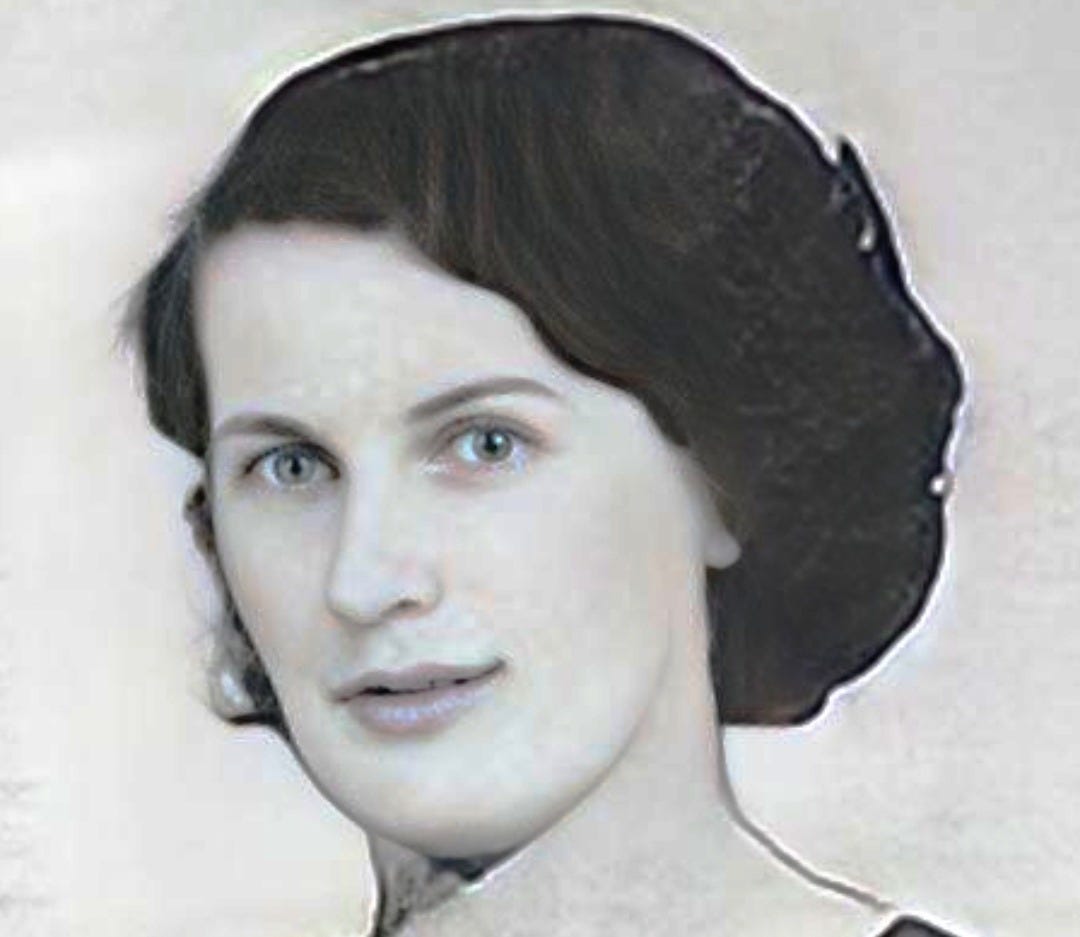
Sara Carter. She had one of the most powerful voices in country music and one of the most complicated inner lives.
Part Three: The Man Who Sang to the Woman Who Was Already Gone
A.P. filed for divorce in 1936 — or rather, Sara did. She sued him. Three years of trying to reconcile had come to nothing. The paperwork was finalized on October 15, 1936, though they continued recording and performing together for years afterward. The professional relationship outlasted everything else.
Here is what A.P. Carter did with his heartbreak: he turned it into songs. He wrote a piece called “One Little Word” — “one little word could have changed my future life, one little word could have made her my wife / too late, too late, now my fondest hopes are dead” — and recorded it with the very woman it was about, standing across a microphone from him in a studio, singing harmony on her own loss. Sara performed songs about longing and separation and faithfulness and leaving, and they sold spectacularly. The audience had no idea they were watching something real unfold in real time. The records they made during the years of their estrangement are some of the most emotionally raw things either of them ever committed to tape.
Meanwhile, Sara was writing to Coy in California. For years she wrote letters, and for years she heard nothing back. She thought he had moved on. She thought the relationship was finished. She had no way of knowing that Coy’s mother — the woman who had moved her son to California to separate them — was intercepting every letter Sara sent. Coy never saw them.
Sara kept writing anyway.
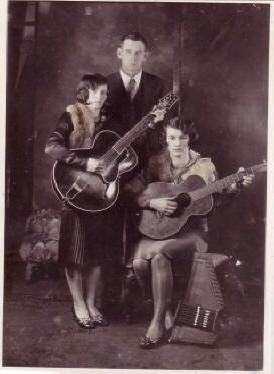
Performing together. Long after everything fell apart.
Part Four: The Radio Dedication That Changed Everything
By 1938, the Carter Family had landed the strangest, most consequential gig of their career. (We’ll get to the full strangeness of it shortly.) They were broadcasting live on a Mexican border radio station called XERA, transmitting from Del Rio, Texas with a signal so powerful it could be heard in 48 U.S. states and into Canada. Ranchers near the transmitter reported that their metal fences picked up the broadcasts. People claimed the signal was audible in dental fillings.
It was on one of these broadcasts, in February of 1939, that Sara Carter did something no one was prepared for.
Between songs, she announced that she’d like to dedicate the next number to her friend Coy Bays, out in California. And then she sang “I’m Thinking Tonight of My Blue Eyes”:
I’m thinking tonight of my blue eyes Who is sailing far over the sea I’m thinking tonight of my blue eyes And I wonder if he ever thinks of me
Six years. Six years of intercepted letters and silence and California distance. And Sara was using the most powerful radio transmitter in North America to reach across the continent and tell him she hadn’t forgotten.
Coy was listening. He heard it. He turned to his mother — the woman who had been hiding Sara’s letters in a drawer for six years — and said he was going to go get her. His mother, who had kept them apart across a decade, looked at her son and said: “Well, I guess maybe you better.”
Coy Bays drove through the night to Texas.
Within three weeks, he and Sara were married.
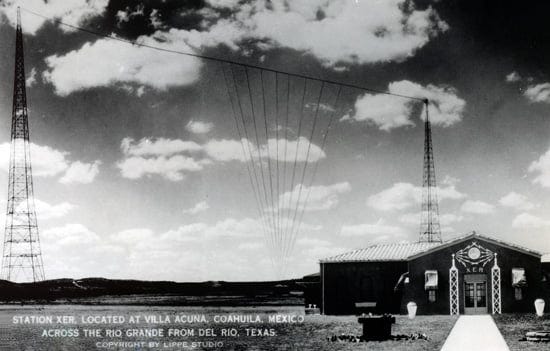
Del Rio, Texas. Where Sara Carter sent a message across a continent via radio.
A.P. Carter was still on the XERA broadcasts when the wedding happened. According to those who were there, his voice was so forlorn after Sara’s marriage that the radio station told him it was upsetting listeners. They sent him home. Sara and Maybelle finished the shows without him.
A.P. Carter’s granddaughter Rita Forrester later said: “I know that my granddad on the day he died loved her every bit as much as he did when he first met her. It was always a source of great sadness for him that they were apart.”
He died in 1960. Sara outlived him by nineteen years, spending most of them in California with Coy, thousands of miles from Poor Valley. She came back occasionally to record, to perform reunion concerts, to visit the children she had left in the mountains. She died in 1979. They are buried not far from each other, back in Virginia.
The circle, as they say, was eventually unbroken.
Part Five: And Now, The Goat Testicles
Right. We need to talk about XERA.
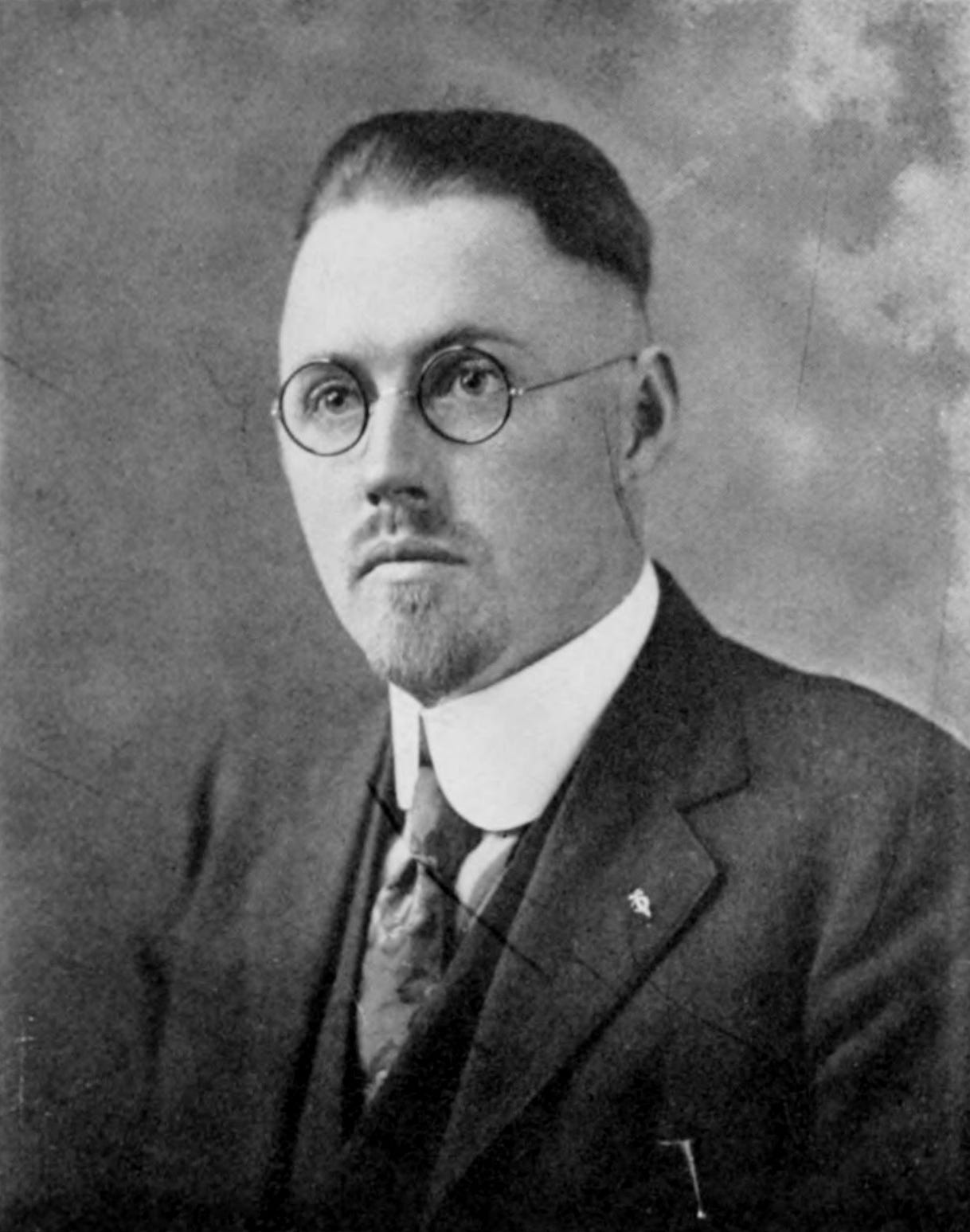
Dr. John R. Brinkley. Not a real doctor. Extremely real goat testicles.
The border radio station that launched the Carter Family to national fame — the transmitter that sent Sara’s dedication to Coy across the continent — was built by a man named John Romulus Brinkley. Brinkley had no legitimate medical credentials. He had bought his medical degree from a diploma mill. And he had made himself one of the wealthiest men in America by surgically implanting goat testicles into men to cure impotence.
This is completely factual. This is a thing that happened.
The story begins in 1918, when a Kansas farmer came to Brinkley’s clinic complaining of “sexual weakness.” Brinkley joked that the man would have no problems if he had “a pair of those buck goat glands in him.” The farmer asked him to try it. Brinkley did — charging $150 for the procedure — and the goat-gland empire was born. Within years he was charging $750 per operation (roughly $12,000 in today’s money), attracting patients from across the country, building a hospital to handle the volume, and launching one of the first radio stations in Kansas to advertise his miracle cure. His baseball team was called the Kansas Goats. He transplanted goat testicles into a judge, an alderman, a society matron, and the chancellor of a Chicago law school while the press looked on. He eventually claimed the technique could cure a “wide range of male ailments.” A woman hobbling around one of his clinics had been given goat ovaries as a cure for a spinal cord tumor.
The American Medical Association caught up with him eventually. His Kansas medical license was revoked. His radio license was yanked by federal regulators. And so Brinkley did what any self-respecting goat testicle magnate would do: he moved to Del Rio, Texas, built a radio transmitter across the border in Mexico — beyond the reach of U.S. regulations — and turned the volume up to 500,000 watts. Eventually a million. The signal reached Canada. It occasionally bounced over the North Pole into Russia, where some sources claim it was used to teach English to Soviet spies.
Ranchers near the transmitter claimed their metal fences and dental appliances reverberated with the station’s signal. XERA sold Crazy Water Crystals, baby chicks, tomato plants, Last Supper tablecloths, and autographed pictures of Jesus Christ. It was also, per the historical record, the station that gave the Carter Family their national audience — broadcasting their music to millions of rural American homes that no other signal could reach.
A six-year-old in Arkansas was among those listeners. He would eventually marry the Carter Family’s daughter June: Johnny Cash.
Waylon Jennings, growing up in Littlefield, Texas, remembered his father pulling the truck up beside the house and running a cable from the battery to the radio just to pick up the Carter Family on XERA. The station that built country music’s first audience was built on goat testicle money and Mexican border loopholes.
Brinkley died broke in 1942, buried under malpractice lawsuits, federal mail fraud charges, and an IRS investigation. His mansion in Del Rio — where he had kept penguins, monkeys, and Galápagos tortoises — was sold off. The XERA transmitter eventually became XERF, and in the 1960s, a DJ named Bob Smith took it over and started playing rock and roll under the name Wolfman Jack.
The goat-gland doctor’s radio tower outlasted him by decades.
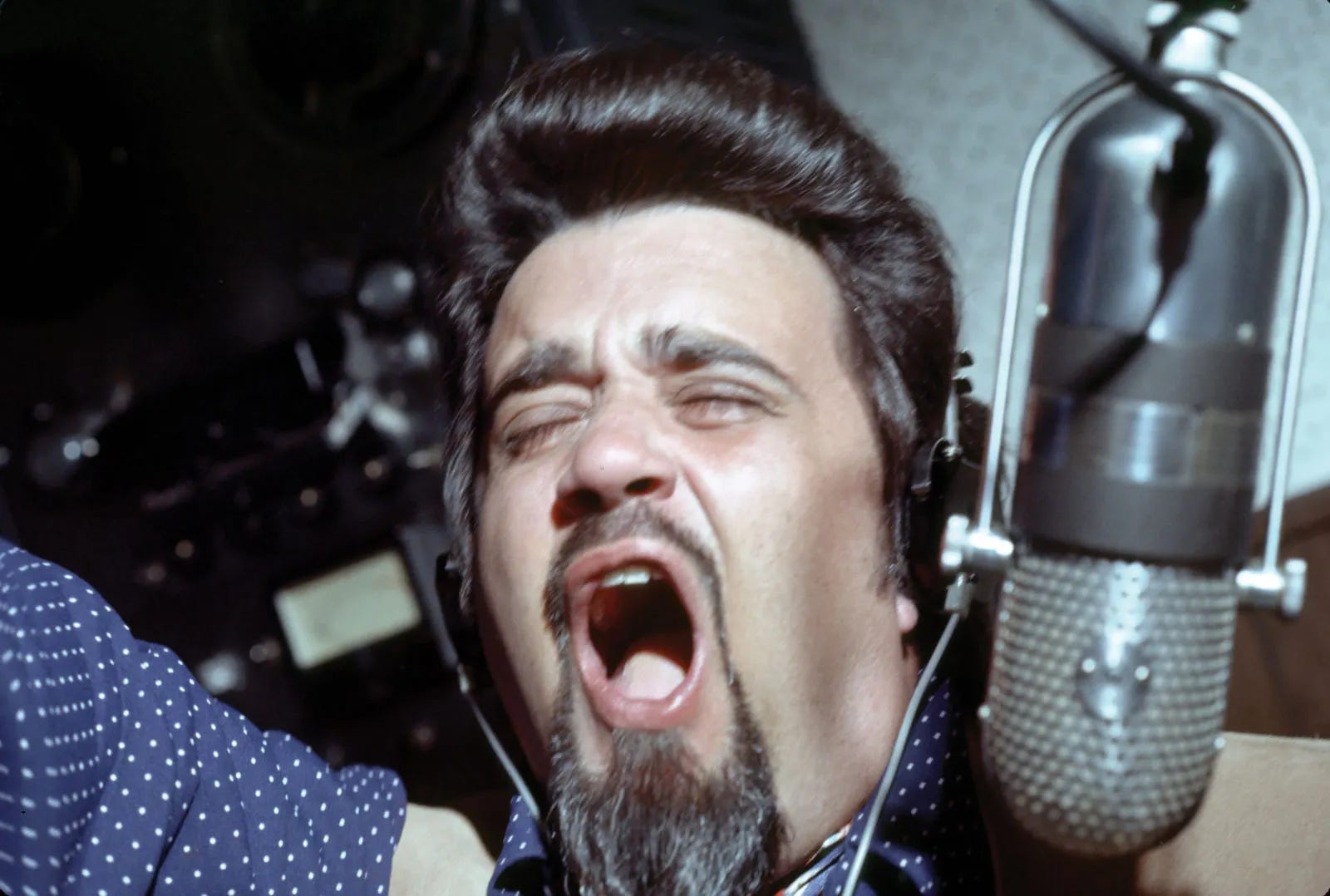
The same transmitter. Different era. No goat testicles.
What the Songs Were Actually About
Here is the thing about the Carter Family’s music that hits differently once you know all of this: those songs were not performances. They were dispatches.
“Keep on the Sunny Side” — recorded by a couple whose marriage was actively crumbling. “Single Girl, Married Girl” — sung by a woman who had fallen in love with someone else and couldn’t reach him. “Will the Circle Be Unbroken” — about bearing loss and holding on to what remains. “I’m Thinking Tonight of My Blue Eyes” — a love letter sent over a half-million-watt transmitter to a man in California who had never received Sara’s letters.
A.P. Carter wandered the mountains of Appalachia collecting songs about heartbreak, loneliness, and the weight of leaving. He brought them home to a woman who was already leaving him. She sang them beautifully, in that powerful, unadorned voice of hers, and people bought the records by the hundreds of thousands because they felt true in a way that commercial music rarely does.
They were true. That was the whole thing.
The First Family of Country Music didn’t just sing about the Southern Gothic experience of love and loss and leaving and the long road home. They were living it, in real time, on records that anyone could buy for a few cents at a general store. A.P. drove home from the studio, back to Poor Valley, back to a house where Sara no longer lived, and he kept going. He opened a country store. He haunted his own life for two decades. He eventually tried a brief reunion with Sara in the 1950s — recording together again, as if enough time had passed to make it simple — and then he died.
The circle will be unbroken. But it took a very long time.
Further reading: Mark Zwonitzer and Charles Hirschberg’s Will You Miss Me When I’m Gone? is the definitive book on the Carter Family. The PBS American Experience documentary The Carter Family: Will the Circle Be Unbroken is essential viewing. And if you want the full story of John Brinkley and the goat-gland empire, Pope Brock’s biography Charlatan covers it in gloriously uncomfortable detail.
Wonderful read! Thanks for sharing.
One of the most serendipitous moments in my newspaper career came in 1968 when I was sent to a bowling alley in the west end of Council Bluffs, Iowa, to take a photo of some junior bowlers. When I arrived, the manager told me he had some people he thought I'd like to meet. He took me into the bar where Mother Maybelle Carter was playing pool with Carl Perkins. They were in. town for an Omaha performance with the Johnny Cash show. At the bar was Cash's guitar player, Luther Perkins. I spent some time talking with Luther and wished I'd spent more time with the entourage. Oh, I did get the picture and included the musicians.