


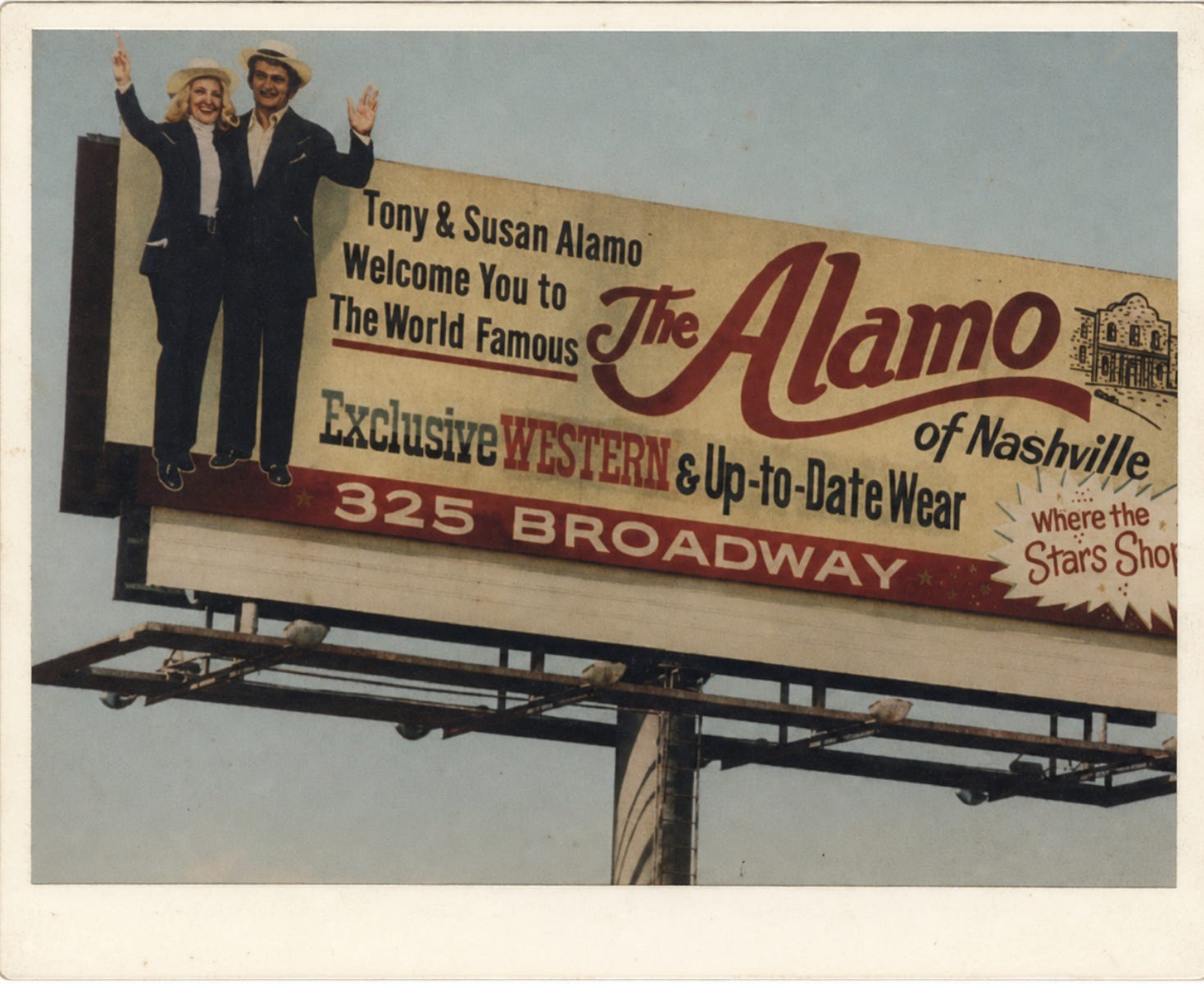
In the 1970s and 1980s, if you were a country music star preparing for a concert, there was a certain kind of jacket you wanted to wear on stage. Bespoke. Glittering. Outrageously expensive. Completely custom. Made by hand with thousands of rhinestones and sequins, each one carefully placed. It announced to the audience that you had transcended the ordinary. These jackets were created by Tony Alamo’s design operation in Nashville, and they became the uniform of stardom for some of the biggest names in country music.
What the stars who wore them didn’t fully understand—or chose not to ask about—was that every sequin and rhinestone on those jackets was hand-applied by unpaid cult members working in conditions of near-slavery. The glittering surface of the music industry was being built on the broken backs of isolated, psychologically controlled, and sexually exploited followers of a man who preached salvation while delivering only degradation.
This is the story of Tony and Susan Alamo, and how their Nashville clothing empire became one of the darkest criminal operations ever to penetrate the country music world.
Part I: The Preacher Arrives in Nashville
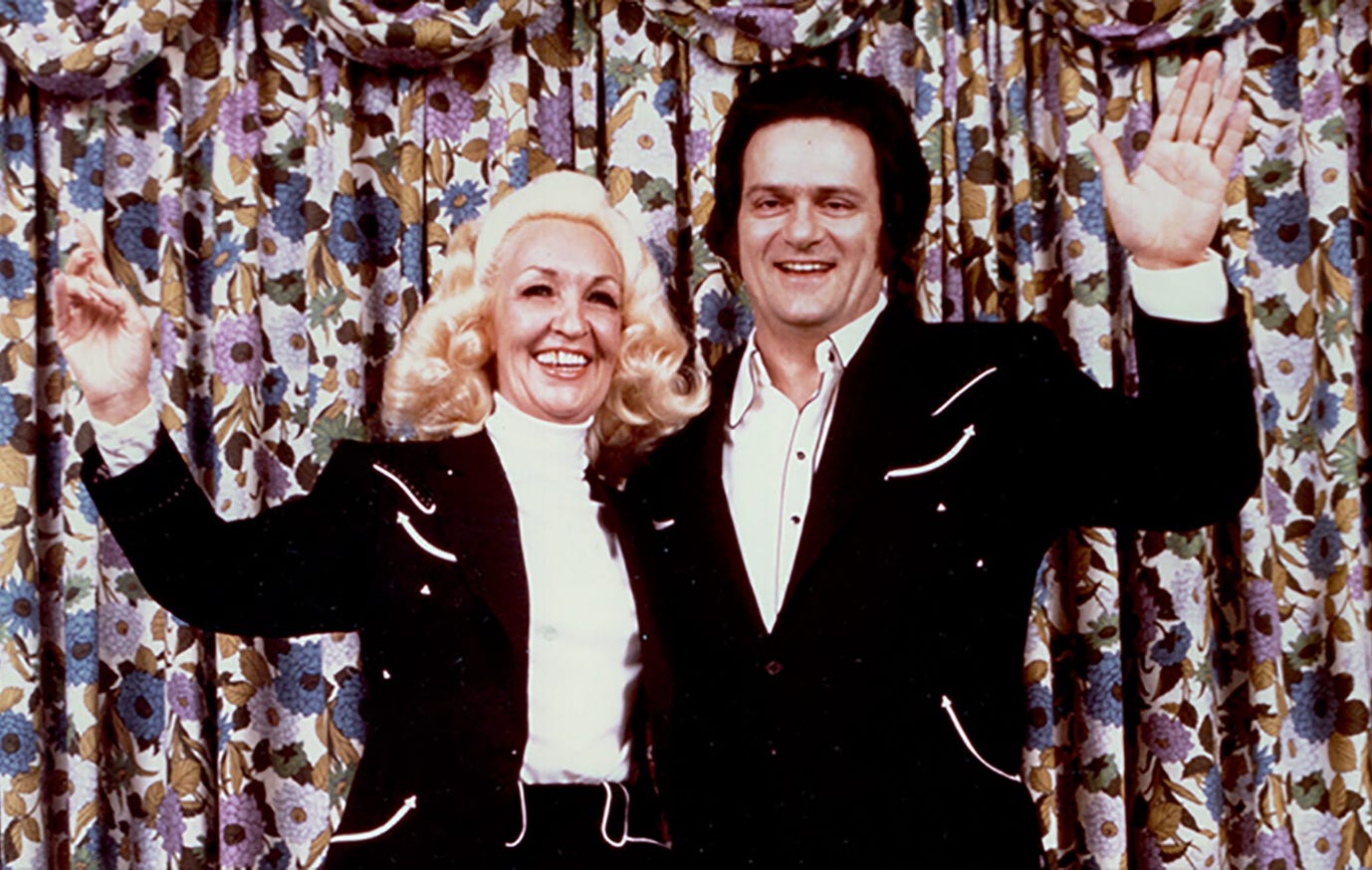
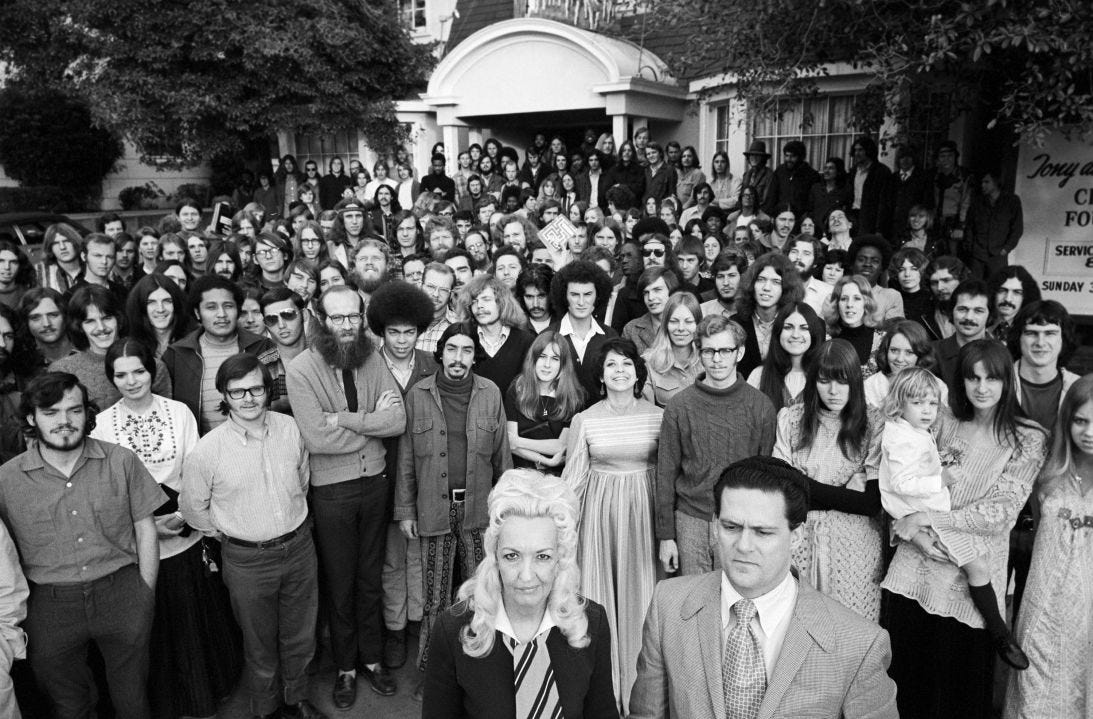
Tony Alamo was born Arden Elwin Branham in 1934. By the 1960s, he had reinvented himself as a street preacher in Hollywood, capitalizing on the Jesus Freak movement to attract runaway teenagers and spiritually desperate people searching for community. He was charismatic, manipulative, and he possessed an intuitive understanding of how to control people through a combination of spiritual authority and psychological terror.
In 1966, he married Susan Lipowitz, who would become his partner in both his religious operation and his criminal enterprise. Susan was intelligent, organized, and by most accounts, served as a stabilizing force in the organization’s early years—managing finances, handling administration, and providing what little structure existed in an otherwise chaotic and predatory system.
But it was Tony who held the real power.
By the early 1970s, Alamo had moved his operation to Nashville, establishing himself at the intersection of country music and the evangelical movement. He founded the Alamo Christian Foundation and began building what would become a multi-million-dollar empire. He established churches and properties in Nashville—including holdings in the Belle Meade area—from 1976 onward. But the real money came from something unexpected: high-end custom clothing for country music celebrities.
Alamo understood the music industry’s weakness: the need for visual excess. Country music had embraced the rhinestone aesthetic. Stars wanted to look like stars. They wanted to stand out on stage. Alamo positioned himself as the man who could deliver exactly that: custom denim jackets that were genuine works of craft, airbrushed with multi-colored designs of cityscapes and western landscapes, then embellished with thousands of hand-sewn sequins, studs, and rhinestones.
What made his pricing possible—what allowed him to create luxury goods while undercutting traditional tailors—was simple: he didn’t pay his workers.
Part II: The Business Model Built on Bondage
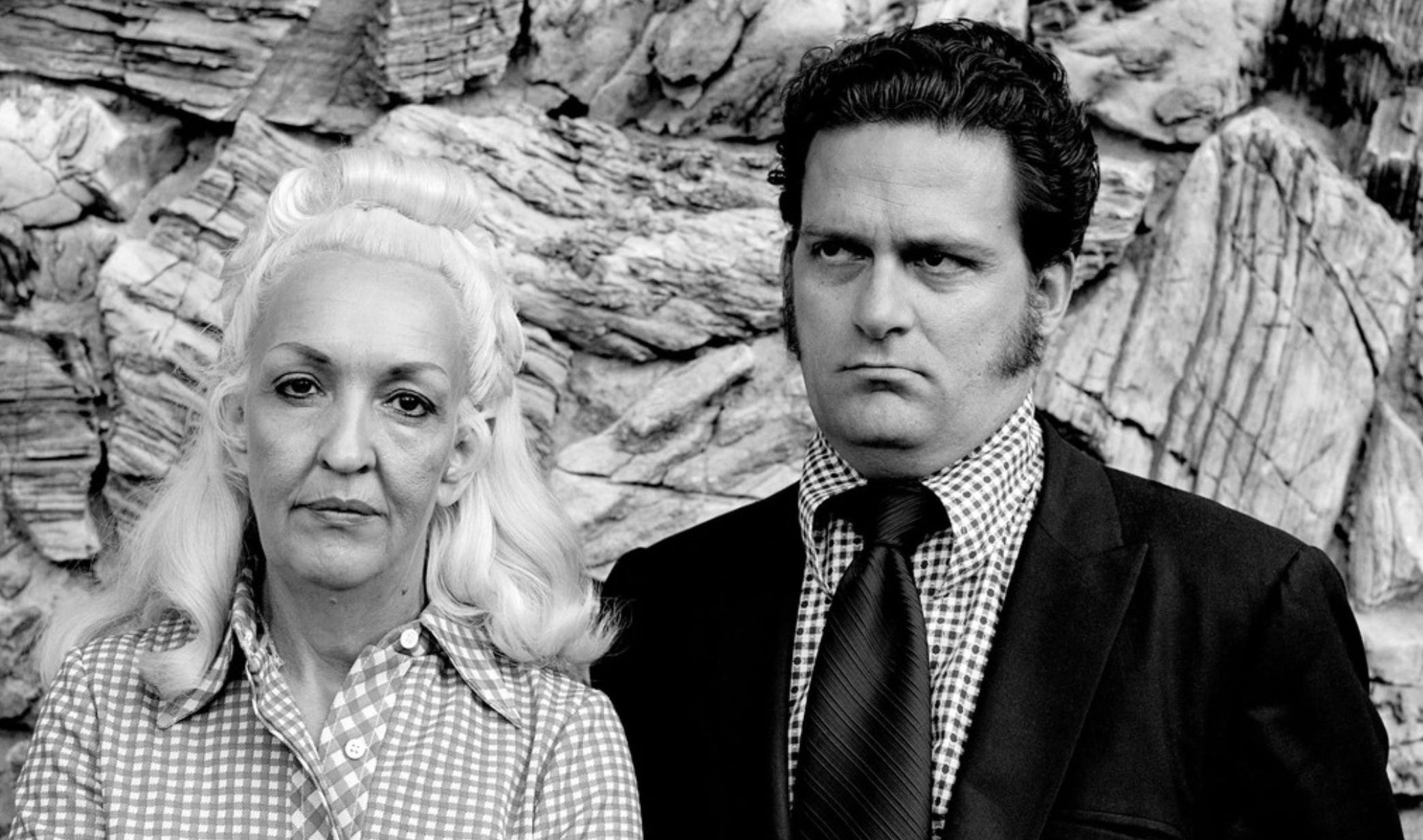
The Alamo Christian Foundation operated as a front for what was essentially a labor trafficking operation disguised as a religious community. Here’s how it worked:
Vulnerable people—runaways, teenagers fleeing abuse, addicts, spiritually searching individuals—were recruited with promises of community, purpose, and spiritual salvation. Once they entered Alamo’s orbit, they were subjected to a systematic process of isolation and control.
The Rules:
Complete financial surrender. Every recruit had to sign over all possessions, bank accounts, and assets directly to Tony Alamo. If you came in with money, you gave it all. If you had property, you transferred it. You entered with nothing and you would leave with nothing.
Total family severance. Followers were forbidden from contacting family members. Phone calls were prohibited. Letters were intercepted. The outside world was portrayed as corrupt, godless, and spiritually dangerous. Your only family now was the Alamo organization. Your only authority was Tony.
Unpaid labor, indefinite duration. Members were put to work immediately—in the clothing factories, in the fields, in construction, in whatever labor the organization needed. The workday was eighteen hours. The week was seven days. There were no days off. There was no overtime. There were no wages. You worked because Tony commanded it, and because disobedience meant spiritual failure and damnation.
Constant psychological reinforcement of dependency. Alamo preached a toxic cocktail of fire-and-brimstone apocalypticism mixed with anti-government, anti-Catholic, and anti-homosexual rhetoric. The world was ending. Only Tony could save you. Disobedience meant hell. Loyalty meant survival.
The Nashville clothing operation became the primary revenue generator for this system. Members worked in the factories producing the jackets. They hand-sewed each rhinestone. They worked the overnight shifts. They rarely left the compound. They were fed basic meals. They slept in crowded, often unheated quarters. They were told they were serving God’s purpose. What they were actually doing was generating millions of dollars in profit that flowed directly to Tony and Susan Alamo.
And country and pop music’s biggest stars were wearing the product.
Part III: The Celebrities and the Complicity
Beginning in the late 1970s and through the 1980s, Tony Alamo’s custom jackets became a status symbol among country music royalty and beyond. They were genuinely custom pieces, each one a work of craft—which was precisely what made them so desirable and so expensive.
The roster of wearers reads like a who’s who of music history:
Dolly Parton wore Alamo designs. She stood on stages across America in jackets that had been hand-stitched by unpaid cult members. Conway Twitty, one of country music’s most iconic figures, proudly paraded in sequined Alamo jackets.
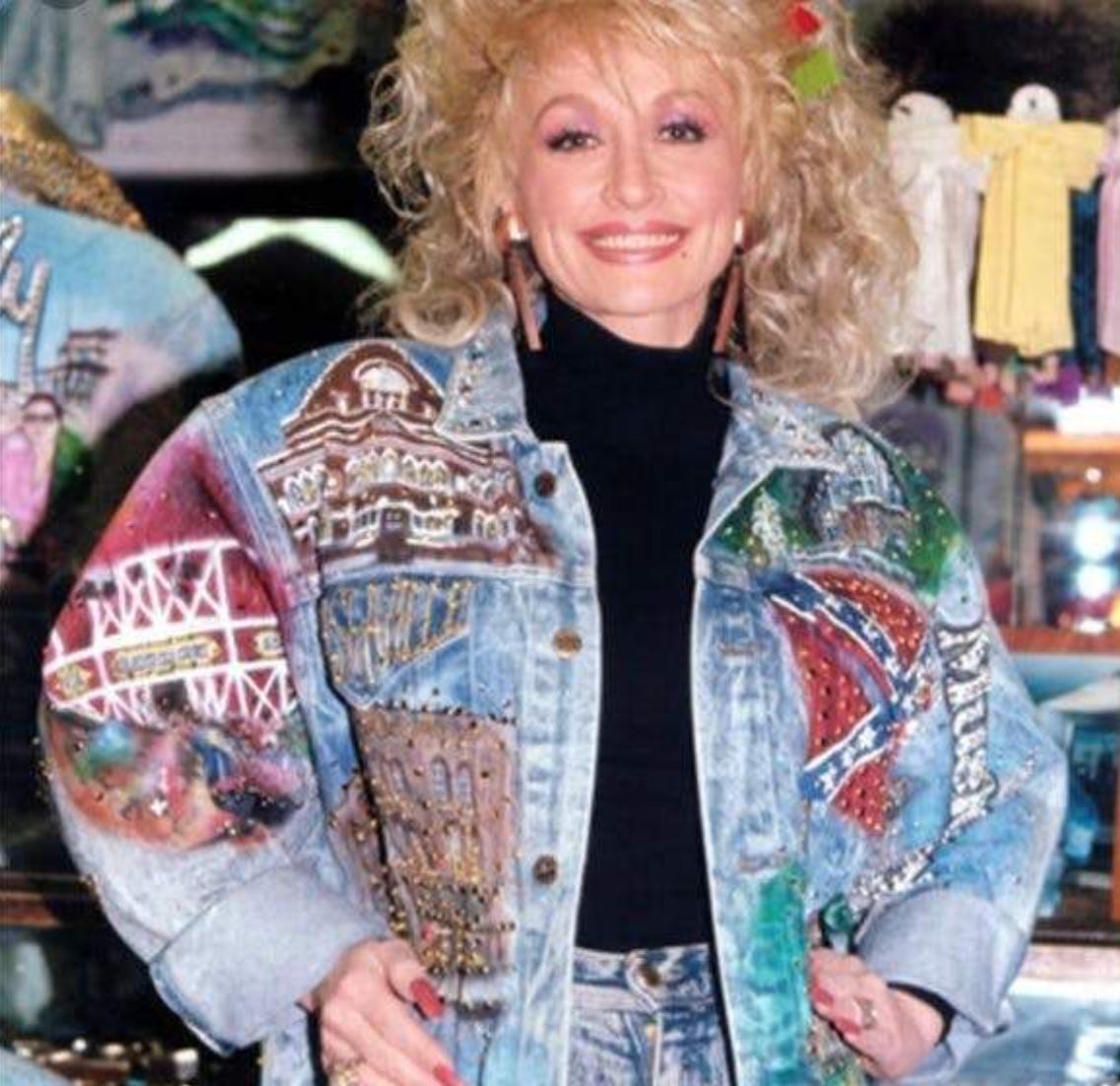
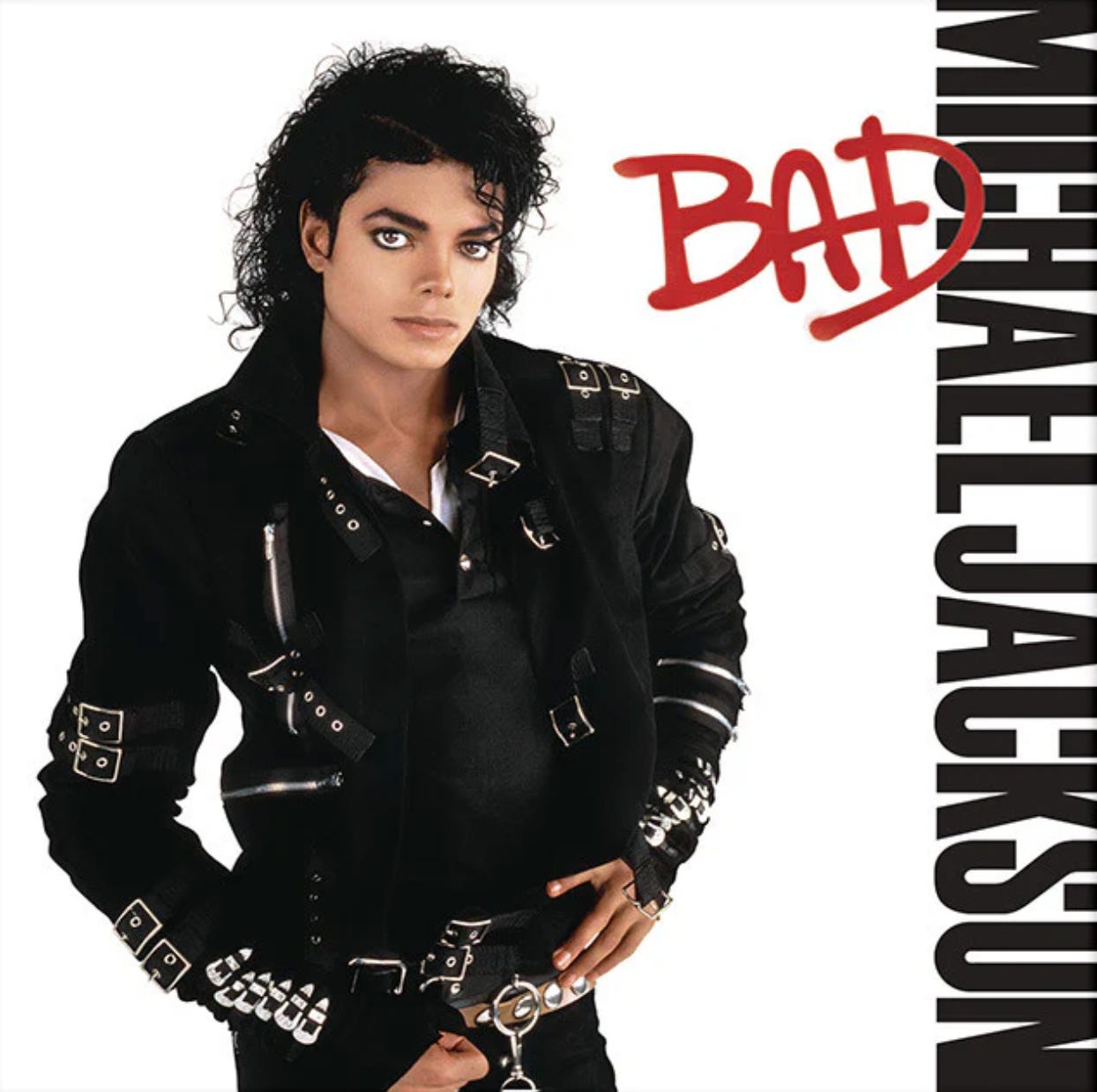
The reach extended far beyond Nashville’s country borders. Elvis Presley owned Alamo pieces. Michael Jackson wore a customized leather Alamo jacket on the cover of his 1987 album Bad, one of the most iconic and recognizable album covers in music history. Mike Tyson was photographed in them. Brooke Shields and Burt Reynolds wore them.
Every single photograph of a superstar in an Alamo design was, essentially, free advertising for the operation. Every concert appearance was a public endorsement. Every album cover that featured an Alamo jacket was a globally distributed advertisement for a criminal enterprise built on slave labor.
Did these celebrities know the full scope of what was happening behind the scenes? That’s difficult to say. Some may have. Many likely didn’t ask. The supply chain was obscured. Information was compartmentalized. It’s possible to accept a beautiful custom jacket from a prestigious designer without investigating where the labor came from—and many people do exactly that every day.
But Nashville is a small world. The music industry circles overlap constantly. Alamo operated openly. He had properties in the city. He employed people visibly. He sold to the industry’s biggest names. At some point, the question has to be asked: how much did people not ask because they didn’t want to know?
Part IV: Susan Alamo and the Body That Would Not Rest
By all accounts, Susan Alamo was different from her husband. She was organized where he was erratic. She was intelligent where he was cunning. She was, by the testimony of people who knew both, the only person who could sometimes temper Tony’s worst impulses.
On April 8, 1982, Susan Alamo died of breast cancer. She was fifty years old.
What happened next reveals the true depths of Tony Alamo’s pathology and his complete psychological control over his followers.
Refusing to accept her death, Alamo ordered his follower’s to steal her corpse from the mausoleum and bring her back to the Alamo compound. Once there, she was kept on display in their home. For six months, her embalmed body remained in the house—dressed in her wedding gown, according to some accounts—while Alamo forced his followers to maintain a continuous, non-stop 24-hour prayer vigil around the body.
He told them that Susan would be resurrected. That their faith would bring her back to life. That if they prayed hard enough, believed strongly enough, maintained their devotion completely, she would rise from the dead.
Well.. after six months of failed resurrection attempts, the decomposing corpse was moved to a newly constructed marble mausoleum on the compound grounds. But this was not the end of Susan’s ordeal. Periodically, Alamo would summon his followers to the mausoleum. He would have them assemble. He would open the crypt and expose his wife’s remains. And then he would rage at them.
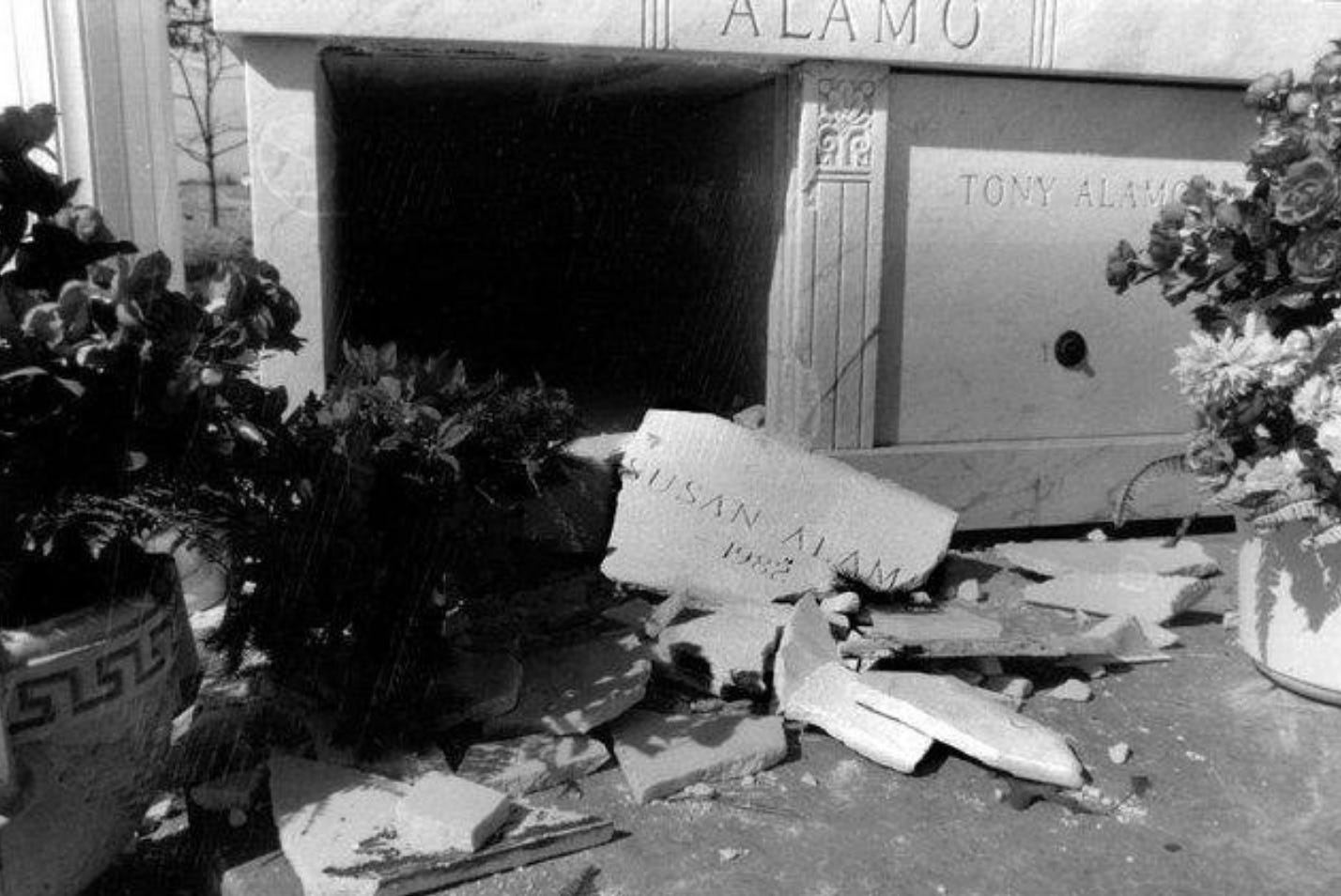
Their lack of faith, he told them, was the reason she stayed dead. They had failed. They were spiritually inadequate. They were responsible for her continuing death. He used her corpse as a tool of psychological torture, making his followers complicit in her death through their spiritual inadequacy.
This went on for years. The body remained in the mausoleum, and periodically the psychological torture would resume.
In 1991, when federal agents raided the compound, Alamo and his followers fled. But they returned that night to retrieve Susan’s remains. For years afterward, her body became something of a macabre bargaining chip within the organization—moved between locations, sometimes stored in barns, kept in the possession of Alamo’s most loyal followers as a symbol of ultimate devotion.
It wasn’t until 1998—sixteen years after her death—that Susan Alamo’s body finally surfaced at a funeral home in Van Buren, Arkansas. She was eventually laid to rest in a cemetery in Tulsa, Oklahoma, finally given a proper burial.
But even then, her memory was not allowed to rest. Alamo continued to invoke her name, her supposed spiritual presence, her “resurrection” as ongoing justifications for the psychological and physical control he maintained over his followers.
Part V: Tony’s Sexual Abuse of Children
As Alamo’s control deepened and his isolation of followers became more complete, his behavior escalated into more explicitly predatory territory.
By the 1990s and 2000s, federal investigators uncovered evidence that Alamo had been systematically grooming and sexually abusing the young daughters of his cult members. He had been taking preteen and teenage girls across state lines for sexual purposes. He had been openly referring to children as young as eight or nine years old as his “wives.”
This was not hidden abuse. This was systemic, normalized exploitation carried out within the organization, enabled by the psychological control he held over parents who were trapped in the cult and unable to protect their own children.
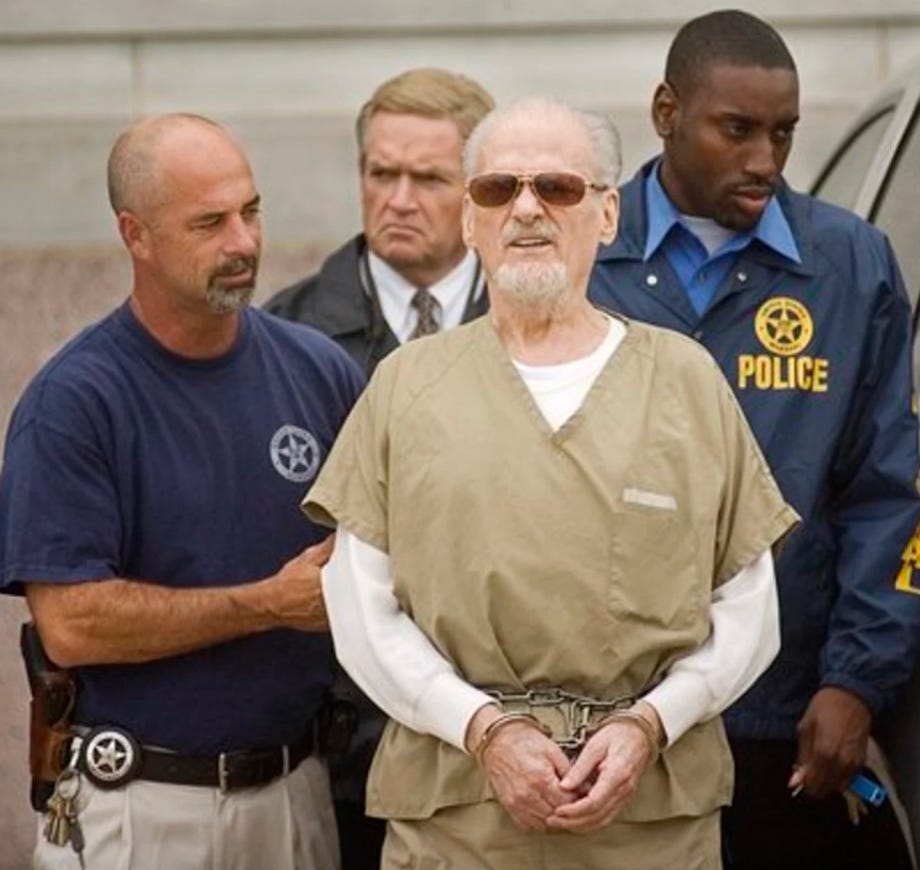
In 2009, at the age of seventy-four, Tony Alamo was convicted on multiple federal counts of child sexual abuse and transporting minors across state lines for immoral purposes. He was sentenced to 175 years in prison—a de facto life sentence.
The man who had once paraded through Nashville’s music circles in custom silks and gold rings, endorsing his “Tony Alamo of Nashville” brand at the highest levels of the industry, would spend the rest of his life locked in a federal cell.
Part VI: The Reckoning That Didn’t Come
Tony Alamo died on May 31, 2017, at the age of eighty-two, in a federal prison hospital in Butner, North Carolina. He died behind bars, where he belonged.
What’s notable about his death is how little it resonated in Nashville. There were no major retrospectives. Country music didn’t issue collective statements of remorse. The celebrities who had worn his designs didn’t give interviews acknowledging the exploitation embedded in every stitch.
Dolly Parton has never issued a public apology for wearing Alamo jackets, nor should she necessarily be held solely responsible for not knowing everything that was happening—but she also hasn’t publicly acknowledged the connection or expressed any concern about the victims.
Conway Twitty’s estate has not addressed his relationship with the designer.
The rhinestone jackets faded from mainstream fashion, but they didn’t disappear entirely. Today, vintage Tony Alamo pieces sell for hundreds or thousands of dollars on the resale market. Fashion enthusiasts and collectors—some aware of the history, some not—continue to buy and wear them.
In recent years, there’s been a small resurgence of interest in Alamo pieces among contemporary musicians and tastemakers, drawn to the aesthetic without necessarily engaging with or acknowledging the horrific history embedded in the garments.
The rhinestones still glitter. The stories they tell have largely been forgotten.
Conclusion: What We Choose Not to See
The Tony and Susan Alamo story is not just a story about a cult leader and his criminal operation. It’s a story about how exploitation hides in plain sight within industries built on image and aspiration. It’s about how we—audiences, consumers, industry figures—participate in systems of abuse without fully examining them because the surface is too beautiful, too desirable, too valuable to look past.
Thousands of people were victimized by Tony Alamo. They were isolated from their families. Their labor was stolen. Their autonomy was erased. Their children were sexually abused. One woman’s body was desecrated for years after her death.
And through it all, country music’s biggest stars wore his designs on the world’s biggest stages.
This is not meant as an accusation that anybody who purchased an Alamo clothing article was complicit in Tony’s crimes, or even knew about them. But it is a reminder that the visual culture of the music industry—the glittering surface, the rhinestones, the carefully curated image of stardom—often obscures darker realities underneath.
325 Broadway was the address of the location of The Alamo retail store in Downtown Nashville. It’s crazy to think the amount of people that walk by that building and don’t know the dark history of the enterprise that once lived within those brick walls.
The Alamo’s story has been told by several documentarians over the years, and if you wanna go even deeper - there’s a documentary series called Ministry of Evil: The Twisted Cult of Tony Alamo that I thought wasn’t bad.
ABOUT THE AUTHOR:
My name is Zachariah Malachi. I’m a full-time, self-employed honky tonk musician in Nashville, Tennessee. This Substack Publication was created for the purpose of sharpening my mind on more Nashville and Country Music history to share with the honky tonk patrons downtown during my shows—but I wanted more folks to benefit from the research, so it’s my gift to the country music fans of the world AND the people who WANT to be. Subscribe and come along for the ride.
We met people in the Love Family, in WA state. They were treated the same and the jobs with the worst conditions were used as punishment. Do you know if Rolling Stone did an article on the Alamos? Seems like I've read about them.