


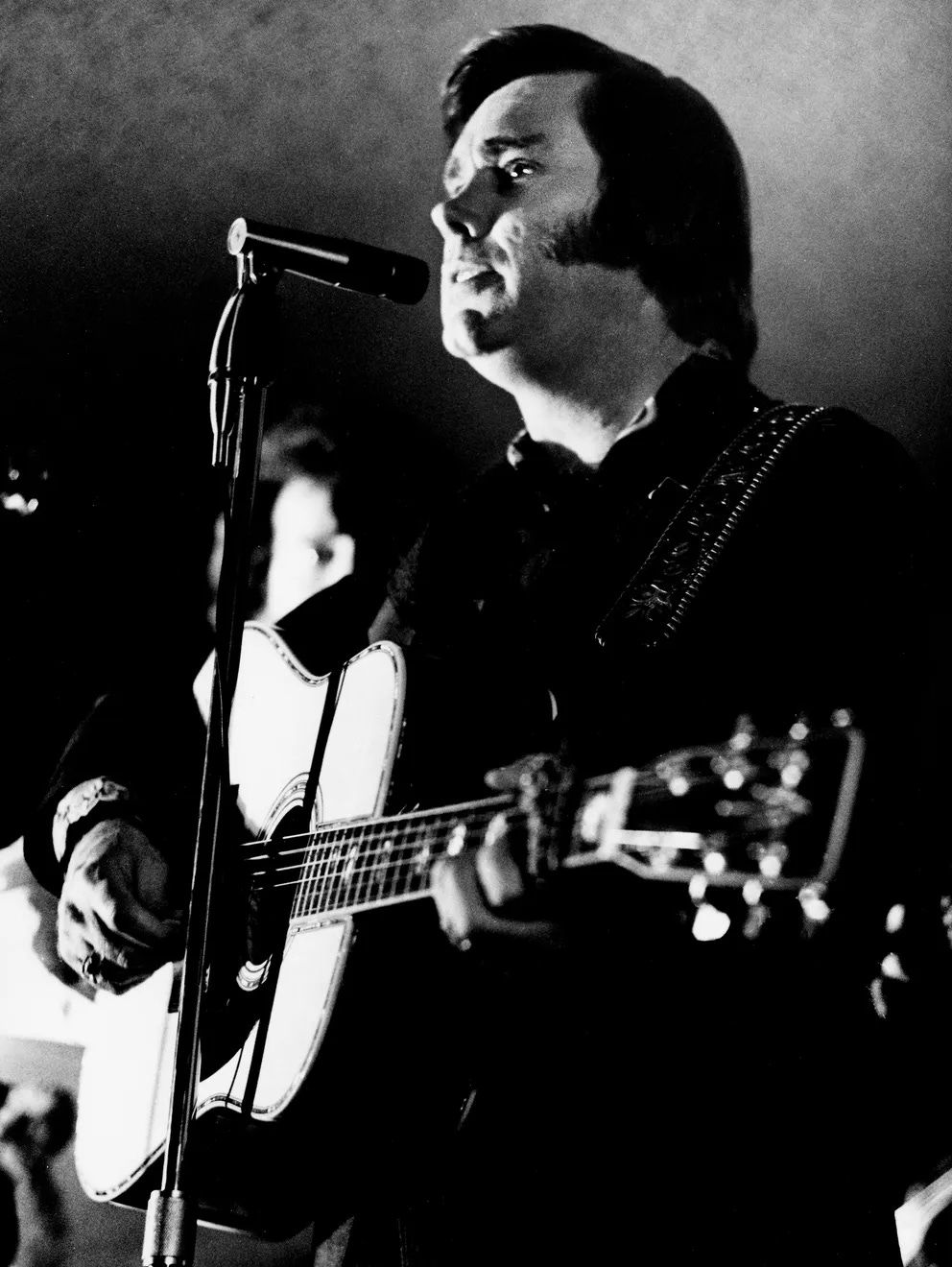
There are places that exist outside of time.
Not because anything supernatural happened inside of them — though God knows enough whiskey got consumed in those rooms to surely qualify — but because the right people were in the right place when the world was still young enough to mean something.
Possum Holler was one of those places. And like most things worth grieving, it's gone now. Gone in the most Nashville way imaginable. Not one. Not two. And not even three. What do I mean by that?
The first Possum Holler opened where Robert’s Western World is currently remodeling and growing into on Lower Broadway. You read me right.
The second Possum Holler was in Printer’s Alley.
And then there was The George Jones Museum on 2nd Avenue.
All gone. But we will get to that here in a bit. First, let’s talk about a guy.
The Possum
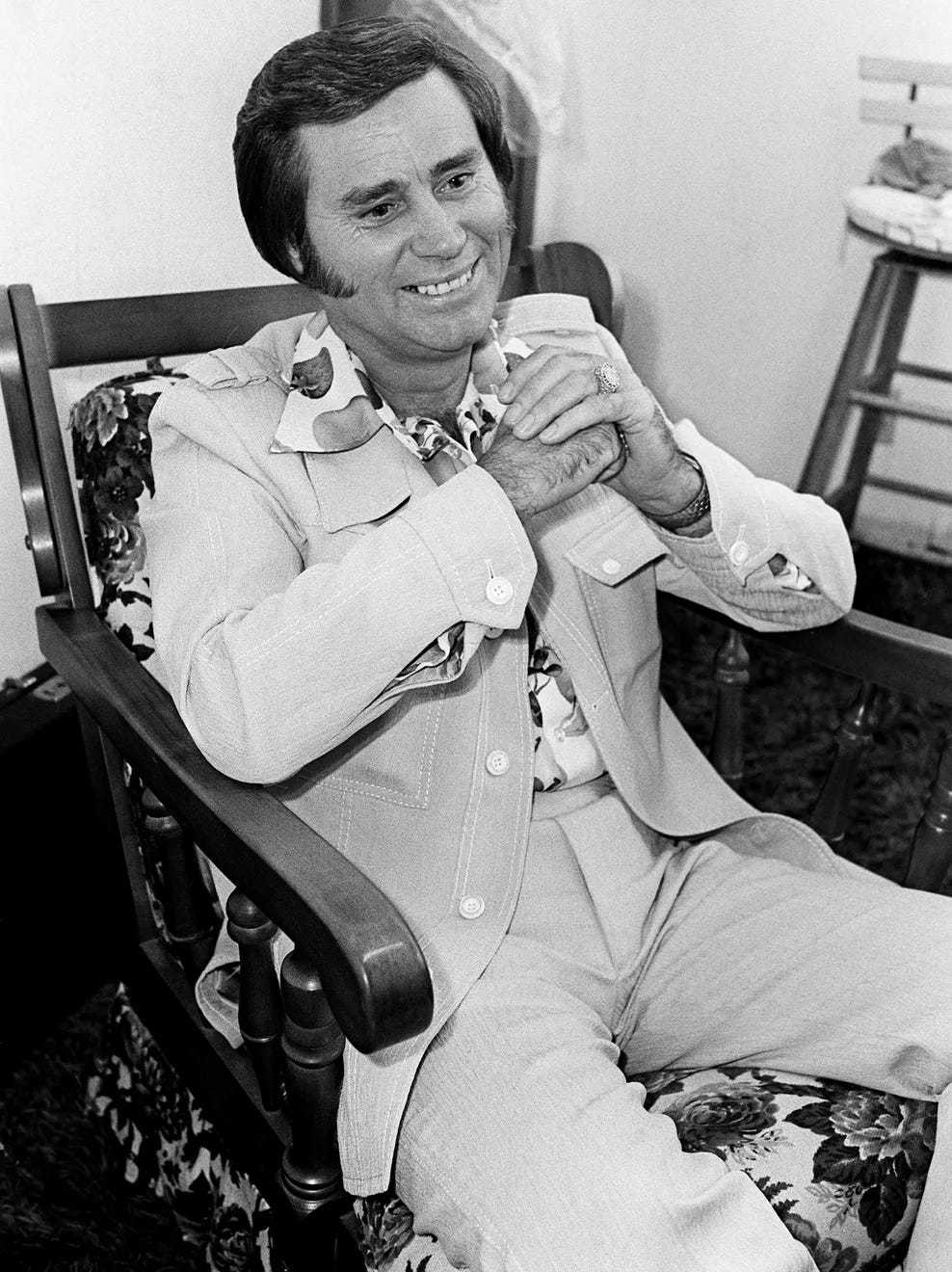
George Glenn Jones was born in a log cabin in Saratoga, Texas, on September 12, 1931, which is either a detail or a prophecy depending on how you look at it. By the time he planted his flag in Nashville in the early 1960s, he had already bled enough music out of himself to fill a cemetery full of corpses. And that voice. The voice. George’s voice was a living thing — not just a talent or a gift. It was a living, writhing creature that lived somewhere between his ribs and his spine and only came out when the pain was real enough to pursuade it to. Men cried listening to George Jones and didn’t feel ashamed about it. Any song delivered by George Jones’ tongue was a nuclear bomb to the heart.
George was called The Possum. Not because he asked for it. Because a disc jockey named Slim Watts at KRTM in Beaumont, Texas decided that Jones’s cropped hair and strange, luminous eyes and that particular shape of his pointy nose made him look like a nocturnal rodent creature that hisses and plays dead. The nickname caught the way all the best nicknames do — like a fishhook. The more you pull against it, the deeper it sets. Jones eventually did what every smart man does when losing an argument: he owned it. Possum this. Possum that. Songs. T-shirts. And in 1967, a nightclub on Nashville’s lower Broadway that he named Possum Holler.
Some men open a bar because they’re drunks. Some men open a bar because they’re businessmen. George Jones opened a bar because he understood that the music needed a room. A real room. Not a stage with velvet ropes and a promoter hovering by the door counting heads. A room where the talent bled through the wallpaper and the band knew every song ever written and the night could turn into anything at any moment, and frequently did.. and well.. alcohol probably didn’t hurt the idea, either.
Thy Holy Block
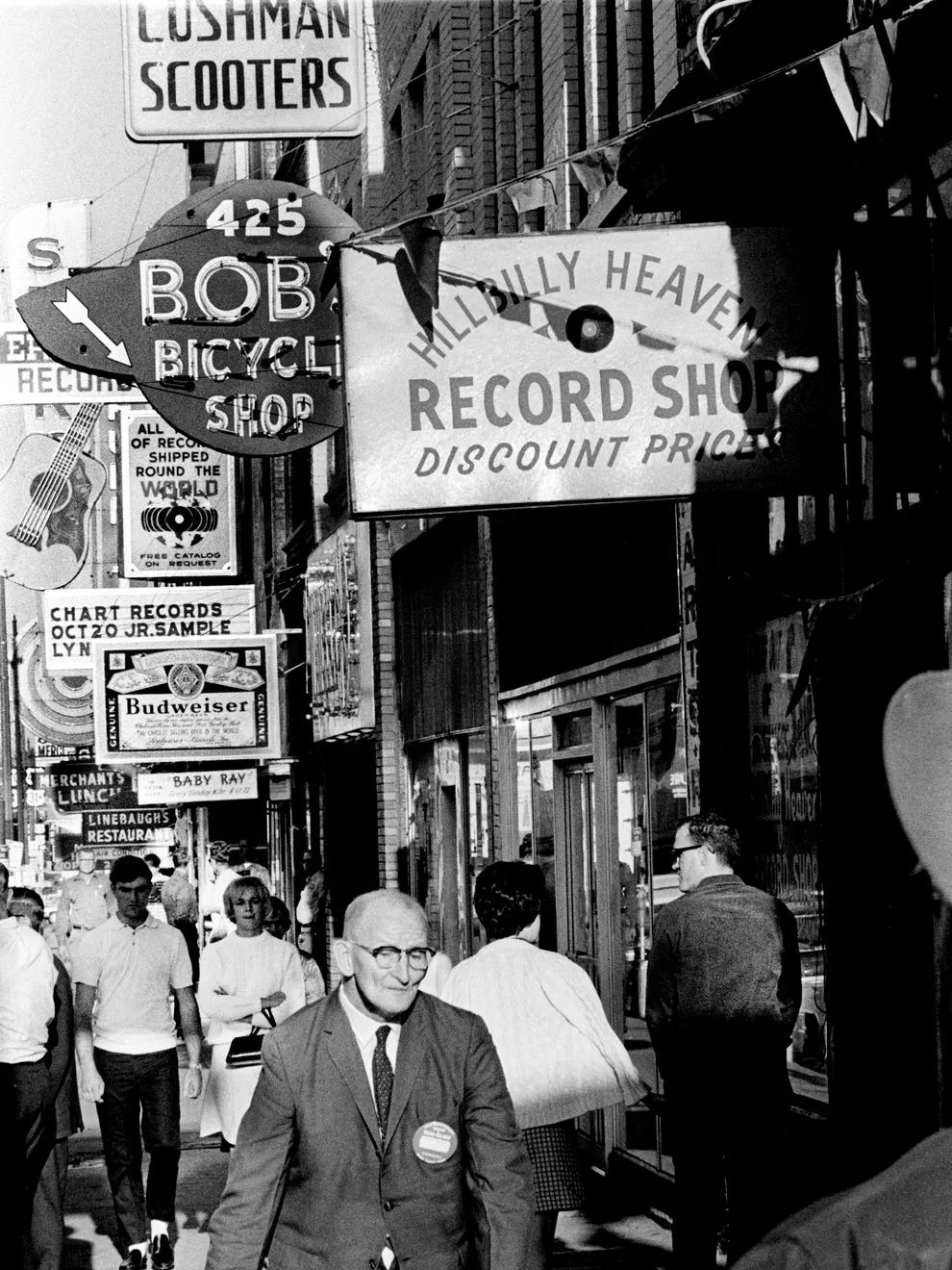
Stand on lower Broadway and 5th in 1967 and close your eyes. To your right, Ernest Tubb’s Record Shop, that square-shouldered monument to the music, where you could walk in off the street and buy a copy of anything that mattered. To your left, Tootsie’s Orchid Lounge — that purple-painted sanctuary where Hank Williams used to slip out the back door of the Ryman between Opry sets and find his “medicine”. That’s all I’m saying about Tootsie’s. And across the alley, the Ryman Auditorium itself, the Mother Church of Country Music, that old gospel tabernacle turned holy shrine, its stained-glass windows watching over the whole crooked block like a deacon who’s seen too much to be surprised by anything.. and let me tell you boys, she’s seen a lot.
That was the neighborhood. That was the air you breathed. Possum Holler opened right in the middle of all of it, on the top floor of an old building, high ceilings and exposed bones and the particular smell of a room that’s been filled with cigarette smoke and honest effort for many years. Jones described it himself, in his autobiography I Lived to Tell It All, the way a man describes a place he loves and has already lost: “There was hardly ever a shortage of talent inside the old room, which had a high ceiling and was located on the top floor of an old building. The club was open during the days when Nashville’s country stars were an unofficial family.”
Sad to read that.
An unofficial family. What Jones was describing was the community between artists and musicians in Nashville at that time. A specific, brief, unrepeatable civilization that existed inside that old building and many more on lower Broadway, where the rules were unwritten, each artist had a unique sound and everybody knew everybody’s name and what they’d been through to get to that god-forsaken town.
The Jones Boys — George’s own road band — became the house band when they weren’t touring. Imagine you’re a young songwriter or a visiting act or a Saturday night Opry performer who just got done playing the Ryman, and you walk up those stairs, and waiting for you is one of the finest working bands in the biz and they’re ready to back you up on anything you want to play. No rehearsal time. Just tell them the key and you’re gold.
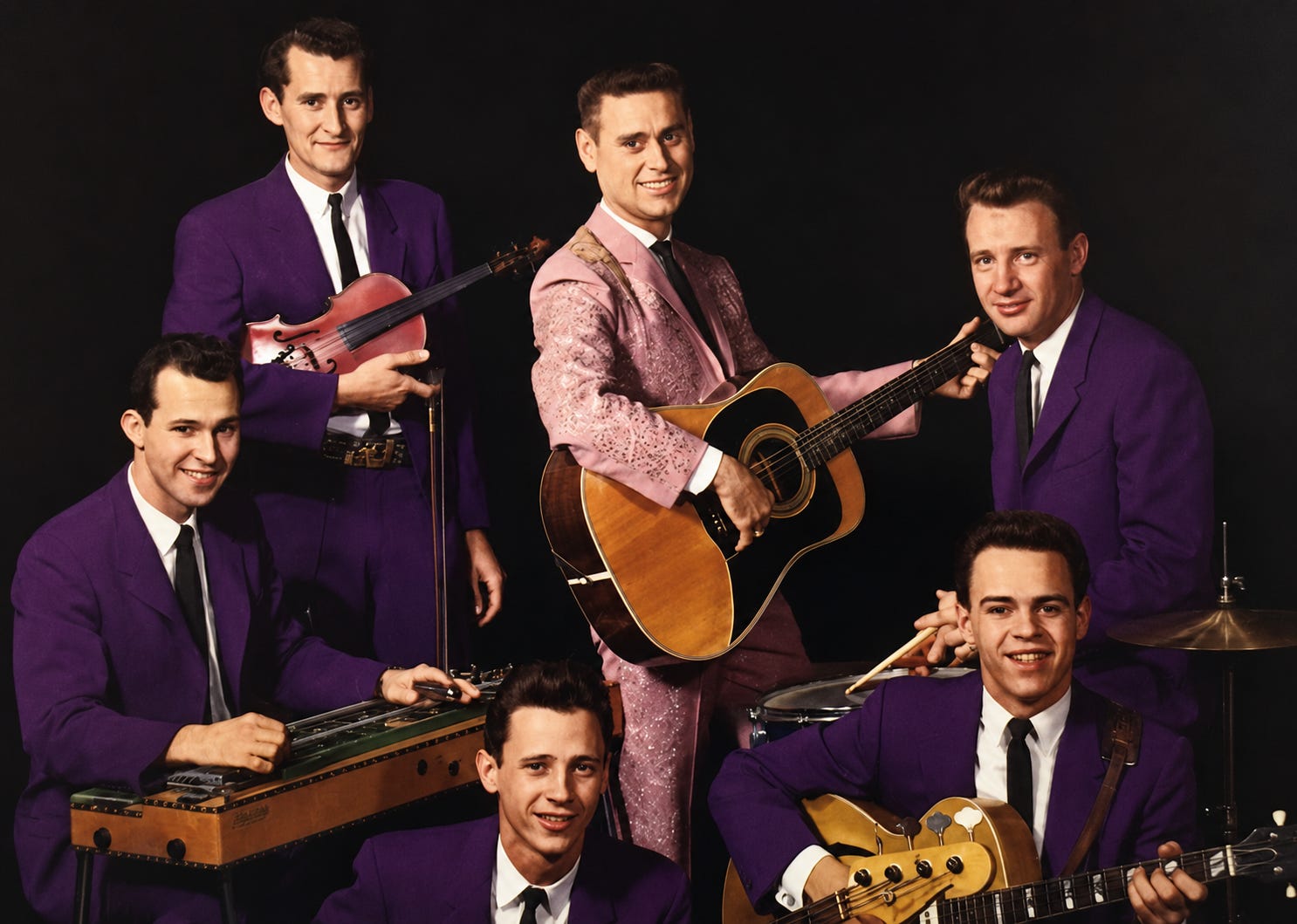
What happened next, on any given evening, might include Merle Haggard. Might include Willie Nelson. Dolly Parton. Waylon Jennings. Kris Kristofferson, who was still writing songs for other people and bartending at the Tally-Ho Tavern over on 17th, turning up to pitch a tune or just to sit in the dark and listen. Charley Pride. Kenny Rogers. Porter Wagoner in that rhinestone suit that could stop traffic in a blackout. Dottie West. The Killer himself — Jerry Lee Lewis — who would play the second Possum Holler in Printer’s Alley so many times in the late seventies that the setlist archives still have his name in the calendar like he had a standing reservation. The thought of George Jones and Jerry Lee Lewis in the same building in the 1970s scares the hell out of me.
It was, by any measurement, the most concentrated gathering of country music royalty that existed outside the Opry stage itself. Except at the Opry, the pews were separated from the pulpit. At Possum Holler, everybody was in the same room, and anybody might end up behind the microphone.
The songwriters came too. This is the part that gets overlooked, and it matters. Possum Holler wasn’t just a performance venue — it was a market for songs like any of those Broadway bars once were. A pitch room. Songwriters would come in with their notebooks and their nerve and find a willing ear in the crowd, because that crowd was the industry. Music Row had its offices and its publishing deals, but Music Row kept regular hours. Possum Holler kept different hours entirely. The kind of hours where the real decisions get made. Back when locals hung out downtown.
A Good Room Don’t Die Easy
The first Possum Holler closed in the early 1970s. I’ll get to the reasons.
But a good room doesn’t die easy.
Enter Shug Baggott.
Baggott was a Nashville hustler — the specific kind of Nashville hustler who knew everybody, owed everybody, and could talk a drowning man into buying an anchor if the price was right. He found Jones at the bottom of a very particular valley: newly divorced, chemically unreliable, spiritually hollowed out, the kind of famous that had curdled into its own kind of loneliness. Baggott signed on as his manager. He had a vision. He had a location. Kenny Rogers — yes, that Kenny Rogers — bought the building in Printer’s Alley and gifted it to Baggott, an act of generosity that history has not fully interrogated. And Baggott convinced Jones to put his name on a new room.
That was the second Possum Holler. March 1975. Corner of Commerce Street and Printer’s Alley, not but a stone’s throw from the original, just couple blocks up with the same soul. Printer’s Alley had been Nashville’s after-dark nerve center since the 1940s — a narrow canyon of neon and noise where Hank Williams had played and Waylon had cut his teeth and the whole sooty mythology of Nashville nightlife had been written and rewritten for thirty years. Late Nights, Country Stars and Showgirls. The Holler fit right in. It probably felt like coming home.
It was an immediate hit. Tourists came. Country fans came. The regulars came back. Jones had less involvement with this one than the original — his name was on it, but the operation ran on Baggott’s engine. And Baggott’s engine, it turned out, ran on more than ambition.
There’s a story Jones told himself, in a candid television interview, that you need to know. One night — he didn’t name the date, didn’t need to — Jones was in bad shape. Not performing shape. The kind of bad shape that had become its own weather system around him by the mid-seventies, unpredictable and total. Baggott pulled him into the back and put something in front of him. Cocaine. “Just sniff it,” Baggott told him, “and you’ll play all night”. Jones did. And he played all night. And when Ralph Emery asked him later if that was the night he got addicted, Jones didn’t hesitate. It was. When I found something good, Jones said, I just got all of everything I could get. I didn’t want to lose that feeling, so I’d overdo it, overdo it, overdo it.
The room that was supposed to save George Jones was, on at least one particular night, the room where George Jones got handed the thing that would nearly kill him. The man who handed it to him was the man running the room.
Baggott eventually did three years in federal prison for cocaine trafficking. He refused to cooperate, refused to name names, did the time without complaint. When he got out, he became a preacher.
Jones meanwhile kept the room going, kept his name above the door, kept the music playing through all of it. That was the thing about him. The personal catastrophe was always running concurrently with the professional grace. Two separate engines, same chassis, both running at full throttle in opposite directions. How the whole machine didn’t come apart sooner is a question for a different article.
What the room gave the world — in spite of all of it, or maybe because of it — was five years of some of the finest live country music that ever happened in a building that wasn’t the Ryman.
Jerry Lee Lewis played there in October of 1977. Came back the following March with Margo Smith on the bill. Came back again in October of ‘78. Came back again in April of 1979. The man kept returning to that room the way certain people keep returning to the places where something amazing happened to them.
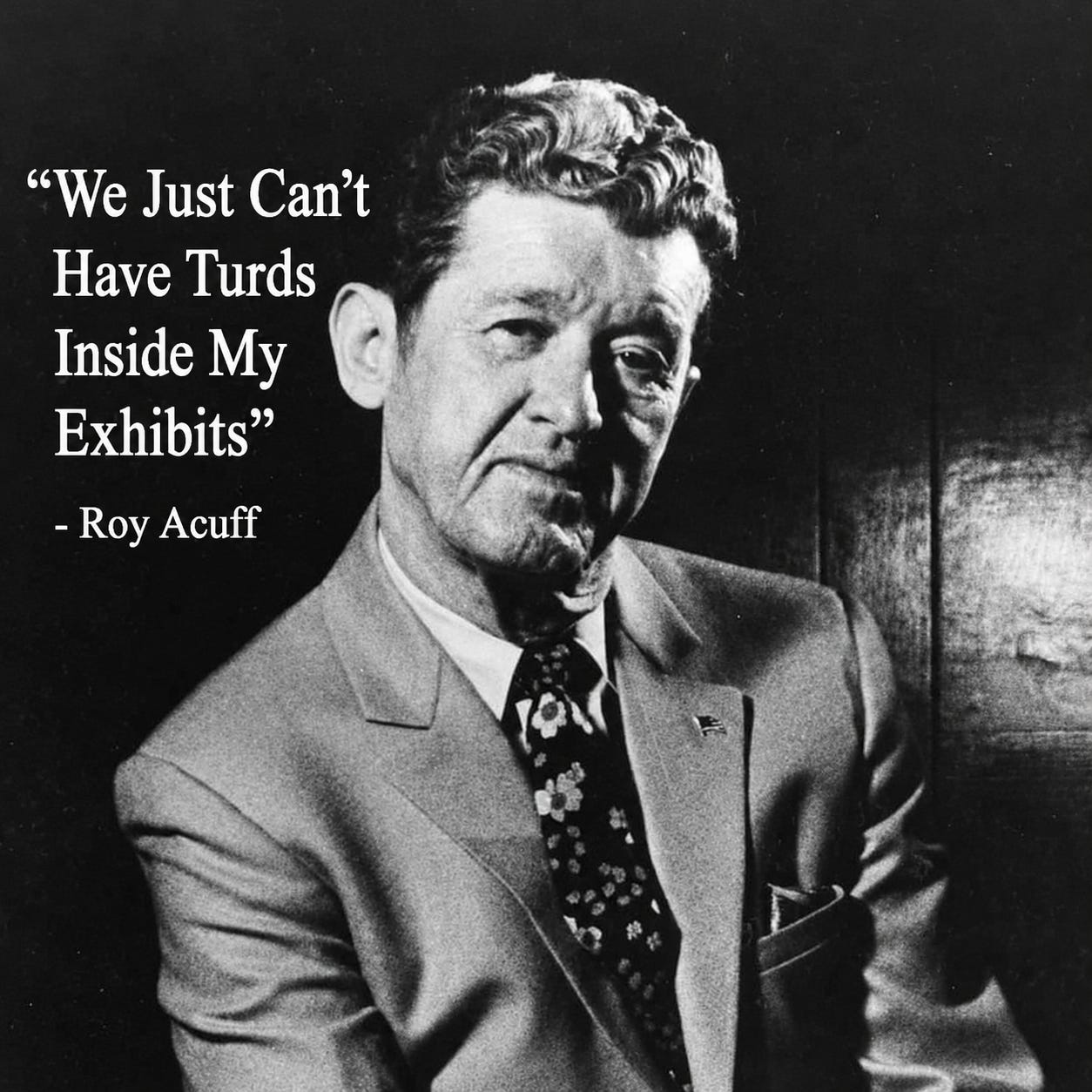
And through all of it, the most frequent visitor — the man who showed up so reliably that he might as well have had his name on the barstool — was Roy Acuff. Who else, but the King?
Remember when I told you about the first Possum Holler closing?
Sadly, most good things end.
Sometimes they end because a toilet overflows.
The plumbing in that old building gave out. Specifically, the plumbing on the Possum Holler floor gave out in the specific direction of the Roy Acuff Exhibits below. The water came through the ceiling. And not just water.
Acuff called the manager — a man named Billy — into the office. He was calm. This is the detail that gets me every time. The man was calm. He told Billy that Possum Holler would have to close.
Billy, who loved the place the way everyone who worked there loved the place, said: “But why? You love this place.”
And Roy Acuff, the King of Country Music, said: “I know it, son. I know it. But we just can’t have turds inside my exhibits.”
And that was the end of that.
What remains
Downtown? George Jones related? Nothing but songs, stories and what the Country Music Hall of Fame has behind it’s giant stone walls and buried deep in the archives.
The second Possum Holler closed in 1980. I can probably name 100 reasons why.
The building stayed. The alley stayed. Nashville kept going, kept changing, kept eating its own history at the rate it always has, which is the rate of a man who is always hungry and never full. The Ryman got renovated. Tootsie’s got a gift shop. Ernest Tubb’s record store held on for another thirty years before got kicked in the teeth. Lower Broadway is now a neon theme park, a tribute band to itself, volume turned up to eleven so you can’t concentrate on what’s no longer down there.
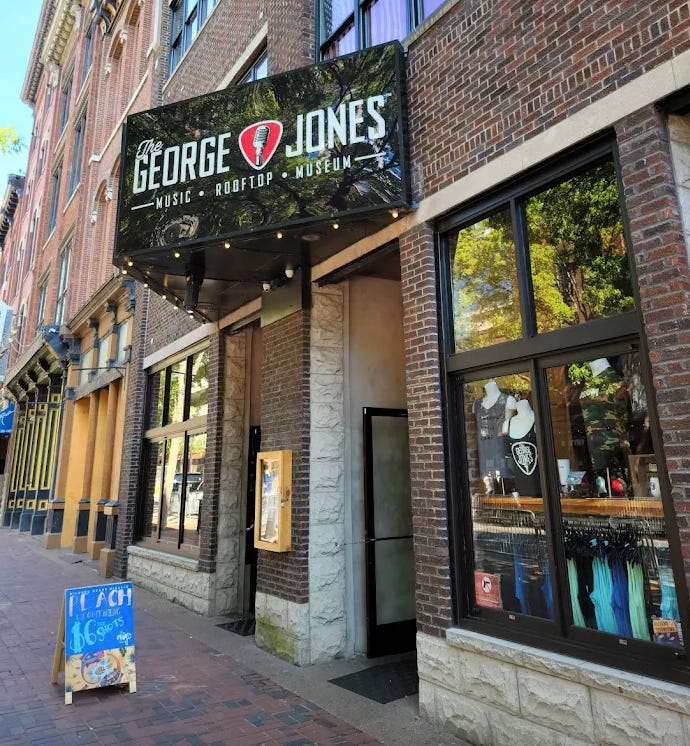
They tried again, of course. In 2015, Jones’s widow Nancy and her business partner Kirk West opened The George Jones on 2nd Avenue — a four-story complex with a museum, a smokehouse, a rooftop bar with views of the Cumberland River, and a serious collection of memorabilia that Nancy herself donated. His stage outfits. His John Deere riding mower — the one he famously drove eight miles to the liquor store after Tammy took his car keys, because a man without a vehicle is not necessarily a man without a plan. The place did right by him. It tried.
Then West got convicted of bank fraud and went to prison. The venue got sold to an investor group who named themselves Possum Holdings, LLC, which is either a tribute or an irony depending on your mood. Then the pandemic hit and shut Nashville’s doors. Then the Christmas Day bombing of 2020 went off one block away on 2nd Avenue and shut them again. They fought back. They kept trying. By December 2021, the math had stopped working, and they closed for good. The museum collection — every stitch of it — was promised a new home somewhere. I believe they later broke up everything and sold it off, but I could be mistaken.
So that’s two Possum Hollers and one George Jones, all closed. Three attempts across fifty years to give the man a room that would last.
There is no Possum Holler anymore. There is no George Jones museum or bar. What’s left are streets, and the noise, and the neon, and very rare occasions that a band plays “He Stopped Loving Her Today” for a group of twenty year old bachelorettes that walk out of the door complaining it’s not Morgan Wallen .
The thing about places like Possum Holler is that they don’t know they’re legendary while they’re happening. The legend is what’s left when the room is gone, the furniture is sold, the band gets a new gig and the building gets repurposed and the last person who was there on a Tuesday night in 1977 when Jerry Lee Lewis sat down at the piano and played until four in the morning finally closes their eyes for the last time. Kind of grim, isn’t it?
What remains is the fact of it. The knowledge that it happened. That for a window of time — maybe fifteen years across two locations, two rooms, one address and then another — there existed a place in Nashville where great music and hillbilly debauchery ran amuck. Where the family was intact. Where the hierarchy was about talent and great tunes.
Well, I thought it was worth talking about.
The Possum understood grief better than most any who ever stood at a microphone. He made art out of it. He knew what it cost and he paid the bill anyway, every time, every night, every song.
As for Possum Holler —I’m going to assume one was a goner due to bad business dealings (don’t quote me). As for the other..
Roy Acuff killed it with a plumbing problem and one of the greatest exit lines in the history of country music.
ABOUT THE AUTHOR:
My name is Zachariah Malachi. I’m a full-time, self-employed honky tonk musician in Nashville, Tennessee. This Substack Publication was created for the purpose of sharpening my mind on more Nashville and Country Music history to share with the honky tonk patrons downtown during my shows - but I wanted more folks to benefit from the research so - it’s my gift to the country music fans of the world AND the people who WANT to be. Subscribe and come along for the ride.
"The thought of George Jones and Jerry Lee Lewis in the same building in the 1970s scares the hell out of me."
Nice..... like King Kong and Godzilla!
Great essay - really enjoyed it.
Since you’ve taken notes, would love to see something on the Bull Pen lounge at the Stockyard. My friends mostly don’t believe my own stories from there — looking for validation!