


Welcome students — to Week 1 of our Genesis semester.
If you truly want to understand the true birth of commercial country music, you first have to ditch the myth that the music industry just stumbled into the backwoods of Appalachia and just saw some hillbillies with moonshine jugs and washboards. The history they feed you in corporate museum brochures is polished, sanitized, and neatly wrapped up in some condescending bow. They want you to believe it was a pure accident.. with all the lore attached.
It was not. It was a calculated collision of urban economic desperation, Yankee snobbery, raw working-class grit, and a northern corporate executive who was completely disgusted by the very music that would make him a millionaire.
The Costume Party That Shocked Manhattan
To understand how we got to that hellaciously hot summer day in Atlanta in 1923, we have to look back one year earlier to a bizarre prequel story in New York City.
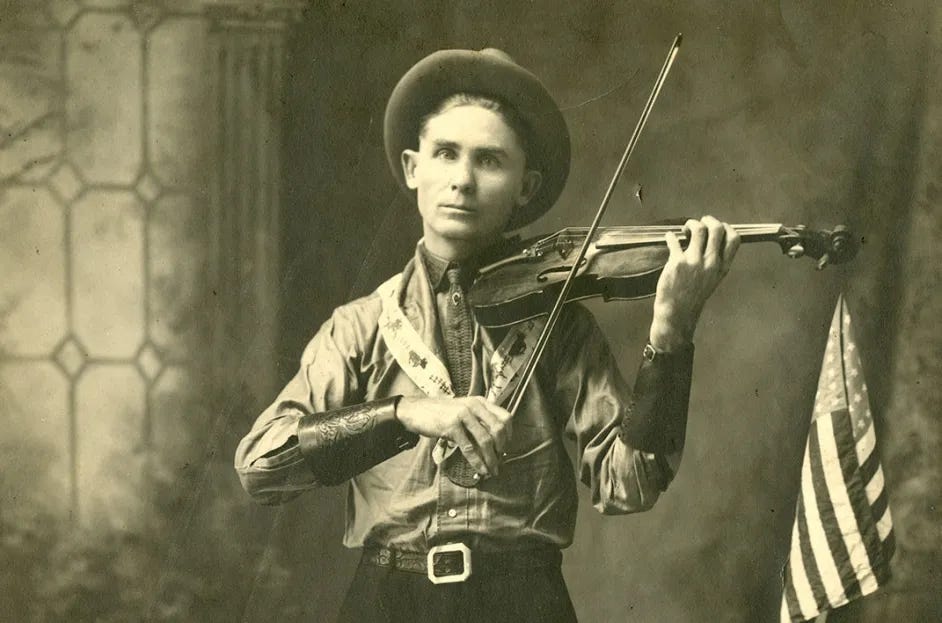
In June of 1922, two southwestern fiddlers named Alexander “Eck” Robertson and Henry C. Gilliland decided to take the recording industry by storm. Fresh off a Confederate veterans’ reunion in Richmond, Virginia — where they’d played to a crowd of thousands — the pair made their way to the Victor Talking Machine Company’s offices on the strength of a connection: Gilliland knew a New York lawyer named Martin W. Littleton, who did occasional legal work for Victor and got them through the door. What they lacked in a formal appointment, they made up for in theater. Gilliland, an old-timer from Oklahoma, was decked out in a full, authentic, woolen Confederate army uniform despite the summer humidity. Robertson, a hotshot young fiddler from Texas, was clad in an elaborate cowboy costume — satin fuchsia shirt, wide-brimmed black hat, pearl studs, boots and all. Could you actually imagine?
Together, this surreal duo walked into the corporate offices of Victor. A staffer, trying to get rid of them the way he’d gotten rid of most everyone else, barked at Eck to get his fiddle out and start playing. Robertson tore into “Sallie Gooden,” a tune he’d used to win fiddle contests across Texas — he didn’t even finish it. The man threw up his hands and said, by his account, “By Ned, that’s fine! Come back in the morning at 9:00 o’clock and we’ll make a test record.” That’s how that went down. Believe it?
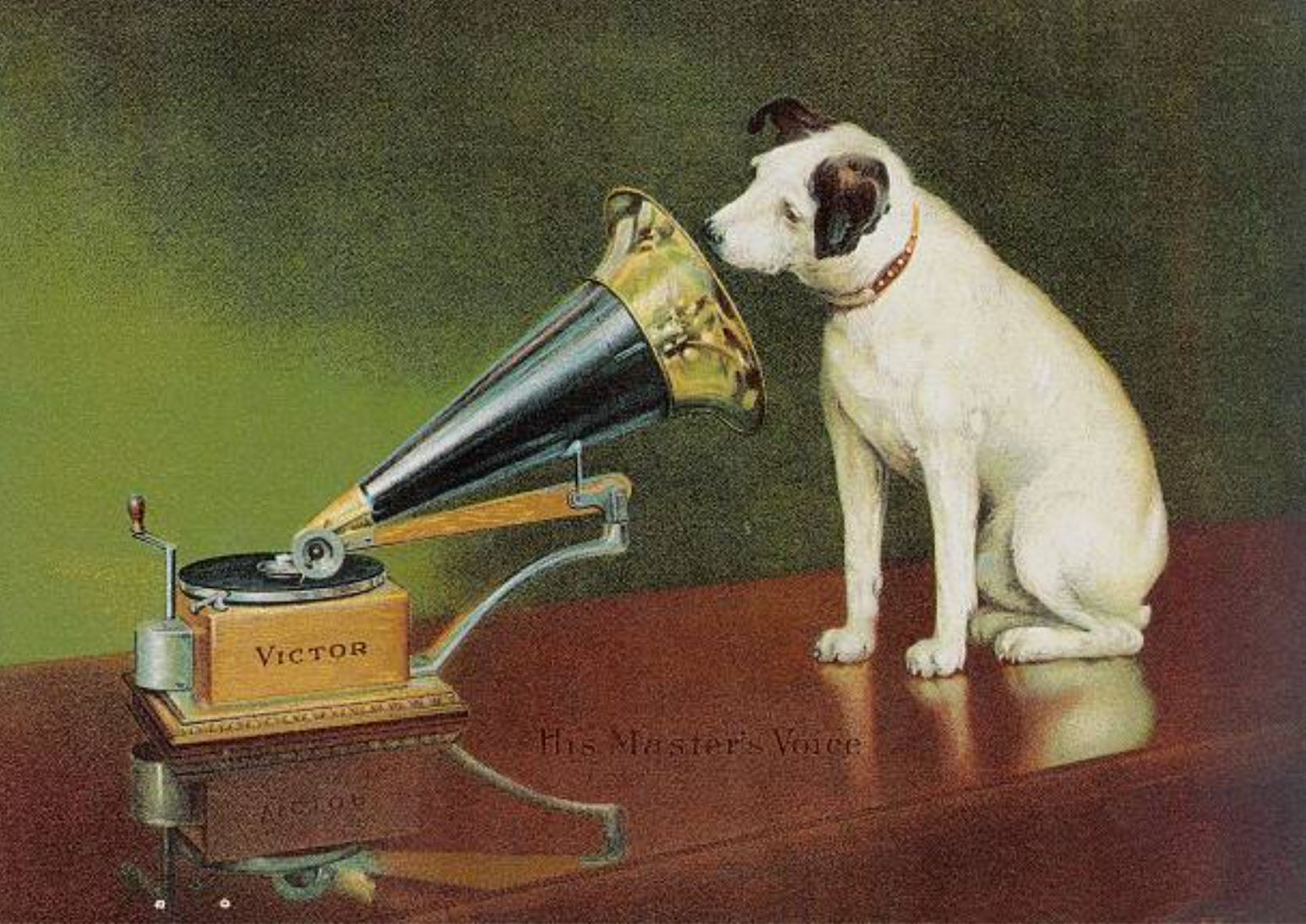
The next day, June 30, 1922, the two of them cut “Arkansas Traveler” and “Turkey in the Straw” together. Robertson came back alone on July 1st and recorded six more sides solo, including a “Sallie Gooden” with twelve dazzling variations that fiddlers are still chasing the ghost of today.
But here’s the catch: Victor didn’t care. The record wasn’t even released until the following spring, and when it was, the label barely promoted it. Typical. Robertson plugged the tracks himself on a Southern radio station, WBAP out of Fort Worth, building a small word-of-mouth following on his own steam. The northern establishment assumed this “hill country” scraping was a dead end — an oddity to be filed and forgotten. The true “Big Bang” of country music required something far more volatile than technical skill and costumes. It required a furniture salesman, a cold-blooded talent scout, and a raw, unhinged sound that the industry initially deemed completely unlistenable.
The Hustler and the Scout Meet on Nassau Street
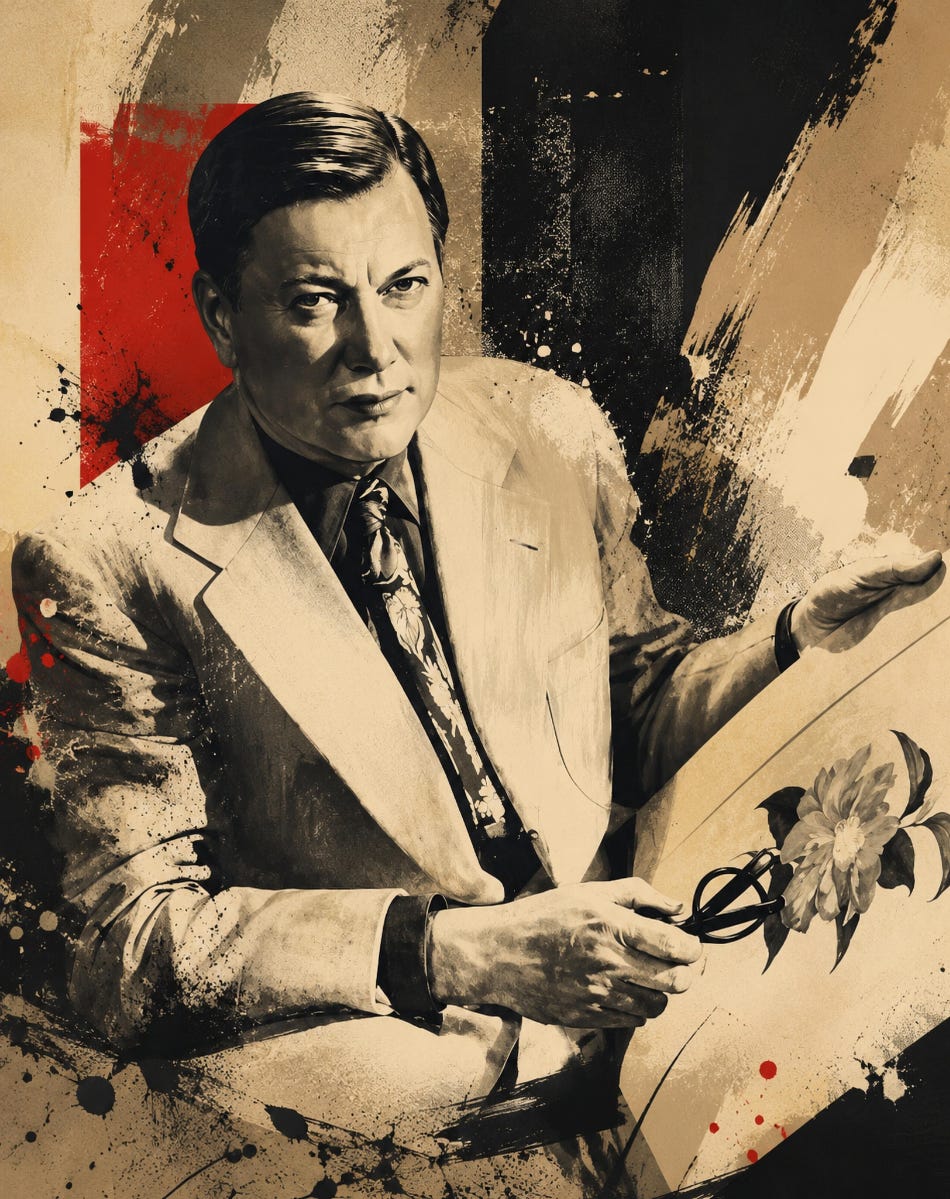
By the spring of 1923, Ralph Peer was working as a talent scout and recording director for OKeh Records. Peer was a sharp, impeccably groomed Northern urbanite. He wore tailored suits, kept his hair neatly parted, and did not care for folk music. He wasn’t a musician; he was a clinical student of human consumption. He had already made history in 1920 by recording Mamie Smith’s “Crazy Blues,” accidentally unlocking the massive, highly lucrative “race records” market. Peer understood a fundamental truth: if you went to where the working class lived and recorded their vernacular music, they would buy it back on shellac discs.
Enter Polk Brockman. Brockman was the son of an Atlanta furniture store giant, and he managed the store’s phonograph department on Peachtree Street. He was also OKeh’s primary distributor in the Southeast — a classic Southern hustler who knew exactly what his neighbors were listening to when they weren’t buying dining room sets. While sitting in a New York movie theater during a buying trip, watching a newsreel of a Virginia fiddling convention, Brockman had a sudden epiphany. He scribbled a note to himself: Record local Atlanta musicians.
Brockman convinced Peer to pack up his heavy, primitive acoustic recording equipment and catch a train down to Georgia. In June of 1923, Peer set up a temporary studio in a vacant building on Nassau Street in downtown Atlanta. The room was hot and stuffy, and it smelled of industrial wax AND stale tobacco. Peer sat behind his equipment, waiting for something that could sell. Brockman knew exactly who to bring him.
The Unhinged Bow of Fiddlin’ John Carson
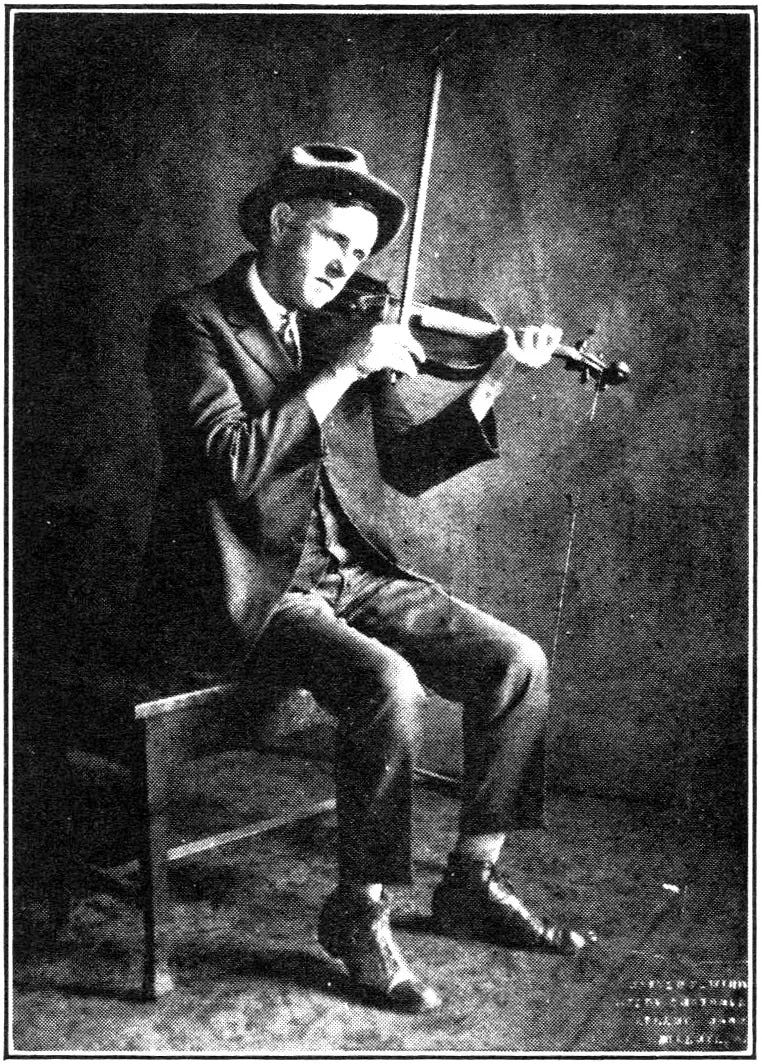
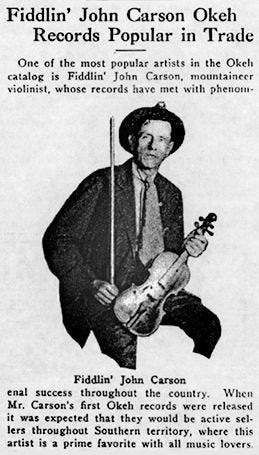
The man Brockman brought up the stairs was a rowdy, 55-year-old local celebrity named Fiddlin’ John Carson. Born and bred in the north Georgia hills, Carson was a living relic of an older, wilder America — a former mill worker, racehorse jockey, and moonshiner turned political campaign fiddler, whose playing did more to pull in votes than any stump speech. He was “Champion Fiddler of Georgia” seven times over and a regular, anarchic presence on Atlanta’s WSB radio, the South’s first station.
Carson didn’t play like the trained artists Peer was used to tracking in New York. He stood in that sweltering warehouse and unleashed a raw, primitive, scraping performance — “The Little Old Log Cabin in the Lane” and “The Old Hen Cackled and the Rooster’s Going to Crow,” sung in a high, nasal wail that carried the dirt and isolation of the Southern mountains.
“Pluperfect Awful”
To a man whose ears were tuned to the polish of Tin Pan Alley, Carson’s performance landed like a slap. Peer’s own verdict, recorded for history by Brockman decades later, was blunt: “pluperfect awful.” Peer was reportedly so unimpressed that Brockman had to talk him into pressing five hundred copies at all — and even then, purely as a favor to a valuable distributor, not because Peer believed in the record.
(Worth noting, in the spirit of making sure I’m Ralph Peer’s biographer Barry Mazor has argued the “pluperfect awful” line may have been aimed at the technical quality of the recording itself — the room, the wax, the primitive equipment — rather than Carson’s music. Peer, by this account, was already angling to get Carson into a proper studio in New York. History remembers the insult; the context of the comment is a little murkier.)
Whatever Peer meant by it, he didn’t fight for the record. He shipped the five hundred unlisted copies down to Atlanta, assumed the whole experiment was dead on arrival, and went back to his office in New York expecting never to hear the old fiddler’s name again.
The Million-Dollar Noise
He was dead wrong.
The boxes barely made it off the truck before Atlanta’s working class — mill hands, farmers, factory girls — cleared the shelves. The pressing sold out within days. It sold out again from the stage of the next fiddlers’ convention. Brockman fired off word to New York demanding more copies, immediately.
Suddenly, that “pluperfect awful” screeching sounded exactly like a ringing cash register. Peer’s business instincts overrode his aesthetics fast. He officially put the disc on OKeh’s national catalog, summoned Carson to New York, signed him to an exclusive contract, and put him back in the studio. Two of those New York sides — “You Will Never Miss Your Mother Until She Is Gone” and “Old Joe Clark” — reportedly sold over a million copies apiece.
Carson became a national name almost overnight, touring Piedmont textile towns and Appalachian coal camps, drawing crowds who’d hand over 75 cents they didn’t really have to watch an old man saw on a fiddle. The posed promotional photographs from this era tell the whole story — mountain musicians stiff as boards in borrowed ties, polished shoes pinching their feet, while the music underneath stayed exactly as wild and untamed as it had been in that Nassau Street warehouse.
The Copyright Epiphany
But while Fiddlin’ John Carson was becoming a folk hero on stage, Ralph Peer’s sharp mind was watching someone else entirely: Polk Brockman.
Peer noticed Brockman wasn’t just moving shellac around at a furniture store — Brockman had quietly positioned himself as a publisher. Every time Carson recorded an “old familiar tune” with no living author to pay, Brockman was securing a piece of the copyright, capturing passive income that had nothing to do with record sales at all.
That was Peer’s real revelation. The fortune in this new, exploding industry didn’t belong to the man sweating on stage. It didn’t belong to the factory pressing the plastic. It belonged to whoever controlled the copyright on the song itself. If you could get your name on the uncopyrighted melodies pouring out of the American wilderness, you could build an empire on paper that would outlast every fiddler who ever played a note of it.
Peer was done being an employee. Can’t say I blame him.
He was about to stage a quiet corporate mutiny that would permanently reshape the business of American popular music.
ABOUT THE AUTHOR:
My name is Zachariah Malachi. I’m a full-time, self-employed honky tonk musician in Nashville, Tennessee. This Substack Publication was created for the purpose of sharpening my mind on more Nashville and Country Music history to share with the honky tonk patrons downtown during my shows - but I wanted more folks to benefit from the research so - it’s my gift to the country music fans of the world AND the people who WANT to be. Subscribe and come along for the ride.
🔒 UPGRADE TO UNLOCK TOMORROW’S MASTERCLASS
Today’s dispatch was just the spark. Not even the Big Bang. Tomorrow, in our Premium Wednesday Masterclass, we go straight into the ruthless, brilliant mind of Ralph Peer.
We’ll break down how Peer weaponized this Atlanta revelation, walked away from OKeh, and approached Victor Records with a contract that shocked the industry: he agreed to work for zero salary, on one condition — he kept the mechanical publishing rights to every song he recorded. We’ll trace the financial engineering behind the 1927 Bristol Sessions, how he pushed Jimmie Rodgers and the Carter Family toward original, copyright-clean material, and how his royalty model built a publishing empire that still shapes the power structure of Music Row today.
If you want to understand how the actual business of country music was engineered, you can’t miss tomorrow’s lecture. Join us this semester.
As always, today’s tutorial is brilliant and engaging. Looking forward to tomorrow’s continuation.
I can just hear those old songs ringing through the ages. I had the good fortune to play behind Billy Armstrong twice. Wow! An amazing talent.