


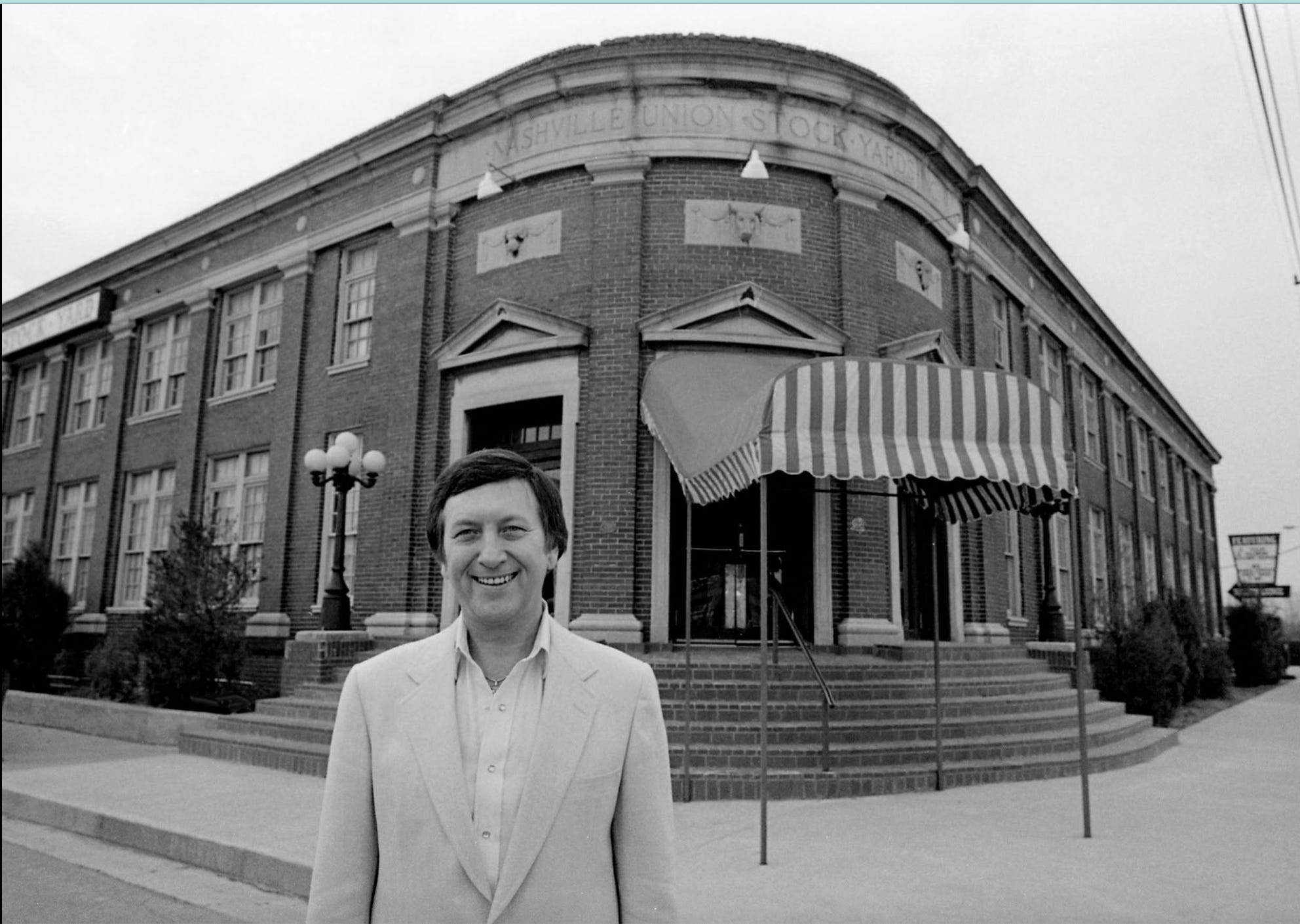
The building still had eyes when they sold it.
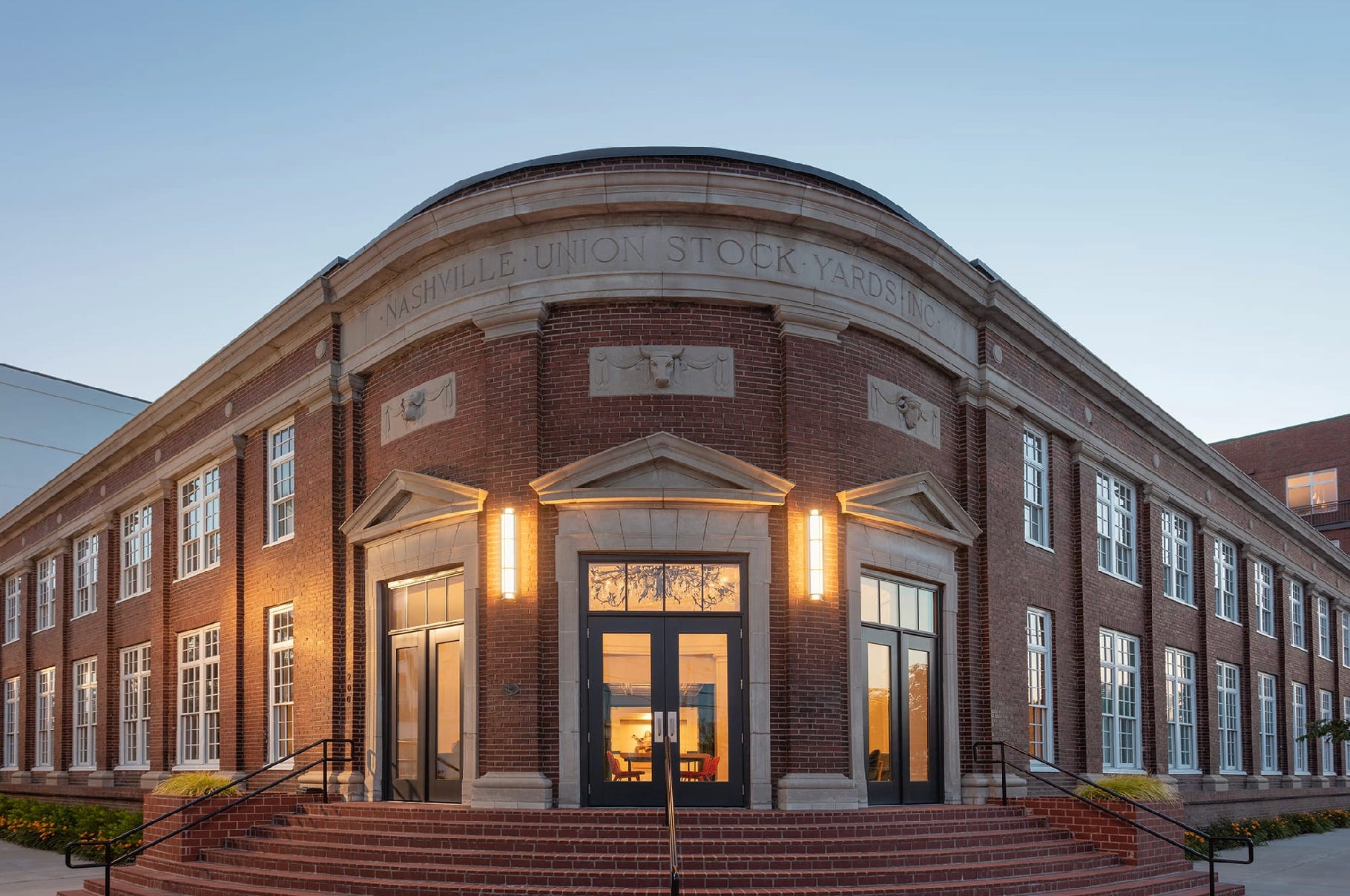
Mounted on the facade at 901 Second Avenue North, three terra cotta animals — a cow, a pig, a curly-horned sheep — watched over the neighborhood the way Hank Williams watches over Montgomery in that Alan Jackson song, “Midnight In Montgomery”. They’d seen everything that happened inside and everything that happened after, and they weren’t telling anyone anything.
By 2015, when the last reservation was honored and the doors were locked for good, the building had been three different things in a hundred years: a working livestock yard that was once the most important animal trading site in the Southeast, then a restaurant where the Nashville music industry went to eat steak and be seen and sometimes fall apart, and then a closed building waiting for developers to decide what came next. The developers paid $8.3 million and announced plans for 300 apartment units. Typical for Nashville.
This is the story of the middle chapter. One that really matters.
Butchertown
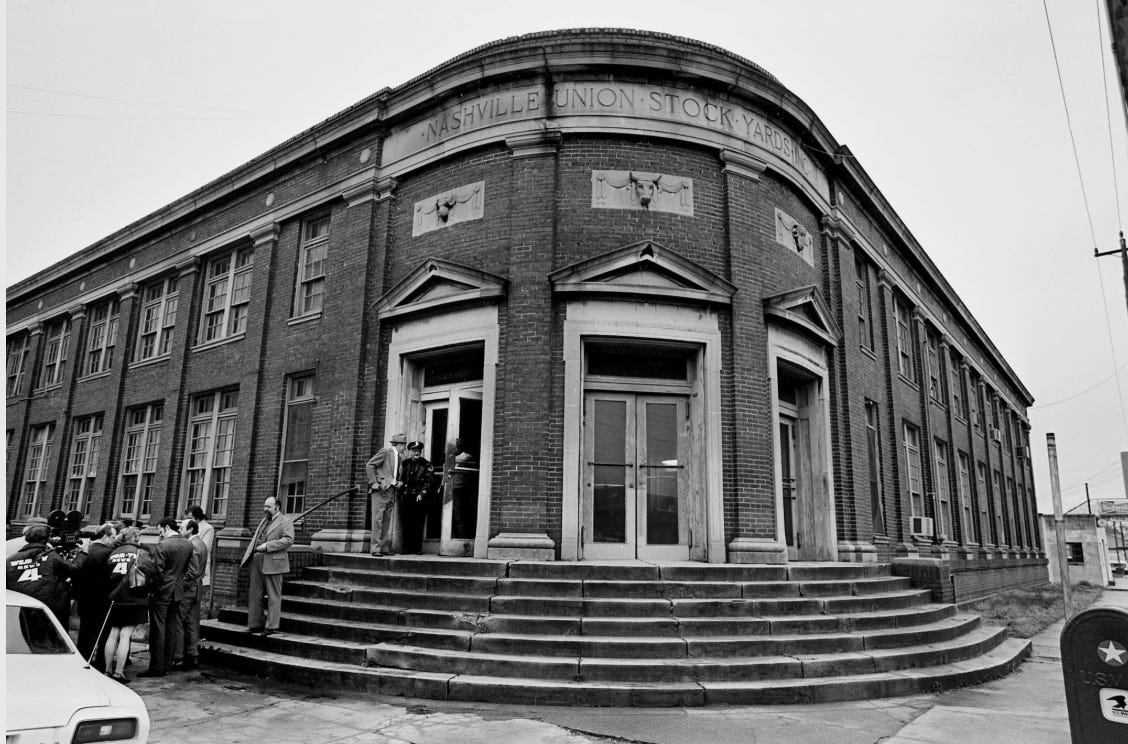
Before it was the Stockyard Restaurant, before it was the Nashville Union Stock Yards, this section of the city was called Butchertown — named for the concentration of slaughterhouses and meat markets that operated along the riverfront two blocks away. The name tells you everything about the neighborhood’s relationship with the transaction of death and meat and money. It was not a clean-cut part of town. It was the part of town that fed the rest of it.
In the mid-1910s, a local businessman named James E. Caldwell looked at the scattered small trading yards around Nashville and saw some inefficiencies. He wanted a single centralized market — one place where farmers, buyers, and animals could converge and conduct business under one single roof. He found his site on open farmland near the Cumberland riverfront, four blocks east of the downtown business district, and in 1919 he hired contractors to build it.
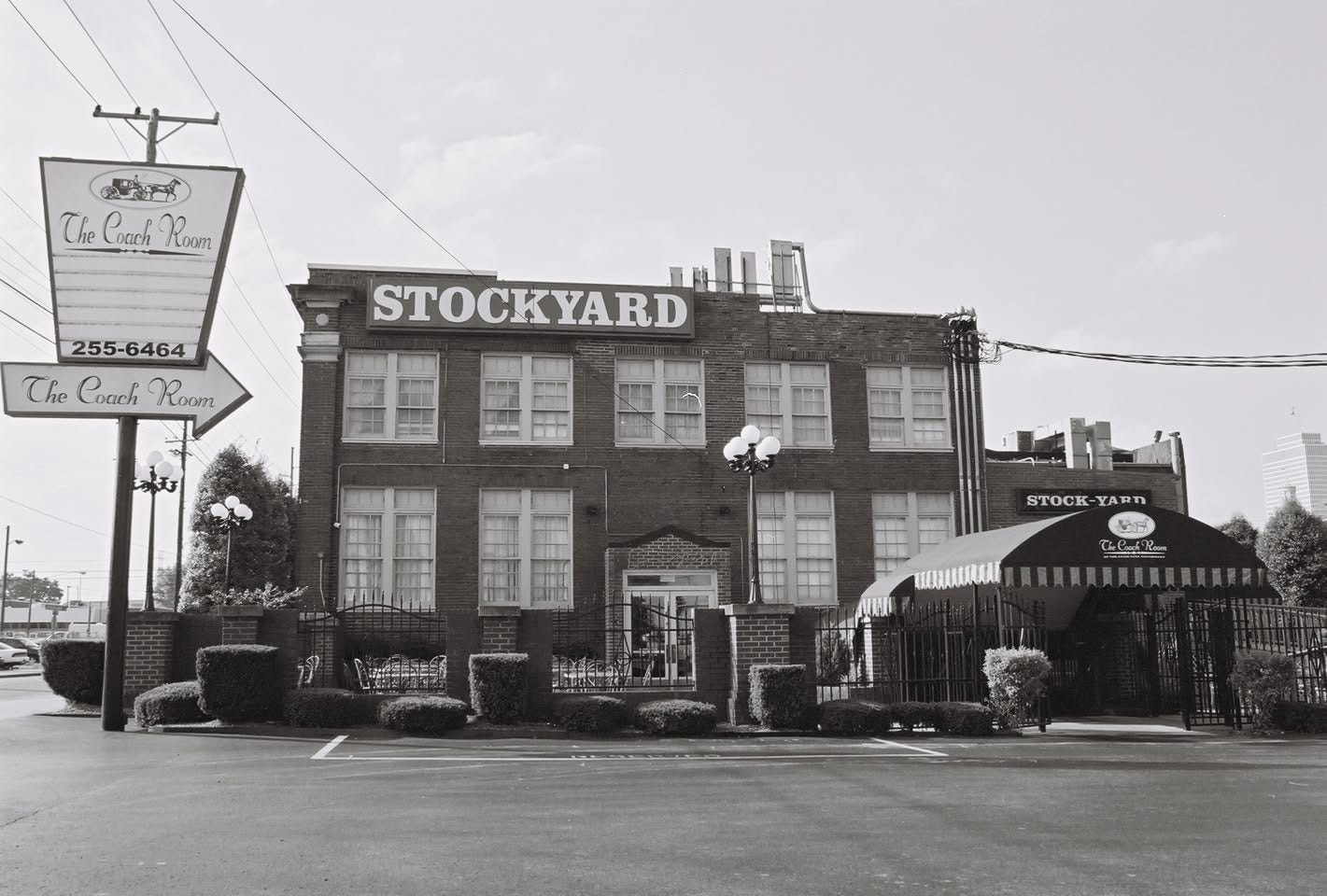
The building was completed in 1920. The architect was H.C. Hibbs, and what Hibbs designed was not a utilitarian livestock shed but something with actual civic ambition — a rounded corner entrance, large-paned glass windows, a facade substantial enough to anchor a city block. The animal reliefs mounted above the entrance were not decoration exactly. They were a statement of purpose. This building knew what it was for.
From 1921 to 1974, the Nashville Union Stock Yards operated as one of the busiest livestock markets in the region. Farmers drove in from Tennessee, Georgia, Kentucky, Alabama, and Mississippi. Well over six thousand animals arrived daily, coming by boat, by rail car, and by farm truck. The building housed not just the trading floors but neighborhood amenities such as a post office and a barber shop. A longtime bookkeeper recalled that it was not unusual to see a cow walking down Second Avenue or an escaped hog loose from a pen. Those were the days.
The Stock Yards closed in 1974 when property taxes made the operation untenable. The sheds were torn down. The paddocks became parking lots. The chutes were dismantled. But Hibbs’s building survived — those eyes still watching, still waiting — and sat largely empty for the better part of a decade until a man named Buddy Killen walked in and saw something else entirely.
The Man Who Owned the Songs

To understand what Buddy Killen built at the Stockyard, you have to understand what Buddy Killen already was by the time he walked through those doors.
He had left Florence, Alabama the day after high school graduation in 1951, arrived in Nashville with essentially nothing, and talked his way into a job playing upright bass at the Grand Ole Opry. He worked as a freelance musician backing Hank Williams, Jim Reeves, George Morgan, Cowboy Copas, Moon Mullican, and Ray Price — the full roll call of postwar country royalty, playing bass for ten dollars a night behind men whose names would outlast them by generations.
In 1953, a Nashville radio executive named Jack Stapp hired Killen as a song plugger for a new publishing company called Tree. The job paid $35 a week and required Killen to pitch songs to artists and their managers — to be a salesman for music that other people wrote. He was twenty years old and very good at it almost immediately.
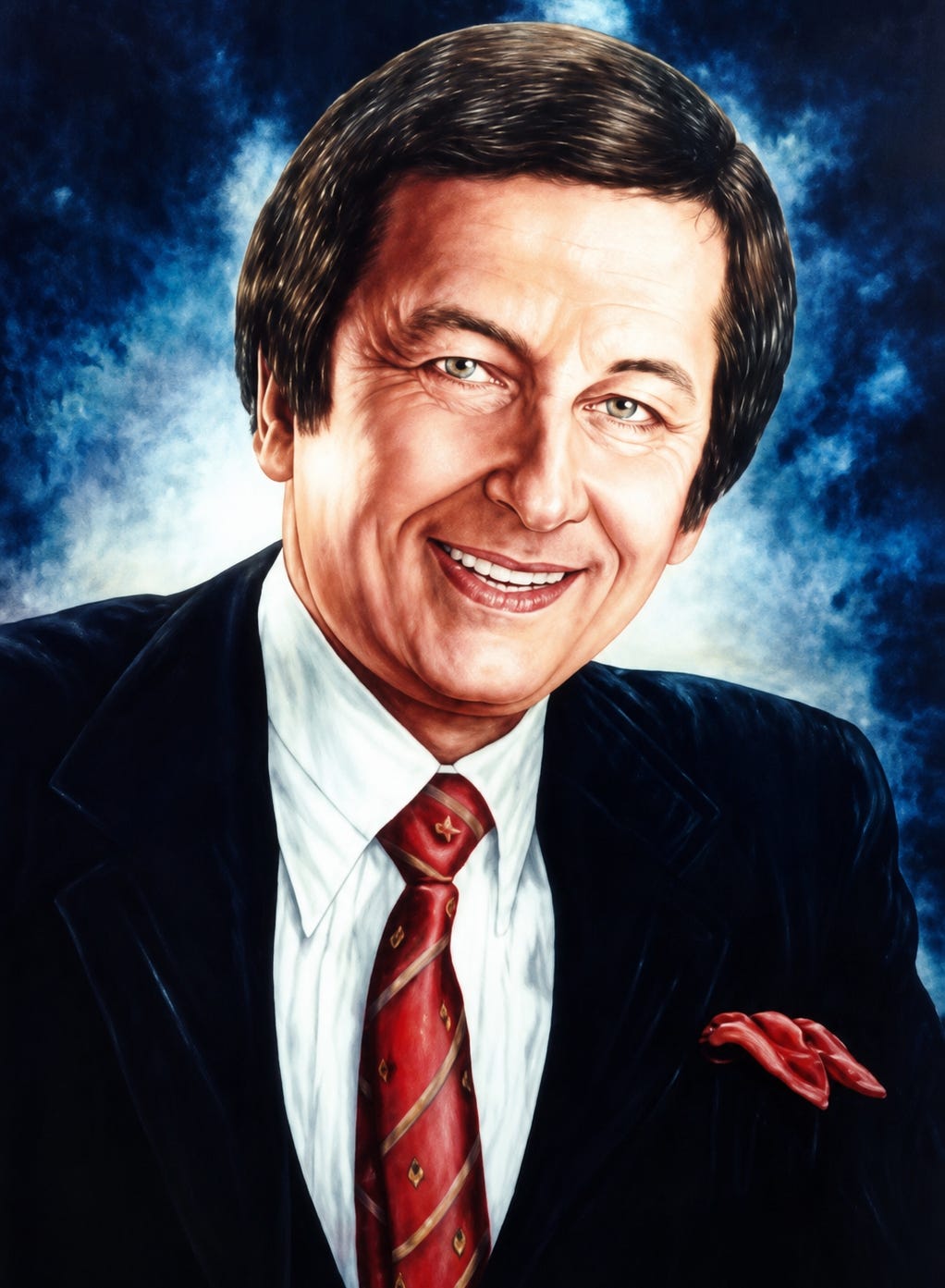
Two years later, Killen pitched a song called “Heartbreak Hotel” to Elvis Presley. It became Presley’s first million-selling number one hit and the first major international success for Tree Publishing. The catalog that followed was staggering: “King of the Road,” “Okie from Muskogee,” “D-I-V-O-R-C-E.” Killen signed Dolly Parton when she was fourteen years old. Willie Nelson wrote for Tree. Roger Miller wrote for Tree. When Stapp died in 1980, Killen became the sole owner of what had grown into the largest country music publishing company in the world.
In 1989, he sold Tree International to CBS for more than $30 million. In Nashville, that number traveled fast. People talked about it the way people talk about a number they can’t fully comprehend — passing it around, testing its weight, trying to understand what it meant that a song plugger from Florence, Alabama had turned $35 a week into that. It was astronomical then in a way it’s difficult to convey now. It meant something specific about what music publishing was worth and what Buddy Killen specifically was worth and what kind of room he was entitled to occupy. That name holds weight.
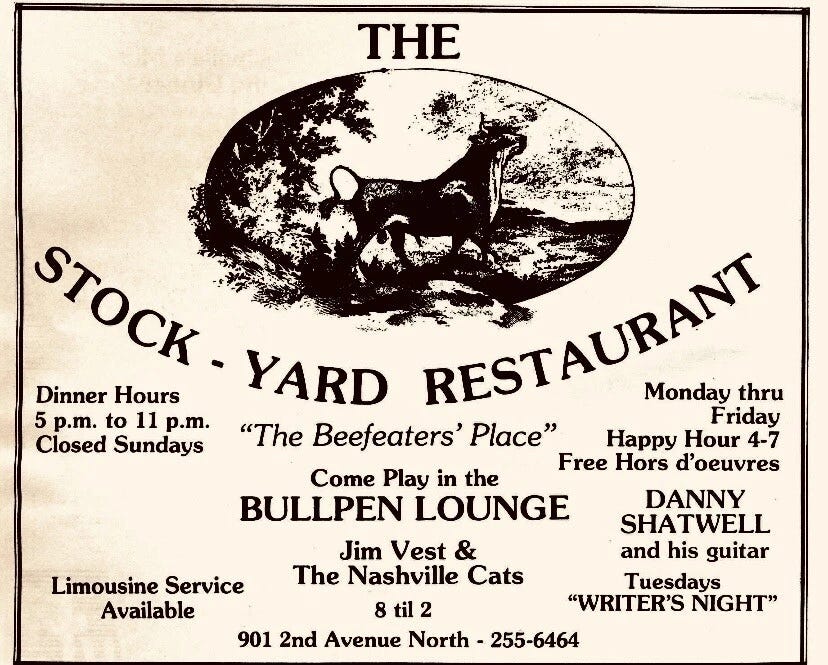
He built the Stock Yards up, himself. He had been building it since 1979, when he first took interest in the old Stock Yards building, and by 1985 he had pulled the property out of bankruptcy, put $400,000 into renovations, and created a space that could seat 475 people across 27,000 square feet. The restaurant he called the Stockyard. The live music lounge inside it he called the Bull Pen. The branding was intentional — the building’s history folded back into itself, livestock becoming something else entirely.
The tagline on the matchbooks: You Never Know Who’ll Be Seen At The Stockyard.
They weren’t wrong.
The Room
There are rooms in every industry city where the real business gets done — not in the offices, not in the conference rooms, but somewhere with tablecloths and low lighting and a bar and music that gives everyone an excuse to lean in close and talk. Nashville had Printer’s Alley for a while. Then it had the Stockyard.
“It really eclipsed Printer’s Alley as the place to go during his tenure,” Randy Rayburn, the Nashville restaurateur, said after Killen died in 2006. What Killen had created was a signature destination — a place where the music was woven into the dining room the way Killen had always understood music to be woven into everything else.
The famous clientele documented in photographs: Andy Griffith, Vicki Lawrence, Jerry Lee Lewis, Loni Anderson, George Steinbrenner. The list was long and varied and crossed every boundary that Nashville’s self-conception had built up around itself. This was not purely a country music room. It was a Nashville power room, and Nashville power in that era meant country music, which meant that everyone who mattered in any room eventually ended up in this one.
Killen himself would get up and sing with the band on a given night. “I’d get up and sing with the band,” he said later. “I didn’t know probably two songs when I first started. But I kept learning them.” The owner of the largest country music publishing company in the world, standing at the microphone in his own restaurant, learning songs he had published thirty years earlier. There is something almost touching about that. Something human inside all the power.
The Bull Pen Lounge was the beating heart of it — a live music room that ran nightly entertainment, with an inside stage and a patio. The house band held down the room every night, ready for whatever the room decided to throw at them. Robin Killen, Buddy’s daughter, was typically the singer. Walter Hartmann played drums.
What happened on that bandstand on any given night was not predictable. That was the point.
Tex
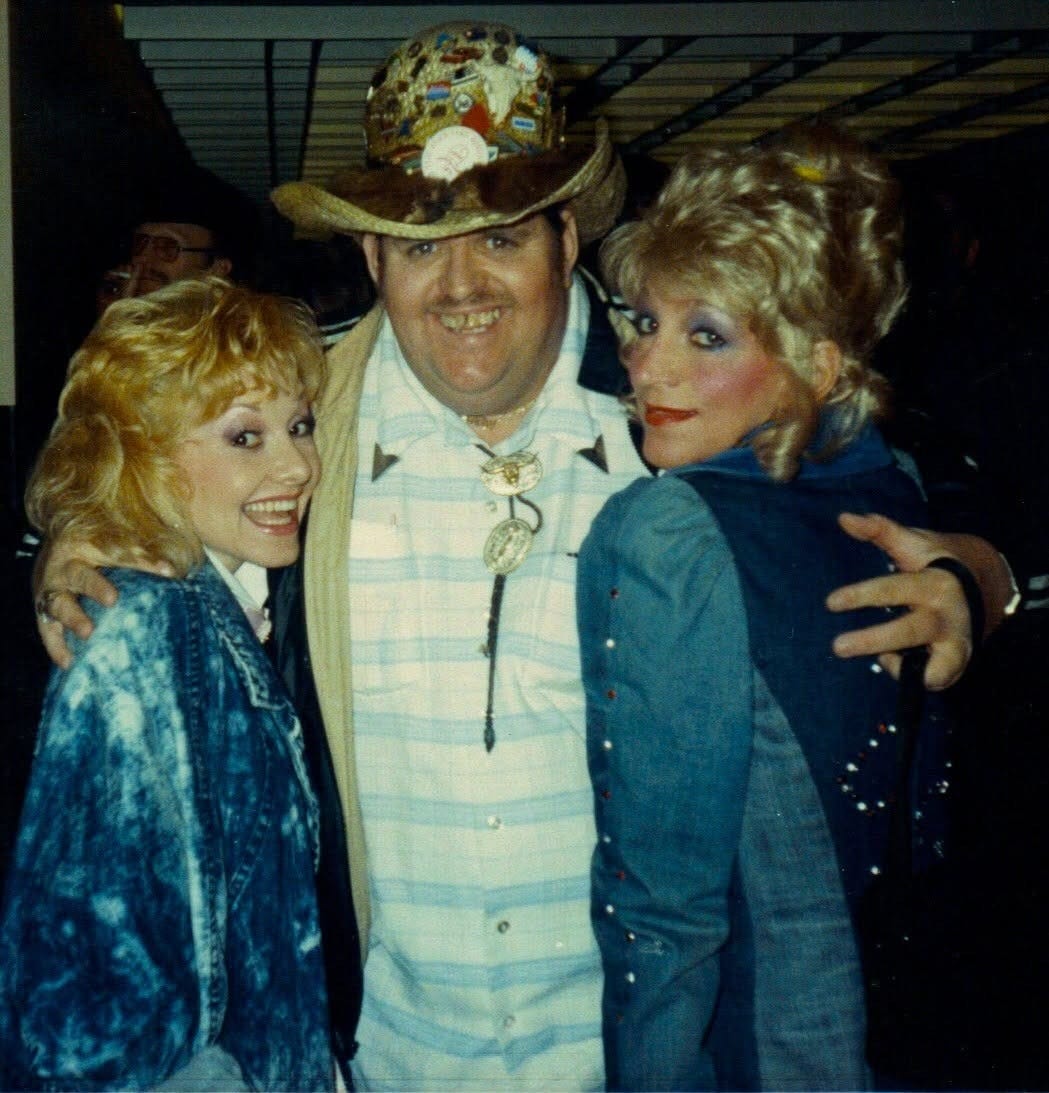
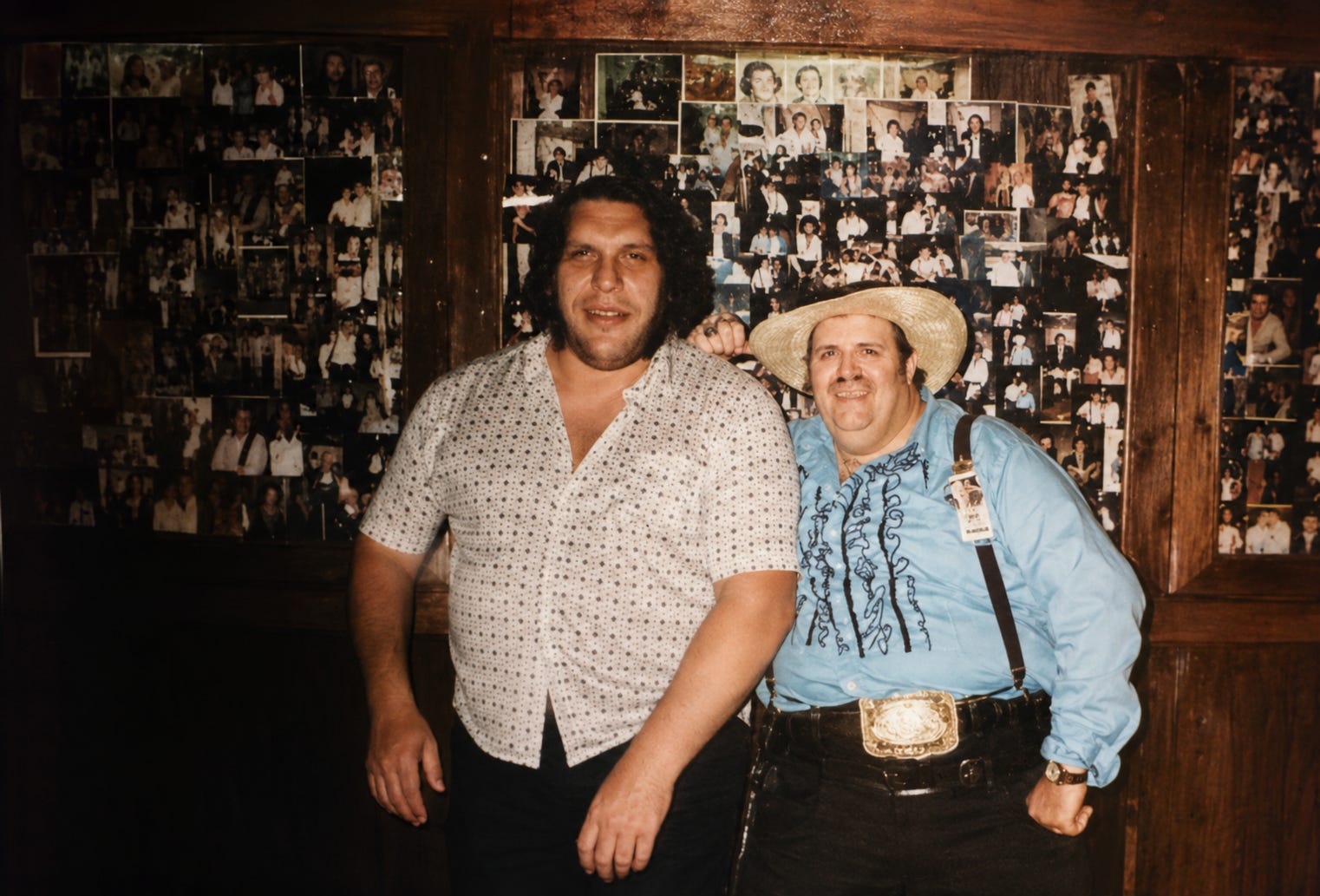
The doorman’s name was Tex, and he looked exactly like that name sounds. A giant of a man, built like a brick wall with a ten-gallon hat on top of it, stationed at the entrance to the Stockyard like something the building had grown specifically for the purpose. Tex was the first thing you encountered when you came to the Stockyard, and Tex set the tone.
Tex had friends. The kind of friends that large men in the professional acquaintance of large venues tend to accumulate — other large men, specifically the kind who performed their largeness for a living. When the WWF or WWE came to Nashville for a show, Tex had a standing arrangement. The Stockyard owned a private bus — not a tour bus, more of a standing-room party vehicle — and Tex would go collect his wrestling friends from wherever they were and bring them back to the Bull Pen Lounge.
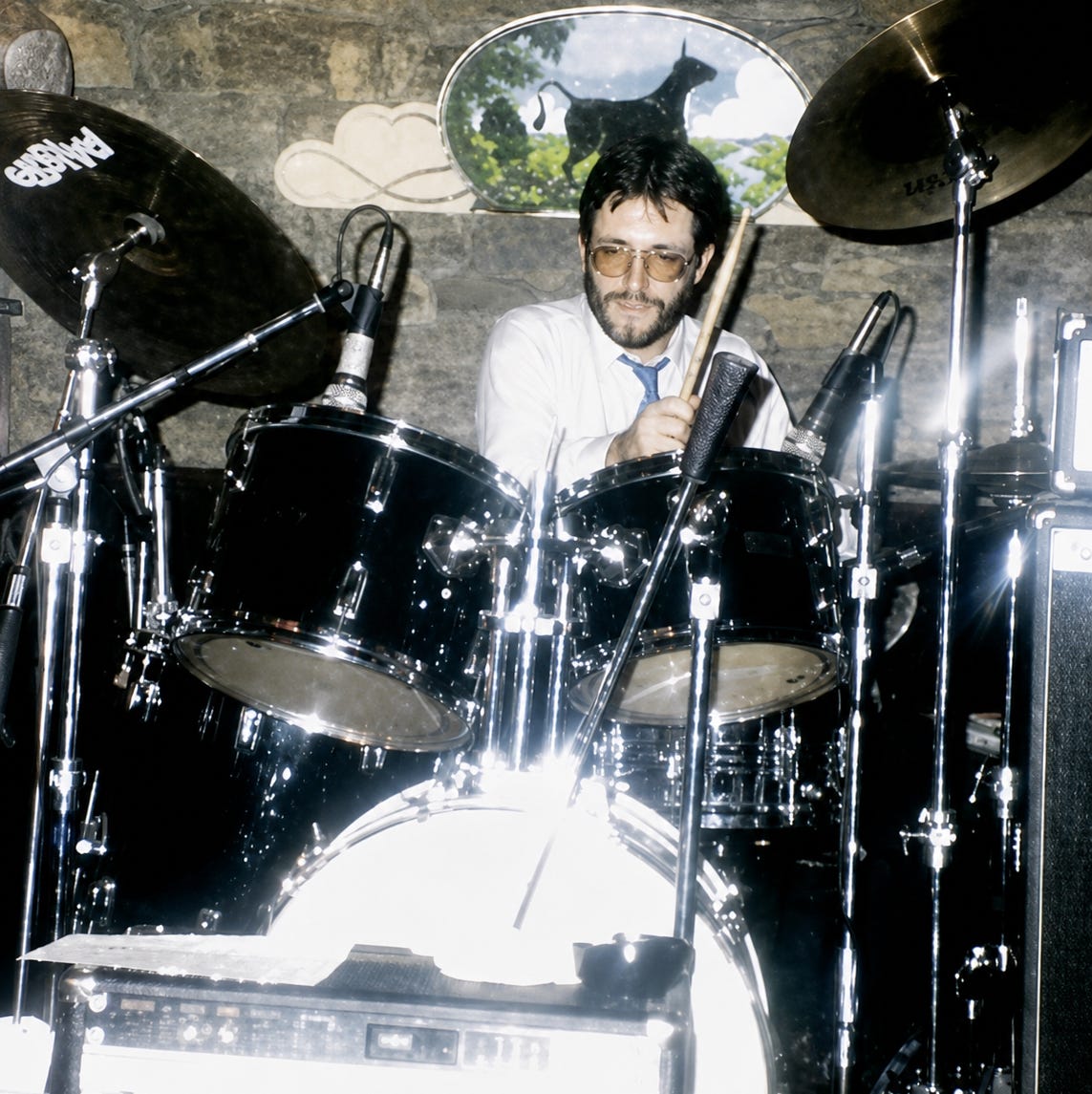
On one of those nights, Walter Hartmann was onstage behind the drum kit, mid-set, when he dropped his drum key. Between songs he got down on the floor to look for it, head disappearing behind the bass drum. The stage went dark. Not a power outage — a presence. Something massive had moved between the stage and the light source and was absorbing most of the available illumination.
Hartmann looked up.
André the Giant was standing on the stage.
Robin Killen had brought him up. André René Roussimoff, seven feet four inches tall and somewhere in the neighborhood of 500 pounds, standing on the Bull Pen Lounge stage while the house drummer blinked at him from behind the kick drum. Whatever the band played next, they played it with André the Giant watching from the stage. The room had swallowed stranger things. The room swallowed this too.
Faron Young Tells the Truth
Being a publisher of Buddy Killen’s stature meant having access to every significant artist in the country format and many outside of it. It also meant that on any given night, someone could walk through the Stockyard’s front door with a guitar or an agenda or both, and the house band would be expected to handle it.
On the nights when a name was coming in, the calculation was different. One evening the name was Faron Young.
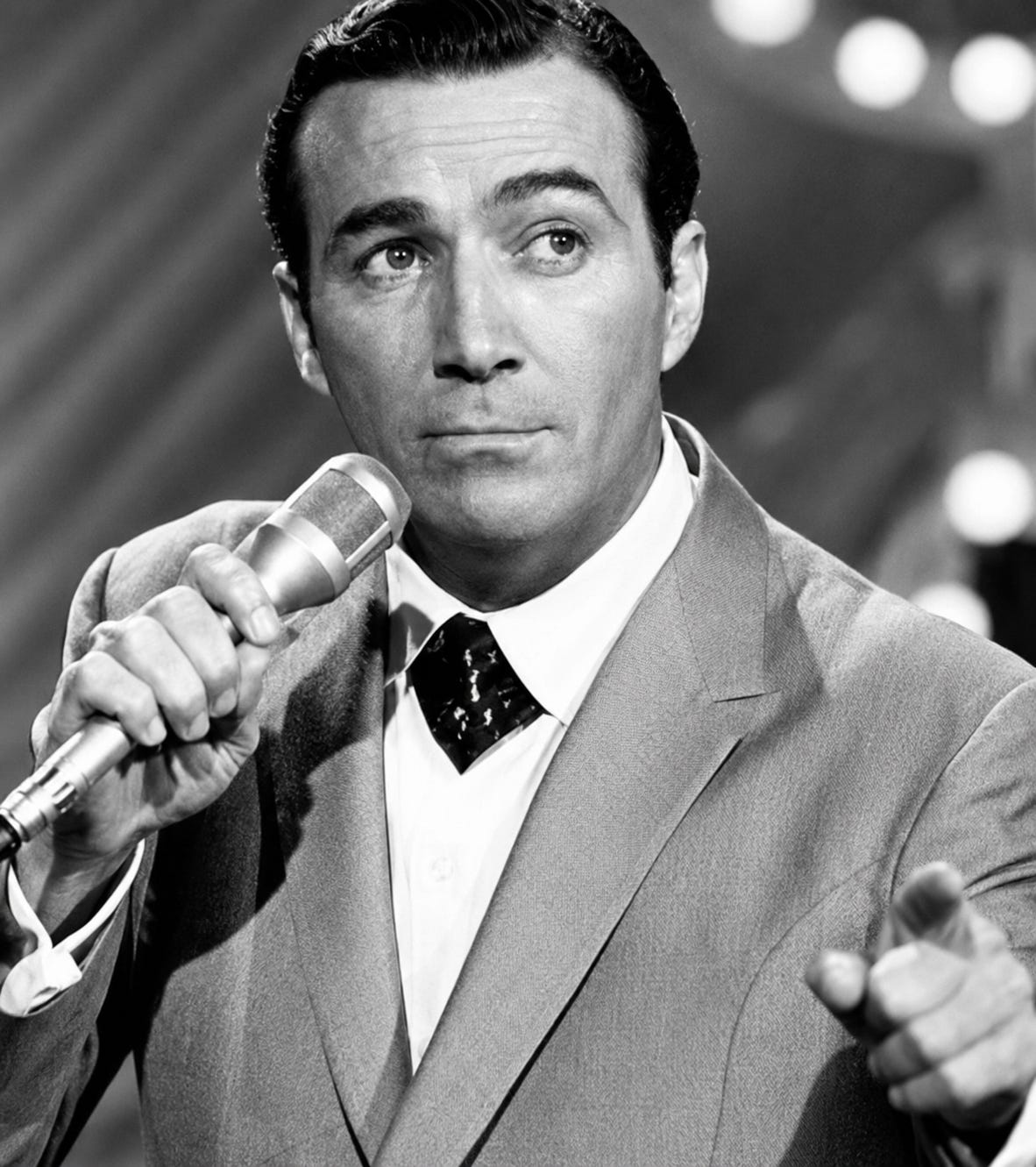
Faron Young — the Hillbilly Heartthrob, the Young Sheriff, a man who had been a genuine country music star since the early 1950s and who carried thirty-plus years of the industry’s full weight in his bearing and his mouth. Faron had a reputation for honesty. That’s the polite way to say it. Faron said what he thought, and what he thought arrived without a buffer, without a diplomatic edit, without the social lubricant that most people apply between the thought and the word. He was honest the way a freight train is honest about its direction.
Fortunately for the house band, Faron came with his own musicians. No last-minute run-throughs of songs they half-knew, no panicking through chord charts in the break room. You simply did not want to be the musician who fumbled a Faron Young song in front of Faron Young. Faron’s band set up, played the intro, and the room got ready.
The sound man that night was the type that probably held that Stockyard job like a lifeline — meticulous at the board, deeply attentive, the kind of technician who treated every knob as a responsibility. Good qualities, in theory. What the board was not prepared for, what perhaps no board could be fully prepared for, was Faron Young walking out to a roar and immediately getting a face full of PA feedback the moment his lips touched the microphone.
Without pausing, without breaking his entrance, Faron Young addressed the room.
“Goddamnit, Buddy Killen. He’s worth over $30 million dollars and he puts in a 60 cent PA in his club. I knew I should have brought my own PA.”
Then, turning to the sound booth: “Mr. Sound Man, turn it up till she squeals then just pull her back a bit.”
The room laughed. The sound man made the adjustment. Faron Young played his set. The $30 million number, which had been traveling around Nashville for months, got a new story attached to it — the one about how all that money apparently hadn’t been enough to buy a decent PA system, according to Faron Young, who would know.
Buddy Killen, who had heard worse from meaner men in smaller rooms, almost certainly laughed too.
The Killer
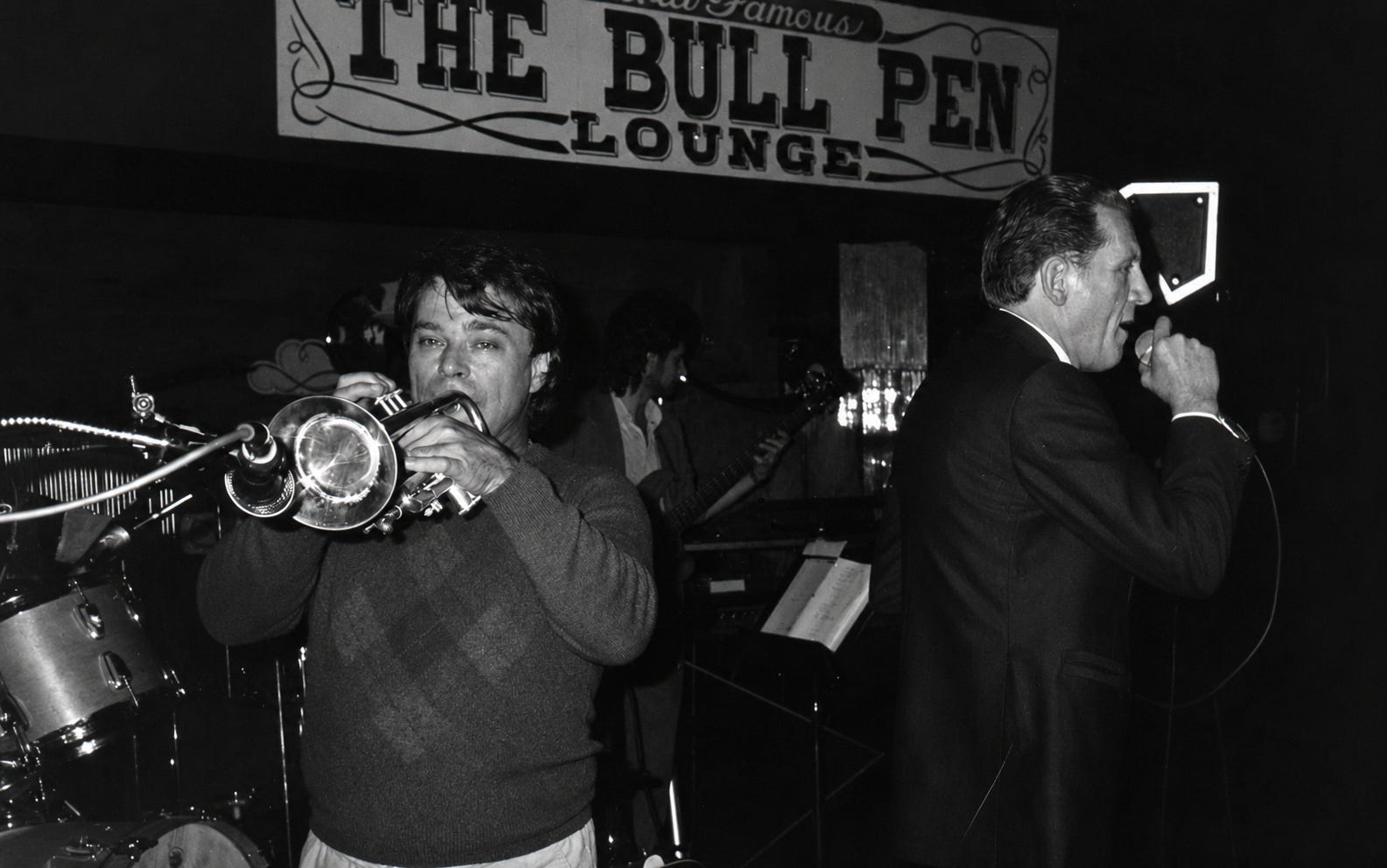
On a night Walter Hartmann was not there, Jerry Lee Lewis came to the Stockyard and got up on the Bull Pen Lounge stage and played the house piano.
Jerry Lee Lewis destroyed the house piano.
This requires little elaboration. It was a Jerry Lee Lewis trait as well-documented as his marriage history and his relationship with the law. The Killer played piano the way some men operate heavy machinery — with total commitment to the task and limited concern for what the equipment looked like when the job was done. Pianos in Jerry Lee Lewis’s orbit did not tend to emerge from the encounter unscathed. Whether Buddy Killen, worth more than $30 million by Faron Young’s accounting, was entirely happy about the state of his piano afterward is a question the historical record does not answer. The smart money suggests he was not.
The smart money also suggests he probably framed it as a story the next day. That was the Stockyard. That was what the room did with its damage.
What Came After
Killen sold the Stockyard in 2001 — reportedly brokered the deal at a New Year’s Eve party, which feels right, which feels like the kind of move a man who understood rooms would make. The restaurant continued under new ownership for another fourteen years, outlasting the era it had defined, running on reputation and inertia until there was nothing left to run on.
It closed in June 2015. The building sold for $8.3 million to developers from Charlotte. Three hundred apartment units.
The animal reliefs on the facade — the cow, the pig, the curly-horned sheep — watched the last of it happen, the way they had watched all of it happen. The livestock and the music executives and the wrestlers and the steaks and the feedback squeal and Faron Young’s voice cutting through all of it like a knife through something expensive. Hibbs had built something that lasted. What it lasted through is the question.
Nashville in 2026 is a city of celebrity-branded honky tonks and bachelorette parties and rooftop bars and a tourism economy that has almost completely colonized the geography that the Stockyard once occupied. The room where the industry went to be unguarded doesn’t exist anymore. Maybe it couldn’t have survived the city Nashville became. Maybe the city Nashville became is precisely what happens when that room closes.
Buddy Killen died in November 2006, twelve days before his seventy-fourth birthday. He is buried in Nashville. The songs are still out there, published and republished and streamed by people who have no idea who owned them. “Heartbreak Hotel.” “D-I-V-O-R-C-E.” “He Stopped Loving Her Today.”
The last thing that can be said is about the animals on the building. They are still on that building to this day. Watching over everything, still.
Happy to see some pieces of what once was great is still left for the city to cherish.
Sources: Walter Hartmann, Bull Pen Lounge drummer; Tennessee State Archives; Buddy Killen, “By the Seat of My Pants: My Life in Country Music” (Simon & Schuster, 1993); Nashville Post; Randy Rayburn, quoted in Nashville Post obituary for Buddy Killen, 2006.
ABOUT THE AUTHOR:
My name is Zachariah Malachi. I’m a full-time, self-employed honky tonk musician in Nashville, Tennessee. This Substack Publication was created for the purpose of sharpening my mind on more Nashville and Country Music history to share with the honky tonk patrons downtown during my shows - but I wanted more folks to benefit from the research so - it’s my gift to the country music fans of the world AND the people who WANT to be. Subscribe and come along for the ride.
You do great work.
Great article. I used to absolutely love that place. The restaurant and the bar. I saw some great acts in there