


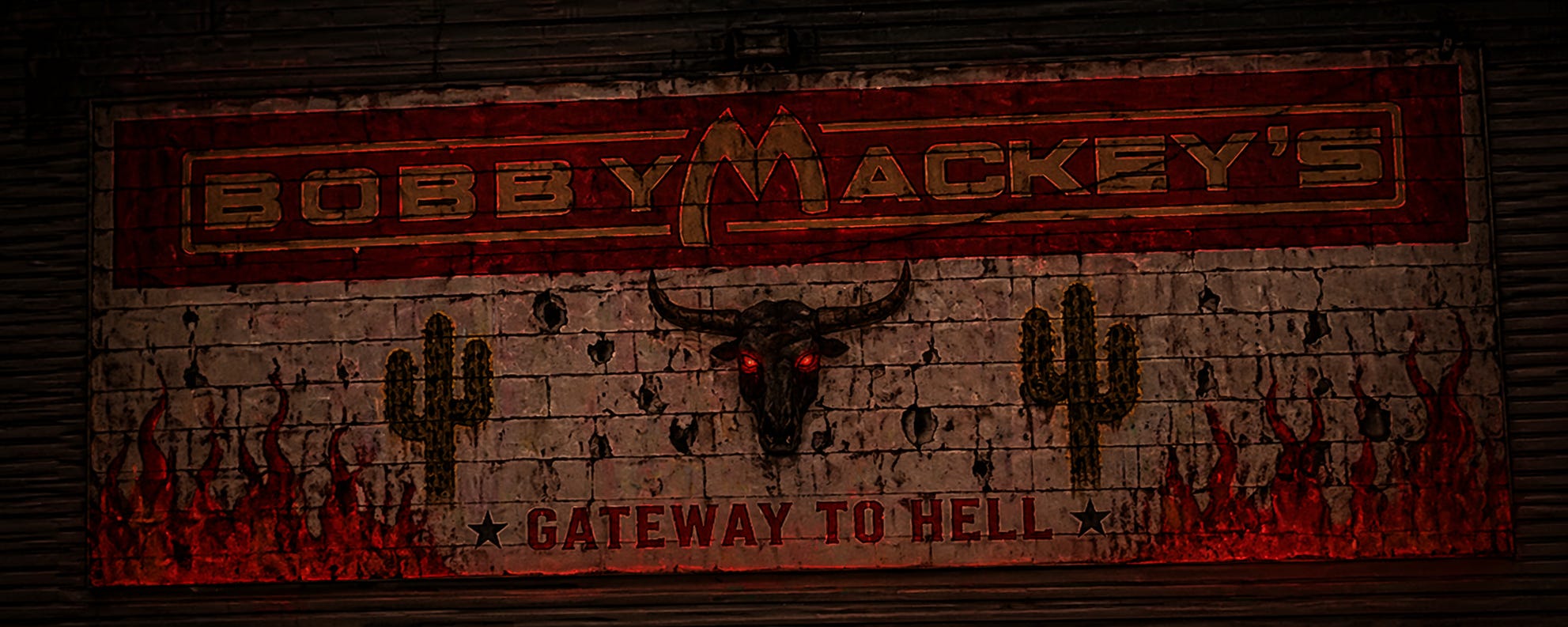
There’s a particular kind of silence that settles inside an empty bar. Not peaceful — expectant. Like the room is still half-listening for the boot scoot, the steel guitar, the laugh of someone who left long ago.
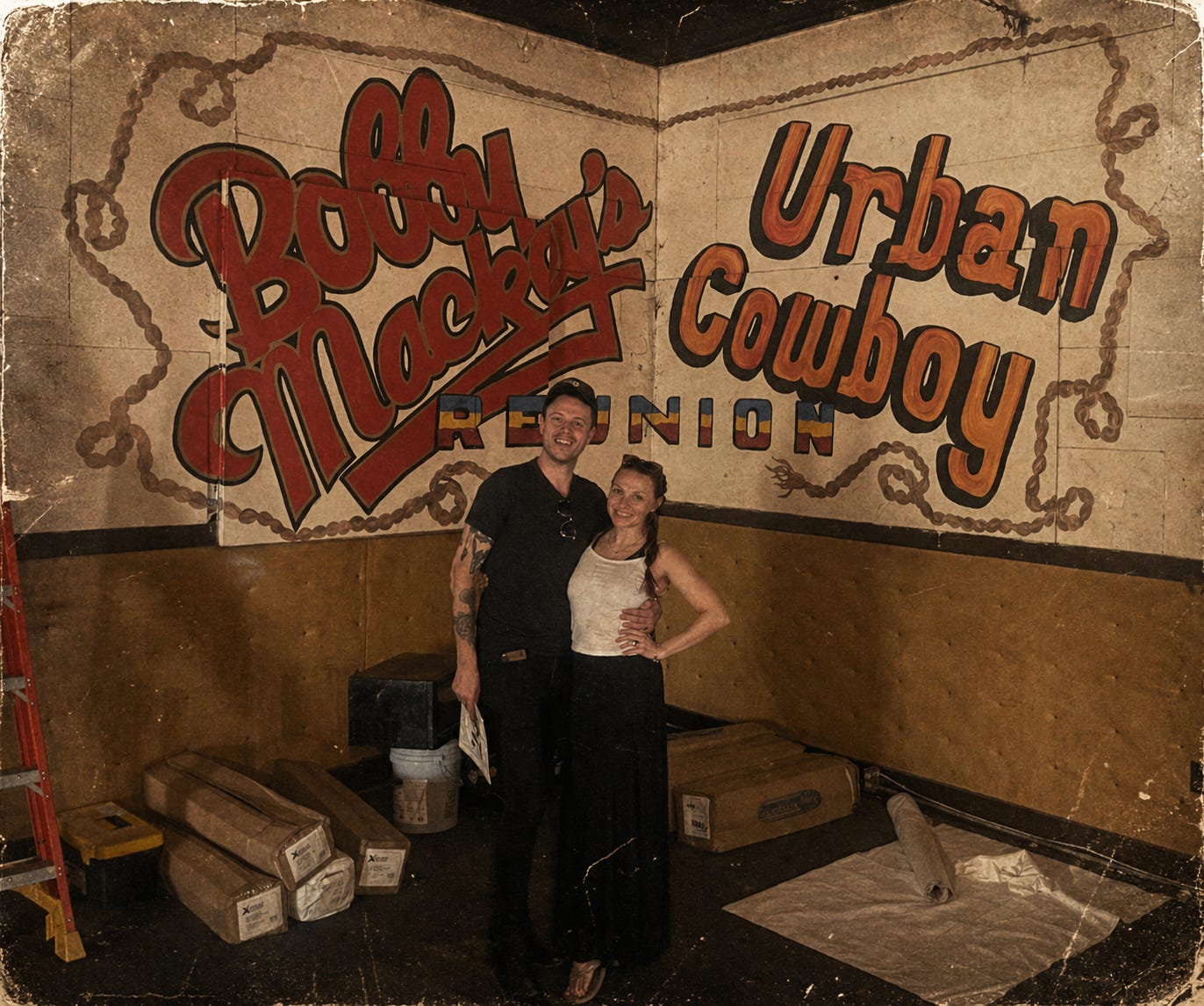
That’s the silence Bonnie and I stood in on our last night inside Bobby Mackey’s Music World, just down Licking Pike from where Wilder bleeds into Newport, Kentucky. Outside, the deconstruction crew was packing up for the day. We were the last two people left inside who hadn’t come to take the place apart.
I think about that a lot now.
For nearly half a century, Bobby Mackey’s was a honky-tonk that wore its hauntings on its sleeve. There was a sign at the door — printed, framed, and worded like a contract — warning customers that the establishment was rumored to be haunted and that management took no responsibility for ghostly encounters. It was the only bar I’ve ever been in where the lawyer, the priest, and the steel guitarist all had equal billing.
This is the story of how it got that way.
The Slaughterhouse and the Headless Girl
Long before there was a stage — before the boots and the band and the bull — the building was something else entirely. In the late 1800s, the structure on Licking Pike housed a slaughterhouse. By some accounts, blood from the killing floor was channeled into a well in the basement — a deep, cold cylinder of stone that, depending on who you ask, was either a piece of practical drainage or a portal to somewhere considerably worse.
It is the well, more than anything else, that made Bobby Mackey’s famous.
In late January of 1896, a young woman named Pearl Bryan — the youngest of twelve children from a respected family in Greencastle, Indiana — was found dead in a field near Fort Thomas, Kentucky. Pearl was twenty-two and pregnant. Her killers, her boyfriend Scott Jackson and his roommate Alonzo Walling, had taken her across the river under the promise of an abortion that became, instead, a murder. They decapitated her. Her head was never found.
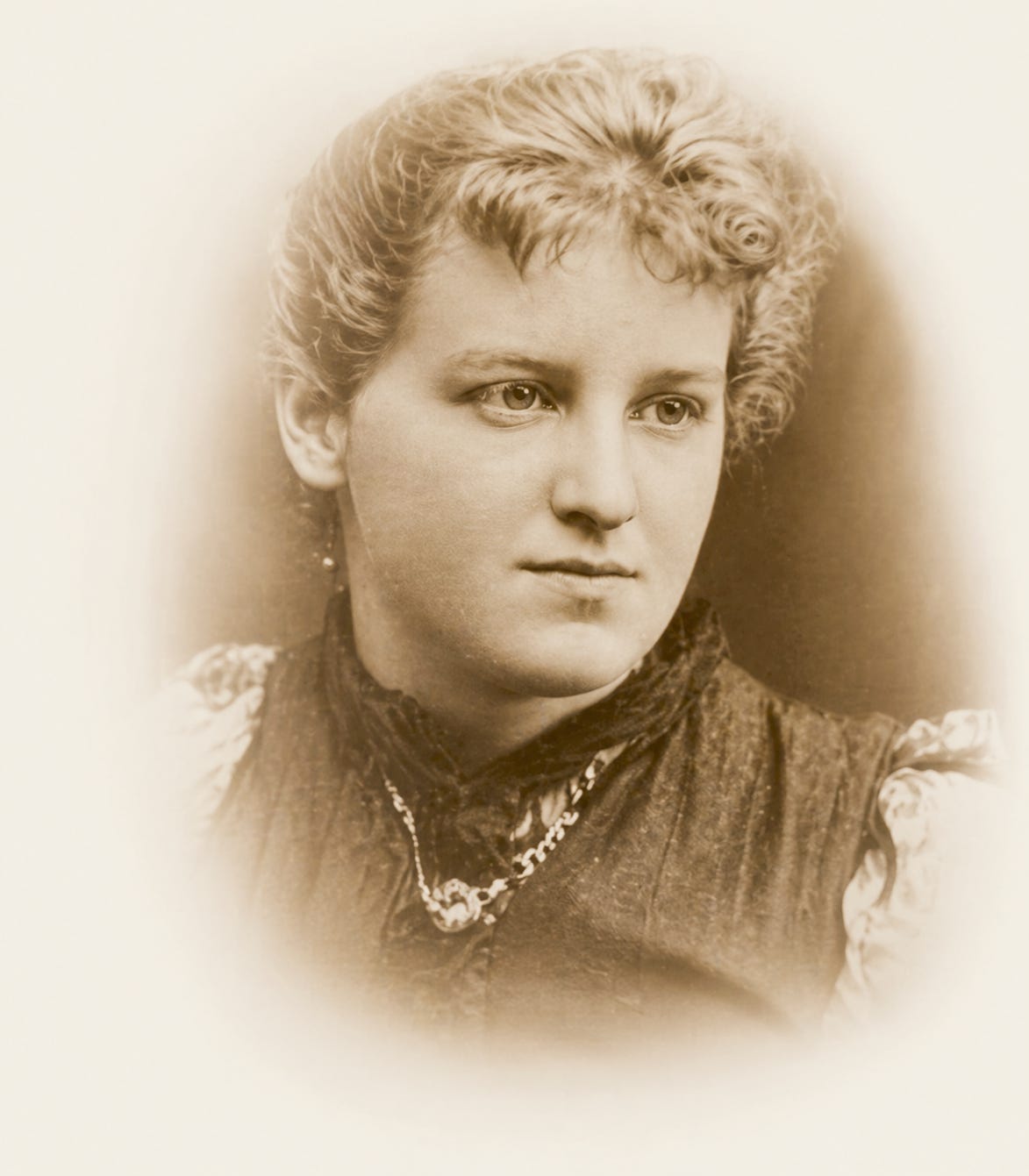
Restored image of Pearl Bryan
It was the kind of crime that made the front page from Cincinnati to New York. And one piece of testimony, given before Jackson and Walling went to the gallows, has clung to that stretch of Licking Pike ever since: that Pearl’s head had been thrown into the well at the slaughterhouse — the same building that would, decades later, become Bobby Mackey’s. Newspaper accounts from the period also reported that Jackson and Walling had been involved with a Satanic cult, and that on the gallows they vowed to return from beyond the grave to torment anyone who’d condemned them.
Whether you believe any of it or none of it, here is what is true: the well was real. The murder was real. The men were hanged. And from that moment forward, the ground beneath that building had a story attached to it that nobody could ever quite shake.
MORE ON PEARL BRYAN HERE
ALSO DON’T SKIP THIS VIDEO I JUST FOUND HERE
(THESE AREN’T CLICKBAIT OR ADS)
Bootleggers, Showgirls, and a Woman Named Johanna
The slaughterhouse closed at the turn of the century. By Prohibition, Newport had become a kind of midwestern Sin City — a thicket of speakeasies, brothels, casino rooms, and gambling halls run by men with nicknames you’d see in pulp novels. The building reopened as a roadhouse and casino, going by various names across the bootlegger and gangster decades that followed: The Primrose, The Latin Quarter, and others that came and went with the heat from the law.
It is from this era that the second great ghost of Bobby Mackey’s emerges: Johanna.
The legend goes like this. Johanna was a singer or a dancer at the casino — accounts differ — and the daughter of one of the gangsters who ran it. She fell in love with a performer named Robert. Her father did not approve. He had Robert killed. Pregnant and grieving, Johanna is said to have poisoned herself in the dressing room above the dance floor, leaving behind a song she’d written for the man she loved.
There is no firm historical record of Johanna. What there is, instead, is a song. Bobby Mackey himself recorded “Johanna” on one of his albums, and over the decades the lyrics — and the rose-scented perfume staff and patrons swore they smelled in the back of the building — became as much a part of the architecture as the bar rail. Whether she ever truly existed or not, by the time the country band started playing on the weekends, she haunted the place either way.
The Honky-Tonk Era
Bobby Mackey was a Kentucky-born country singer with a voice built for jukeboxes and a streak of stubbornness that ran straight through his career. He’d done the Nashville rounds, cut records, opened for big names, and in 1978 he bought the building on Licking Pike and turned it into Bobby Mackey’s Music World.
For the next four-plus decades, it was one of the great honky-tonks of the Ohio Valley. Mackey and his band held the stage most weekends — if you wanted to hear “Johanna” sung by the man who wrote it, you went to Wilder. The venue became a stop on the kind of regional country circuit that doesn’t show up in the glossy magazines but kept classic country alive when Nashville was busy chasing pop crossover. Bluegrass and traditional acts came through. A mechanical bull in the corner. Two-step lessons on the floor. A jukebox that knew the difference between Hank and Hank Jr.
You can argue about which of the boldfaced names of country actually played the room across the years — Mackey’s own list ran long, and the building’s mythology grew with each story. What’s not in dispute is that it was the kind of place where local kids had their first dance, where bachelor parties came to sweat, and where the steel guitar and the Pearl Bryan rumor lived under the same roof without anybody finding it strange.
That was Bobby Mackey’s signature trick: it was a real honky-tonk. The hauntings weren’t a gimmick layered on top. They were the foundation under the dance floor. People came for the music and stayed for the chill that climbed the back stairs.
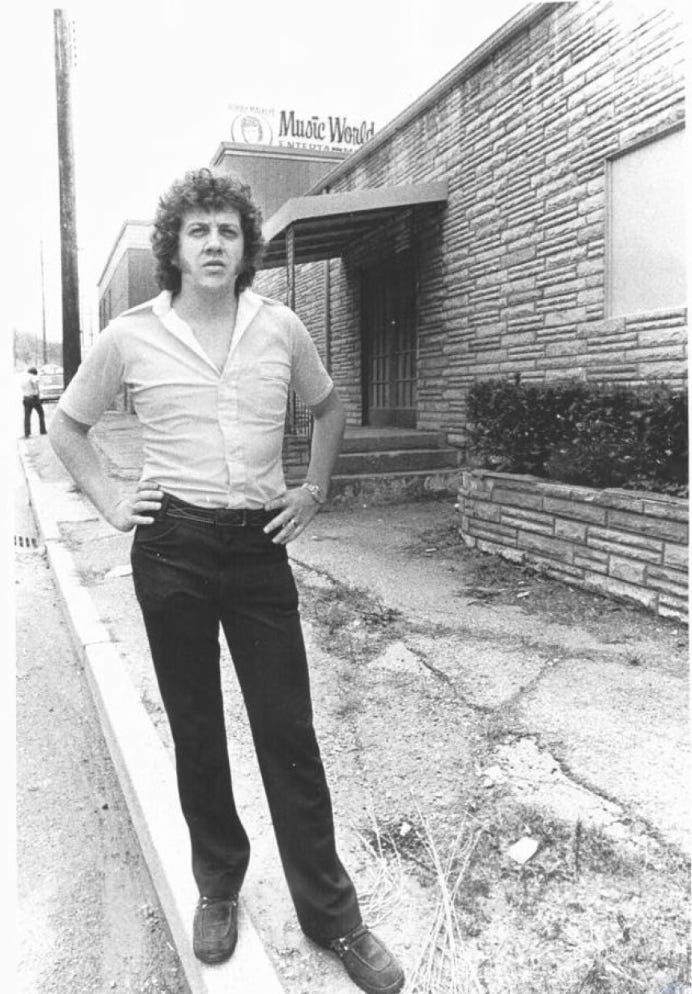
A young Bobby Mackey in front of his club, Bobby Mackey’s Music World - Wilder, KY
The Hauntings That Made It Famous
There is a basement at Bobby Mackey’s. There are stairs that lead down to it. There is a well at the bottom of those stairs.
If you ever made it down there — and not many patrons did (we were able to)—you were looking at the thing locals had simply taken to calling the well from hell. Some said two priests had performed exorcisms on the building over the years and left convinced the well was a portal. Others said it was just a well.
The most famous figure in the haunted history of Bobby Mackey’s wasn’t a ghost — he was a custodian. Carl Lawson worked at the bar in the 1990s and lived in an apartment on the property. By his own account, and by the accounts of the priests and parapsychologists who eventually got involved, Lawson became convinced the building was tormenting him: voices, footsteps, objects moving, and ultimately what he and several clergy described as a partial possession. An exorcism was performed. Lawson left the property. He spoke about the experience for the rest of his life.
He was not the only one with a story. In the early 1990s, a pregnant woman sued Bobby Mackey personally, claiming she had been attacked by an unseen force in the basement and that the establishment had not adequately warned her of the supernatural risks. The case was eventually dismissed — but the warning sign at the entrance, the one I mentioned at the top of this piece, was reported to have appeared shortly afterward and stayed there ever since. Management is not responsible for any ghostly encounters. Read it twice. There aren’t many bars in America where you have to.
The stories that piled up over the decades were almost monotonously consistent. The smell of roses where there were no roses. A figure in the mirror of the women’s restroom that wasn’t anyone’s reflection. A cowboy at the end of the bar who was there and then wasn’t. Cold spots on the dance floor. Doors that opened on their own in the dressing room above the stage — Johanna’s dressing room, if you believe the legend. Patrons reported being scratched in the basement. Staff reported hearing their names whispered when they were alone closing the place down.
Skeptics had explanations for most of it. The building was old. The river was close. The HVAC was original. The clientele was, on any given Saturday, deeply lubricated. All of that is fair. And none of it ever quite explained the well.
Here is Bobby and Janet Mackey on the Jerry Springer Show.
Television, Tourists, and the Long Tail of Fame
By the 2000s, Bobby Mackey’s had outgrown regional legend and become one of the most visited haunted locations in the United States. The TV crews started arriving. Unsolved Mysteries did a segment. A Haunting did an episode. And then Ghost Adventures showed up — multiple times. Zak Bagans famously claimed to have been scratched on his back in a triple-six pattern in the basement, an episode that, more than any other piece of media, cemented the building’s place in the modern paranormal canon.
Suddenly the parking lot on a Wednesday looked like a parking lot on a Saturday. Ghost tours ran on weeknights. Investigators flew in from Europe. The venue managed the strange feat of being a working country bar and a working tourist attraction at the same time, and Mackey, to his credit, mostly let the legend speak for itself. He’d play his set, sing “Johanna,” sign autographs, and head home.
There were detractors. Local historians pointed out — correctly — that some of the central claims are hard to verify with primary sources. The newspaper coverage of the Pearl Bryan murder is real and chilling on its own terms, but the connection between the well in the basement and Pearl’s missing head is more folklore than forensics. Johanna may be entirely composite — a piece of country song-craft retrofitted as ghost story. Bobby Mackey himself was, in interviews, careful never to oversell. He’d shrug. He’d grin. He’d say something like, I don’t know what’s down there. But something’s down there.
That, in the end, was always the line. Something’s down there.
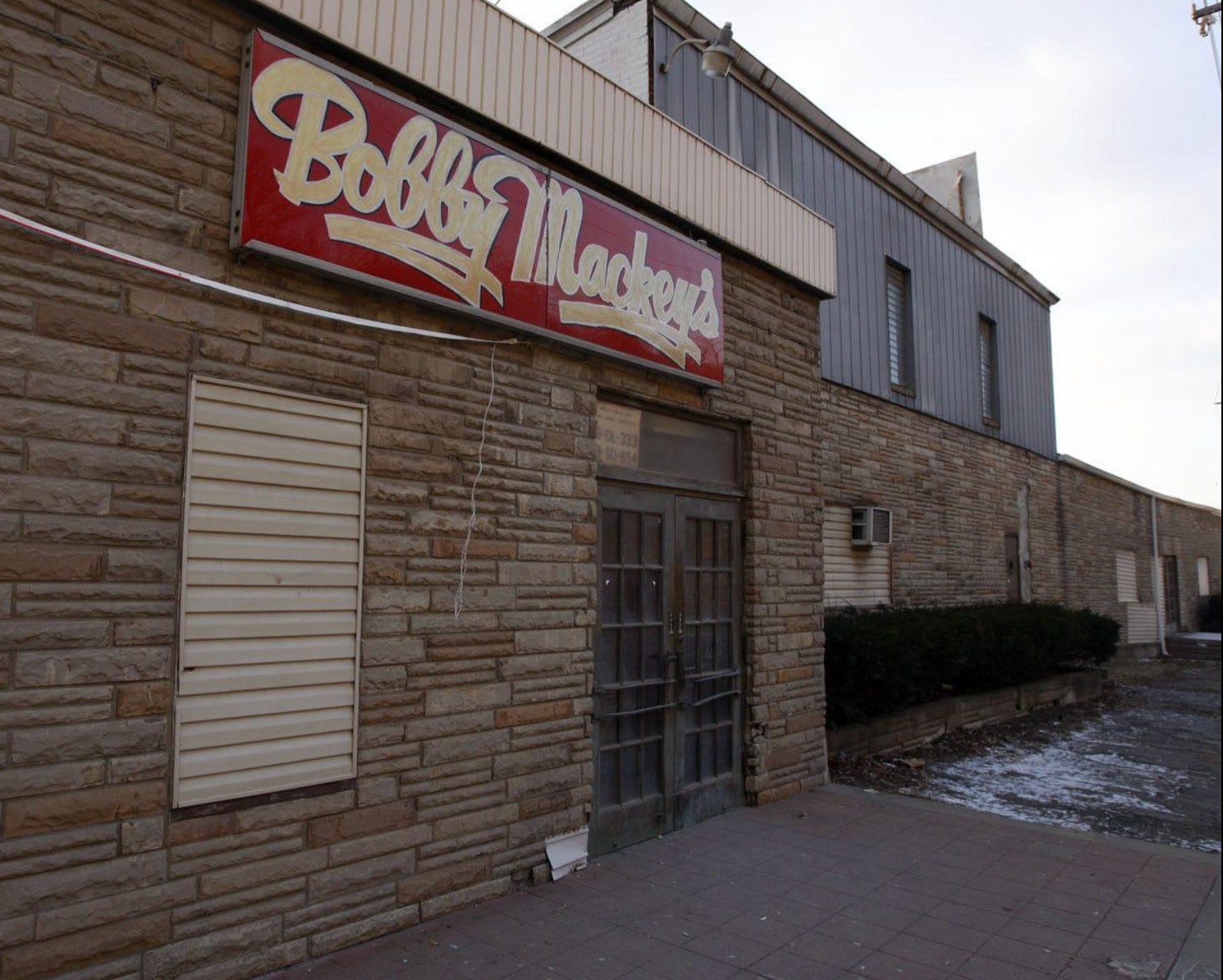
If those walls could talk, eh old man?
The Last Night
Which brings me back to Bonnie, and to the silence.
We had always wanted to visit Bobby Mackey’s — and we finally were rolling through town and had a chance to. When the news came that the building was finally going to be taken down, we HAD to see it. We came late in it’s life, alright — after the crowds, after the official farewells. The deconstruction crew was finishing up for the day. We were let inside.
I want to tell you the lights flickered. They didn’t. I want to tell you we smelled roses. We didn’t. The well was sealed by then, and the ground floor was already half a memory: the booths gone, the long bar with the scarred pine top still in place, the stage stripped down to its plywood bones. Bonnie walked across what once was the dance floor. I stood in the place where the band used to be and tried to hear “Johanna.” I couldn’t.
What we did feel — and I’m not going to dress this up — was the weight of every Saturday night that had ever happened in that room. First dances, last dances, fistfights, marriages started and ended, bachelor parties, bachelorette parties, country songs sung loud and badly by people who would never sing them better. A hundred and thirty years of human life stacked on top of a slaughterhouse well. Whatever you believe about ghosts, you cannot stand in a room like that and not feel the people who passed through it. They leave something. They always do.
One of the crew members took us to the basement. We saw the well. We saw the entirety of it by the flashlights of our phones. Creepy? Yeah - for sure. Exciting? You bet.
We didn’t stay long. It didn’t feel right to stay long. We walked out into the parking lot and stood there a minute with the building behind us, the river somewhere off to our left, and the long Kentucky dusk doing what Kentucky dusks do.
The next morning, the work began in earnest. The roof came off. Then the walls. Then the floor where I’d tried to hear the band. Eventually the well, I’m told, was filled and capped for good.
After
Bobby Mackey’s is gone. The sign that warned about ghostly encounters is gone with it. Whatever was actually down in that basement — Pearl, Johanna, the cult’s curse, the slaughterhouse blood, or just the smell of an old Kentucky river building with too much history under one roof — it doesn’t have a building to live in anymore.
But here’s the thing about places like that. They don’t really need a building. They need a story, and somebody to tell it.
So that’s what this is.
Bonnie and I were the last people in Bobby Mackey’s while it was still standing — aside from the crew that took it apart. I think about that a lot now. Mostly I think about how strange it is that a slaughterhouse, a casino, and a country bar all turned out to be the same room. And how in the end, the bands packed up, the lights came down, the warning sign came off the wall, and what was left was exactly what had always been there: the silence, and whatever it was the silence was waiting on.
I hope wherever it went, somebody’s still playing “Johanna.”
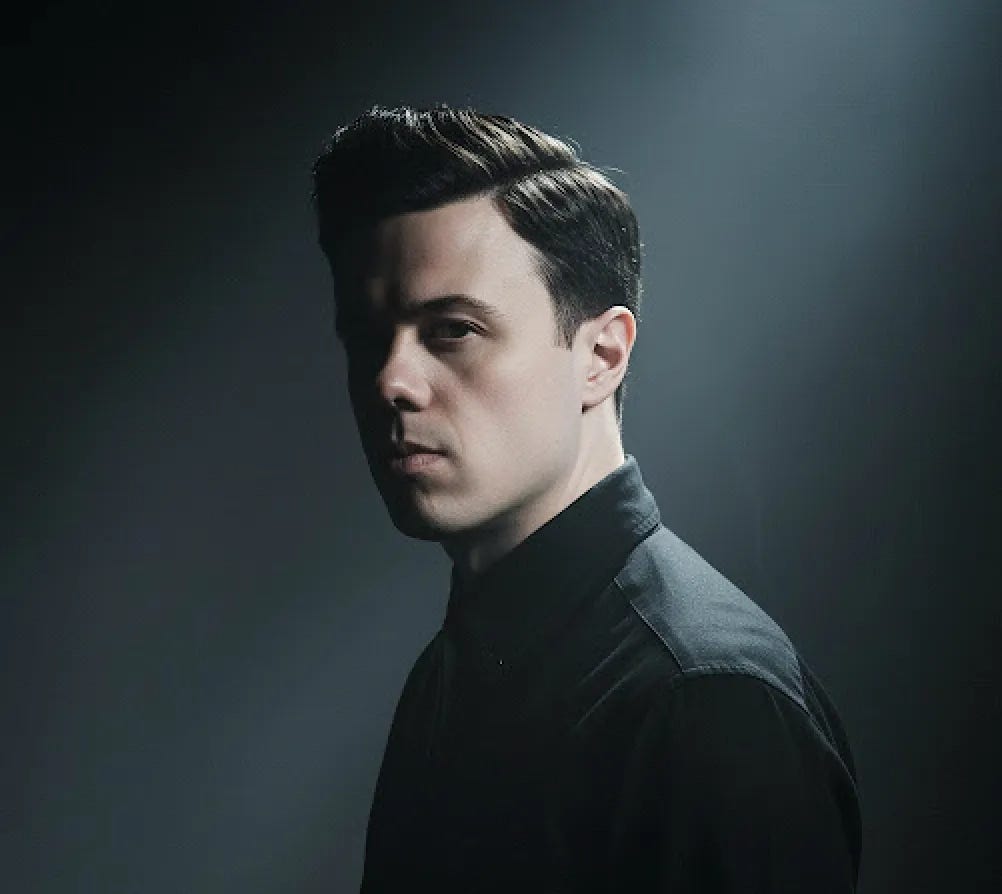
Zachariah Malachi — known as The Count of Country Music — is a singer, musician, actor, and writer based in Nashville, Tennessee. He writes about the American dark the way a man writes about a fire he was too close to — not as a historian, but as a survivor.