


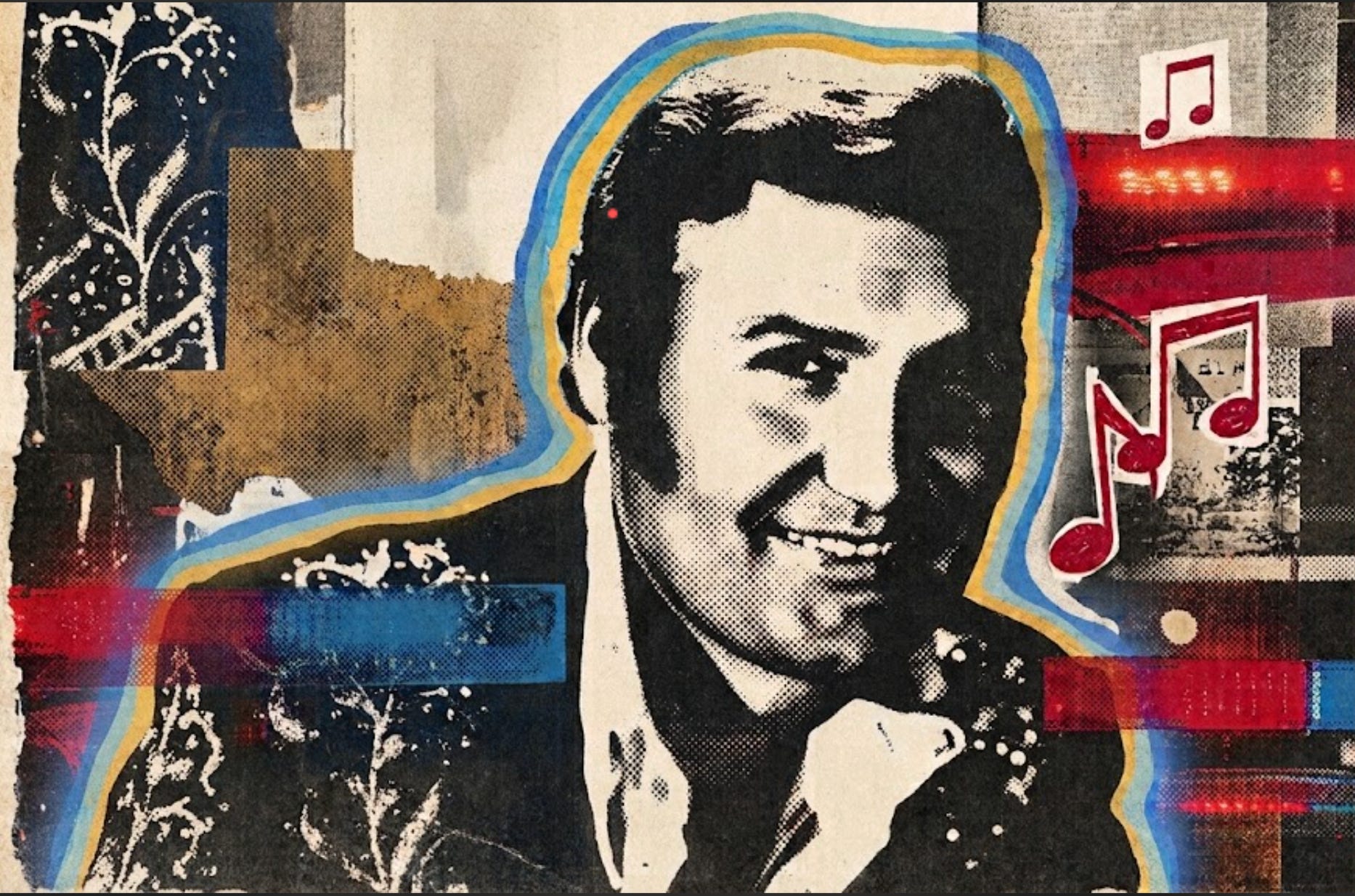
Not long ago there was a hit song on TikTok that sampled a famous Willie Nelson song called “Ain’t It Funny How Time Slips Away?” The song was a hit for Billy Walker, The Tall Texan. Billy was one of honky-tonk’s pioneers—playing stages with any name in the business between the 1950s and ‘60s.
I was in a band for a decent chunk of time with Billy’s grandson, Sweepy. I got real close with the family and am so happy to call them friends. They all have an infectious and fun sense of humor, which I imagine when I see any interview with an almost always “jolly” Billy Walker.
I recently stumbled across a very strange correlation in my research that I wanted to share.
Kansas City - March 3, 1963
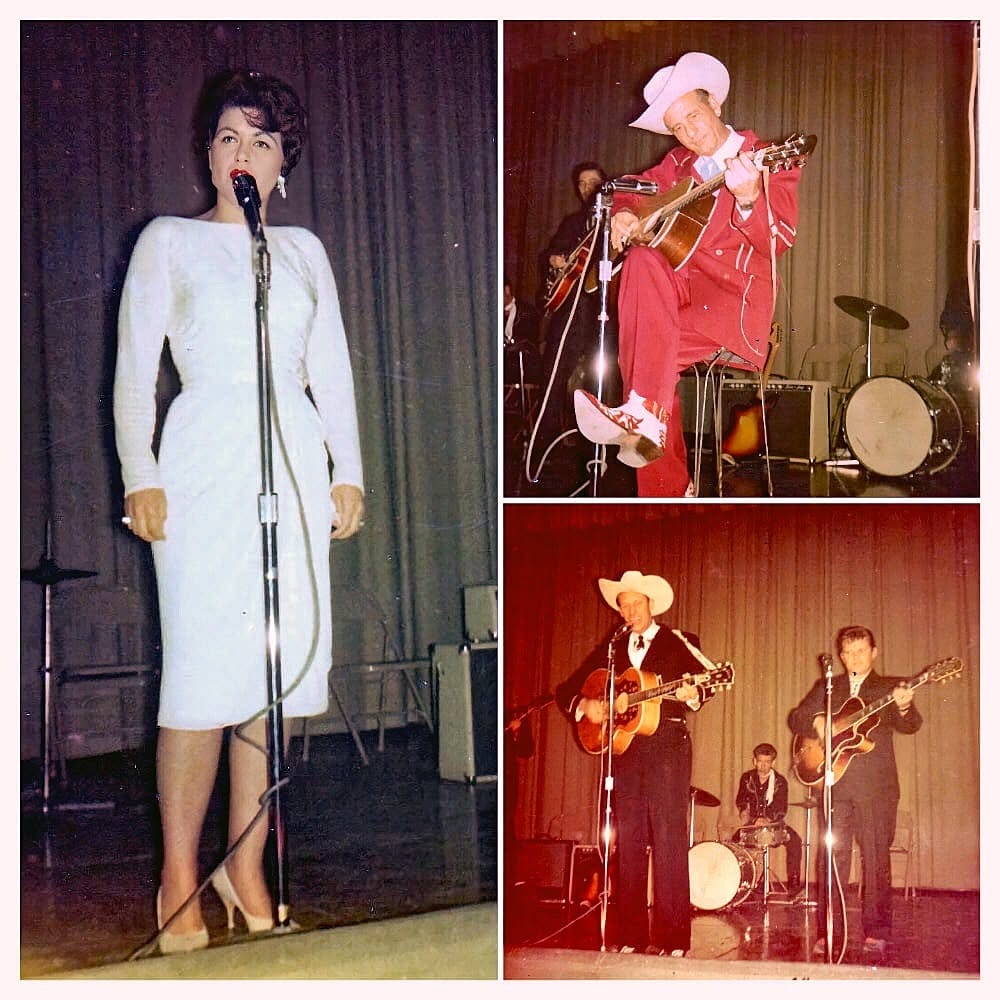
On March 3, 1963, Billy Walker was performing at a charity benefit in Kansas City, Kansas, alongside some of the biggest names in country music. Patsy Cline was there. Hawkshaw Hawkins was there. Cowboy Copas. Red Foley. They were raising money for the family of “Cactus” Jack Call, a beloved disc jockey who’d died in a car accident two months earlier. It was the kind of show that defines the country music community—strangers brought together by tragedy, working to ease someone else’s suffering.
That generosity almost killed him.
The night of the benefit, Billy got a phone call from Nashville that stopped his heart. His father had suffered a massive heart attack. The doctors weren’t optimistic. He needed to get home now—not tomorrow, not after the scheduled flight. Now.
There was a private plane leaving the next morning but Billy was too big a man to fit on it. It was a four-seater Piper Comanche piloted by Randy Hughes, Patsy’s manager.
The only way Billy could get home in time was to take a commercial flight early the next day.
He phoned Hawkshaw Hawkins.
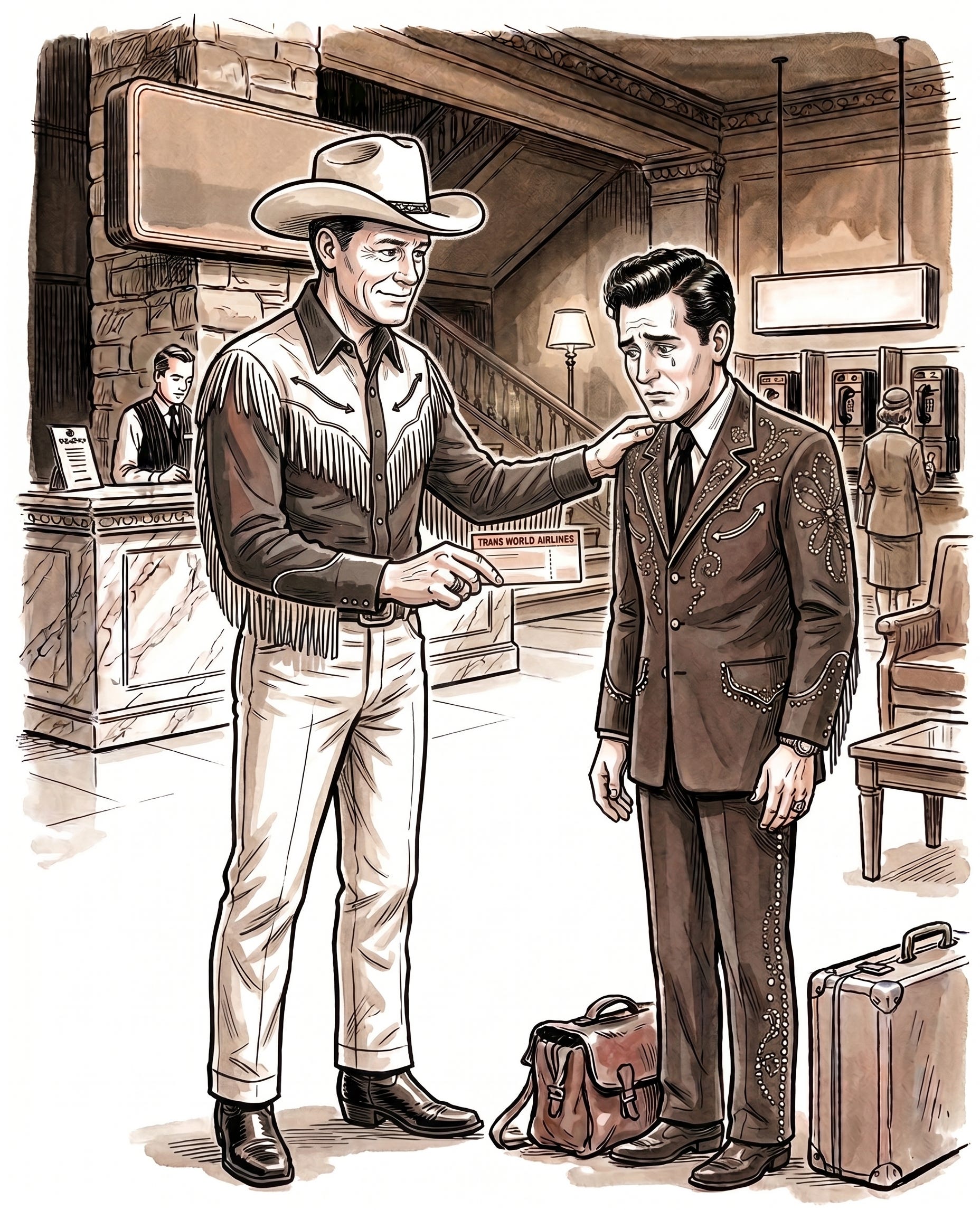
Hawkins met him a few minutes later, and without hesitation, pulled out his commercial airline ticket. He handed it over and said something Billy would never forget: “Kid, I wouldn’t do this for anybody else. I hope your dad pulls through.”
It was the kind of generosity that cuts deeper when you know what it ended up costing. Hawkins wasn’t a kid anymore. He was 41, established, respected. But he was also the kind of man who understood that some emergencies trump everything. A man’s father dying. That changes everything.
Billy took the commercial flight.
Hawk went with Patsy, Copas and Randy on the private jet.
Later that night, during intermission at the benefit, Hawkins performed his new record for the crowd—a song called “Lonesome 7-7203.” He didn’t know all the words, so he pulled the lyrics from his wallet, apologized to the audience, and had another performer hold the paper next to him while he sang. It was his last performance. None of them even knew it. Most never do.
Billy made it back to Nashville on a commercial flight and his father pulled through.
Billy knew Patsy. They weren’t just names on a bill. Before the Kansas City benefit, they’d worked a package show together in Lima, Ohio, discussing what was coming up. Billy had watched Charlie Dick, Patsy’s husband, get heavily intoxicated and abusive toward her backstage. Billy and Randy Hughes tried to intervene. The next night, Billy made the trip to Toledo to see Patsy perform her pop concert with an orchestra—a different kind of stage, a different kind of music, but still Patsy, still fighting to become something bigger than country radio would allow her to be.
That’s who Billy knew. That’s the Patsy he’d sat with, tried to help, and believed in.
The Wreck
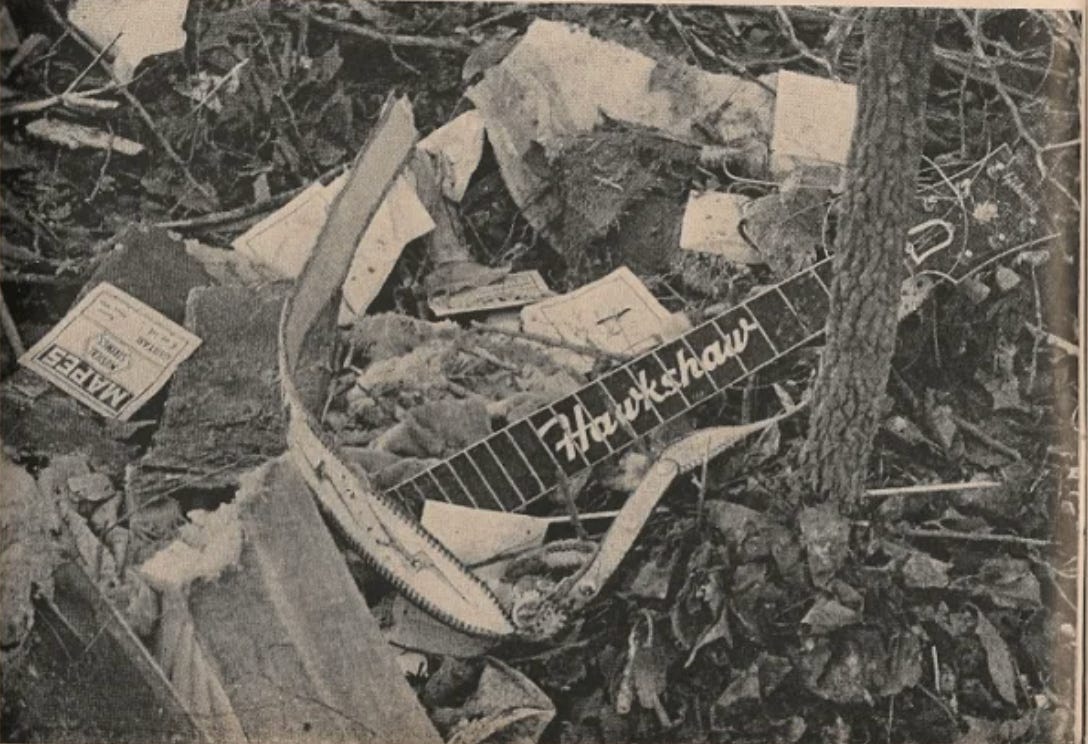
On March 5, 1963, the private plane carrying Hawkshaw Hawkins, Patsy Cline, Cowboy Copas, and pilot Randy Hughes left Dyersburg, Tennessee, heading for Nashville. They flew directly into severe weather—thunderstorms the way Tennessee gets them in March, when the sky turns a color that doesn’t have a name. Around 6:29 p.m., the Piper Comanche encountered the storm and lost control. It crashed in a forest near Camden, Tennessee, 90 miles short of home.
Everyone on board died. The coroner’s office found Patsy’s watch lying in the wreckage. It had stopped at 6:20 p.m.
Billy Walker, flying commercial, made it back to Nashville. His father survived the heart attack. Billy lived because Hawkshaw Hawkins wouldn’t do this for anybody else.
In the end, Hawkshaw Hawkin’s life had been sacrificed to get Billy Walker home.
Blasphemous Rumors
Forty-three years later, on May 21, 2006, Billy was driving back to Nashville in a van after a performance in Foley, Alabama. He was 77 years old. The Tall Texan, his stage name announced, who’d been a fixture at the Grand Ole Opry for forty-six years. He’d survived the era when the Lost Highway claimed singers the way the Depression claimed farms. He’d outlasted the plane crashes, the drunk driving, the overdoses—all of it.
But Interstate 65, on an ordinary Sunday night south of Montgomery, Alabama, wasn’t ordinary anymore.
The van veered off the road. It overturned. When the emergency crews arrived, they found Billy dead. So was his wife, Bettie, who’d booked his shows for years. So was Charles Lilly Jr., his bass player, the one who’d played on those songs for decades. So was Daniel Patton Sr., his lead guitarist.
Only his grandson, Joshua Brooks, 21 years old, survived—critically injured but alive.
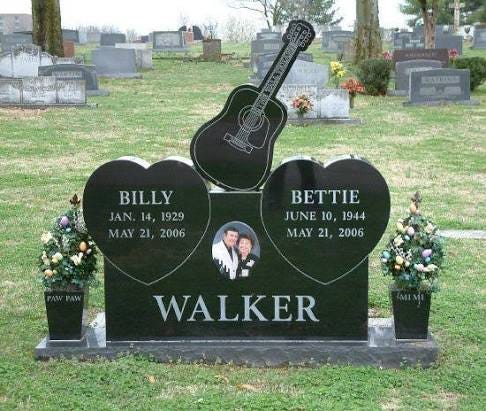
There’s something in this story that moves beyond mere irony. It’s not just the coincidence of a man escaping one of country music’s most infamous tragedies only to die in a completely different kind of crash forty years later. It’s what that borrowed ticket represents—a moment of grace, of one person’s generosity saving another’s life, and then the universe collecting the price of that ticket decades down the road anyway.
In the immediate aftermath, Billy gave a statement to the Nashville Banner. He was careful with his words, still processing what had happened. “God was on my side,” he said. “Else how can you explain my being here and Patsy, Copas, Hawk, and Randy gone? No, I was not scheduled to ride the plane. Actually there wasn’t enough room for me in the four-seater. So I went out and back on a commercial flight.”
He didn’t mention his father’s heart attack. He didn’t mention the ticket swap. He didn’t mention Hawkshaw’s generosity or the words that had been spoken between them. Some things are too sacred to make public in a time of grief. I believe Billy understood that. I would honestly argue that Billy probably felt some guilt, too.
Regardless, Billy carried the weight of Hawk’s generosity on his shoulders..
for forty-three years.
Billy didn’t die on Randy Hughes’ plane. He lived because Hawkshaw Hawkins was generous in a moment that mattered. He got to keep living. He got to record over thirty charting records. He got to watch the Grand Ole Opry change and stay the same, to see Nashville become something his younger self wouldn’t have recognized. He got to marry Bettie. He got to enjoy the time with his family. He got to tour the world—he performed at Wembley Arena in London several times in the 1980s. He got to keep playing.
He also carried the weight. “Kid, I wouldn’t do this for anybody else.”
The cruelty isn’t that he died at the age of 77.
The cruelty is how it went down. It wasn’t the romantic tragedy of a plane going down —the kind of death that gets written into legend. Just a van, a road, and an ordinary night that went wrong. The kind of death that doesn’t make the history books, even though the man who went needs to be in all of them.
On May 21, 2006, the story of Billy Walker ended. But it didn’t end the way anyone who knew him would have predicted. It ended on an interstate, with his wife beside him, his grandson and his band around him—just heading home.
That borrowed ticket from 1963 didn’t protect him forever. Nothing does. But it bought him forty-three more years. It bought him a life. And in Nashville, where we’ve always understood that every night could be your last, forty-three extra years is everything.
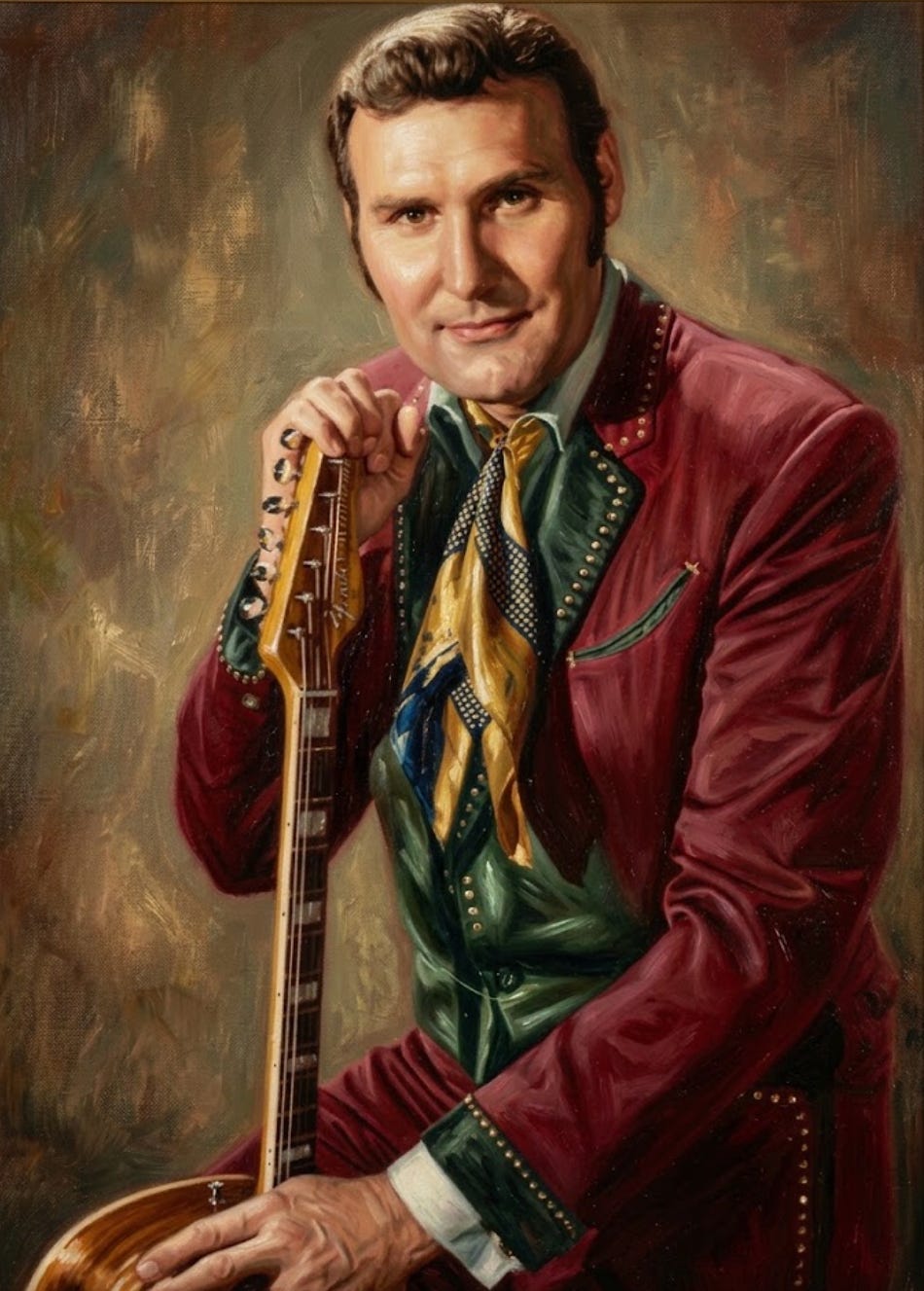
Billy Walker was 77 when he died. He’s not in the Country Music Hall of Fame, though he charted over thirty records and was a fixture at the Grand Ole Opry for forty-six years. No one talks much about the men who came to every show, did the work, made the music happen. Billy Walker doesn’t show up anywhere in history as any sort of problematic character so he gets buried like too many other legends do, just because they weren’t viewed as “outlaws”. He is a legend. All the greats knew it - and he got to live it.
ABOUT THE AUTHOR:
My name is Zachariah Malachi. I’m a full-time, self-employed honky tonk musician in Nashville, Tennessee. This Substack Publication was created for the purpose of sharpening my mind on more Nashville and Country Music history to share with the honky tonk patrons downtown during my shows—but I wanted more folks to benefit from the research, so it’s my gift to the country music fans of the world AND the people who WANT to be. Subscribe and come along for the ride.
Very well done, Zachariah!
I saw Billy at the Omaha airport about 2000. He was flying solo on a Delta flight and no one recognized him. I did, went up and introduced myself and told him I enjoyed his work. He autographed a note for me and we visited for 15-20 minutes. He was just a delightful guy who seemed so appreciative that I recognized him.