


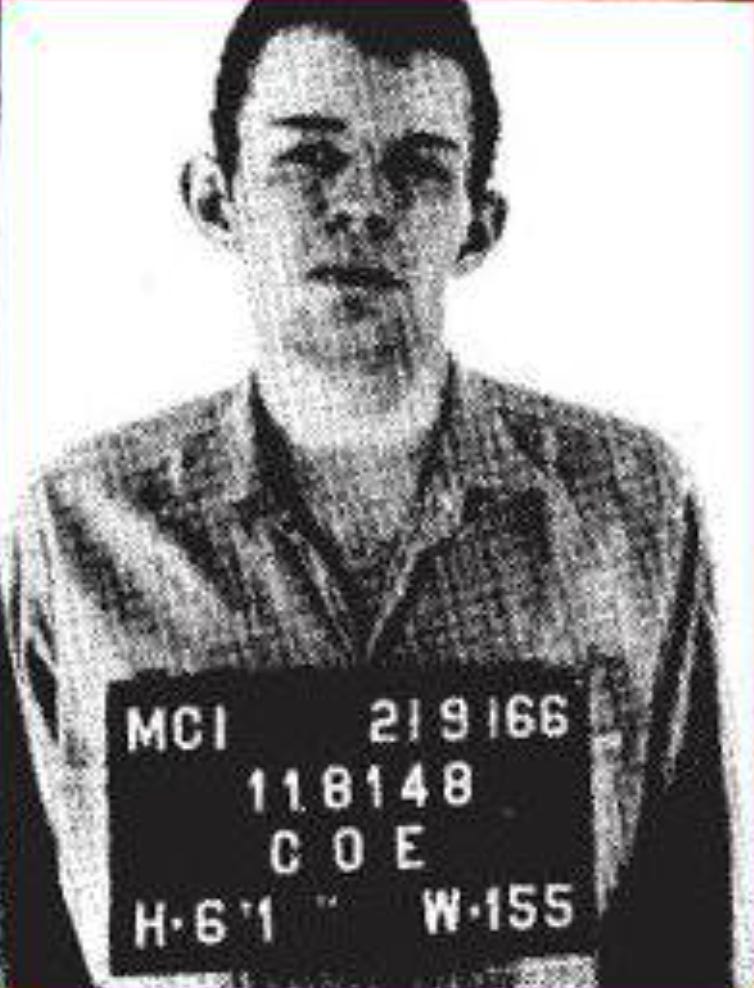
There are probably more than a dozen images like this in existence of the same person in the same life choice decision. Who knows? He was always trouble.
There is a particular kind of American the twentieth century produced in abundance and acknowledged almost never — the boy nobody wanted. He passed through broken homes and institutional corridors, slept in whatever bed the state assigned him, and learned to read people the way the rest of us learned to read books. David Allan Coe was one of those boys. Born in Akron, Ohio on September 6, 1939, he arrived into a world that had no particular interest in keeping him, and spent the better part of two decades proving it right.
What I want to give you here is not any idolization. Coe spent a career building his own mythology, and he was not always scrupulous about where the truth ended and the legend began. What I want to give you is the raw material beneath the leather and rhinestones — the actual texture of a life that produced one of the most honest and devastating debut albums this country ever made. Penitentiary Blues was not a concept. It was a biography piece.
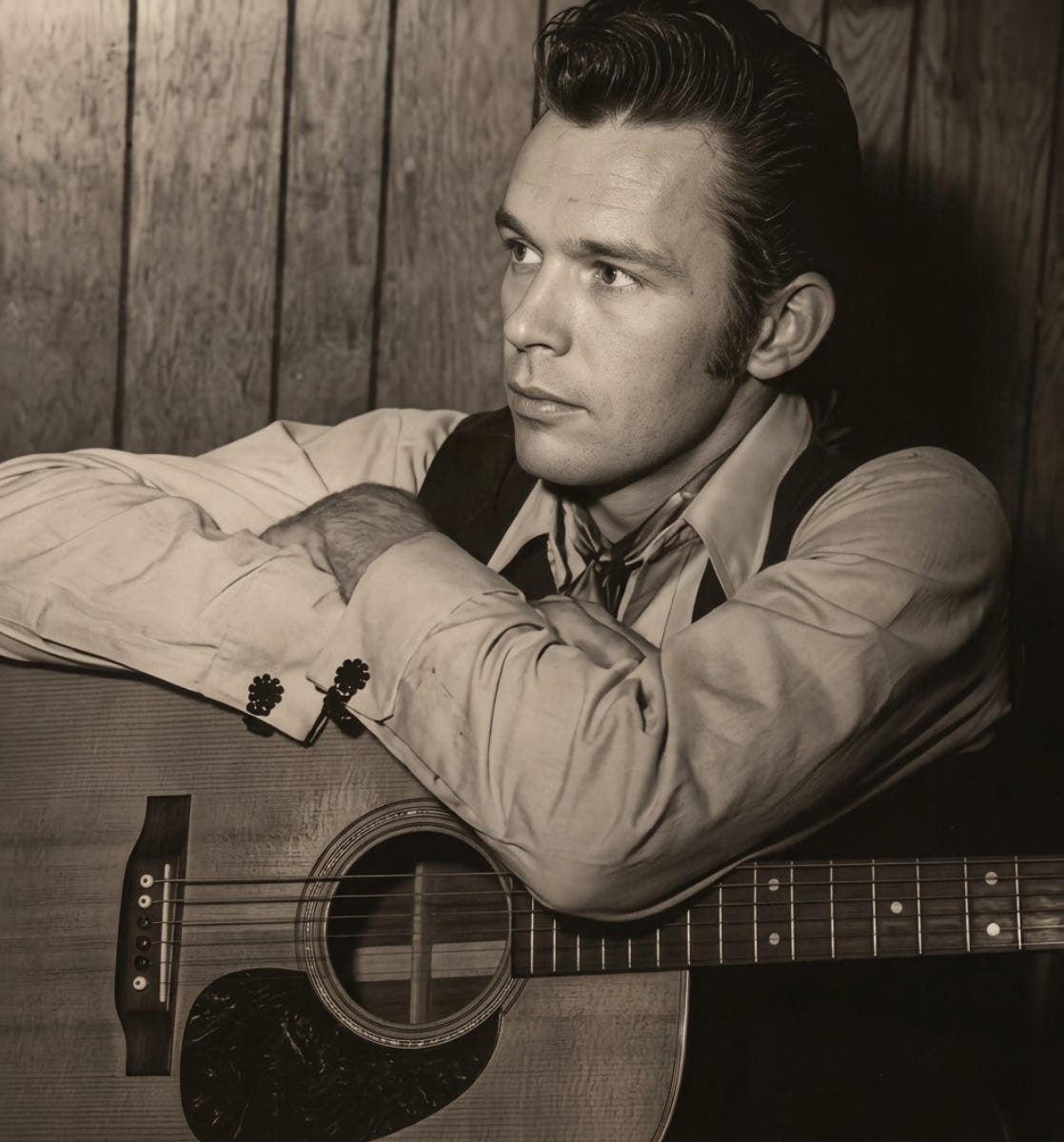
An extremely rare photo of young David Allan Coe. Not pre-music, though.. obviously.
Akron, Ohio. A Broken Home. Age Nine.
David Allan Coe was born to Donald Mahan Coe and Dorothy Ruth Wilson. Beyond names, the details of his family life are murky in the way that poor and fractured families tend to be in the historical record — more absence than documentation. What is known is that he was the product of a broken and unhappy home. Reports describe a stepmother unwilling to manage his conduct, resulting in his transfer to state facilities rather than home supervision.
That is the clinical version. What it means in plain language is this: when David Coe was nine years old, in 1948, someone in authority decided the problem was the child rather than the circumstances surrounding the child, and they sent him away.
His favorite singer at the time was Johnny Ace — the rhythm and blues singer from Memphis whose career ended at twenty-five when he shot himself in the head playing Russian roulette backstage at a Christmas dance in 1954. There is something in that detail worth sitting with. A nine-year-old boy from a broken home in Akron, Ohio, who loved Johnny Ace. He was already listening for something the mainstream couldn’t give him.
He was sent to the Starr Commonwealth for Boys reform school — a facility in Albion, Michigan, about two hundred miles from Akron. Starr Commonwealth billed itself as a Christian-based therapeutic community for troubled youth. What it was in practice, for a child who’d done nothing more serious than become inconvenient to the adults around him, was a cage with better public relations.
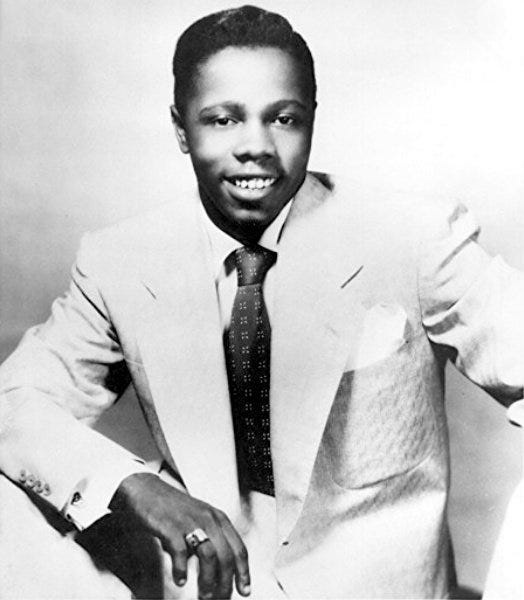
Johnny Ace’s “Pledging My Love” was always a favorite of mine. DAC made a record on that one, too.
The Reform School Circuit
Here is what a childhood spent in institutional care looked like in mid-century America, and why it mattered for the music that eventually came out of it.
You did not go to one place and stay. You cycled. Every time he was released, he managed to do something to get incarcerated again. Sometimes that something was a genuine infraction. Sometimes it was the predictable behavior of a child who had been given no stable foundation and was simply being what the system had made him. The distinction rarely mattered to the courts.
Coe spent much of his pre-adult years cycling through detention homes and reformatories, often due to escapes and further infractions such as car theft committed with older peers. By age fifteen, in 1955, he was at the Boys Industrial School in Lancaster, Ohio. It was there — in a prison yard in front of a captive audience — that he first sang with a guitar and five other boys. He would later recall that moment standing in front of another inmate audience decades later, rhinestone suit and all: “It started when I was 15 years old, at the Boys’ Industrial School in Ohio, and I started singing with just my guitar and five of my friends.”
The guitar came first. The songs came from whatever was already living inside him. And what was living inside him was the blues.
This is not incidental. Coe was imprisoned with, by his own accounting, around 87% Black inmates. The white inmates called him names I would never repeat because he hung around Black men and absorbed their music. He did not arrive at the blues through record shops or college radio. He absorbed it through proximity, through the same walls, through nights in cells where music was the only thing that wasn’t owned by the institution.
What the Ohio Penitentiary Costs a Man
By the time David Allan Coe entered adult incarceration, the charges had escalated from the vague catch-all of troubled youth into specifics: possession of burglary tools, auto theft, armed robbery. He was imprisoned from 1963 to 1967 on charges of possession of burglary tools — an offense that stemmed from authorities finding a screwdriver in his glove compartment.
Read that again. A screwdriver.
He served time at the Ohio State Penitentiary and Marion Correctional Institution. The Ohio State Penitentiary in Columbus was, by any accounting, one of the most brutal facilities in the American corrections system — overcrowded, violent, the site of riots, fires, and a culture of predation that the state did nothing to slow. Coe was a young white man who didn’t act like a young white man was supposed to act in that environment. He crossed racial lines in a place where racial lines were enforced by violence. He spent years inside walls that were designed not to rehabilitate but to punish, and in those walls, between surviving and waiting, he wrote songs.
Now, here is where the mythology enters — and we have to deal with it honestly, because Coe himself was not always honest about it.
Coe later claimed that he was on death row for killing a man in prison. Prison officials stated there was no evidence to support it. Most who studied him concluded it was embellishment. He also claimed to have taught Charles Manson guitar. When David was in Starr Commonwealth in Albion, Michigan, Manson was at Gibault School for Boys in Terre Haute, Indiana — and the man who actually taught Manson guitar appears to have been career criminal Alvin Karpis.
Coe was, as Waylon Jennings’ drummer Richie Albright once put it, “a great, great songwriter” who “could not tell the truth if it was better than a lie he’d made up.”
I do not think this diminishes him. I think it tells us something essential about the particular American archetype he inhabited and eventually perfected. The outlaw does not merely live a hard life — he performs a hard life, shapes it into narrative, makes himself the protagonist of a story large enough to contain what actually happened to him. The truth of David Allan Coe’s childhood and adolescence was, in fact, bad enough. He didn’t need to embellish it. But the embellishments tell us where the wounds were.
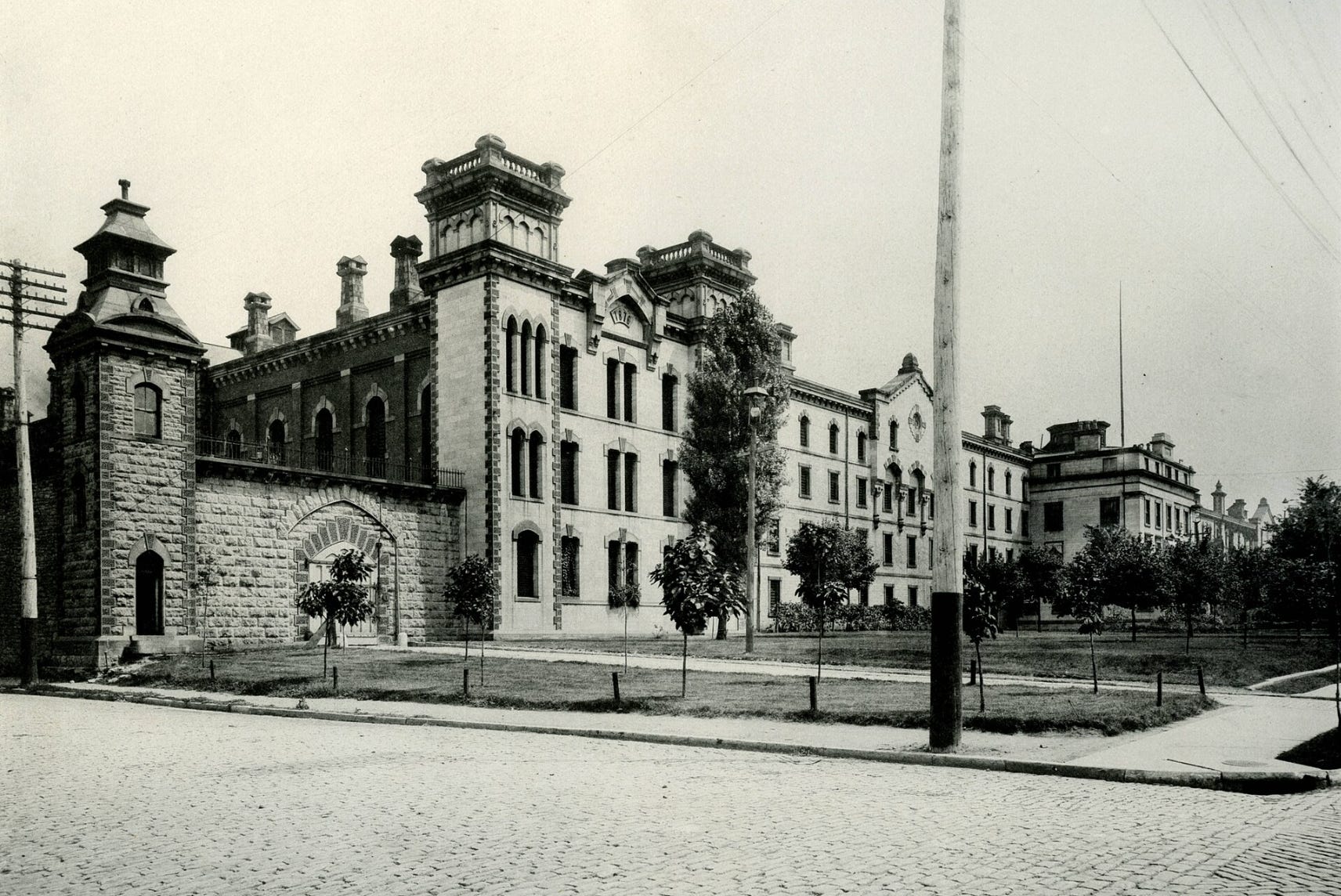
The infamous Ohio State Penitentiary, erected in 1834.
The Man in the Next Cell
What is substantiated — and what matters most to this story — is what happened inside those walls between a white boy from Akron with a ruined childhood and one of the most singular figures in the history of rhythm and blues.
In the cell next to David Allan Coe, during his time at the Ohio Penitentiary, was Screamin’ Jay Hawkins.
Jalacy Hawkins — Screamin’ Jay — was the man who in 1956 recorded “I Put a Spell on You,” one of the most ferocious and unsettling performances in the American musical canon. A classically trained baritone, a former professional boxer, and a showman who performed rising from coffins and wielding a skull on a stick named Henry. He was, in short, a man who understood that performance was transformation, that what you put on stage was something more than what you were in the world. That the mask was not a deception but a revelation.
Coe has said Hawkins was in the cell next to him, and that it was Hawkins who encouraged him to write the songs that would eventually become Penitentiary Blues. “I was one of about fifteen white boys,” Coe recalled, “and that word didn’t mean nothin’. I used to have to fight my way outta everywhere because I hung around black guys.”
Two men in adjacent cells. One of them had already bent American music into a new shape. The other had nothing yet but a talent and a wound. The conversation through the wall between them is lost to history, and I would give a great deal to have it back.
What we know is what came out the other side.
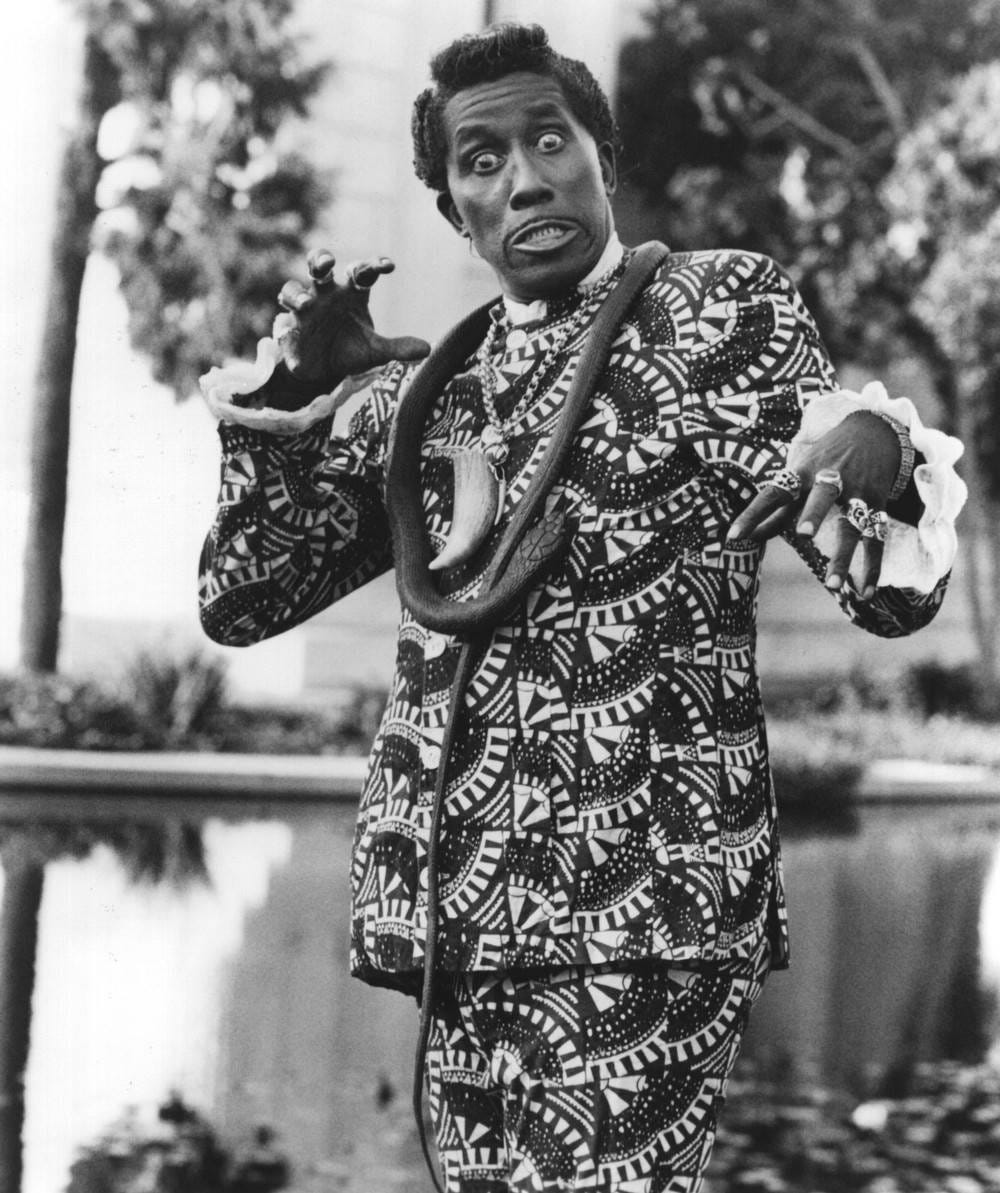
I cannot say enough how big of a Screamin’ Jay Hawkins fan I am. I mean,
look at that suit, too…
Nashville, 1967. A Hearse and a Dream.
On November 2, 1967, David Allan Coe was released from the Ohio State Reformatory at Marion. He arrived in Nashville the following day.
He came with almost nothing. He lived in a red Cadillac hearse, emblazoned with his name and the words “SUPPORT THE GRAND OLE’ OP’RY.” On weekends, he parked it in front of the Ryman Auditorium and played on top of it for the audiences heading inside.
Think about what that image contains. A man who has spent most of his life inside walls, standing on a hearse — a vehicle built to carry the dead — outside the cathedral of the music he intended to conquer. It was theater. It was desperation. It was the act of a man who understood instinctively that in Nashville, as in prison, if you don’t announce yourself, nobody sees you at all.
The Nashville he arrived in was dominated by the countrypolitan sound — Jim Reeves smoothness, lush strings, music designed to sand down every rough edge until it could slide across a radio dial without catching on anything. David Allan Coe was nothing but rough edges. He had spent twenty years acquiring them.
After his release, he hit the road with B.B. King and the Staples Singers. The blues community recognized what Nashville hadn’t yet decided to see. And it was B.B. King himself who eventually redirected him — telling Coe, with the plain honesty of a man who knew the industry, “You’re a great blues singer, but, man, you gonna starve to death. Nobody wants to hear a white boy sing the blues.”
Coe listened. He did not abandon the blues — he never could, and the music he made from that point forward proves it. But he turned the lens toward country, which had always been, at its root, the same music with different clothes on.
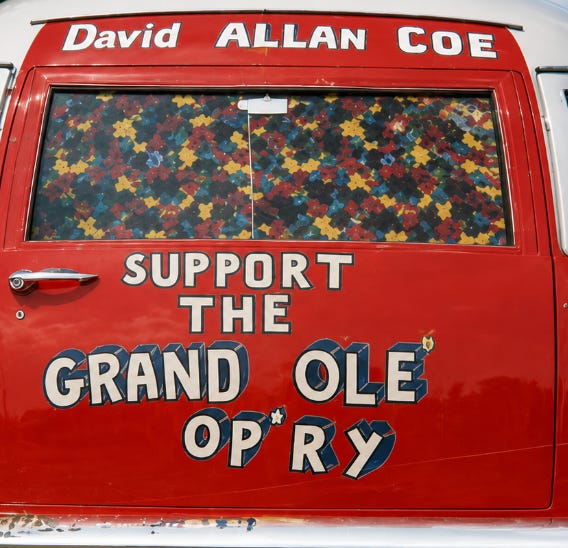
The back of the DAC Hearse. How legendary is that? A hearse with the Opry on it.
Shelby Singleton and the First Record
Coe’s early music was strongly influenced by blues and R&B — he often cited Hank Ballard as one of his favorite vocalists. When he landed his first record deal, with Shelby Singleton’s SSS Records, he cut a tough blues-based effort based on his experiences behind bars.
Shelby Singleton was one of the more interesting characters operating in the margins of the music industry in the late 1960s — a man who ran Plantation Records and SSS International out of Nashville, signing artists the major labels wouldn’t touch and putting out music the mainstream wasn’t ready for. He heard Coe busking outside the Ryman and recognized something raw enough to be real.
The album they made together was called Penitentiary Blues.
It focused on themes such as working for the first time, blood tests from veins used to inject heroin, prison time, hoodoo imagery, and death. Its influences included Charlie Rich, Jerry Lee Lewis, Bo Diddley, Lightnin’ Hopkins, and Tony Joe White. It contained tracks called “Cell #33” and “Death Row.” It was, as AllMusic’s Thom Jurek later described it, “a rowdy, funky, and crude blues record full of out-of-tune guitars, slippery performances, and an attitude of ‘fuck it, let’s get it done and get it out.’”
In Europe, it won Coe blues artist of the year. In Nashville, it was largely overlooked.
This is how it works. The place you came from understands you before the place you’re going does. The blues world heard Penitentiary Blues and recognized a man telling the truth. Nashville heard a record that didn’t fit the format and filed it under difficult.
What the Album Was, Actually
I want to be precise about what Penitentiary Blues represents in the arc of American music, because it is not simply a historical curiosity.
It is the sound of a man who learned to sing in prison, singing about prison, recorded in Nashville by a label that expected little and released into a world that wasn’t ready. It is a document. Not a document manufactured after the fact, not a retrospective mythology shaped by later success, but a thing made in direct contact with the experience it describes. The blood tests from heroin veins. The cell number. The death row imagery — embellished or not, the fear it encoded was real.
Allmusic wrote of it: “There are hints and traces of the lyrical genius Coe would display later.” That is accurate as far as it goes, but it undersells what’s already present. The genius in Penitentiary Blues is not latent. It is raw — which is a different thing entirely. Latent means waiting to develop. Raw means already real, not yet refined. The refinement came later, and it made Coe famous. But the truth was always in the raw version.
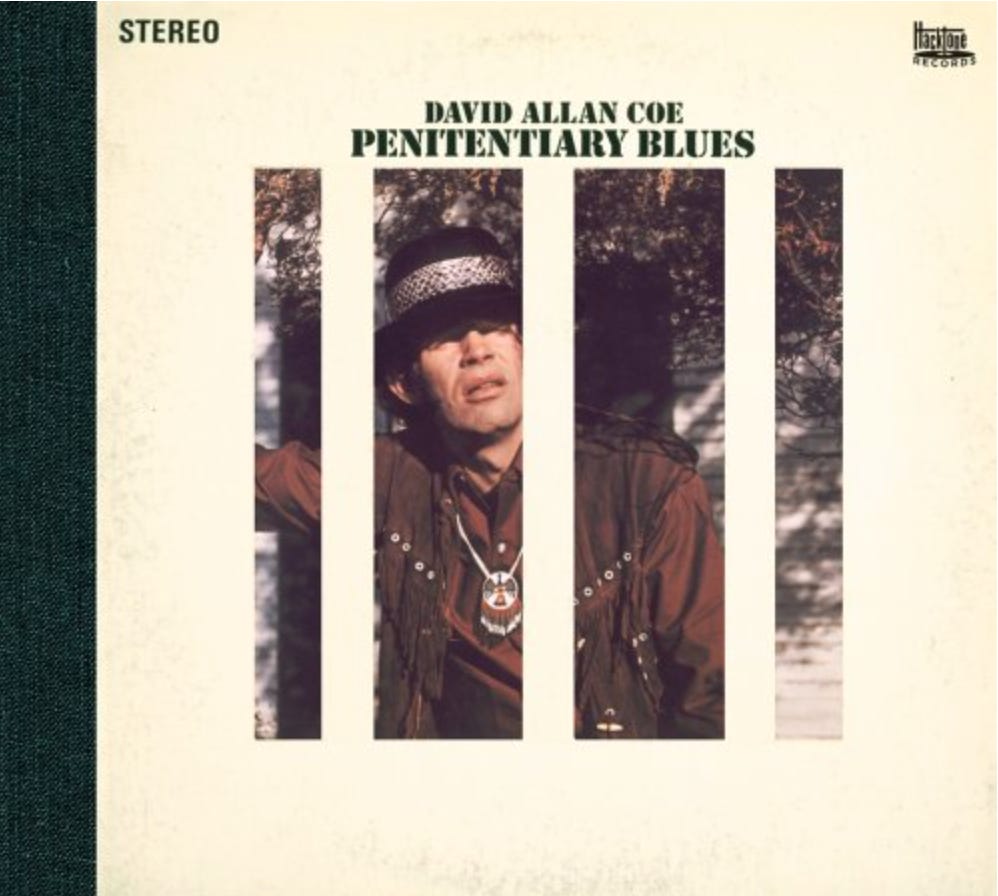
The gold mine. This album is pretty legit. I am not gonna lie — it’s a pretty bluesy masterpiece.
The Shape of a Wound
I’ve spent some time now in this archive thinking about what it means that David Allan Coe — a man who went to a reform school at nine, who spent his adolescence inside institutions, who absorbed the blues from Black men in Ohio prison cells — became the songwriter who gave Johnny Paycheck “Take This Job and Shove It” and Tanya Tucker “Would You Lay With Me (In a Field of Stone).”
The answer is that the wound was always the material.
The boy nobody wanted grew into the songwriter who understood, better than almost anyone working in Nashville in the 1970s, what it felt like to be at the end of your rope, to be invisible to the people who were supposed to see you, to be one bad break away from permanent ruin. He wrote from that place because he had lived in it for twenty years before anyone gave him a microphone.
His daughter Tanya Montana Coe, reflecting on his death in April 2026, said something that has stayed with me: “He had an extremely traumatic childhood and early adult life, and I am so proud of what he made of himself as an artist. All we kids ever really wanted was for him to feel free in his soul.”
He never fully did. You can hear it in the music, which is why the music has lasted.
The institutions got his body for twenty years. They did not get what was inside him. That survived, found its way to Nashville on top of a hearse, and eventually became Penitentiary Blues — an album that told the truth about America in 1969 with such directness and such rawness that the country barely knew what to do with it.
Some truths are like that. They arrive before their time, get filed away, and wait for the world to catch up.
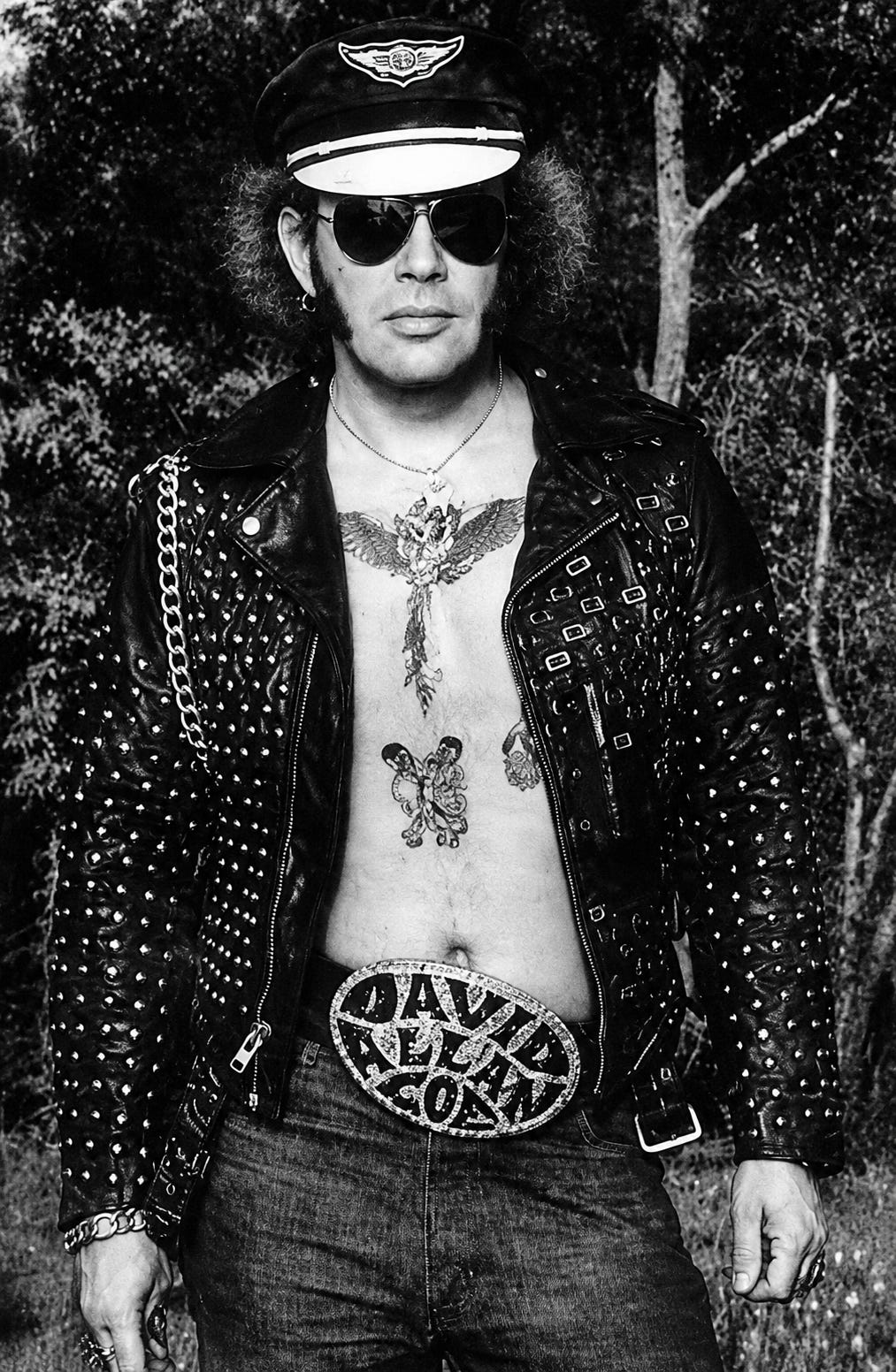
No matter what they say.. this is what country music looks like.

A message from the author, Zachariah Malachi:
If you know someone who needs to hear the real story of country music — not the sanitized version, but the one with blood and bars and genius forged in institutions — share this piece. The archive grows one reckoning at a time.
Subscribe to The Country Music Book of The Dead for more from the dark country history vault.
Beyond glad to have found your stack brother, you write about a lot of musicians I love and I'm learning a lot of the history behind their music, much appreciated!