


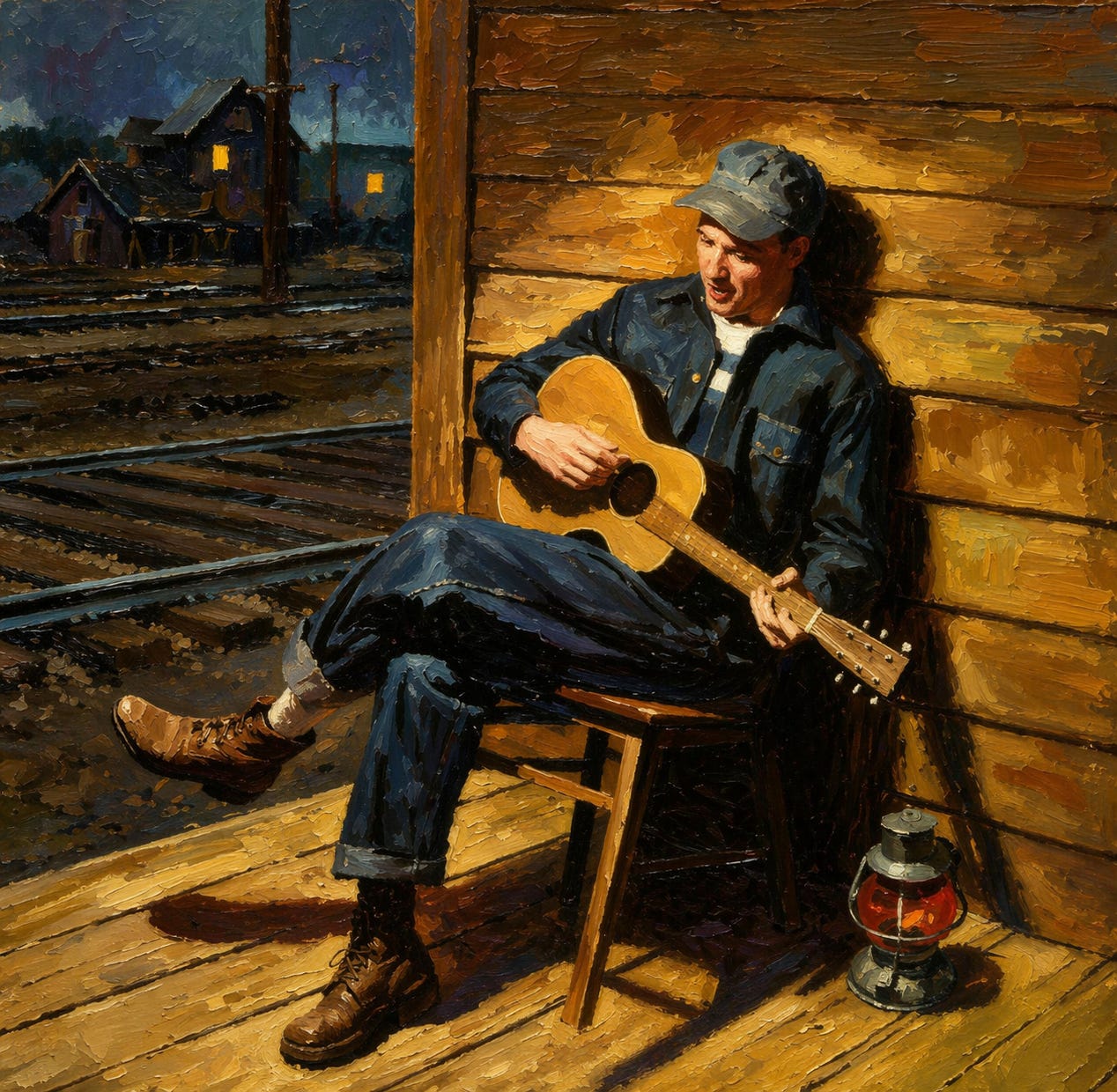
I’ve been playing Jimmie Rodgers. No, not just his music.. I mean, I’ve been acting as him. Well, and Johnny Cash.. and Conway Twitty, etc., etc.
I’ve been playing him onstage, in Nashville, in a show called CountryRoadsUSA — and I’ll tell you, the deeper I’ve gone into this man’s life, the more I’ve wanted to just grab people by the arm and say sit down, let me tell you what actually happened here. Not because it’s obscure trivia. Because it’s one of the greatest stories in American music, and it deserves to be told out loud, not just footnoted on a Hall of Fame plaque that people barely breeze by.
The “Father of Country Music.” That’s what they call him. And that’s true — but the title doesn’t carry the weight of the story. The story carries the weight. And the story ends in a New York hotel room in May of 1933, with a canvas cot, a failing lung, and twelve songs that needed to exist before the man recording them ran out of time to record them.
That’s the story I want to tell you today.
Country Music and Trains. It Was Always That Way.
Here’s something I keep coming back to. Ha. Here’s something that country music consistently comes back to:
Songs about trains.
Country music and trains have gone together since the very beginning of the genre — since before there was even a name for it. So many country songs are about trains. So many of the great artists either worked the railroads, grew up in railroad towns, or reached for the train as the central image for everything they were feeling — movement, freedom, loss, leaving home and never quite finding your way back.
That didn’t come from nowhere. It came from real life. From the actual intersection of working-class American existence and the iron lines that ran through the middle of it.
And the whole lineage of it — everything we love about country music — starts with a brakeman from Meridian, Mississippi named Jimmie Rodgers.
He was a railroad man before he was a music man. He worked the lines as a brakeman in the early 1920s, out in all weather, doing hard physical labor alongside Black railroad workers whose blues sensibility he absorbed deeply and genuinely. That sound — raw, sliding, emotionally honest, not fitting neatly into any existing category — became the foundation of what he eventually put on record. Country music, the way we hear it and feel it and perform it today, is built on what Jimmie Rodgers learned working those tracks.
And then the railroads gave him the thing that would kill him.
The Diagnosis
He was twenty-six years old when the doctors told him he had tuberculosis.
Twenty-six. Out on those lines in the cold and the dust, and somewhere along the way tuberculosis got into his lungs and decided to stay.
In 1924, there was no cure for TB. You rested. You got fresh air. You hoped. Which is just about the worst possible prescription for a man like Jimmie Rodgers — restless, performing, driven, with a wife named Carrie and a daughter to take care of and music pouring out of him whether he wanted it to or not.
So he kept going.
In 1927, he ends up in Bristol, Tennessee for the now-legendary Bristol Sessions, where Ralph Peer of Victor Records was holding auditions. The Carter Family recorded there too. Peer wasn’t entirely sure what to make of Rodgers — his sound was blues and folk and Tin Pan Alley and something that didn’t have a name yet — but he signed him anyway.
What came next was something remarkable. Between 1927 and 1933, Jimmie Rodgers recorded over a hundred songs. He became the best-selling recording artist in the American South — during the Depression. People who couldn’t afford groceries were buying his records. He built a mansion in Texas he called “Blue Yodeler’s Paradise.” He was photographed with Will Rogers. His blue yodel — that wild, soaring, impossible vocal thing — became a national obsession.
All of it, every show and every record, while tuberculosis was slowly taking him apart from the inside.
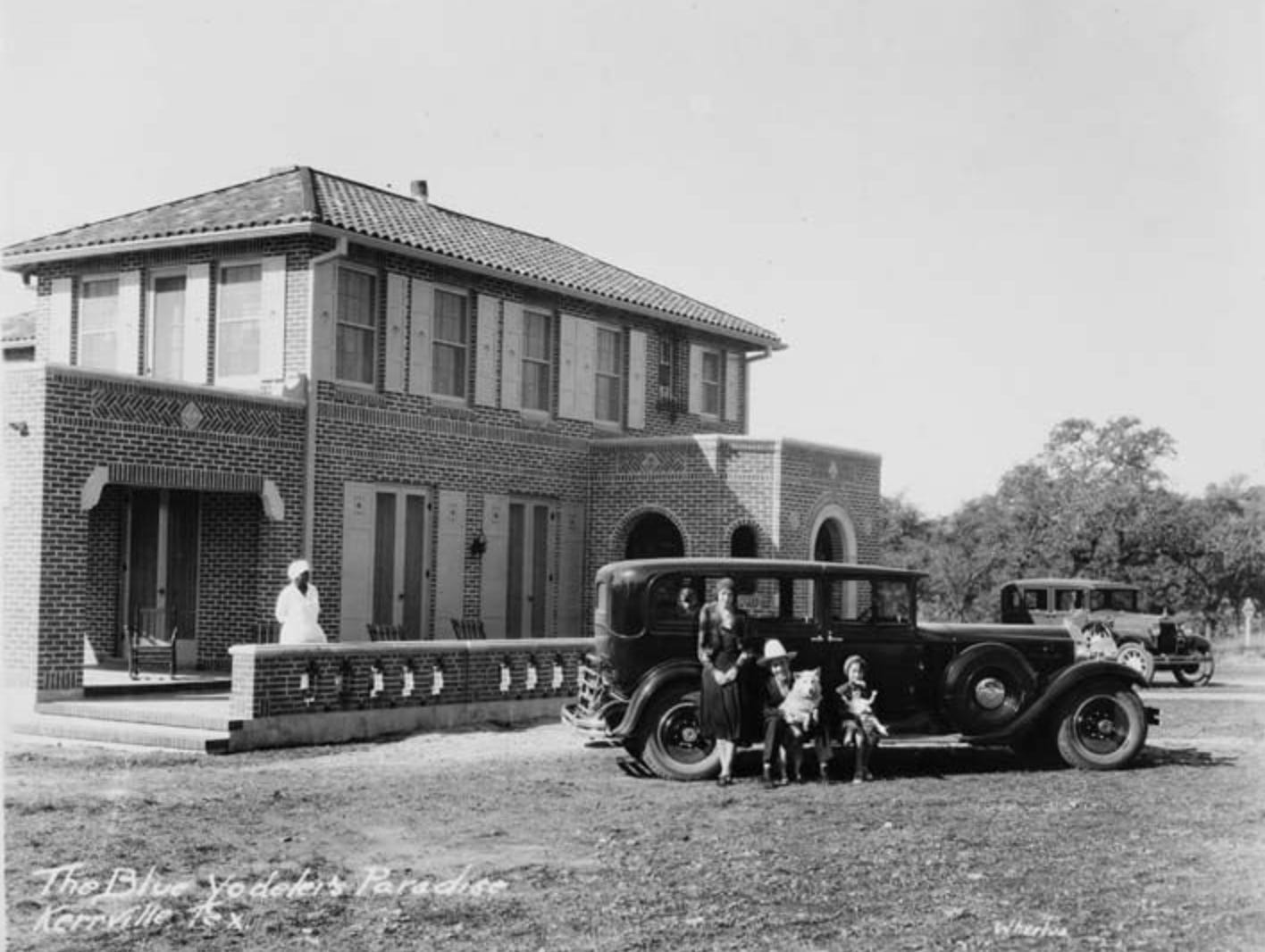
The Rodgers Family outside of “Blue Yodeler’s Paradise” in Kerrville, TX
May 1933. New York City. A Hotel Room and a Canvas Cot.
By the spring of 1933, Jimmie Rodgers weighed about ninety-five pounds.
When I play him on stage I think about that number. Ninety-five pounds. The disease had hollowed him out. He was coughing up blood. He couldn’t walk a block without stopping to breathe. His doctors told him plainly that he was dying — not eventually, not someday, but soon — and that he absolutely should not travel.
He’d already had to sell Blue Yodeler’s Paradise to cover debts. The Depression had hit Victor Records hard, the royalties had shrunk, and most of what he’d built financially was gone. His body was failing. The money was gone.
But he had twelve songs that weren’t recorded yet.
So he got on a train — of course he got on a train — and rode from Texas to New York City.
He checked into the Taft Hotel on Seventh Avenue with Carrie, a portable canvas cot, and a recording schedule starting May 17th.
Ralph Peer, who’d been with Rodgers since Bristol, understood exactly what he was looking at. He set the studio up with the cot in mind. Between takes — sometimes between verses — Jimmie would be helped from the microphone to the cot, where he’d lie down and breathe and wait for his body to let him keep going. Some sessions had to stop because he was coughing blood.
The people who were in that studio — the engineers, the session musicians — have described a quiet that would settle over the room during those pauses. These were working professionals, practical people, and they’d find themselves just going still. Watching this man on a cot in midtown Manhattan, waiting for his lungs to settle so he could get back up to the microphone and yodel.
What gets me most — what has always gotten me — is that Rodgers wasn’t making a scene about any of it. He joked with the musicians. He asked for retakes when the sound wasn’t what he wanted. He was focused. He was working. The dying was just something else happening at the same time.
The Twelve Songs
Eight days. May 17th to May 24th. Twelve songs.
Sounds like a long time to spend in the studio nowadays when Nashville sessions are famous for pumping out song after song like a Detroit assembly line. But think of trying to get a close to perfect vocal take from a man coughing up blood from tuberculosis.
“Mississippi Delta Blues” — deep in the tradition of those railroad workers who first shaped his sound. “Dreaming with Tears in My Eyes” — go find that one and listen to it knowing what you now know, and see what it does to you. “Somewhere Below the Dixon Line,” a man singing about longing for home. “Jimmie Rodgers’ Last Blue Yodel” — he named it that himself.
The recordings sound different from his earlier work. Not worse — different. Everything that made him great is still there: the phrasing, the timing, that loose and conversational way he had with a melody. But the voice is thinner. The breath is shorter. The yodels don’t climb as high or hold as long.
You can hear the disease in the music. And I’d argue that’s what makes these recordings something truly rare — the body and the song are the same thing, both at their absolute limit, and somehow that makes the whole thing more true than anything produced in perfect health ever could be.
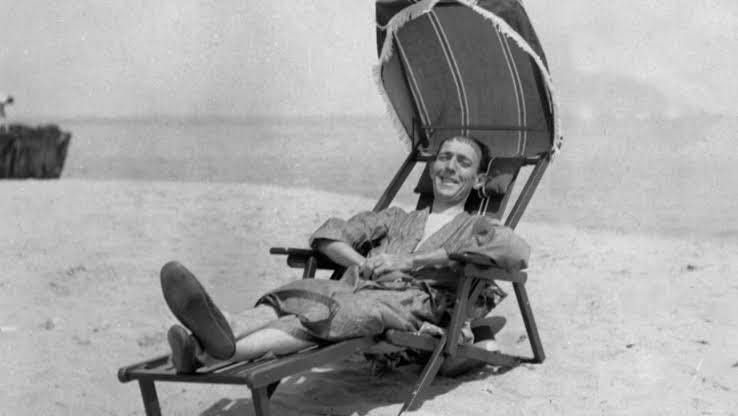
Imagine if the last photo of you alive was one like this one. Here is the 95-pound Father of Country Music resting on the beach of Coney Island, NY on May 25th, 1933.
How it went down?:
May 24th. Last session. Done.
May 26th. Carrie finds him in the hotel room. Pulmonary hemorrhage. Thirty-five years old.
They put him on a train back to Meridian — those same lines he’d worked as a young man carrying him home. Thousands of people lined the tracks to watch the train pass. More than three thousand people came to the funeral home to pay their respects. In Mississippi. In 1933. Three thousand people, for a musician.
The twelve songs from those final sessions were released in the months that followed. People bought them. Radio played them. And quietly, they went into the bloodstream of everything that came after.
Why I Keep Telling This Story
Every time I walk out on stage as Jimmie Rodgers, I carry this with me.
Not as a sad ending. As a testament. Hank Williams was obsessed with Rodgers as a kid — obsessed. Merle Haggard recorded an entire album just to honor him. Bob Dylan has cited him. Every country artist who ever put real ache into a lyric, who ever connected a song to working-class life, who ever used a train as a way of talking about all the distances that open up between people — they’re downstream from this man.
Country music and trains. It has always been that way. And the man who set all of it in motion rode the rails his entire life, right up to the very last trip.
The Singing Brakeman.
Now you know the whole story.

Zachariah Malachi portrays Jimmie Rodgers in CountryRoadsUSA, currently playing in Nashville. Jimmie Rodgers (September 8, 1897 – May 26, 1933) was the first inductee into the Country Music Hall of Fame in 1961. His final recordings are available on multiple Victor/RCA posthumous compilations. Go find them.
He was so young. He was determined to get all his songs recorded before he died. So sad. You did a wonderful job on Jimmy Rodger’s story of his life.
I'm so tired of Ai images. I can't even.