


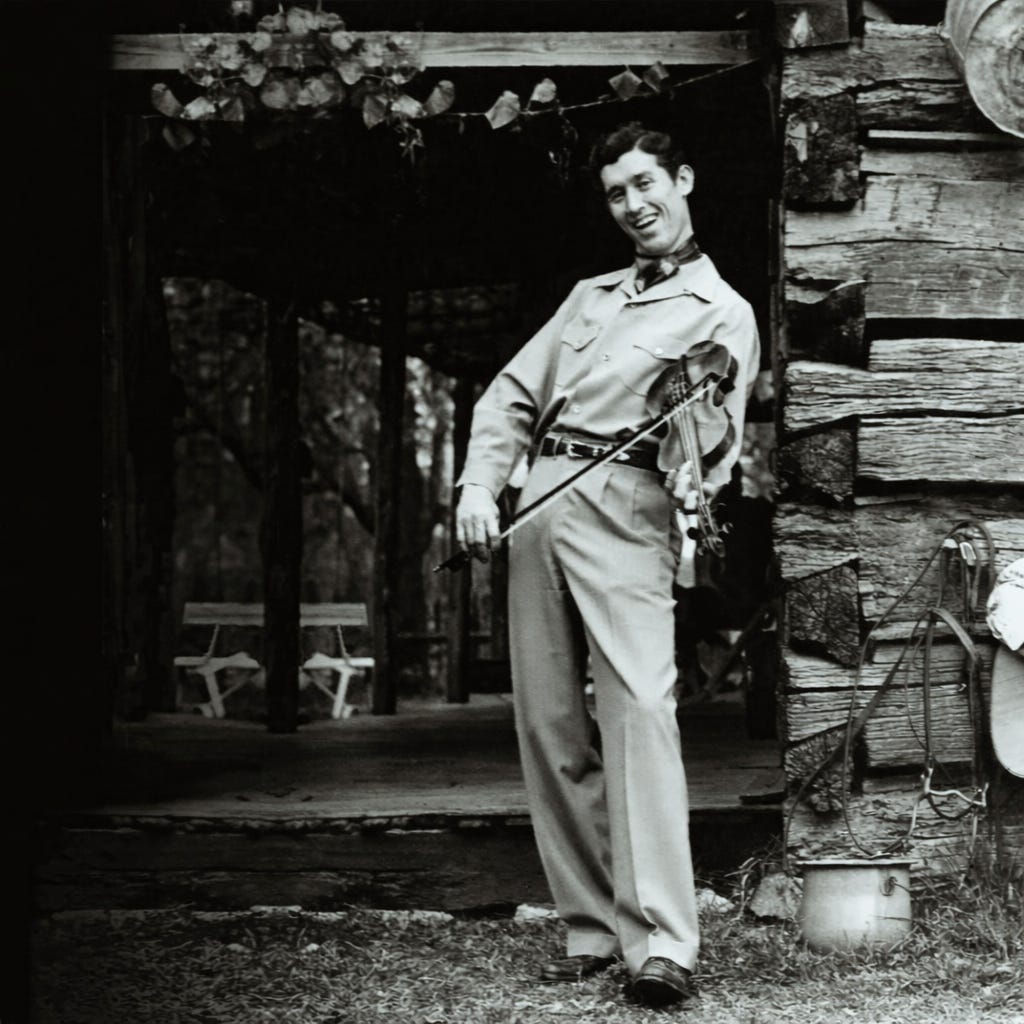
I have known a great many men who sold things they didn’t believe in to people who couldn’t afford them. Some of those men became preachers. Some became politicians. Roy Acuff became the King of Country Music, which is more or less the same thing, depending on the night.
I don’t say that to diminish him. I say it because it’s the truest thing about him — and the music world has spent seventy years sanding it down to nothing.
Before Roy Acuff was the moral conscience of the Grand Ole Opry — before he was the man Japanese soldiers cursed by name on Pacific beaches, before he was the institution, the monument, the king — he was a young man in rural Tennessee performing comedy routines and doing yo-yo tricks so a doctor named Hauer could sell desperate farm families a tonic called Moc-a-Tan that promised relief from constipation, headaches, and most other ailments the body could produce.
Think about that for a moment. Hold the whole picture in your mind before you look away.
The Breakdown
The real story begins somewhere dark.
In 1929, Acuff tried out for the Knoxville Smokies, a minor-league baseball team affiliated with the New York Giants. A series of collapses in spring training following a sunstroke ended his baseball career. He had been offered a scholarship to Carson-Newman University and turned it down for baseball. He had been running toward a future in sunlight and crowds and the clean, comprehensible victory of a man who is simply better at something than other men.
The effects left him ill for several years, and he suffered a nervous breakdown in 1930. “I couldn’t stand any sunshine at all,” he later recalled.
Consider the specific cruelty of that. A man felled by sunlight, forced to live in the margins of the day. While recovering, Acuff began to hone his fiddle skills, often playing on the family’s front porch after the sun went down. His father — a Baptist preacher and accomplished fiddler — gave him records of regional masters: Fiddlin’ John Carson, Gid Tanner. The music came to him in convalescence, in the half-dark, in the hours most people were asleep. That is not an insignificant detail. The music that would eventually make him a king was learned in shadow, by a man who had been struck down by ordinary daylight.
During 1931, Acuff played on the streets of Knoxville, fiddling and performing yo-yo tricks for spare change. There was no plan. There was just a young man in a broken body, doing whatever kept the hours moving.
The Show
In 1932, Dr. Hauer’s medicine show, which toured the southern Appalachian region, hired Acuff as one of its entertainers. The purpose was to draw a large crowd to whom Hauer could sell patent medicines of suspect quality for various ailments.
The product was called Moc-a-Tan Tonic — sometimes Mocoton, sometimes Mocatan, depending on who was writing it down that day, which tells you something about the operation’s overall commitment to consistency. The tonic allegedly cured ailments such as constipation, dyspepsia, and headaches, at the price of one dollar per bottle. A dollar was not nothing in 1932. A dollar in a Depression-era Appalachian farming community was a real sacrifice, handed over to a traveling stranger in exchange for a bottle of what was most charitably described as flavored alcohol with ambitions.
Now — what do you suppose they played at these shows?
The answer, if you look honestly at the medicine show tradition, is: whatever worked. And in the 1920s and 1930s, what worked was not hymns. A 1929 Saturday Evening Post reminiscence by medicine showman Nevada Ned Oliver described the larger shows as presenting “full evenings of drama, vaudeville, musical comedy, Wild West shows, minstrels, magic, burlesque, dog and pony circuses.” Burlesque. I know Burlesque and that word is doing polite work for this scenario. The medicine show lived at the absolute outer edge of acceptable public entertainment, and frequently well past it. The music was bawdy, the comedy was blue, the humor ran to the kind of double entendres and outright obscenities that would have emptied a church but filled a field.
This was the era of what historians now gently call “hokum” — a genre of country and blues music built almost entirely on sexual innuendo, often barely veiled and frequently not veiled at all. Songs with titles like “Press My Button, Ring My Bell.” Songs about farm implements that were not about farm implements. The 1930s produced an extraordinary volume of this material, though it was usually performed in secret at adult entertainment clubs rather than captured in recording booths. The medicine show had no such restraint. Out in an open field, three counties from the nearest church elder, the performers gave the crowd what the crowd wanted.
Roy Acuff — the future King of Country Music, the man who would become the moral authority of the Grand Ole Opry, whose songs showed what every biographer calls a “strong Christian influence” — spent two years performing in that tradition. Learning the room. Learning what a crowd wanted before it knew it wanted it.
He absorbed every disreputable tool in the kit. Then he redeployed them in the service of the sacred.
That is a genuinely remarkable piece of human alchemy. Most men who learn those skills use them forever in service of the bottle.
What the Show Taught Him
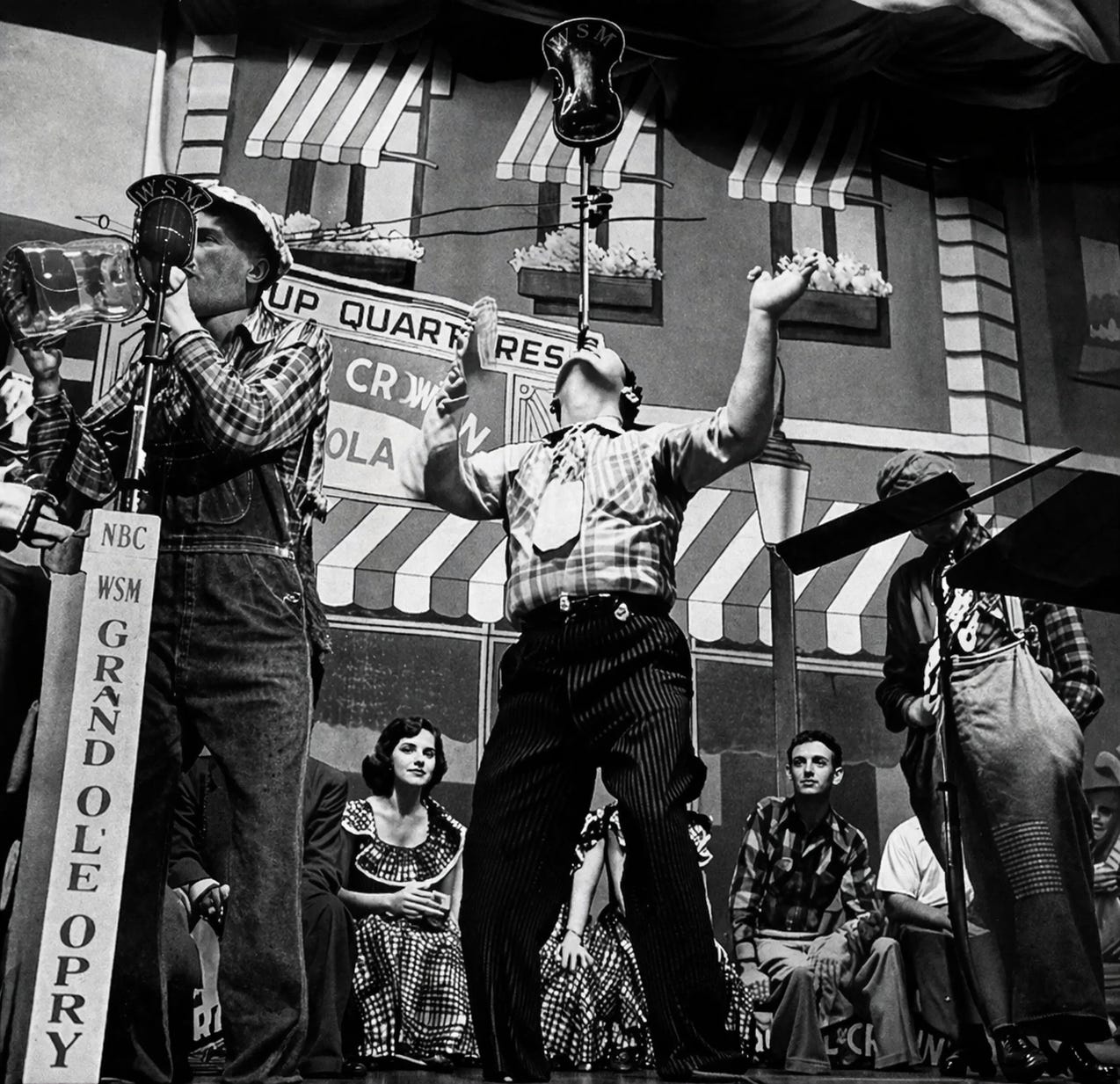
As the medicine show lacked microphones, Acuff learned to sing loud enough to be heard above the din, a skill that would later help him stand out on early radio broadcast. This gets mentioned in most biographies as a footnote. I think it is more significant than that.
In a medicine show, you had no stage, no lights, no architecture directing the audience’s attention toward you. You had a field. You had strangers. You had a crowd that was there for an evening’s distraction and would forget you by morning. The only tool you had was the instrument of your own body — the voice, the fiddle, the trick with the yo-yo — and your ability to make a group of tired, skeptical human beings feel something before they walked away.
Acuff became famous for weeping openly onstage during emotional songs, which his contemporaries considered strange, even suspect. Manipulation, some called it. Too much. Too raw. What they were really saying was that it reminded them of the tent revival, the medicine show, the traveling preacher — all those contexts where emotional manipulation was the acknowledged product rather than a side effect. Acuff had imported the full voltage of that tradition into a new setting, and it made people uncomfortable in the way that true things sometimes do.
The yo-yo deserves more consideration than it gets. He carried that skill his entire life — showing President Nixon how to yo-yo on the stage of the Grand Ole Opry in 1974, still spinning the thing well into his later years. Every great performer has a piece of business that keeps the eye while the soul does its actual work. The yo-yo was Acuff’s. A hypnotic object. Something that said: watch this hand, don’t look away, stay with me. And while you watched the hand, the fiddle got into you without permission.
The Ghost on the Circuit: Clarence Ashley
Here is where the medicine show story gets genuinely strange.
While on the medicine show circuit, Acuff met legendary Appalachian banjoist Clarence Ashley, from whom he learned “The House of the Rising Sun” and “Greenback Dollar,” both of which Acuff later recorded.
Clarence Ashley is not a household name. He should be.
Ashley had been performing at medicine shows in the Southern Appalachian region as early as 1911 — two decades before Acuff arrived on that circuit. He was a clawhammer banjo player of almost supernatural skill, and he had been carrying songs through those Appalachian hills since before the First World War, passing them town to town the way a disease passes — silently, through contact.
The oldest known recording of “House of the Rising Sun,” under the title “Rising Sun Blues,” is by Ashley and Foster, recorded September 6, 1933. Ashley said he learned it from his grandfather, Enoch Ashley, who married around the time of the Civil War — suggesting the song could have been written well before the start of the 20th century.
Think about that chain of transmission. A song learned from a grandfather who came of age during the Civil War, carried through medicine show fields and dirt roads by a clawhammer banjo player for twenty years, passed to a young Roy Acuff sometime in 1932 or 1933 in some nameless Tennessee location, and eventually — through the Animals in 1964 — becoming one of the most famous rock songs in history. The medicine show circuit was not just entertainment. It was the circulatory system of American folk music, moving songs through a continent that had no other mechanism for the job.
Roy Acuff was described as an “early-day friend and apprentice” of Clarence Ashley’s. That word — apprentice — is doing a lot of work. Acuff did not simply encounter Ashley at a show. He sat with a man who had been carrying songs since 1911 and absorbed something that cannot be transcribed, something that can only be passed hand to hand in the margins of a traveling show, in the hours between performances.
Jerry Garcia once said in an interview that he learned clawhammer picking from listening to Clarence Ashley. Doc Watson began his recording career with Ashley. The threads running out from this one medicine show banjoist touch almost every corner of American roots music — and the central node of that transmission spent his career entirely off the main stage, moving through fields and small towns, selling bottled nothing.
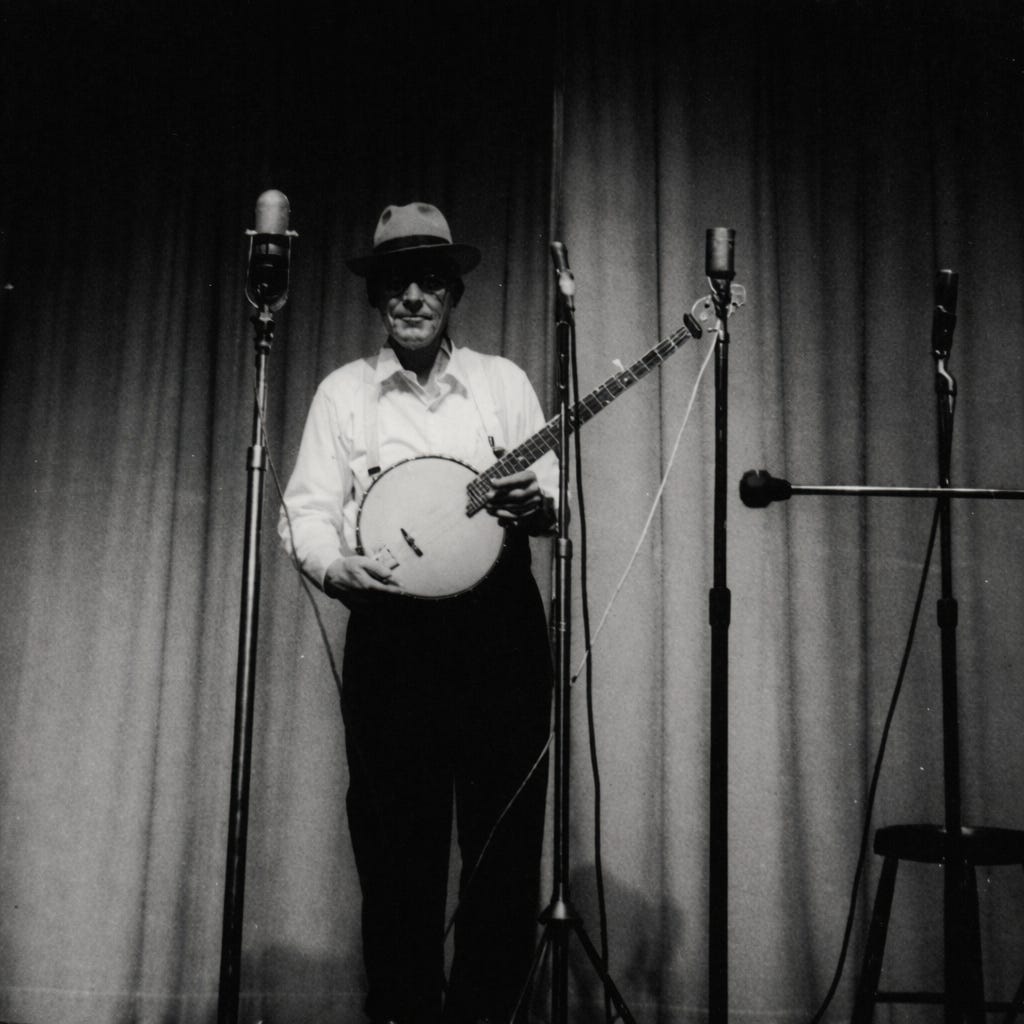
Clarence Ashley Live in Greentwich Village, 1962
The Secret Recordings
Now we get to the part nobody talks about at the Country Music Hall of Fame.
When Acuff went to Chicago in 1936 to record for the American Record Company — the session that produced “The Great Speckled Bird” and launched him toward the Opry — he recorded more than hymns. He made a handful of risqué numbers during those sessions, which were released under the name “the Bang Boys.”
The King of Country Music had a secret discography released under a pseudonym. The man who would become country music’s moral authority was recording blue material under an alias, at the same Chicago sessions where he cut his most beloved gospel numbers. Those two things coexisted in the same man, in the same room, on the same days.
That is not hypocrisy, exactly. That is a human being who had learned, on the medicine show circuit, that the sacred and the profane are not opposites — they are the same emotional territory accessed from different directions. The crowd weeping at “Great Speckled Bird” and the crowd howling at something the Bang Boys recorded are moved by the same machinery. Acuff had mastered that machinery in the fields. He knew which lever to pull for which effect, and he had enough self-knowledge — or enough pragmatism — to understand that the same hand could pull both.
You can’t spend two years performing bawdy material in fields without developing a sophisticated and complicated relationship with what music actually does to people. What it is actually for.
The House That God Built
The Ryman Auditorium — the Mother Church of Country Music, the room where Hank Williams performed and was eventually banned, where country music was consecrated into an institution — was not built for country music.
Known colloquially as the “Mother Church of Country Music,” Ryman Auditorium began as the Union Gospel Tabernacle. Local entrepreneur Thomas Ryman built it as a permanent location for tent revival-style gospel meetings. Ryman was a steamboat captain and notorious Nashville saloon operator who attended a revival by the evangelist Sam Jones in 1885, had a conversion experience, and decided to build Jones a permanent home. He spent the rest of his life fundraising for it and died before he saw it finished.
The Grand Ole Opry arrived at the Ryman in 1943, earning the auditorium its famous nickname, “the Mother Church of Country Music.”
Consider what that means. The central institution of American country music — the stage where Acuff became the King, where Hank Williams became a legend and a cautionary tale, where every significant artist in the tradition came to be anointed — was a gospel revival house built by a converted sinner on the strength of religious guilt. The pews were real pews. The acoustics were designed to carry the word of God. And for thirty years, every Saturday night, they carried “Wabash Cannonball” and “Your Cheatin’ Heart” and “I Walk the Line” to the same effect.
That is either a profound irony or a profound continuity, depending on how you understand what country music does when it does what it does best.
Roy Acuff — the man who had learned his craft on the medicine show, who had played bawdy material for fieldfuls of strangers, who had recorded blue songs under a pseudonym — stood at the center of that sacred, repurposed space for decades and became its moral axis.
In 1952, Hank Williams told Ralph Gleason: “He’s the biggest singer this music ever knew. You booked him and you didn’t worry about crowds. For drawing power in the South, it was Roy Acuff, then God.”
Roy Acuff, then God. In that order.
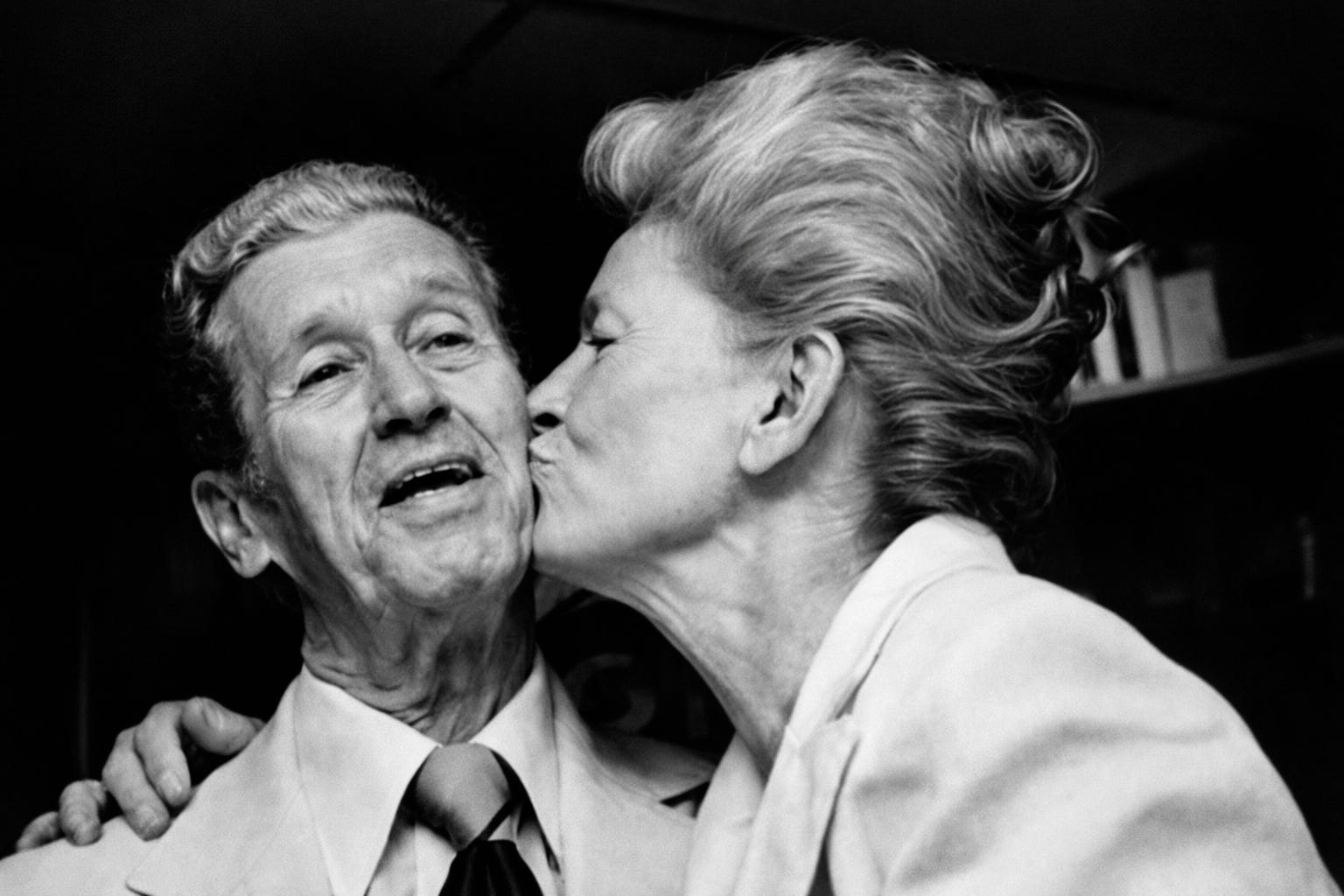
Minnie Pearl giving Roy Acuff a smooch backstage at the Grand Ole Opry
The War and the Curse
During the Second World War, American troops in the Pacific reported that Japanese forces used a battle cry: To hell with Roosevelt. To hell with Babe Ruth. To hell with Roy Acuff.
This is one of the stranger facts in American cultural history and it is almost never examined properly. The Japanese military intelligence apparatus, tasked with identifying the symbols of American civilian life that would most demoralize enemy troops, landed on three names: the President of the United States, the greatest baseball player who ever lived, and a former medicine show performer from Maynardville, Tennessee.
The president represents political power. Babe Ruth represents physical excellence — the clean American mythology of the body. Roy Acuff represents something harder to name: the emotional core of a culture, the music a people carry inside them when everything else is stripped away. To curse Roy Acuff was to curse the thing that could not be bombed or legislated or starved out. It was to curse the feeling itself.
A man who learned what feelings are worth on a medicine show circuit had become, by the logic of wartime propaganda, the emotional symbol of an entire civilization.

The Attack of Pearl Harbor in Honolulu, Hawaii on December 7th, 1941
The Landlord of Lower Broadway
And now we arrive at the story I find most extraordinary of all — the one that crystallizes everything about Roy Acuff into a single, perfect, almost literary irony.
In the 1950s and 1960s, as Nashville’s tourist economy began to develop around the Opry and Lower Broadway became the commercial heart of country music’s public identity, Acuff was quietly accumulating property. One building on Lower Broadway housed Roy Acuff Exhibits — and at one point, Acuff himself lived there.
The neighborhood, however, changed. As the decades passed and the Opry decamped to Opryland in 1974, Lower Broadway declined rapidly into a stretch of pawn shops, honky-tonks of the more desperate variety, and — this is where the story gets remarkable — adult bookstores and pornography shops. The neon got seedier. The clientele shifted. The street that had been the front porch of country music’s most sanctified institution became, block by block, something its former residents would not have recognized.
The local television stations took notice. So did the newspapers. And Roy Acuff — the King of Country Music, the moral conscience of the Grand Ole Opry, the man Japanese soldiers had named alongside God and the President as a symbol of everything America stood for — became the on-camera spokesman for the Opry’s outrage at the neighborhood’s decline.
Acuff pointed out what he thought was the worst offender in the neighborhood — a porno shop on a Lower Broadway corner a block from the Opry — and said whoever owned that property should shut them down.
The news media did their job.
In their next interview, they told Acuff: “Mr. Acuff, we found out who owns the porno shop property — and you are the owner. Are you going to throw the porno shop out of your building?” Acuff said: “I can’t do that. They’re good tenants and always pay their rent on time.”
I have turned this story over in my mind for a long time. There is something almost too perfect about it — too concentrated, too emblematic to be real. And yet it is entirely real, on the public record, reported by the Nashville press. The King of Country Music, self-appointed spokesman for the moral dignity of the Opry neighborhood, was simultaneously the landlord collecting rent from the exact establishment he was denouncing on television.
A man who had spent his career mastering the distance between performance and reality. Who had learned on the medicine show that what you present to a crowd and what you are doing behind the curtain are two separate and equally legitimate operations. Who had recorded under a pseudonym while recording hymns. Who had built his empire on the emotional architecture of the sacred while operating from a foundation that was, in the most practical terms, thoroughly profane.
The porno shop tenants paid on time. The rent was good. The cameras were rolling.
Roy Acuff was, to the end, a medicine show man.
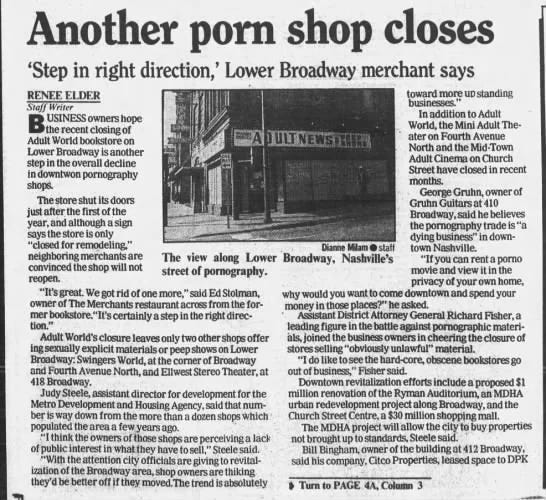
Nashville Newspaper’s Renee Elder writes about the closing of another “adult” store in 1989.
What He Became, and What He Kept
In 1942, Acuff co-founded Acuff-Rose Music, the first major Nashville-based country music publishing company, which signed acts such as Hank Williams, Roy Orbison, and The Everly Brothers. He ran for governor of Tennessee twice. He became the first living inductee into the Country Music Hall of Fame. He moved, in his eighties, into a house on the Opryland grounds and spent his final years performing on the Opry stage each weekend, arriving early to stock sodas in backstage refrigerators — an old man keeping himself useful in the building he had made sacred.
He showed President Nixon how to yo-yo.
He never entirely left the medicine show. He just found a bigger tent.
The most powerful man in Nashville for three decades — the man who shaped what country music was, who controlled the publishing rights to Hank Williams’s entire catalog, who had the ear of presidents — was built entirely by two years on a traveling con artist’s road show, learning to make strangers feel things in fields without microphones, playing songs that would have made a preacher faint, absorbing every gray and disreputable tool the tradition had to offer.
The medicine show gave him everything. The crowd-reading. The emotional precision. The understanding that an audience is not a collection of individuals but a single animal with a single nervous system, and that if you can find the right frequency — the right drag of the bow, the right break in the voice — you can move that animal anywhere you want it to go.
He took those tools and built a kingdom.
Most men who learn those skills use them forever in service of the bottle.
I wonder, sometimes, if he ever thought about those fields at dusk. If he ever heard a fiddle come in on the downbeat and felt, just for a moment, the specific electricity of a crowd that doesn’t quite trust you but cannot look away.
I suspect he did.
I suspect he always did.
ABOUT THE AUTHOR:
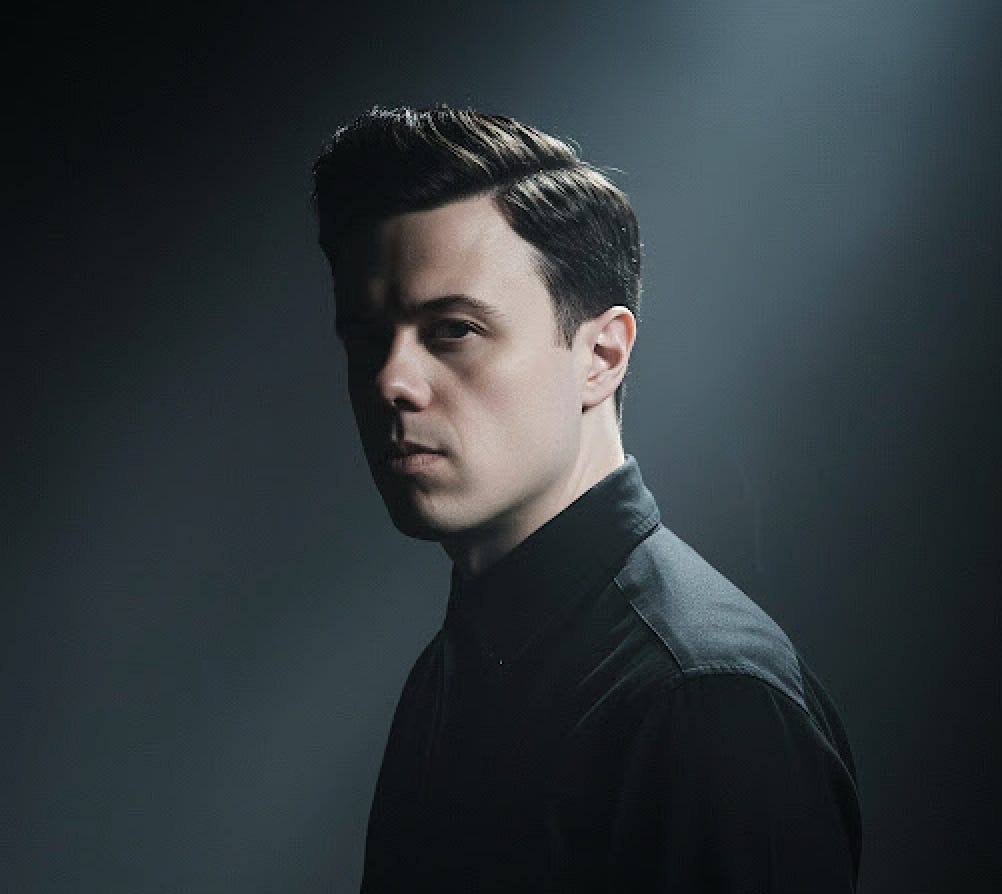
Zachariah Malachi — known as The Count of Country Music — is a singer, musician, actor, and writer based in Nashville, Tennessee. He works somewhere in the tradition between Hank Williams and the end of the world, and has a particular interest in the parts of country music history that the Hall of Fame keeps in the back room. His first record is forthcoming. He has been saying this for some time. He means it.
So we'll written. I can feel the passion you have for knowing these iconic curators of country.