


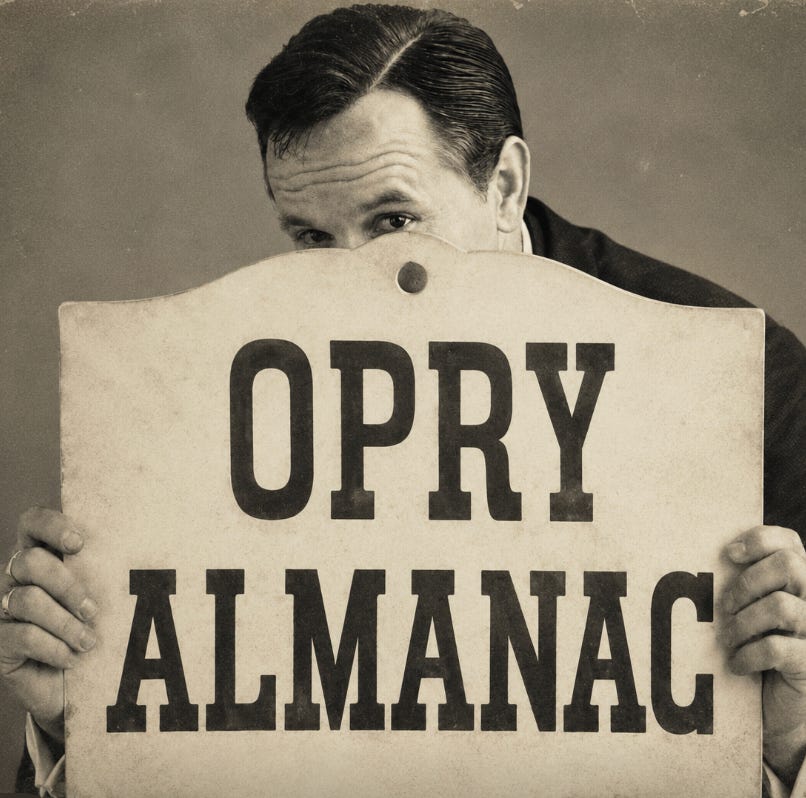
There is a video. It exists. You can watch it right now if you want, and I strongly suggest you do, because no amount of words I put on this page will fully prepare you for what’s on it.
(But only after you share this article and let everyone know that the the author is a guy that nerds out on country music chaos. And when I say country music, I mean real country music. PS - The video is attached at the bottom of this article)
The Scene of the Crime
March 8, 1966. WSM-TV, Nashville. Six o’clock in the morning. Ralph Emery’s Opry Almanac — a local morning show styled after the Today Show, the kind of wholesome, low-stakes television where you’d expect coffee, weather, a song or two, and a polite goodbye before you headed off to work. That was the idea, anyway.
The guests that morning were Charlie Louvin and Roger Miller.
One of them had been awake for approximately a week.
Who Were Roger’s victims?
Pretty much anyone in his path.
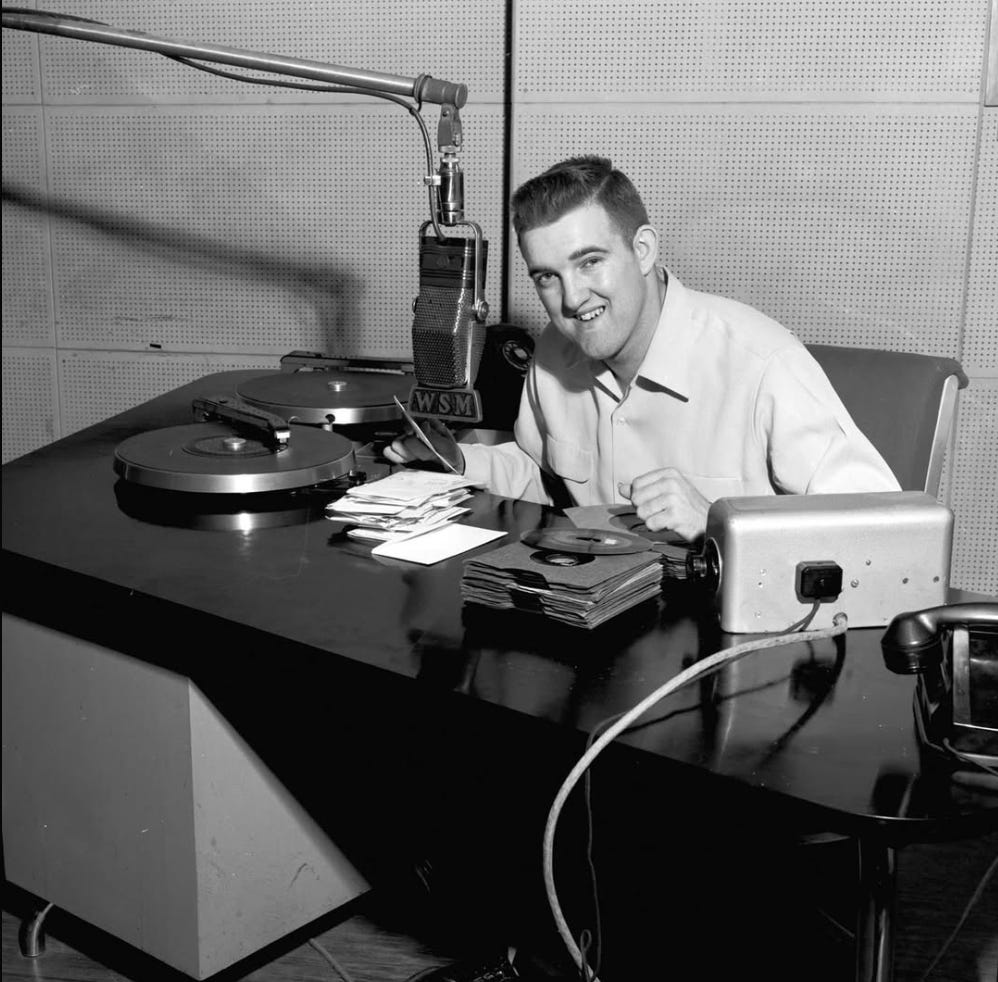
Ralph Emery was the anchor of Nashville’s broadcasting universe. He’d been running the all-night shift on WSM radio since 1957 — a 50,000-watt clear-channel signal that reached forty states, and his open-door policy meant that every serious country music figure in America had sat across from him at some point in the dark between midnight and five. Tex Ritter was one of Ralph’s frequen late night visitors. It’s often noted that he would show up to visit Ralph late and fall asleep while he was at the station and Ralph would have to wake him up before he’d start snoring over the air. Ralph was competent, polished, genial in the way of a man who has learned to manage certain chaotic situations with a smile. He would need every bit of that skill on this particular morning.
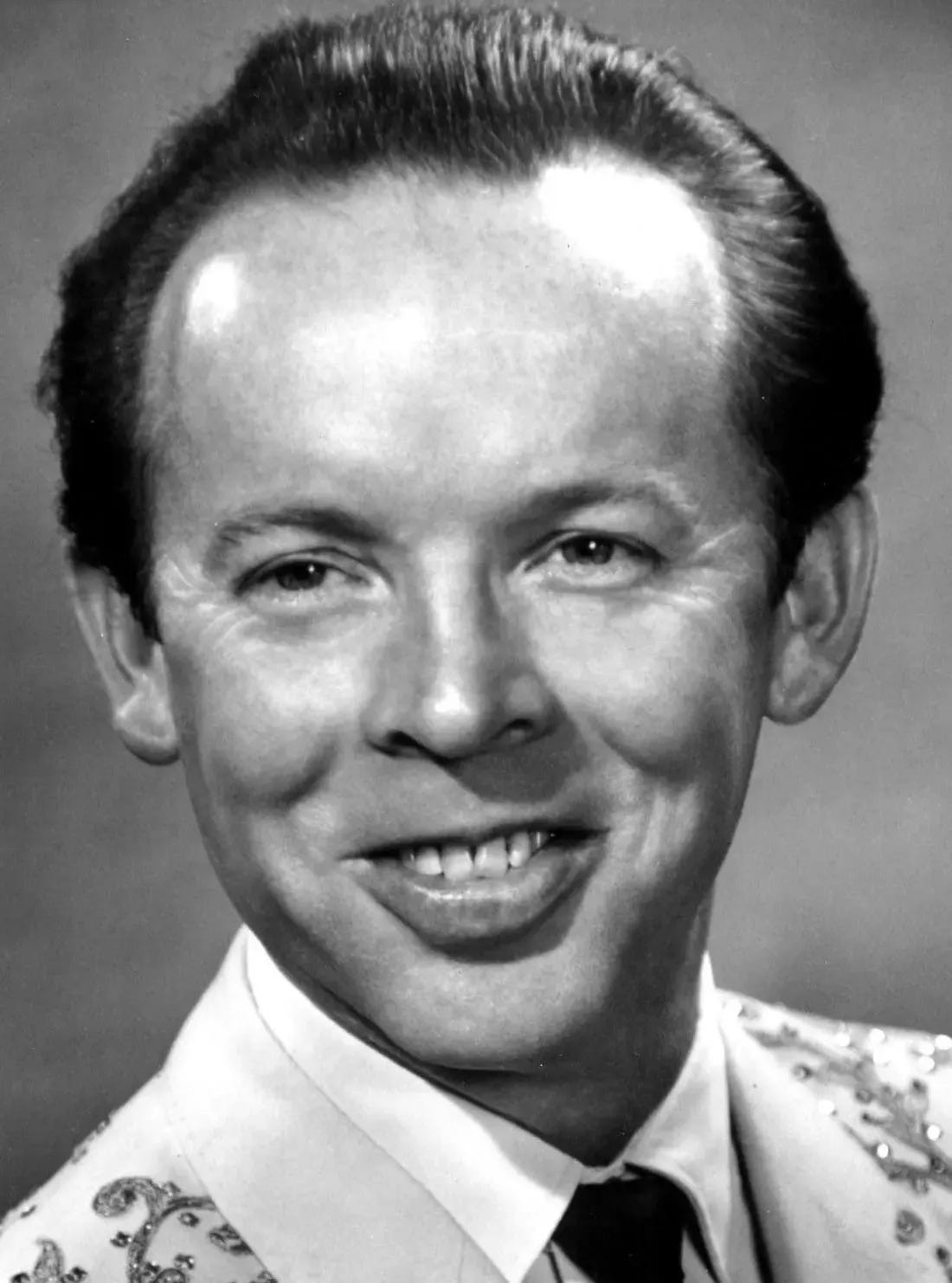
Charlie Louvin was in grief and in grace simultaneously. Ira — his brother, his partner, the high harmony that defined the Louvin Brothers sound for a decade — had been killed in a car crash less than a year before. June 20, 1965. Charlie was out here alone now, carrying the name, carrying the Louvin Brothers’ catalog, carrying whatever he could carry. He was a professional in the deepest sense of the word. He would do his best to be the best he could be for the show.
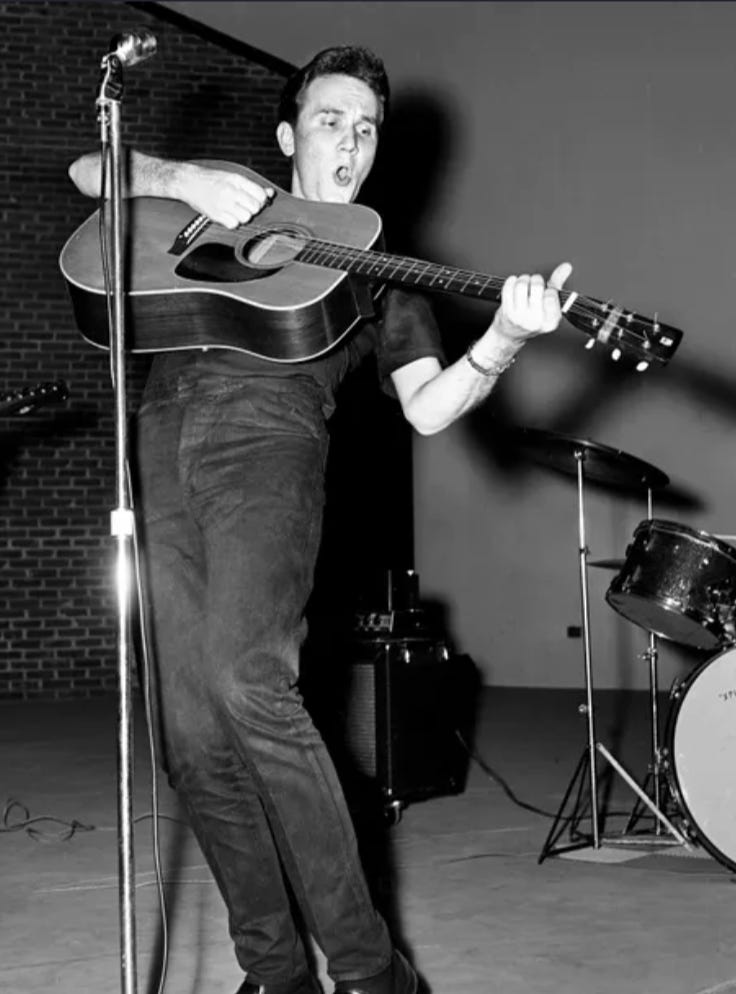
Roger Miller was one of the most famous men in American popular music at this time. Not just country music — popular music. He had won five Grammy Awards in 1965, a feat so absurd that the Recording Academy quietly restructured its country categories afterward. He was one week away from winning five more for “King of the Road.” He had just signed a deal for his own NBC variety show. He was on the cover of everything. He was everywhere.
He also, according to everyone who knew him at the time, had been awake for about a week straight on amphetamines (I wrote an article about the Nashville pill scene at the time that could further explain the country music fascination with drugs in the ‘60s).
Roger’s lyrics and song structures may be a clue for a lot of people, but to be blunt —Roger was an incredibly special person. With today’s cultural awareness of mental disorders, I guarantee many of Roger’s peers would have recommended that he should have been evaluated by a psychiatrist at some point — but that sort of recommendation is common for people who are incredibly gifted. There’s another pattern to loook at.
Roger was odd. But creatives like odd. Right?
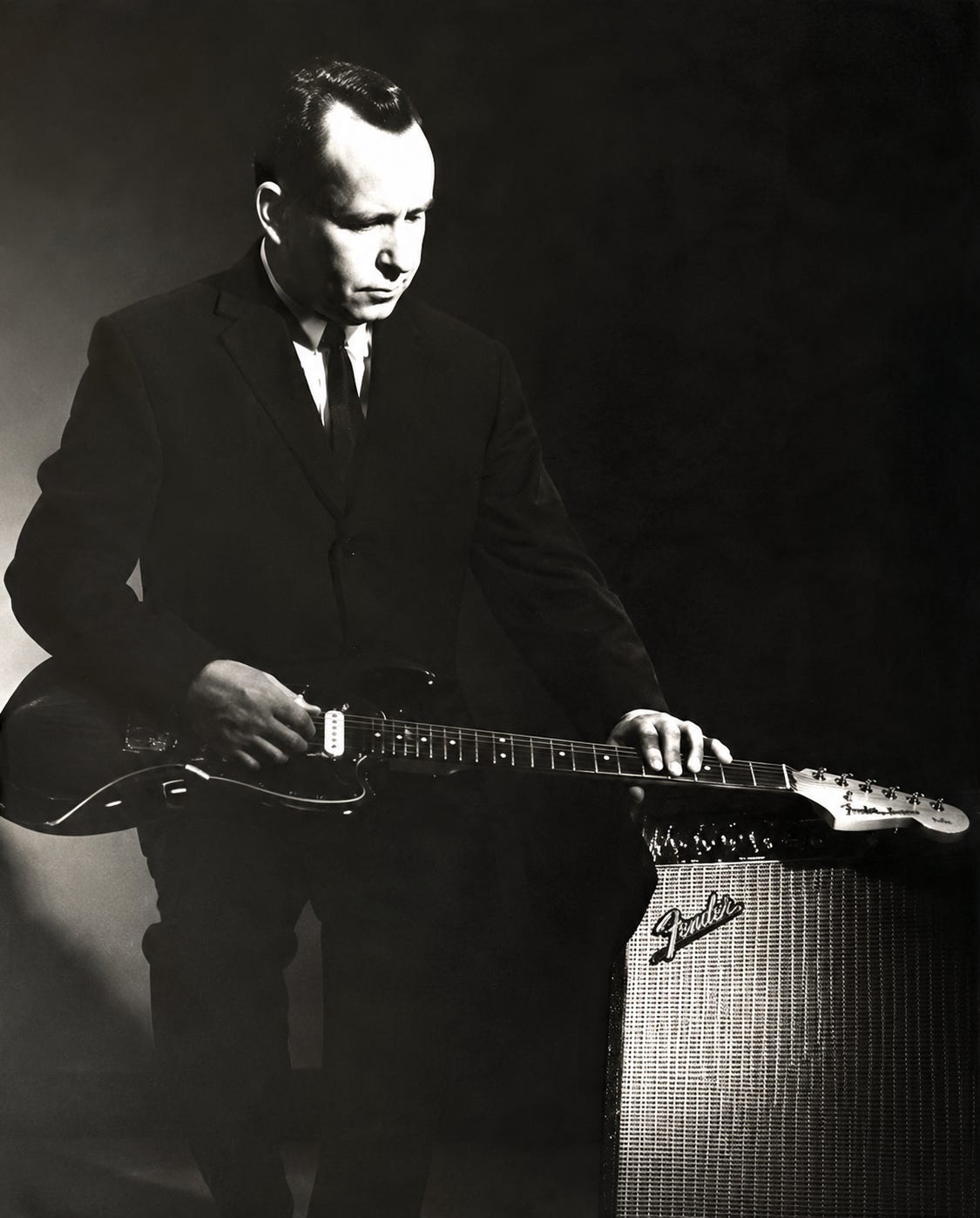
Now, Roger’s guitarist — the magnificent Thumbs Carlisle, was with him. Thumbs played guitar with a bizarre, patented technique that looked wrong and sounded extraordinary. He was wearing a Batman t-shirt under his sport coat. He was also smoking a cigarette on camera. For those seeking inside knowledge on Nashville — this is typically what an early morning shift on Broadway looks like, too. But this was 1966 and it wasn’t on lower Broad. It was on live television.
Let the chaos begin.
Before I start this, I have to tell you — the show is an hour long.
Think of what is being said next as a sort of “highlight” reel. Don’t fret, though. I’ll include the whole show at the bottom of the article for you to have a drink with later on.
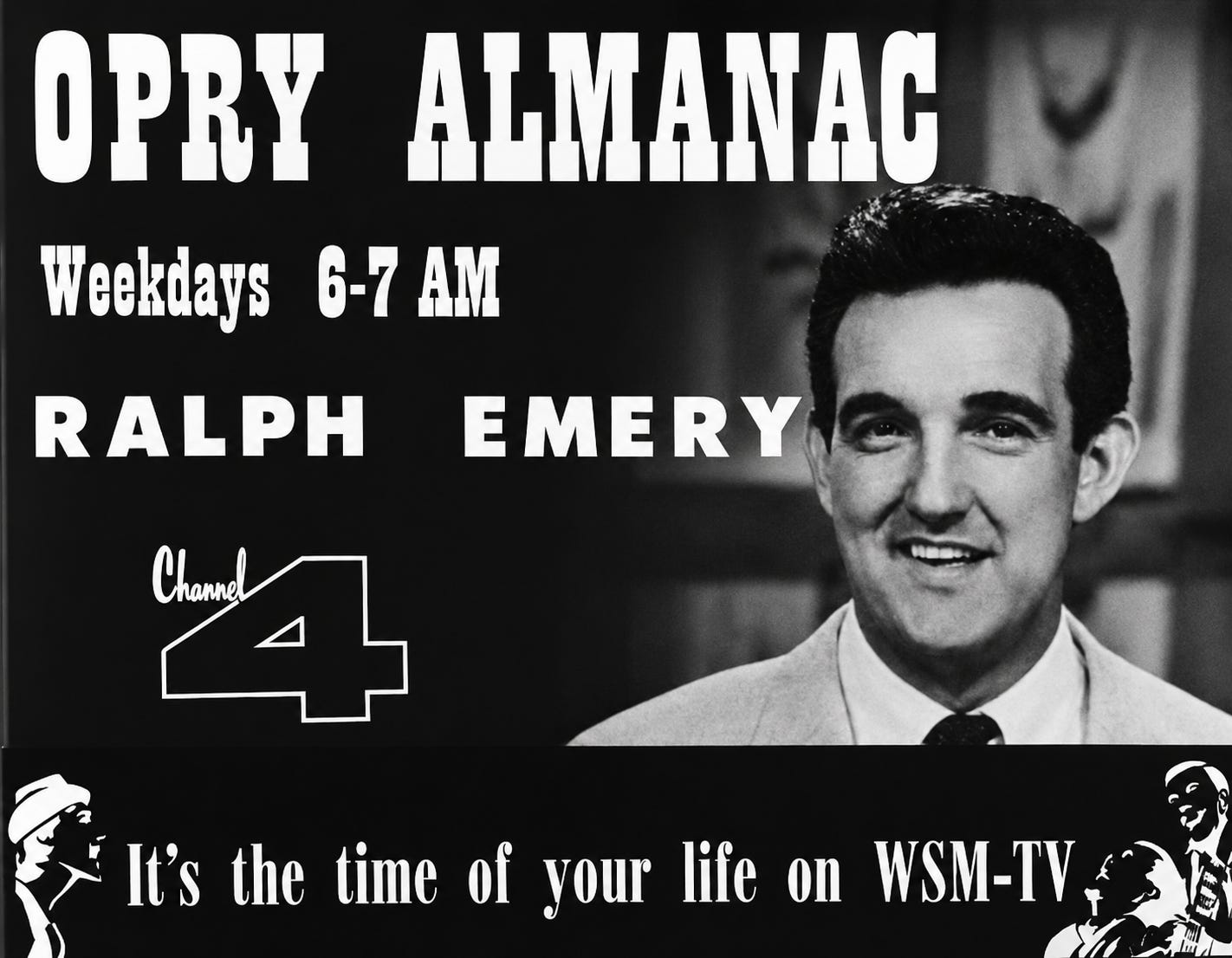
The show opens and Roger is already at the desk, center stage on a stool, before anyone has a chance to establish any sort of law and order. Ralph introduces the program. Roger immediately calls it the Charlie Louvin Show.
Charlie Louvin is not hosting the show. It is not the Charlie Louvin Show.
This is the first thirty seconds.
Ralph, a man with a professional amount of patience, absorbs this and keeps moving. He asks about Charlie. Roger tells him he doesn’t like Charlie. Ralph tries to pivot. Roger mentions UCLA and then asks Ralph if he caught that — UCLA — with the particular pointed emphasis of a man delivering a joke only half the room will understand. This is, by most accounts, a reference to Roger’s recent experiments with LSD in California. Ralph changes the subject. Roger mentions that their mutual friend Don Bowman had just come back from visiting him out west, that Don “brought back all of Roger’s jokes.” No telling what else he brought back, says Roger. He then mimes smoking a joint, on live Nashville television, at six in the morning, in 1966.
The people off-camera lose their composure completely.
Ralph Emery does not.
At the ten-minute mark, Thumbs Carlisle joins them at the desk and the situation accelerates. There are inside jokes nobody in the audience is meant to understand. There is giggling that has no clear origin. The energy in the room is the energy of people who have been awake so long that the membrane between funny and terrifying has dissolved entirely.
Roger announces he’s had laryngitis all week. He may have trouble singing. He sings anyway — “Husbands and Wives,” a song he wrote during a car ride on Thanksgiving, one of the genuinely great country songs of his career. Even hollowed out, running on fumes and chemicals, the man could sing. The talent was never the problem. Or is it? Does talent turn people into Roger Miller? Sometimes, I guess.
Then he tries to play “Do-Wacka-Do.” He stops in the middle to invite Jerry Allison — formerly of The Crickets, Buddy Holly’s drummer, a man who had survived his own share of music industry wreckage (literally wreckage - look back on the Buddy Holly article) — to come over and sit at the kit. The song gets going again. Thumbs takes a solo. Roger stops everything.
“We always do a highly informal show,” he tells the camera. “The higher we get, the more informal we are.”
On live television. In Nashville. In 1966. I love it.
Charlie Louvin, the professional, eventually comes out and does his work. He plays his new song, “To Tell the Truth, I Told a Lie.” He is dignified. He is composed. He is a man who has just buried his brother and still showed up, still sang, still carried himself like someone who understood what the music was supposed to mean. At the fifty-minute mark, he plays a medley of the old hits and closes with “Less and Less” — a song written by Roger Miller, the man currently dissolving on the couch beside him.
For a talk show of any sort, this is the Odd Couple.
At some point Roger mentions that he’s been working on a book of philosophical musings. He describes it with total sincerity. The book, as far as anyone knows, was never finished. Somewhere there may be a manuscript. Roger asleep over it, probably. I need to ask his son, Dean — if that manuscript exists.
He tells a story about falling asleep in a meeting with the film director Otto Preminger. “The bigger they are, the less I care,” he says. My God — Roger lives on a plane of existence that I wish I could exist in.
The show eventually comes to an end. The band plays out. The guests laugh and dance.
And Ralph Emery smiles the smile of a man who doesn’t get paid enough to babysit Roger Miller on live television.
What happened after?
A week later on down the road, Roger Miller would win six Grammy Awards. I wonder if he slept at all between the Opry Almanac and the Grammys? Six months later, his NBC variety show would debut. Unfortunately in 1968, the show would be cancelled, the momentum broken, the crossover moment passed. The speed and the chaos and the genius were all the same thing, and they burned at the same rate.
Charlie Louvin would keep working. He always kept working. That’s the Louvin way — you absorb the catastrophe and you go back out and you sing.
Ralph Emery would go on to host television for thirty more years. He would greet the Byrds with hostility in 1968. They would write “Drug Store Truck Drivin’ Man” about him. He would become one of the most powerful men in Nashville broadcasting. He would outlast almost everyone.
But on March 8, 1966, at six in the morning, on a television set decorated like a kitchen and beaming out across Tennessee to a handful of early risers who had no idea what they were watching, Roger Miller looked into the camera with eyes that had not closed in days and was the funniest, strangest, most alive person on earth.
That tape still exists. Merry Christmas, kids.
ABOUT THE AUTHOR:
My name is Zachariah Malachi. I’m a full-time, self-employed honky tonk musician in Nashville, Tennessee. This Substack Publication was created for the purpose of sharpening my mind on more Nashville and Country Music history to share with the honky tonk patrons downtown during my shows - but I wanted more folks to benefit from the research so - it’s my gift to the country music fans of the world AND the people who WANT to be. Subscribe and come along for the ride.
Well, when Glen Campbell says you are a party animal.....
Dang me! Love me some Roger Miller.