


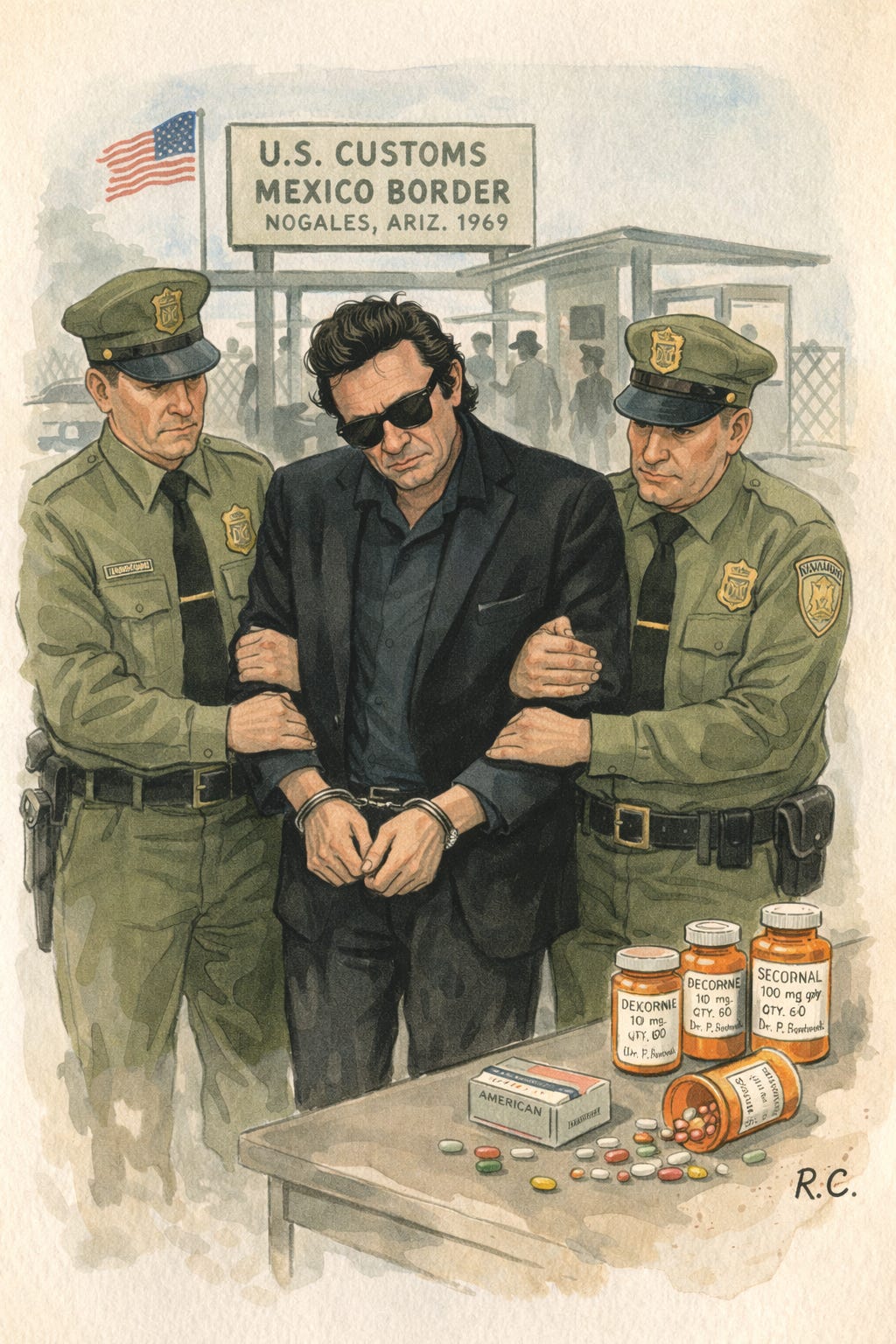
Illustration of Johnny Cash being arrested at the Mexican Border.
The road is a particular kind of hell that most people never have to understand from the inside.
Not the romantic road — not the open highway of the songs, the freedom, the wind through the windows and the next town glowing on the horizon. The real road. Three hundred nights a year in a different bed. The same set list for the four hundredth time to a crowd that wants to hear the song you wrote ten years ago and doesn’t care what you’ve learned since. The promoter who booked you into two cities five hundred miles apart on consecutive nights. The driver who needs to stay awake. The headliner who needs to perform at full power for ninety minutes after sixteen hours on a bus, then do it again tomorrow, then do it again the day after that.
The music industry of the 1950s and 1960s built its entire commercial architecture on the assumption that its artists could sustain this indefinitely. It did not provide the tools to do so. The artists found their own tools. They were small, they were cheap, they were widely available, and they worked — right up until they didn’t.
This is the story of what those tools cost.
The Pills Had Names
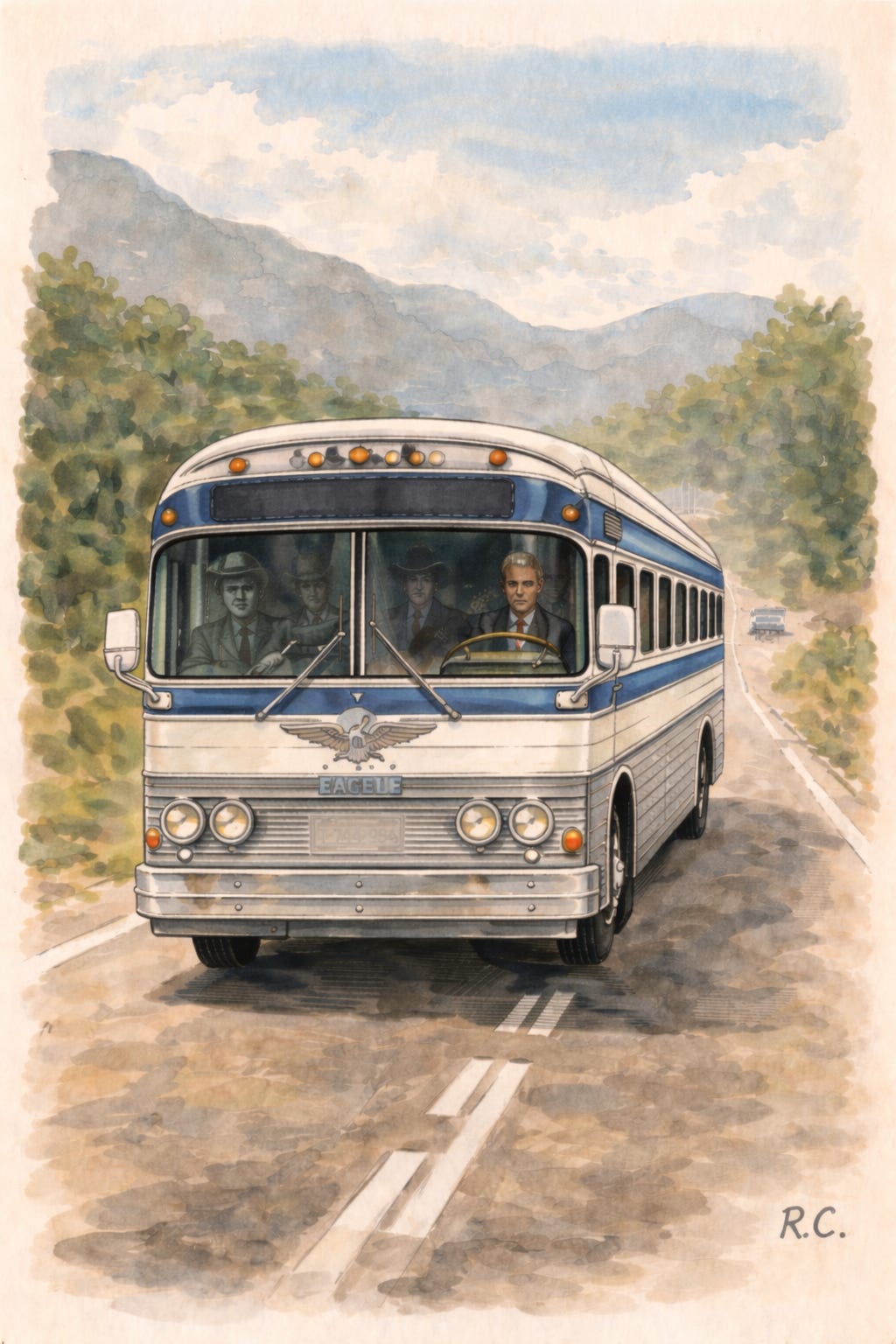
Like Elvis Presley and Johnny Cash, country musicians in the 1950s came out of their military service knowing that one or two little pills could help them through a long night of maneuvers. It was the same on the country music circuit, where agents booked shows night after night across long distances with little thought to the bus driver’s stamina or the headliner’s ability to stay sharp for audiences.
The pills got their own nicknames: little yellers, bennies, speckled birds, and the fabled L.A. Turnarounds — a big dose of the amphetamine Obetrol that allegedly could keep someone awake on a drive from Nashville to Los Angeles and back.
These were not illicit drugs in the modern sense. They were prescription medications — diet pills, pep pills, the same amphetamines the military had been handing to soldiers since World War II. Cheap, legal with the right piece of paper, and available from almost any doctor willing to write the script.
In Nashville, there was one doctor everybody went to.
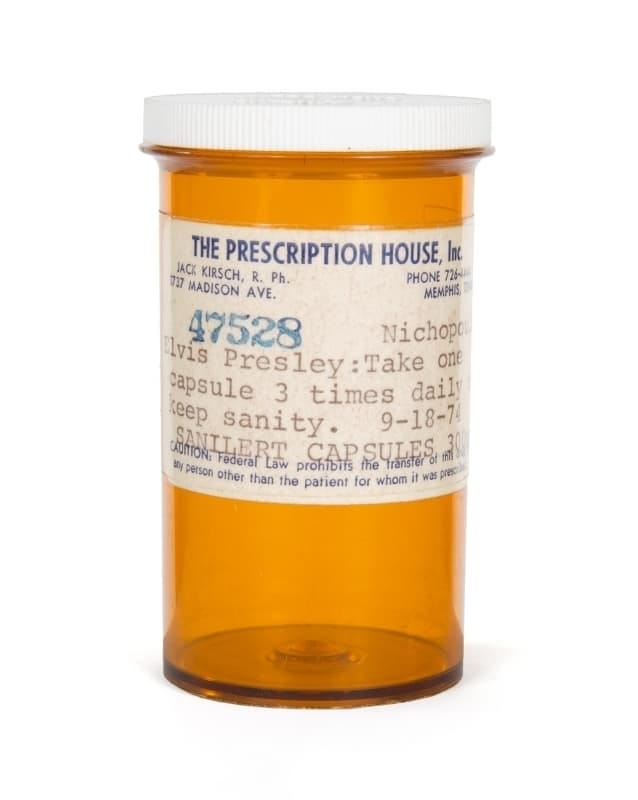
My guess is that Elvis Presley is in the lead for artist most associated with pill addiction award.
Dr. Snapp’s Waiting Room
His name was Dr. Landon B. Snapp II, and his office was at 627 Woodland Street on Nashville’s east side, about a half mile from Woodland Sound Studios. In the mythology of Nashville’s pill years he was known simply as Dr. Snap — but most writers, caught up in the perfection of the name, never bothered to find out it was actually Dr. Snapp, spelled with two p’s. The distinction matters because Snapp was a real man, with a real address, a real waiting room, and a real patient list that reads like a who’s who of the Grand Ole Opry.
Singer Don Bowman described the scene with the clarity of someone who was there: “Everybody seen Dr. Snap. It looked like a goddamn Grand Ole Opry meeting every Monday morning in his office. Faron Young, Webb Pierce — every country music singer in Nashville was sitting out in his lobby waiting to see Dr. Snap. You’d go in and he’d say, ‘Yeah, you’re fine. Blood pressure? Yeah, okay. Pulse? Yeah, you got a pulse okay here.’ And he’d write you a prescription.”
That was the entire appointment. You had a pulse. Here were your pills.
Nashville DJ Captain Midnight, reflecting on the era, captured the specific commercial logic of the arrangement with startling clarity: “You didn’t get arrested for driving under the influence of speed. You didn’t get busted for dealing. There wasn’t any kind of crime about it. It was a very creative time in the city’s history.”
A very creative time. That phrase deserves to sit with you for a moment.
Ralph Emery — himself no stranger to the pill culture of the era — wrote about Dr. Snapp in his 1992 autobiography, recalling “songwriters would get a prescription from him, then sit up for days writing tunes.” There was a favorite gag among the musicians: someone would press a yellow thumbtack into the floorboards next to the Opry microphone, then watch in amusement as musicians walking by stopped to try to pick it up, mistaking it for one of the little yellow amphetamine tablets they were all carrying. The joke required no explanation to be funny. Everyone in the room already understood exactly what it meant.
Even Brenda Lee was briefly pulled into Dr. Snapp’s orbit. She was fifteen years old. Her manager didn’t object when she got diet pills prescribed. She took them, lost weight, and lost her memory along with it — standing onstage unable to remember the lyrics to her own songs. “I said, ‘I’d rather be fat than feel this way,’” she recalled decades later. “I’m not sure what the pills were. I was just a kid.”
She was fifteen. She was a kid. And she was sitting in the same waiting room as Faron Young and Webb Pierce and every other country music singer in Nashville, waiting to see the doctor who had a pulse check and a prescription pad and no further questions.
Singer Doug Kershaw, when called to testify at Dr. Snapp’s eventual trial, admitted he had used different names to obtain as many as five prescriptions from Snapp at a time — so he could have at least 500 pills on hand when he went out on tour. Not fifty. Five hundred. For the road.
After a four-year investigation by Tennessee’s State Health Department, Dr. Landon B. Snapp II was arrested in November 1976 and charged with multiple counts of overprescribing and illegally distributing Didrex. His defense attorneys argued he was a kindly man who might have been easily taken advantage of. He lost his medical license and was sentenced to twelve years in federal prison.
The waiting room on Woodland Street closed. The musicians it had served went looking for something else.
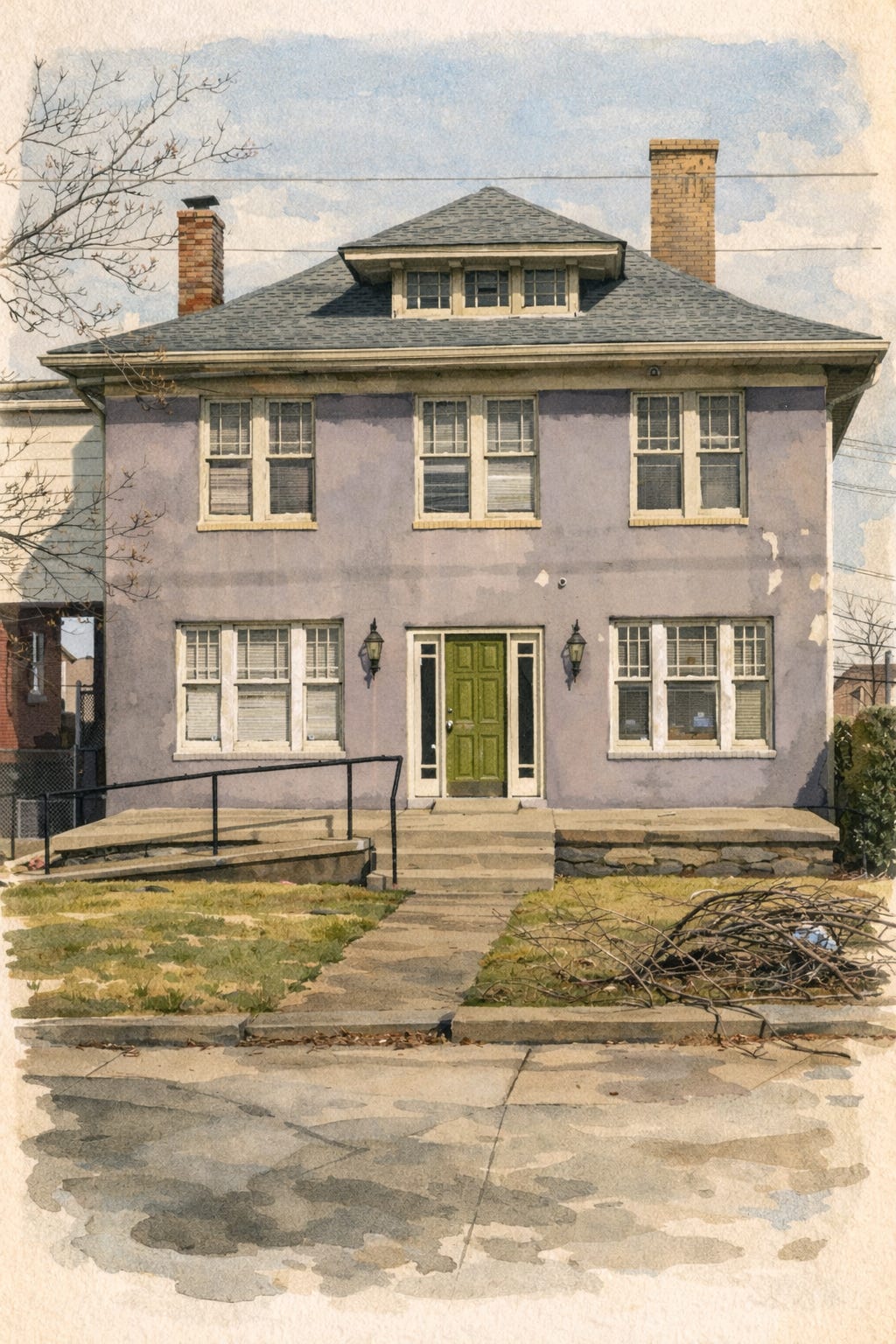
The former office of “Dr. Snapp” at 627 Woodland Street in East Nashville
Hank Williams and the Other Fake Doctor
Dr. Snapp was at least a real physician — whatever the quality of his judgment. Hank Williams was not so fortunate.
Williams was born with a mild undiagnosed case of spina bifida occulta, a disorder of the spinal column which gave him lifelong pain — a significant factor in his later substance abuse. He was drinking by thirteen. By the time he became famous the pain and the alcohol were already inseparable, and a hunting accident in 1951 followed by spinal fusion surgery at Vanderbilt University Hospital deepened a dependence on painkillers that was already well established.
Into this situation walked a man named Horace Raphol “Toby” Marshall.
Marshall claimed to be a doctor. He had been previously convicted for forgery and paroled from the Oklahoma State Penitentiary in 1951. He purchased his DSC title for $35 from the “Chicago School of Applied Science.” Under the name Dr. C.W. Lemon, he prescribed Williams with amphetamines, Seconal, chloral hydrate, and morphine.
Marshall charged $300 a week for his services. He was a convicted forger on parole who had bought a fake degree for thirty-five dollars and was prescribing the greatest songwriter in country music history a cocktail of substances that would kill him.
Williams was scheduled to perform in Charleston, West Virginia on New Year’s Eve 1952. Because of an ice storm he could not fly, so he hired a college student named Charles Carr to drive him. They stopped in Knoxville where Carr requested a doctor for Williams, who was ill from the combination of chloral hydrate and alcohol he had consumed. Dr. P.H. Cardwell injected Williams with two shots of vitamin B12 that also contained a quarter-grain of morphine.
Hotel porters had to carry him to the car. He could not walk under his own power.
At around midnight on New Year’s Day, somewhere between Mount Hope and Oak Hill, West Virginia, Carr noticed Williams’ blanket had slipped. When he pulled it back up, he noticed that his hand was stiff and cold.
Hank Williams was twenty-nine years old.
The autopsy did not test for drugs. Had the coroner done so, it is likely that both morphine and chloral hydrate would have been present. Chloral hydrate is known to be a heart depressant. When mixed with both morphine and alcohol, it creates a combination that can be deadly.
Following his death, Williams’ family received a bill for $736.39 from Marshall for his services.
Marshall’s parole was eventually revoked. He served the remainder of his sentence in an Oklahoma prison. The bill went unpaid, presumably. Hank Williams was buried in Montgomery, Alabama, and has never been reinstated as a member of the Grand Ole Opry.
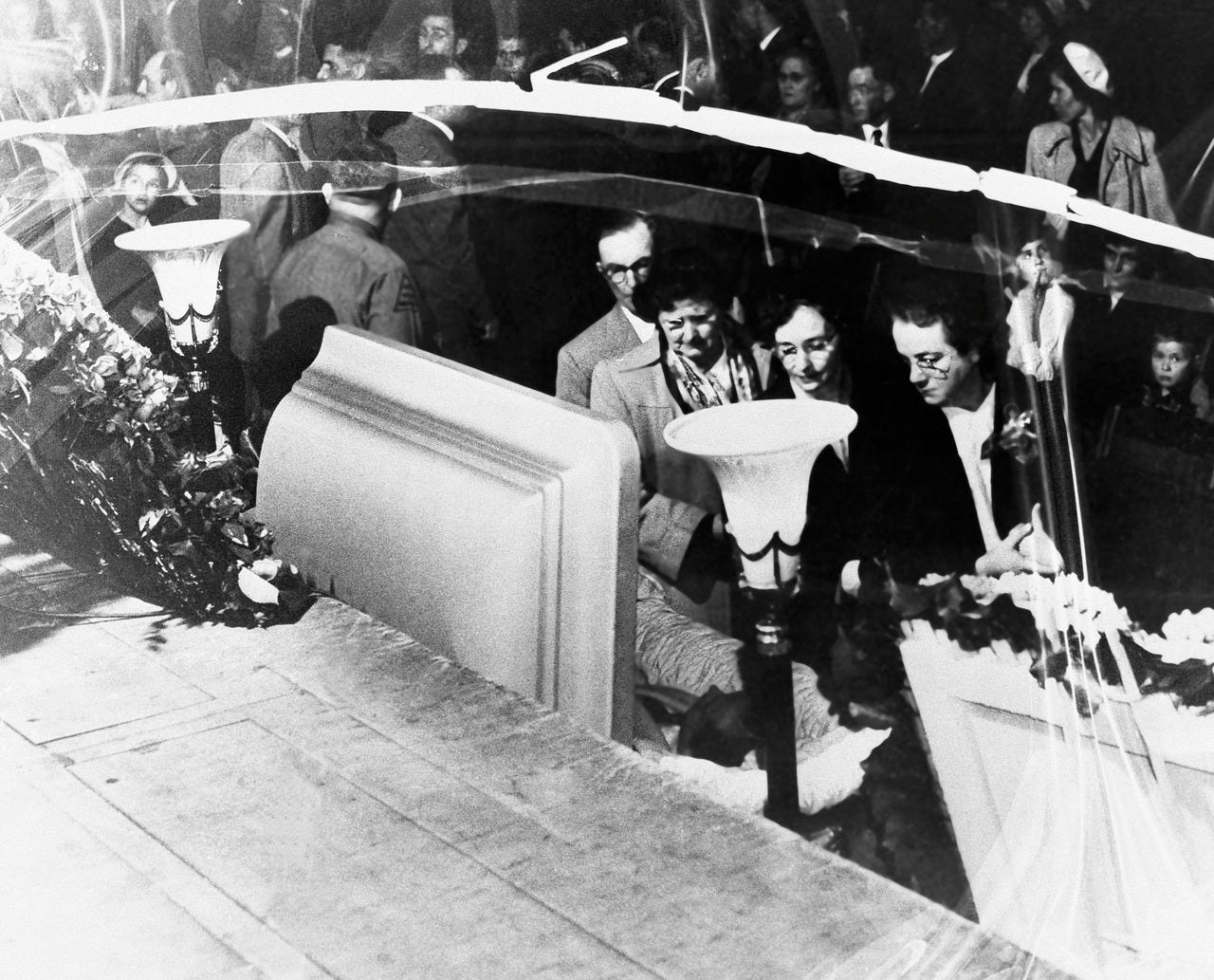
20,000 fans attended the funeral of Hank Williams in Montgomery, AL on January 4th, 1953
Johnny Cash Lived in the Dark for Ten Years
In 1957, on a long road trip to Jacksonville, Florida, Cash began taking amphetamines to stay awake. Members of his touring party were using them and were happy to share these bennies with Cash and his band. A bottle of 100 or so pills would cost less than ten dollars, and on the road, they were as important to Cash as his guitar.
Cash described his initiation in language that remains one of the most honest accounts of amphetamine addiction ever delivered by a public figure. He told Larry King: “In the 1960s, it was amphetamines to stay up and barbiturates to wind down. For a while it was okay. At first I said, ‘This is what God meant for me to have in this world. This was invented for me.’ I honestly thought it was a blessing, a gift from God — these pills. But then I finally found out I was deceiving myself.”
Cash took his first pep pill in 1957 and was addicted by 1960. He believed the pills gave him the energy and confidence to be a better performer. As he took more, he needed barbiturates to come down from the amphetamines. Unable to sleep or eat, at six feet one inch tall, Cash dropped to 155 pounds.
In his own words: “Soon I was going around to different doctors to keep those pills coming in the kind of quantities I needed, and when they started upsetting my digestive system, I started drinking wine to settle my stomach. The wine also took the sharper, more uncomfortable edges off the amphetamines I’d begun adding to the mix — because I was still looking for that euphoria.”
In 1965, U.S. Customs officers arrested Cash in El Paso, Texas. They suspected heroin. They found instead 688 Dexedrine capsules and 475 Equanil tranquilizers hidden inside his guitar case. Because the pills were prescription drugs rather than illegal narcotics, Cash received a suspended sentence.
Nearly twelve hundred pills in a guitar case. Legal. Suspended sentence. The road back to Nashville and the next show.
For a time Cash shared an apartment in Nashville with Waylon Jennings, who was also deeply addicted to amphetamines. Two of the most important artists in the history of country music, living together in a Nashville apartment, both on the same pharmaceutical program, both falling apart while the booking calendar kept filling up.
In 1967 Cash drove alone to Nickajack Cave near Chattanooga with a fatal dose of pills and the intention of not coming back out. Once deep inside the caves, he became religiously inspired and found his way back out, where June Carter and his mother were waiting with food. He swore off the pills.
The cave would have been underwater on the day Cash often cited. And he still used drugs afterward.
He relapsed in 1977. Again in 1983. Betty Ford Clinic. Cumberland Heights. Loma Linda. The relapses kept coming because the pills kept being available and the road kept demanding what the road had always demanded. He made At Folsom Prison during those years. He made At San Quentin. He made the American Recordings with Rick Rubin at the end of his life and created some of the most devastating music of the century. The addiction and the art ran in parallel for nearly fifty years, and it is not possible to fully separate them.
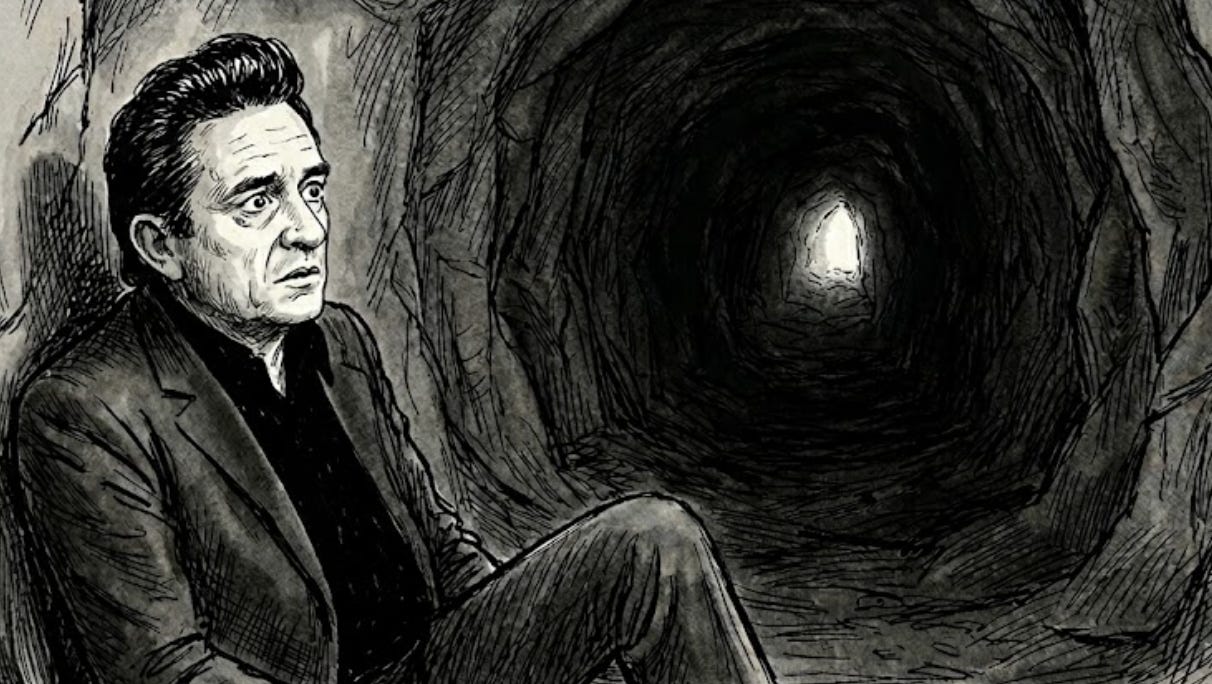
I always sort of knew the Nickajack Cave story wasn’t a thing — but damned if I didn’t want to believe Johnny Cash’s ever word..
Waylon, Cocaine, and the End of the Prescription Era
Dr. Snapp’s arrest in 1976 did not end the drug culture of Nashville’s music industry. It redirected it.
In his autobiography, Waylon Jennings described the transition with the blunt economy of a man who had lived it firsthand: “Prescriptions were harder to find, and there was some bad shit on the market. I wasn’t going to stop, no way, so Richie gave me some cocaine. ‘Look, Hoss, try this.’ I liked it. For the next ten years, I liked it.”
That is the entire story of how Nashville’s amphetamine era became Nashville’s cocaine era, told in four sentences by one of the men who lived through both.
During the early 1980s, Jennings’ cocaine addiction was so intense that he claimed to spend $1,500 a day to fuel his habit. Fifteen hundred dollars a day in 1980 dollars. The math on a year of that is staggering. The math on the years he somehow still performed through it is more staggering still.
Jennings got clean in 1984. He wrote about the cocaine years in his autobiography with a directness that most of his contemporaries never managed — not as cautionary tale, not as redemption narrative, but as the plain account of what it actually looked like from inside. The paranoia. The delusion. The years of burning through something irreplaceable in the engine of a career that the industry needed to keep running.
Marty Stuart, who knew these men and traveled those same roads, said: “I look at Waylon and I’m glad he quit because it probably extended his life several years. But quite frankly that music never had the spark again that it had before he went to Phoenix and got his life together. It was more mature, maybe more meticulous, but there was a romping stomping something about it that was fueled by it.”
That observation — delivered with obvious ambivalence — is the most honest public statement anyone in Nashville has made about the relationship between addiction and the music it produced. The implication underneath it is the one nobody wants to say directly: some of the greatest country music ever recorded was made at the outer edge of what human chemistry could sustain.
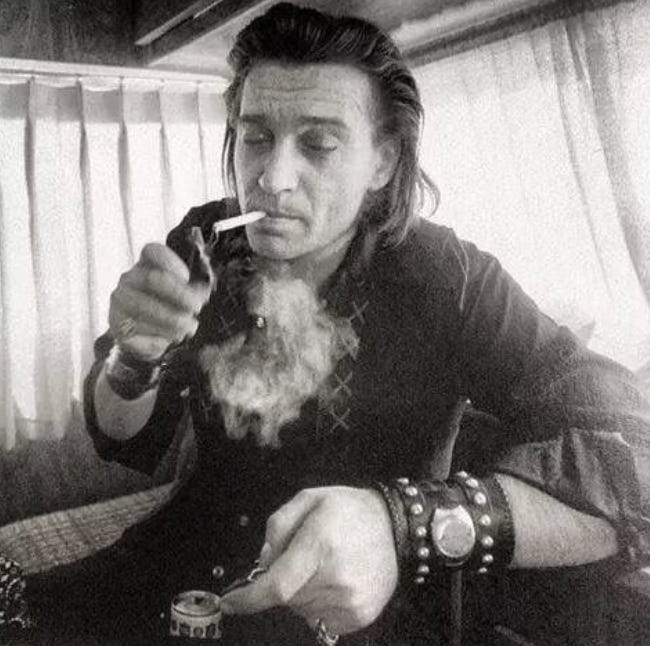
Waylon could be a cigarette ad without even trying. Look at this. If it were the 70s, and I were the marketing director at Marlboro — this would be in every bus stop in America.
The Industry’s Role
I want to be direct about something the biographical accounts of these artists consistently soften or sidestep.
The drug culture that consumed Hank Williams, Johnny Cash, Waylon Jennings, and dozens of others was not a series of individual failings that happened in isolation from the commercial structure around them. It was the industry’s solution to an impossible logistics problem, adopted by artists because the alternative — rest when the schedule demanded performance — was not considered commercially viable.
Dr. Snapp’s waiting room on Woodland Street was not a rogue element. It was infrastructure. The fake doctor prescribing Hank Williams chloral hydrate and morphine was an extreme version of a system that was operating, in more legitimate form, all over the industry. The booking agents who scheduled two cities five hundred miles apart on consecutive nights were not unaware of what their artists were taking to survive the schedule. They were simply not required to care.
Marty Stuart put it plainly: “You look back on the broken families and the people that are in their graves today that should be here playing music with us and the hurt that it imposed on kids who didn’t know what was wrong with daddy or mama. That’s a deep and hurtful subject.”
What It Cost
Hank Williams dead at twenty-nine. Keith Whitley dead at thirty-three from alcohol poisoning in 1989. The list of careers shortened, voices damaged, families destroyed, and children who grew up not knowing what was wrong is long enough to fill a much longer article.
The ones who survived did so largely through luck, the intervention of people who refused to leave, and a kind of constitutional stubbornness that the road tested to its absolute limit. Johnny Cash broke his own nose three times during his addiction years. He crashed every car he owned. He walked out of Nickajack Cave and spent the next thirty-five years relapsing and recovering in a cycle that the public version of his story compresses into a single triumphant turning point because the truth is less comfortable.
Waylon Jennings got clean and spent his remaining years as an elder statesman of a movement he had helped build. He died at sixty-four, his foot amputated from complications of diabetes. The music he made during the worst of the cocaine years remains some of the most vital and ungovernable country music ever recorded.
Neither of them had to survive it. The industry that needed them onstage had no plan for what happened if they didn’t.
The pills had names. The doctor had an address on Woodland Street. The waiting room was full every Monday morning. The shows went on.
And the music was extraordinary.
That is the most uncomfortable truth of all.
ABOUT THE AUTHOR

Zachariah Malachi — known as The Count of Country Music — is a singer, musician, actor, and writer based in Nashville, Tennessee. He writes about the American dark the way a man writes about a fire he was too close to — not as a historian, but as a survivor.
This is well written, Zach!One of my goals when I moved to Nashville was to make the artists healthier and to shape a narrative with promoters, booking agents, and labels that kept artists, their investment, healthier and mentally sound. I specialize in vocal performance and rehabilitation. No one wanted to talk to me. The culture remains dark and unhealthy.