


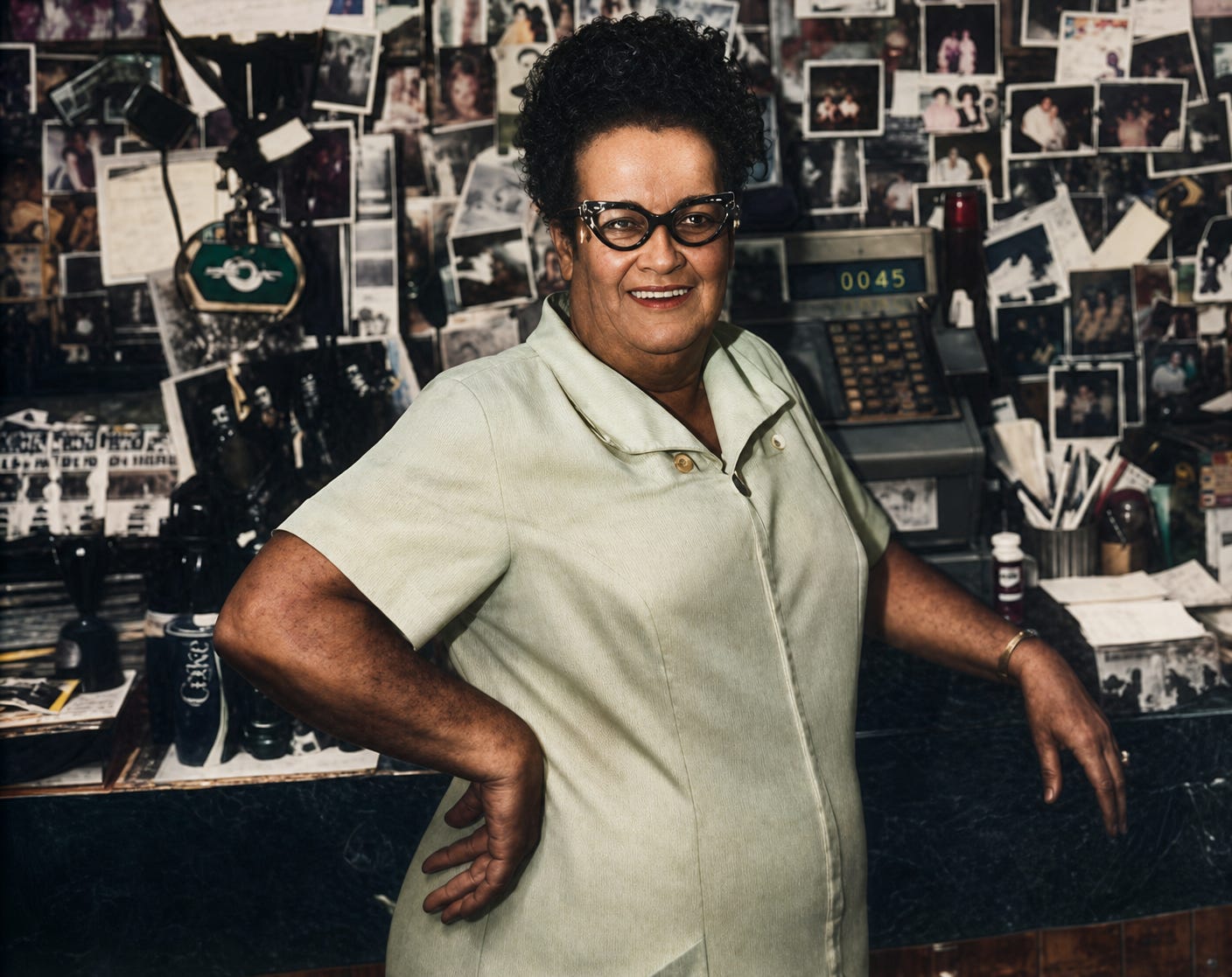
The iconic Ms. Tootsie Bess, of Tootsie’s on Lower Broadway. A honky tonk queen in her own right. She has nothing to do with this article but I’d say her establishment has had a major impact on the music, as well - at this point for the good.. and maybe, the bad.
There was a bar in East Nashville — I won’t tell you which one because it doesn’t exist anymore and naming the corpse feels indecent — where on a Thursday night in 1957 you could sit in the third row with a bourbon you couldn’t afford and listen to a man with a Telecaster and a broken marriage tell you the precise shape of your own loneliness. Not approximately. Not in the neighborhood of it. Precisely. The steel guitar would cry and the fiddle would answer and something in the room would shift, the way pressure shifts before a storm, and grown men who hadn’t cried since their fathers’ funerals would stare into their glasses and feel, for four minutes, that the universe had noticed them.
That’s what they killed.
Now let’s talk about who they are.
The Body
First, understand what you’re looking at when you look at honky tonk music at its peak — roughly 1945 to 1958. You’re looking at something that had no precedent and has had no true successor. Ernest Tubb. Lefty Frizzell. Webb Pierce. Hank Williams, obviously, though Hank is almost too large to discuss in this context without the conversation collapsing into hagiography. These were not just mere entertainers in any conventional sense. They were transmitters. The music they made came from a specific section of American life — the working poor of the rural South and the displaced working poor who’d migrated to Detroit and Chicago and Cincinnati looking for factory work and found, instead, a different kind of poverty with better plumbing. Maybe I’ll tell you some personal stories about this some day. Wink.
The honky tonk was their cathedral. Not metaphorically. Literally. It was the place where the week’s accumulated grief got a formal hearing. Where infidelity and debt and dead-end jobs and the particular ache of being alive in a country that had forgotten you existed got transformed, through the alchemy of a three-chord song and a man who meant every word, into something bearable. Sometimes even beautiful.
The genius of honky tonk — and I use that word with the full theological weight it deserves — was its refusal of comfort. It did not tell you things would be fine. It told you that other people were suffering the same way you were suffering, and that this shared suffering had a name, and the name of it was Wednesday night, and the cover charge was two dollars. (No place is more lonely than Lower Broadway on a Thursday morning at 3 am)
By 1960, that cathedral was being demolished, brick by brick, with the full approval of the people who were supposed to be its custodians.
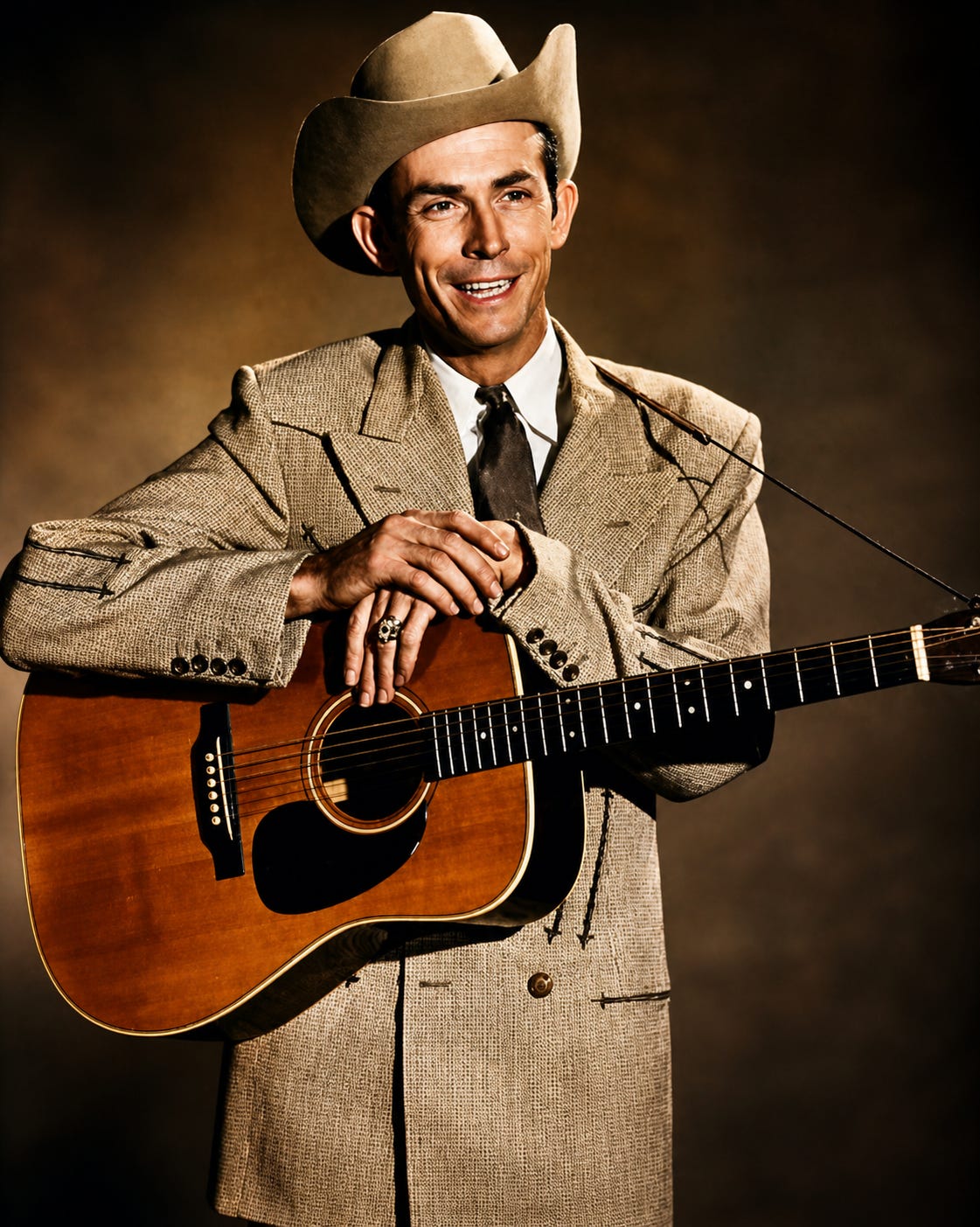
When you die at the height of your career and you are 29 years old, you always permanently stay on the top. And that’s where Hank Williams is today, still on the top. \
The Timeline
Here is how fast it happened. In 1952, Hank Williams recorded Your Cheatin’ Heart. In 1957, Patsy Cline recorded Walkin’ After Midnight — still rough-edged, still country in its bones, though the seams were already showing. By 1961, she was recording Crazy with strings and background vocals and a production so polished you could see your reflection in it.
Nine years. That’s all it took.
In 1958, Chet Atkins and Owen Bradley — both operating under the full blessing of their respective labels, RCA and Decca — began systematically replacing the sonic vocabulary of country music. Steel guitar was reduced, then eliminated. Fiddles were pushed to the margins. In their place came string sections, vocal choruses, and production values borrowed wholesale from the pop world that Nashville had spent a decade being condescended to by. The term they used for what they were building was The Nashville Sound.
What they were actually building was a product.
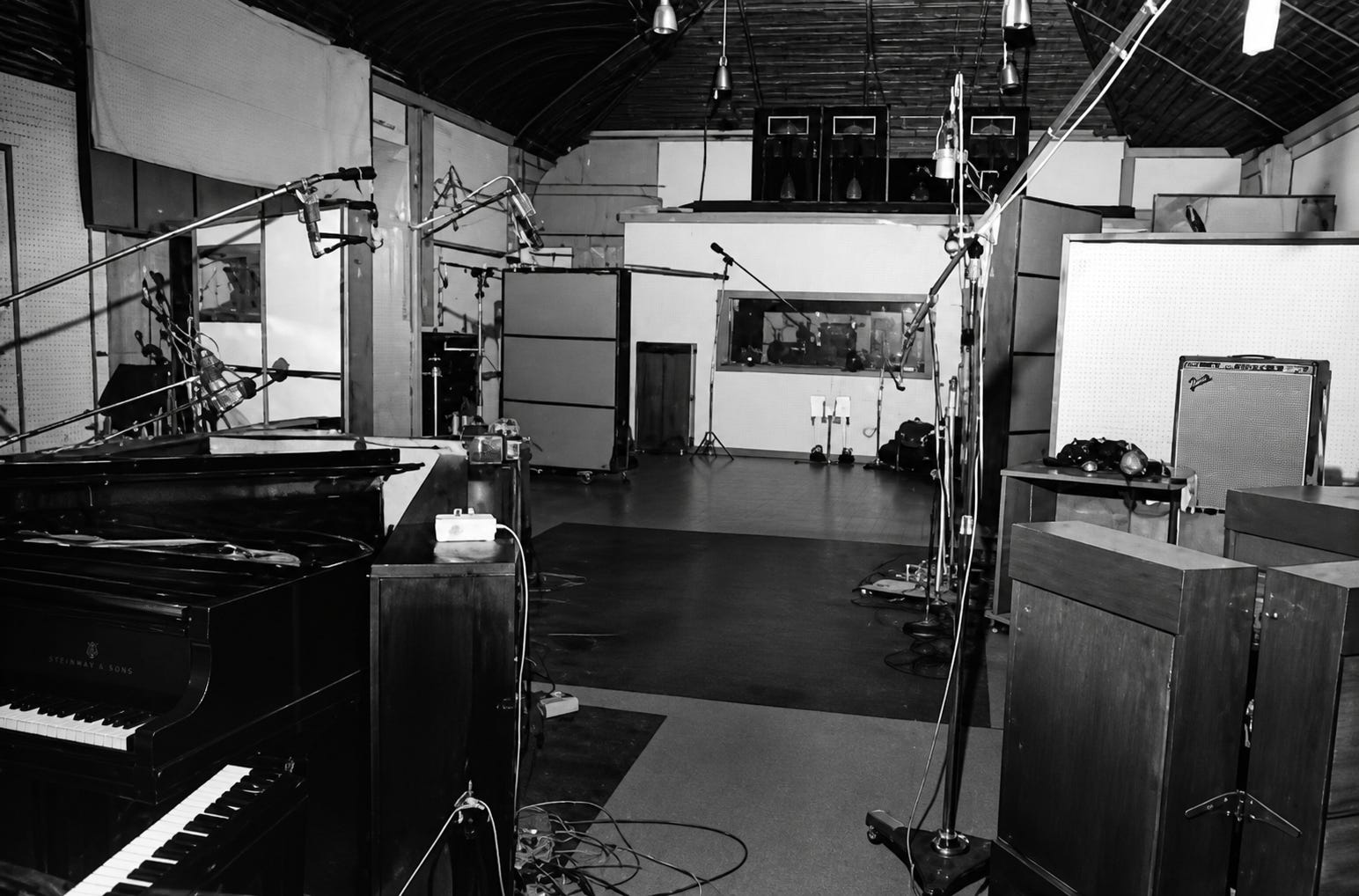
The inside of Owen Bradley’s “Quonset Hut” Studio on Music Row.
The Suspects
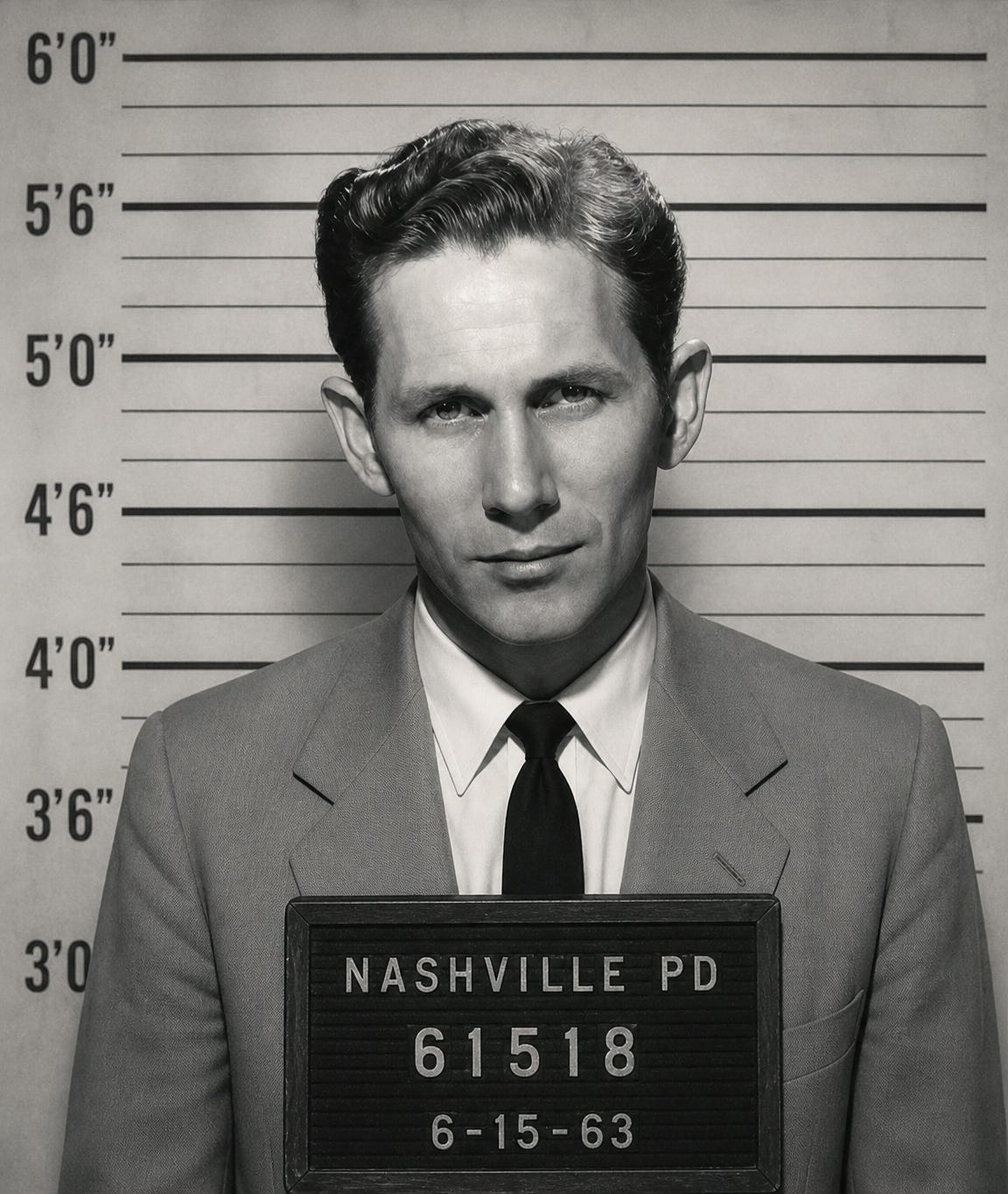
No, this isn’t a real image. It’s just my terrible sense of humor. And I recently discovered that Chet was a cousin of mine - which makes this article all the more complicated.
Chet Atkins. Let’s start here because Atkins is the most complicated figure in this story, and complication is where the truth lives. He was, by any honest accounting, one of the most gifted musicians country music ever produced — a guitarist of almost supernatural ability, a man with genuine roots in the East Tennessee tradition, a man who understood perfectly well what he was replacing. Which makes what he did either more forgivable or less, depending on your disposition.
Atkins understood that rock and roll was eating country music’s lunch. The teenagers who might have grown up listening to Lefty Frizzell were instead listening to Elvis — who was, not coincidentally, recording at RCA under Atkins’ purview. The math was not complicated: rough-edged music made by people who looked like they’d been in a fight was losing market share to rough-edged music made by people who looked like they’d been sent from central casting. The solution, as Atkins saw it, was to stop being rough-edged.
What Atkins built worked. Commercially, it worked beyond anyone’s reasonable expectations. He turned Nashville into a genuine industry, attracted major label investment, and created infrastructure that still exists. He also, in the process, decided on behalf of an entire tradition that the tradition was worth less than the revenue it could generate if sufficiently smoothed down. He made that decision quietly, competently, and with what I have no doubt was a sincere belief that he was saving country music rather than gutting it.
He was wrong. But he was wrong in the way that very intelligent men are often wrong — with complete conviction and excellent results, right up until the moment the consequences arrive.
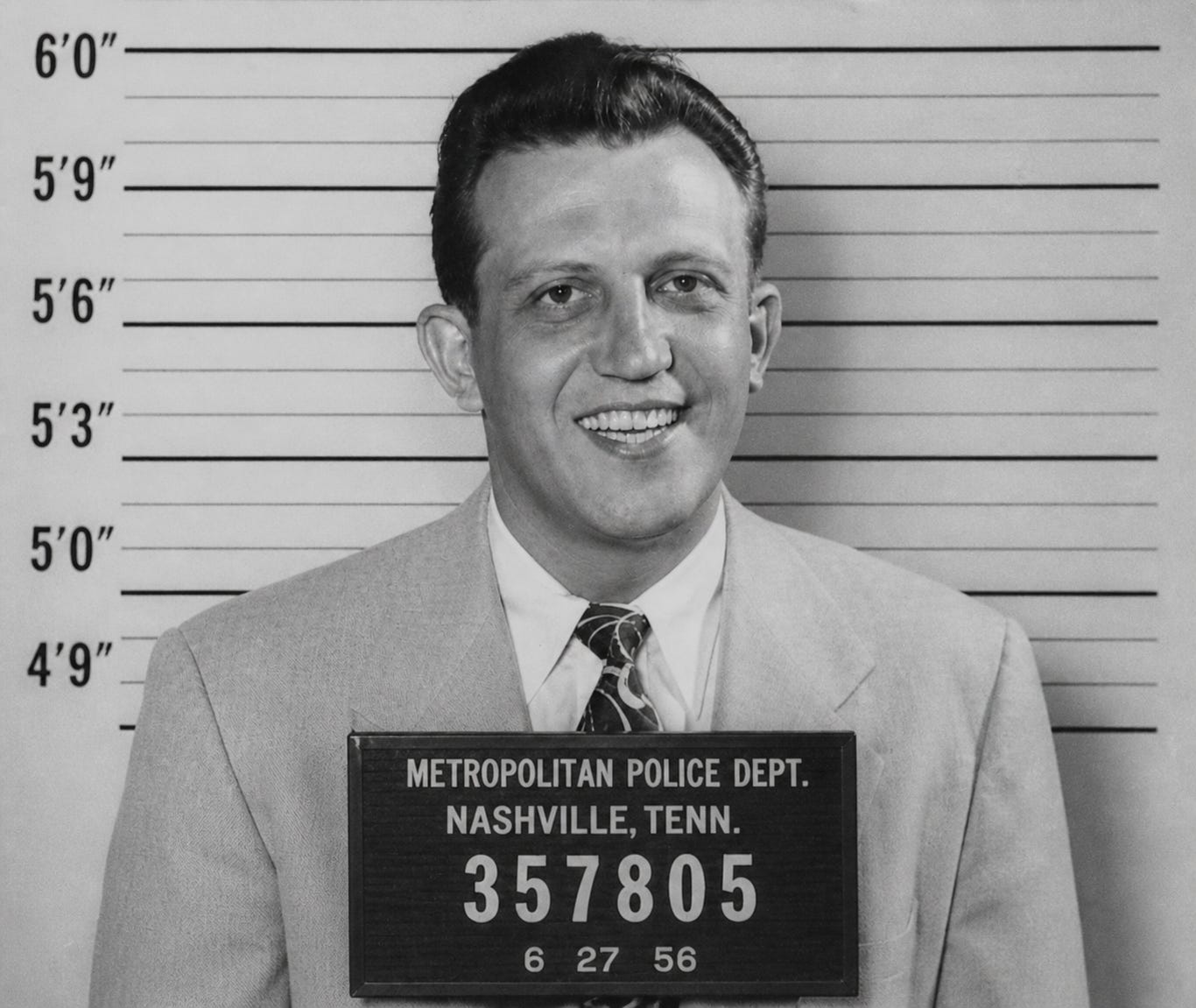
Yeah, it ain’t real either. But it makes sense for this article. Just play along.
Owen Bradley. Where Atkins was the strategist, Bradley was the executor, and in some ways the more gifted one. His Quonset Hut studio on 16th Avenue became the laboratory where the Nashville Sound was refined into something genuinely seductive. The productions he made with Patsy Cline are, and I say this through gritted teeth, some of the most beautiful recordings in American music. I Fall to Pieces is a perfect record. Sweet Dreams is a perfect record. If you want to argue with me about this I will lose the argument and I know it.
That’s the thing about Owen Bradley that the simple version of this story can’t accommodate. He wasn’t making bad music. He was making gorgeous music that required the death of something irreplaceable as a precondition of its existence. That’s not a minor footnote. That is the entire moral weight of what happened.
The Labels. Columbia. Decca. RCA. Follow the money and you will always find it, patient and cold, waiting at the end of every artistic crime scene. The major labels were not villains in the operatic sense — they didn’t hate honky tonk, they were indifferent to it, which is worse. What they saw in the late 1950s was a genre with an expanding audience and a ceiling imposed by its own roughness. Pop crossover revenue was real and growing. The calculation was simple: sand off the edges, access the mainstream, multiply the revenue.
The artists whose careers were managed, redirected, and in several cases effectively ended by this calculus were not even a secondary consideration. Webb Pierce, one of the most successful country artists of the early 1950s, found himself commercially irrelevant within a decade — not because his audience disappeared, but because his audience was no longer the audience the labels were interested in serving. The people who needed honky tonk music the most were, it turned out, the least profitable demographic to make it for.
Radio. The demand side of the equation, and perhaps the least discussed. Program directors at mainstream country radio stations in the early 1960s were not selecting records based on artistic merit or cultural authenticity. They were selecting records based on what advertisers would tolerate running adjacent to. A Lefty Frizzell record about drinking yourself to oblivion in a roadside bar was not what a regional appliance company wanted playing before their spot. A lushly produced Eddy Arnold record was. The format shaped the content, the content shaped the culture, and the culture forgot, within a single generation, what it had been before the format existed.
In Defense of the Devil
I am not an unsophisticated man. I understand the counterargument, and I will make it myself before you have the chance.
The Nashville Sound produced great art. Not merely commercially successful art — great art. Patsy Cline’s recordings with Owen Bradley are masterworks. Don Gibson’s Oh Lonesome Me is a perfect song perfectly recorded. Ray Price’s transition-period work contains some of the most emotionally devastating vocals in the country canon. The Everly Brothers recorded in Nashville and made records that still sound like the inside of a dream.
You cannot dismiss this. Anyone who tells you the Nashville Sound was simply bad music is either being dishonest or hasn’t listened carefully enough. The tragedy of what happened between 1958 and 1965 is not that the music was bad. The tragedy is that it was sometimes beautiful, and that beauty required a sacrifice that nobody asked the congregation about.
The honky tonk tradition was not replaced by mediocrity. It was replaced by a different kind of excellence — cleaner, more controlled, more universally accessible, and fundamentally unable to do the one thing that honky tonk had always done: speak directly to the people who needed it most, in a voice that sounded like their own.
That is not a minor distinction. That is the whole thing.
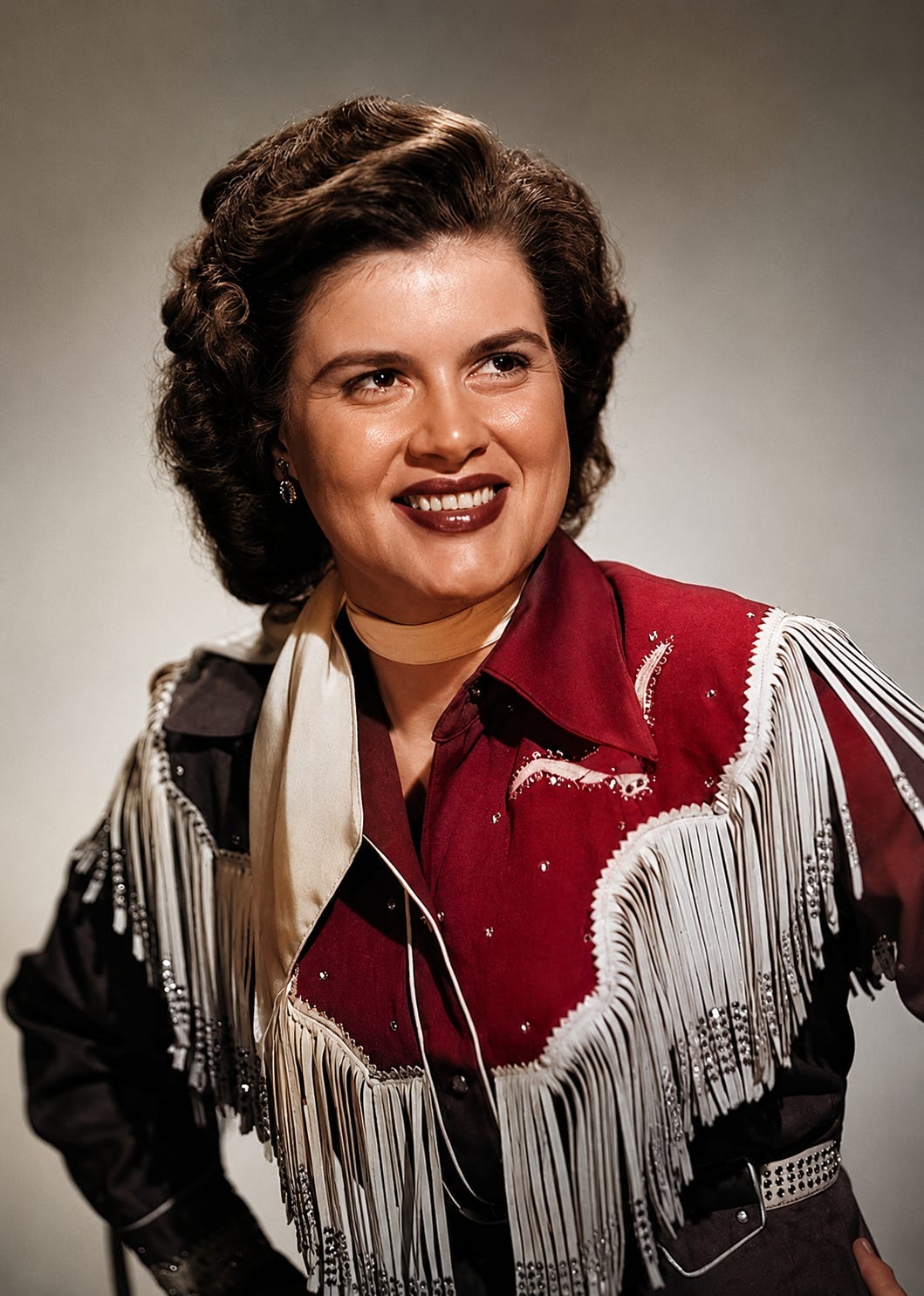
Patsy Cline was without a doubt the “queen” of the Nashville sound.
What They Created By Killing It
Here is the dark irony that Nashville has never fully reckoned with. The Nashville Sound’s success created, within a decade, the precise conditions for its own rebellion.
By the late 1960s, a generation of artists and producers had grown up inside the machine and found it suffocating. Waylon Jennings. Willie Nelson. Kris Kristofferson. Billy Joe Shaver. These were not radicals in any political sense — they were traditionalists in the deepest sense, men who had been alive long enough to remember or imagine what country music was before it became a product, and who were angry enough about its absence to do something about it. The Outlaw Movement was not, at its core, an aesthetic rebellion. It was a grief response. It was what happens when a tradition gets killed slowly enough that the people who loved it have time to notice and to rage.
The machine that destroyed honky tonk spent the next decade being haunted by it. Every Outlaw record was, at some level, an accusation. Every raw vocal, every unpolished production, every lyric about whiskey and hard living and dying the way you lived was a direct rebuke to the men in the suits who had decided, fifteen years earlier, that this kind of honesty was bad for business.
They didn’t kill honky tonk. They drove it underground, where it got meaner, and waited for it to come back and settle accounts.
It always comes back.
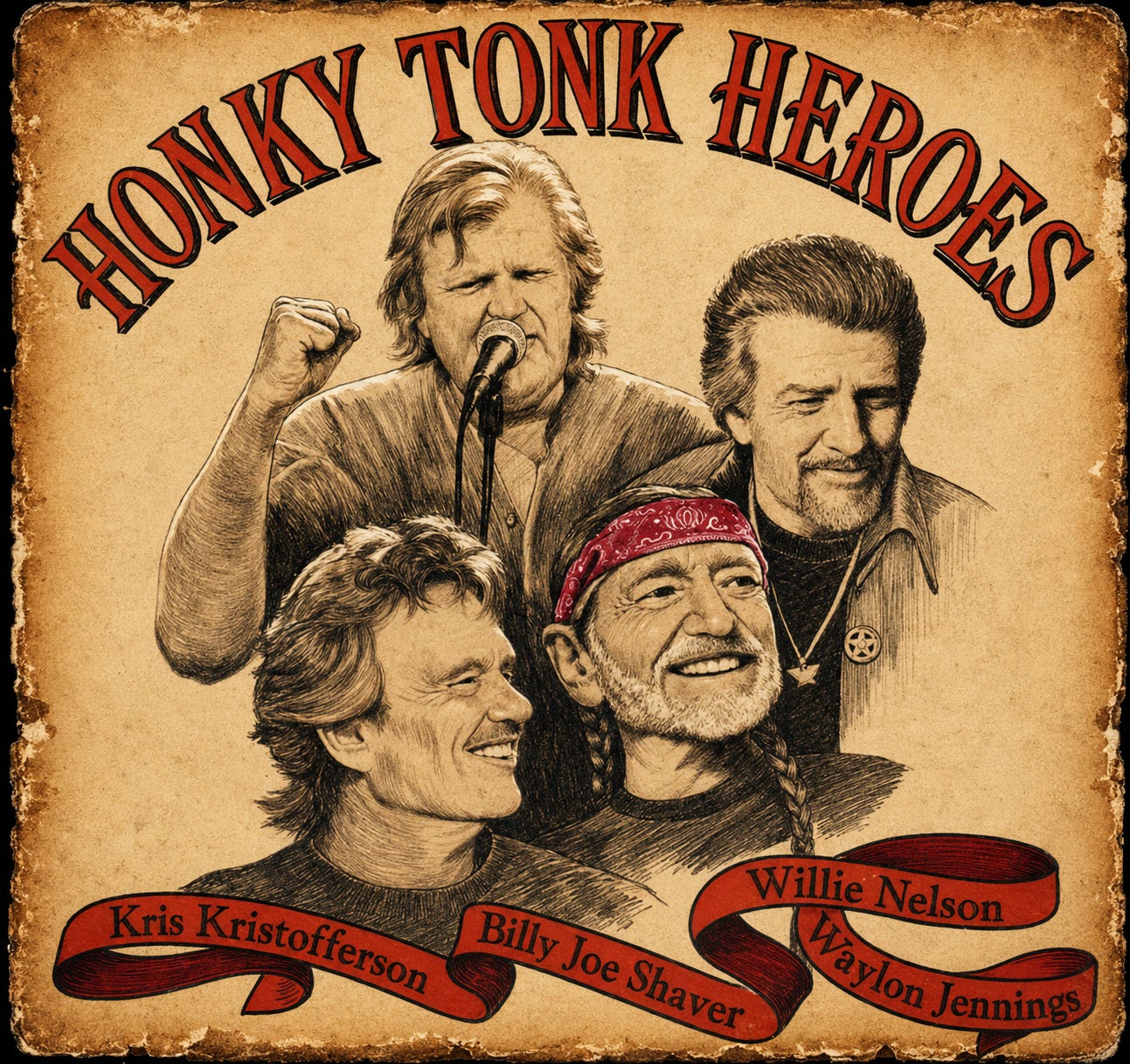
The rebellion - that would not have happened without the Nashville Sound. Something to rebel against..
The Verdict
Let me be plain with you.
What happened to honky tonk music in the late 1950s and early 1960s was not evolution. Evolution is undirected, gradual, and driven by the environment. What happened here was directed, rapid, and driven by revenue projections. It was a business decision that masqueraded as artistic progress, and the people who made it were smart enough to understand the difference and powerful enough not to care.
The tradition that was displaced — the music of Hank Williams and Lefty Frizzell and Webb Pierce and the ten thousand nameless players in the ten thousand nameless bars across the American South and Midwest — served a function that no other art form in American life has ever adequately replaced. It told the truth to people the rest of the culture had decided weren’t worth telling the truth to. It made grief beautiful without making it comfortable. It was honest in a way that honesty is rarely permitted to be, which is to say: completely, without apology, and without the slightest interest in whether you found it palatable.
They killed that. Deliberately, professionally, and with full knowledge of what they were doing.
The Nashville Sound didn’t profit from the death of honky tonk. The Nashville Sound was the death of honky tonk, dressed up in strings and background vocals and sold back to the audience as an upgrade.
Nashville has spent sixty years hoping you wouldn’t notice.
You’re noticing now.
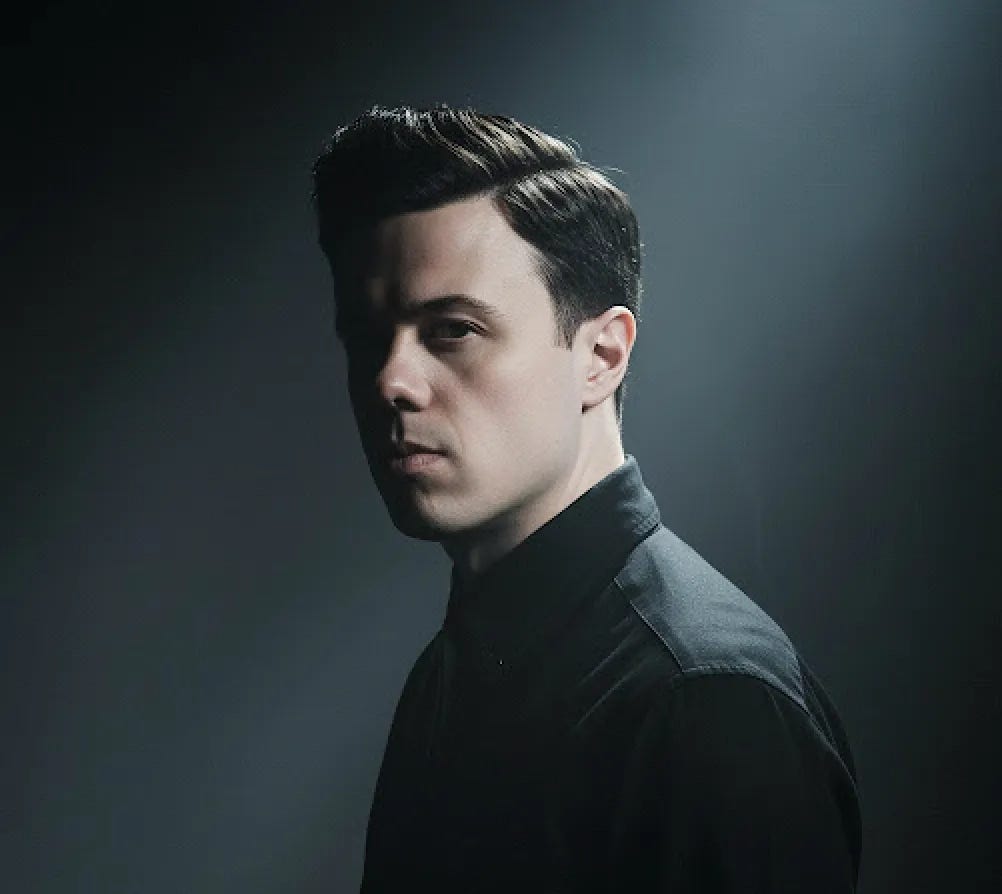
ABOUT THE AUTHOR:
Zachariah Malachi writes about the American dark — not as a historian, but as a survivor. If someone forwarded you this piece, consider subscribing. There’s more where this came from, and most of it is worse.
Isn’t this kind of what happened to Bluegrass?
Excellent and informative. Thanks Zachariah.