


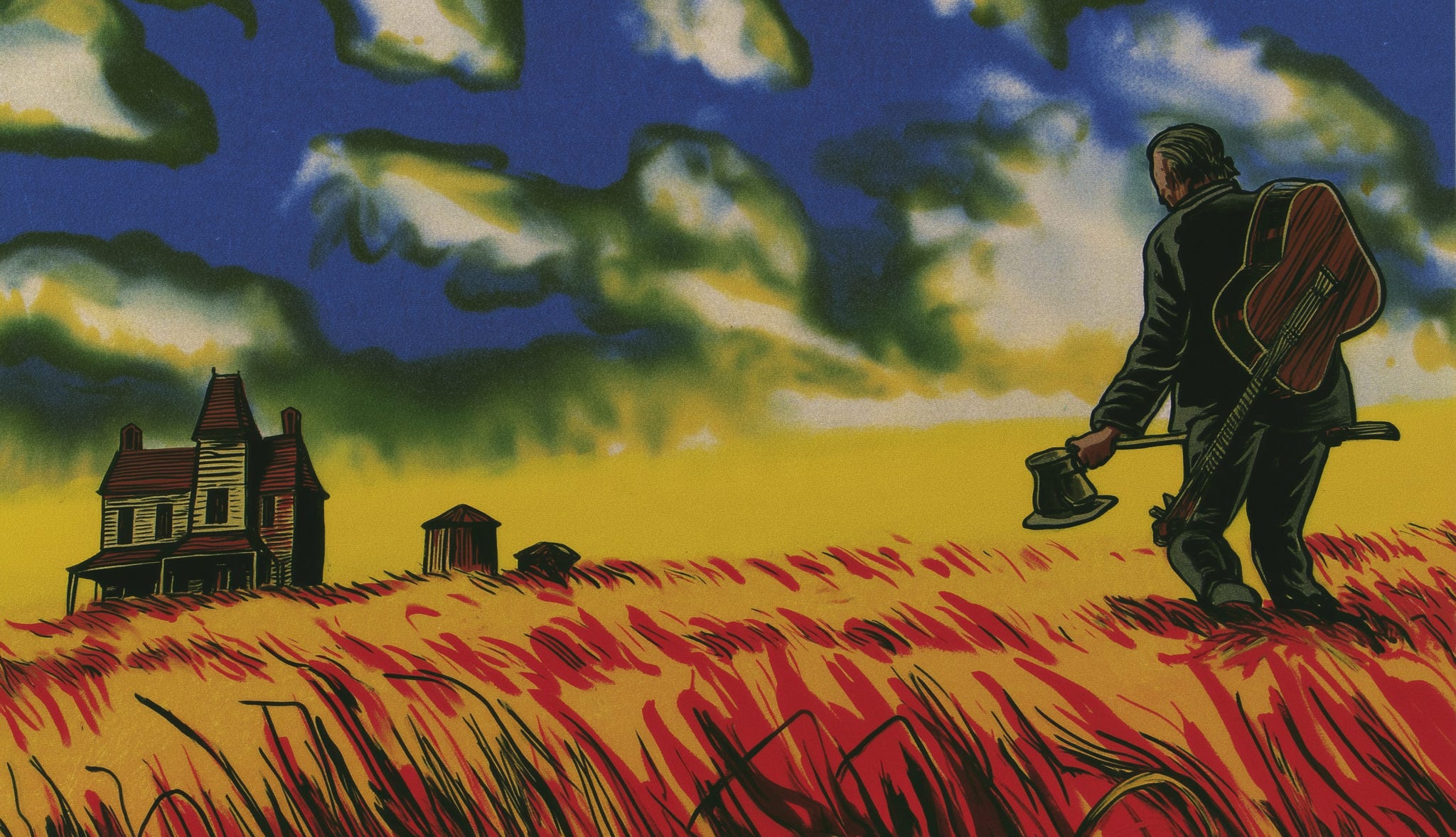
Can Mary Fry Some Fish, Mama?
There is a record that used to pass from hand to hand in this town the way a dirty secret does.
Not a bootleg. Not a rarity in the way collectors mean it, with the white gloves and the plastic sleeves. I mean a record that people played for each other late at night, in the back room, after the good people had gone home. Somebody would say you have never heard anything like this, and they would be right, and when the needle lifted off the last groove nobody in the room would say a word for a while.
It is a honky tonk shuffle. Mid-tempo, tasteful, a little tack piano, a rim-knock on the snare. The kind of arrangement you could play at a VFW fish fry on a Friday night and nobody’s grandmother would complain. And over the top of it, in a voice as smooth and unbothered as a man ordering a cup of coffee, somebody confesses to murdering his ex-girlfriend, her new man, a puppy, and a little girl in a park. He asks his mother if she thinks he’s crazy. He asks her more than once. And at the end of the record, Constant Reader, you understand why she isn’t answering.
The song is called “Psycho.” It was written in Texas in the spring of 1968 by a blind man who also wrote “I Love You Because” and “Lost Highway.” It was first recorded that same year by a drunk, broke honky tonk singer in a Nashville vanity studio, on a label that mostly took money from amateurs who mailed in their poems. It sold a few hundred copies and then it vanished.
And then it did not stay vanished. It never does, with records like this.
I have been chasing the story of this song for a long time now, because almost everything you have read about it on the internet is wrong. The Charles Whitman story is wrong. The Hitchcock story is wrong. The famous one, the one everybody repeats, that the writer forbade anyone to record it until he was dead, is not only wrong but provably impossible. What’s left when you strip away the folklore is stranger and sadder than the folklore ever was.
So pull up a chair. The coffee’s on. Mama’s in the kitchen.
Let me tell you about Leon.
The Blind Balladeer
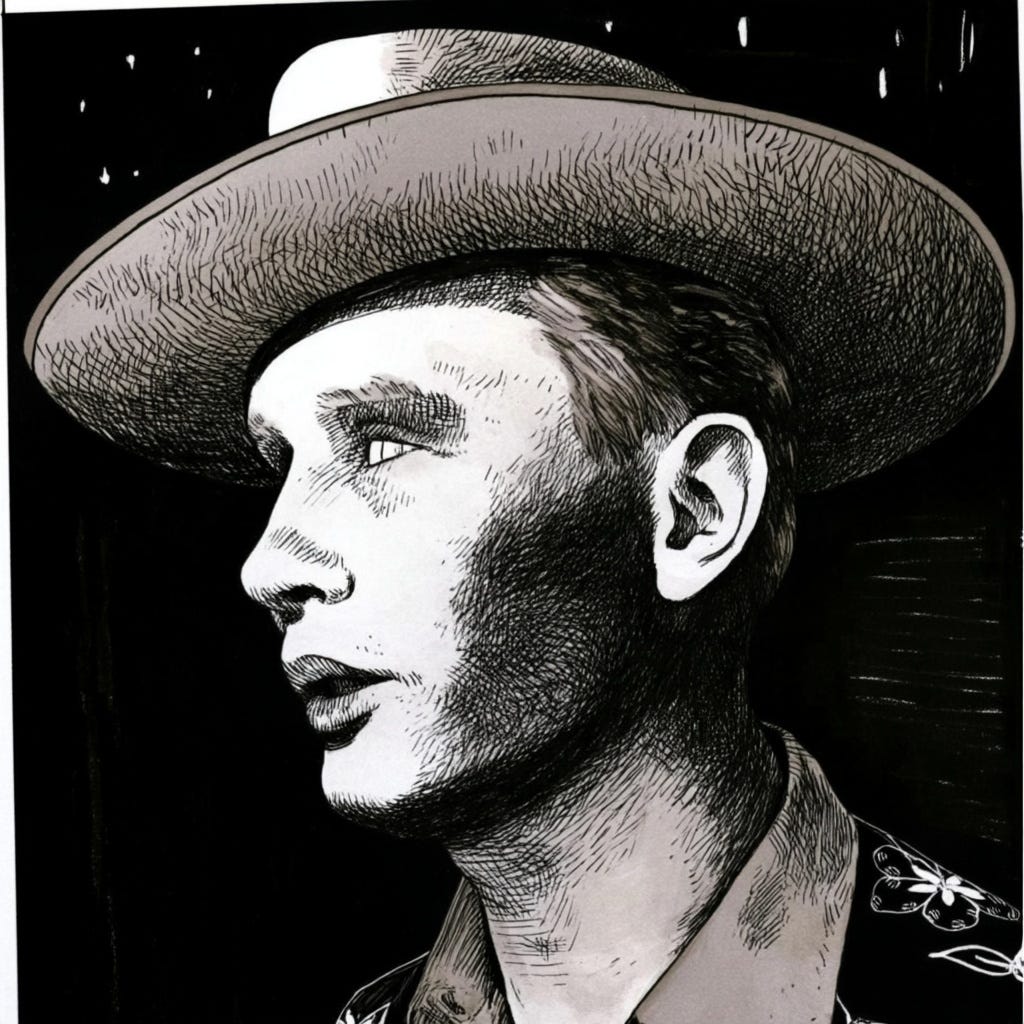
Leon Roger Payne was born June 15, 1917, in Alba, Texas, a railroad stop in Wood County that had about as many people as a good-sized church. He came into the world blind in one eye and lost the other as a small boy. On May 17, 1922, not yet five years old, he was enrolled at the Texas School for the Blind in Austin, and he stayed until 1935. The teachers there pushed music on the children because music was one of the few trades a blind man could make a living at in Depression Texas, and Leon took to it the way some people take to religion. Guitar, piano, organ, drums, trombone. By 1938 he was playing with Bob Wills and His Texas Playboys, which in Texas in 1938 was like playing with the Yankees.
For a stretch of years he drifted the state calling himself the Texas Blind Hitchhiker, which is exactly what it sounds like. A blind man standing by the side of a Texas highway with a guitar case, thumb out, going wherever the next car was going. If you want to understand “Lost Highway,” start there.
