


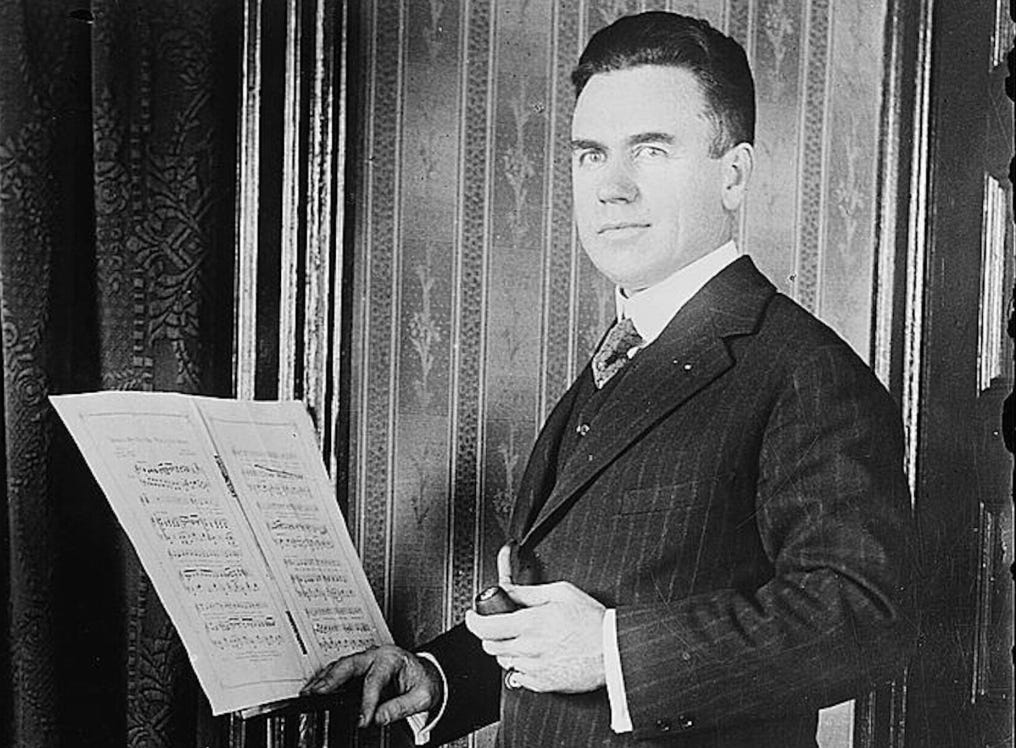
If you ask someone who knows their country music history to name the genre’s first superstar, they’ll probably say Jimmie Rodgers. They’ll tell you about the Singing Brakeman, the blue yodels, the Bristol Sessions of August 1927. If they’re feeling thorough, they’ll mention the Carter Family, whose harmonies came out of the same two days of recording and laid the foundation for everything that followed in American roots music.
Both answers are wrong. And not narrowly wrong — wrong by three years and several million records.
Before Jimmie Rodgers stepped up to a carbon microphone in Bristol, a singer had already cracked the commercial code, broken every sales record the industry had on the books, and released what became the world’s first million-selling country record. His name was Vernon Dalhart. The odds are good you’ve never heard it. And that gap — between what he actually did and how completely history managed to forget him — is worth sitting with for a second.
The Texas Tenor Who Went Looking for Opera
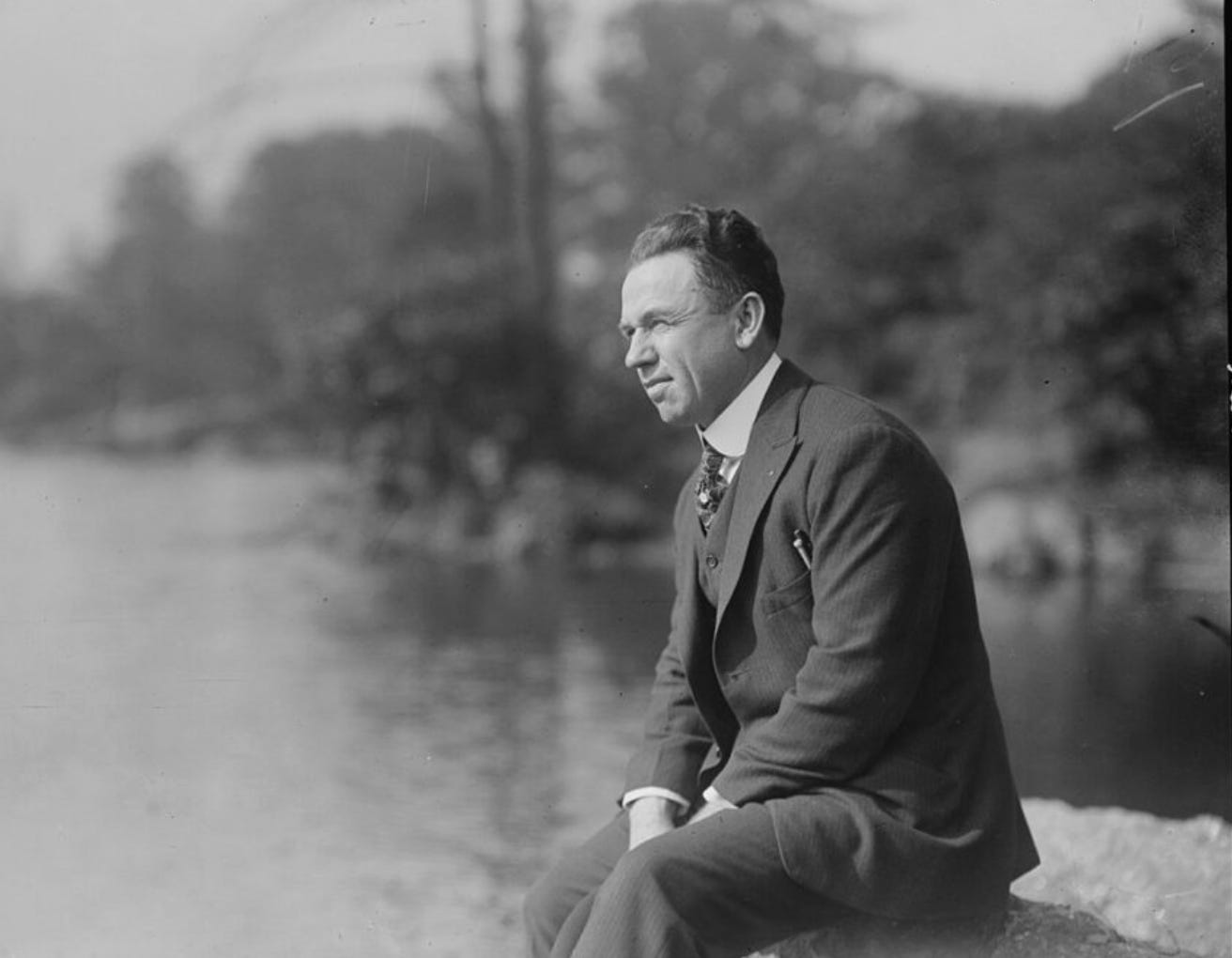
He wasn’t born Vernon Dalhart. He was born Marion Try Slaughter in Jefferson, Texas, in 1883. As a young man he punched cattle in the stretch of West Texas that runs between two towns — Vernon and Dalhart — and when he decided to pursue music instead of ranching, he took both town names, bolted them together into a stage name, and moved to New York City to become a classical opera singer. Not even kidding..
That detail sounds like the setup to a joke, but it’s the straight biographical record. By the early 1920s, Dalhart was a working studio professional in New York, a smooth trained tenor who could record light opera, pop standards, minstrel material, and novelty numbers for any label that called. He was the opposite of hillbilly music in almost every measurable way — diction, delivery, pedigree, address. And then came 1924.
The Record That Changed the Arithmetic
The previous year, a Virginia musician named Henry Whitter had recorded a regional ballad for Okeh Records about the wreck of Southern Railway train No. 97, which came off the rails at a steep grade near Danville, Virginia, in September of 1903 and killed the engineer, Joseph Broady, along with eight other people on board. The song wasn’t a massive seller, but something about it caught the attention of executives at Victor Talking Machine Company. They wanted a cover version and called in Dalhart.
He did something smart. He didn’t try to out-New York the material. He mimicked Whitter’s nasal southern delivery closely, backed himself on mouth harp, brought in a studio fiddler, and added the guitar work of a session player named Carson Robison. For the B-side of the 78, he recorded a melancholic folk tune his cousin Guy Massey had given him called “The Prisoner’s Song” — a simple, aching thing about longing and jail walls that Dalhart later claimed Massey had written and Massey’s heirs contested in court for years after it turned out to be worth real money.
Victor 19427 came out in late 1924. At a time when a successful record might move tens of thousands of copies, it sold past a million and kept going. Some estimates put the final worldwide count somewhere in the neighborhood of seven million copies. To be honest, the exact number depends on which accounting you trust, and the record industry in 1924 was not exactly running tight ledgers. What’s not in dispute is that it became the biggest-selling non-holiday record in the first seventy years of recorded sound, and that nobody in Nashville or New York had seen anything like it coming.
What He Proved and Who Was Watching
The thing Vernon Dalhart did that mattered more than the sales figures was what the sales figures demonstrated. Before 1924, record executives largely treated Southern rural music as a regional novelty — something you sold on Victrolas in mountain towns, not something you marketed to Boston or Chicago or London. Dalhart’s record rewrote that assumption completely.
He was a trained vocalist in a business where authentic grit was the stated commodity. What he had instead was precision — the ability to land the emotional center of a hard-luck song without losing a single lyric to muddy diction, to take a regional tragedy and transmit it cleanly across class lines and geography. Ralph Peer, the same A&R man who would later run the Bristol Sessions and sign both the Carter Family and Jimmie Rodgers, described Dalhart at the time as a professional substitute for a real hillbilly. Peer meant it as a limitation. But the sales numbers kept proving it was also quite the skill.
For the next decade, Dalhart became something close to a recording machine. He cut the same hit songs for dozens of competing labels under more than a hundred different pseudonyms — Al Craver, Mack Allen, Jeff Calhoun, Tobe Little, half a dozen others — because the same song appearing on the Victor label and the Columbia label and the Brunswick label as the work of three different “hillbilly” singers was the standard industry practice of the era, and Dalhart understood the mechanics of it as well as anyone. If a mine collapsed, a train left the rails, a hurricane made landfall, he was in a New York studio within forty-eight hours recording a disaster ballad about it. “The Death of Floyd Collins,” about a young cave explorer who got trapped and died in a Kentucky sandstone passage in 1925 while the nation watched for two weeks, was one of his biggest. He understood that the country music audience of the 1920s was working-class people who wanted songs about working-class disasters, and he built a production operation around that understanding at a speed that nobody else in the business matched.
How History Decided to Forget Him
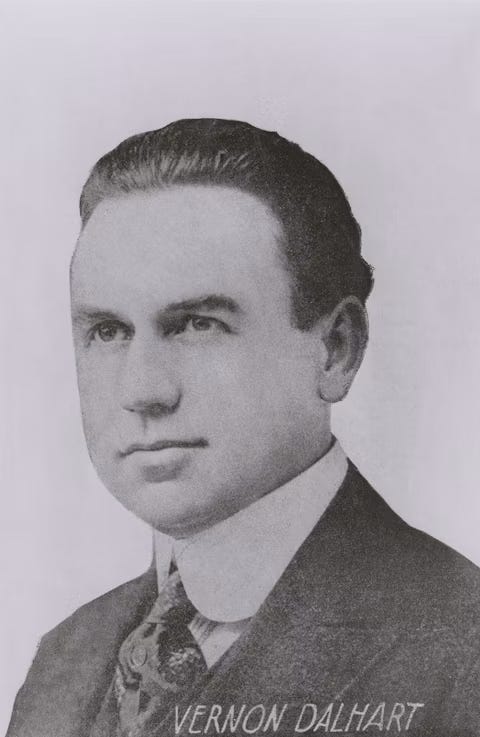
The Depression hit in 1929 and the record industry collapsed fast. When it came back, the cultural appetite had shifted. The audience in the late 1930s and early 1940s didn’t want a polished New York tenor with classical training singing about the South. They wanted cowboys and coal miners and drifters — men who looked and sounded like they had lived the material. Jimmie Rodgers was already gone by 1933, dead at thirty-five, but the mythology around him was growing faster than it had when he was alive. Hank Williams was coming. The idea of authenticity as country music’s core value was cementing itself in a way that left no room for Marion Try Slaughter of Jefferson, Texas, who had rebranded himself as a New York studio professional and cracked the market open from there.
Critics and music folklorists in the postwar period mostly dismissed him as an interloper — an opera singer who had put on a costume and sold a lot of records without any legitimate claim to the genre. Nashville built its official origin story around Bristol 1927, and the man who had proved in 1924 that country music had a mass market beyond the region got written out of the primary narrative because his biography didn’t fit the mythology the industry had decided it needed.
By the time World War II ended, Vernon Dalhart was working as a night clerk at a hotel in Bridgeport, Connecticut. He died there in 1948, largely forgotten by the industry his record had underwritten. He was inducted posthumously into the Country Music Hall of Fame in 1981, thirty-three years after his death, which is to say the Hall got around to him eventually, but not in time to mean anything to the man himself.
What the Forgetting Cost the Record
The practical problem with erasing Dalhart from the story is that it makes the story make less sense.
The commercial infrastructure that allowed Ralph Peer to travel to Bristol in 1927 with recording equipment and the confidence that regional Southern music could generate actual cash — that infrastructure existed because a million people had already bought Victor 19427. The labels that were willing to take chances on Jimmie Rodgers and the Carter Family were willing to take chances because Dalhart had already demonstrated that the market existed. You don’t get Bristol without the arithmetic that came before it, and the arithmetic came from a Texas cattle hand who moved to New York, learned to sing opera, and figured out how to translate a Virginia train wreck into something the whole country wanted to hear.
And every time a country artist crosses over to the pop charts — every time a song about ordinary American disaster or heartbreak or longing reaches an audience well beyond the genre’s home base — that’s the pattern he demonstrated first. He wasn’t a hillbilly. He made the world listen to hillbilly music anyway. And then the world, and the music, moved on and pretended it had always found its own way there.
ABOUT THE AUTHOR:
My name is Zachariah Malachi. I’m a full-time, self-employed honky tonk musician in Nashville, Tennessee. This Substack Publication was created for the purpose of sharpening my mind on more Nashville and Country Music history to share with the honky tonk patrons downtown during my shows - but I wanted more folks to benefit from the research so - it’s my gift to the country music fans of the world AND the people who WANT to be. Subscribe and come along for the ride.
Wednesday’s Paid Masterclass: Scopes, Shocks, and the Sinking of the Vestris
The Core Lesson: How did early record companies capitalize on a population that was hungry for news? They invented the “Event Song”—highly topical, musical tabloids that acted as the audio equivalent of broadsides.
We will introduce Carson Robison, a Kansas-born vaudeville whistler and guitarist who became country music’s first professional, full-time songwriter. Robison mastered the art of “ripping headlines from the papers” and turning them into instantly pressable ballads.
We’ll break down the astonishing logistical speed of the 1920s record industry:
The Scopes Monkey Trial (July 1925): Dalhart went into the studio to record “The Scopes Trial” on July 10, 1925—the very day the trial actually opened in Dayton, Tennessee. Released exactly one month later, the record sold 80,000 copies, with thousands of discs being sold directly on the courthouse steps during the trial’s final days. In the lyrics, Dalhart firmly took the side of fundamentalism, cautioning young Scopes against “questioning the old ways”.
The William Jennings Bryan Eulogy: When Bryan died on July 26, 1925, soon after the trial, it took Columbia only two weeks to get “Bryan’s Last Fight” recorded and in stores.
The Dirigible Disaster: When the U.S. Army dirigible Shenandoah crashed in Ohio during a storm on September 3, 1925, Dalhart was in the studio recording “The Wreck of the Shenandoah” in less than a week. It was pressed, distributed, and on store shelves by mid-October.
We’ll also trace how songwriters like Andrew Jenkins turned maritime disasters (the sinking of the steamship Vestris) and prison breaks into instant, national melodies.
Friday’s Paid Liner Notes: Deconstructing the “Formal” Hillbilly
The Listening Lab & Test: We will teach subscribers how to train their ears to hear the stark class and regional divides of the 1920s.
We will pit Vernon Dalhart’s stiff, over-enunciated operatic diction on “The Prisoner’s Song” against the raw, slide-guitar-drenched mountain realism of Tom Darby and Jimmie Tarlton’s “Columbus Stockade Blues.”
Liner Notes & Listening Recommendations:
“The Wreck of the Old 97” — Vernon Dalhart (1924): Note the precise, theatrical pronunciation of rural train slang.
“The Scopes Trial” — Vernon Dalhart (1925): Listen to how Carson Robison wraps a modern legal debate in a traditional, acoustic fiddle-and-guitar structure to sell fundamentalism.
“The Sinking of the Vestris” — Vernon Dalhart (1928): Observe how classical maritime ballad structures were repurposed to document modern post-war disasters.
“Left My Gal in the Mountains” — Carson Robison (1930): Tracing Robison’s shift away from event songs as the genre began to commercialize further in the early 1930s.
The Wednesday Test: A 5-question listening test challenge. Subscribers will listen to Dalhart’s “The Wreck of the Shenandoah” and try to identify the subtle classical and operatic “tells” in his vocal delivery,
Monday’s Paid Community Chat: The Pop Crossover — Evolution or Sellout?
The Discussion Prompt: You open the comments with a battle lines debate: Vernon Dalhart was a trained New York opera singer who made millions pretending to be a poor Southern convict. Did Dalhart’s massive success save country music by proving its commercial viability, or did it infect the genre with pop-crossover artifice before it even had a chance to breathe?
Thanks. If I had ever heard of him I had forgotten.
Wow. For an old East Tennessee boy who thought he knew his taters, I just got schooled. Thanks for passing that along. I will win some bar bets with this information.