


Buddy Holly is a character that pops up in a request on rare occasions when I'm down on Broadway. I never know what prompts people to request him unless it's just the fact that most of the music I play is old. Last night was one of the nights that Buddy Holly got brought up. And when I think of Buddy, I think of Waylon.
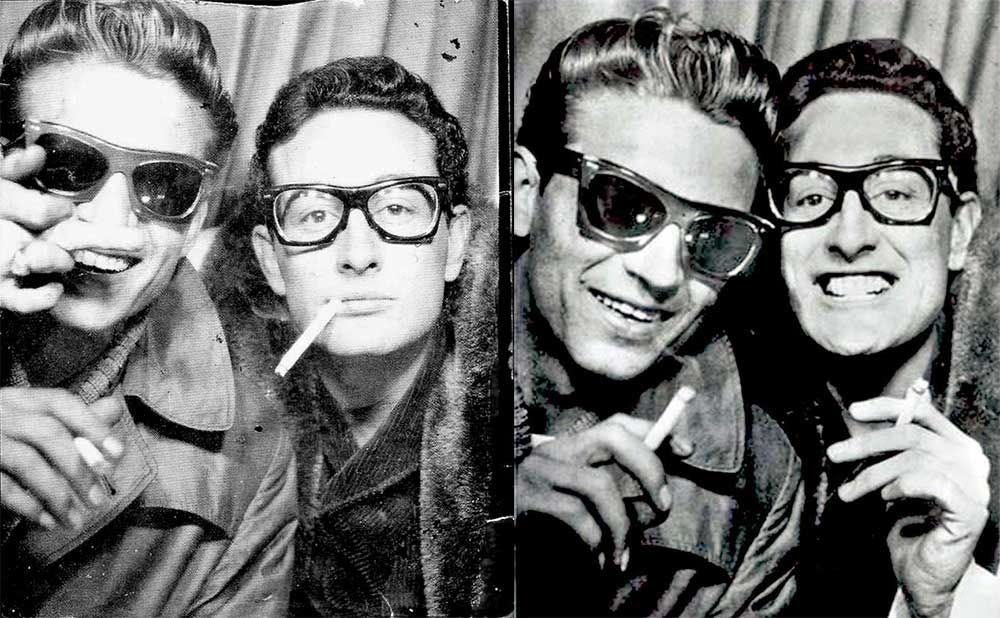
There is a photograph that I keep coming back to. Two young men crammed into a photo booth, sometime in early 1959. One of them is Buddy Holly — thick-framed glasses, the grin of a man who has already figured something out that the rest of the world is just beginning to suspect. The other is Waylon Jennings, twenty-one years old, lean and unfinished, not yet the outlaw, not yet the legend, not yet anything in particular. They are laughing. You can tell by the way they lean into each other that this is the easy laughter of men who have been sitting up too late talking, men who have decided, without ever saying so, that they are going to go through life together.
Six weeks after that photograph was taken, Buddy Holly was dead in a cornfield outside of Clear Lake, Iowa. And Waylon Jennings would spend the next forty years trying to figure out why he was still alive.
This is not just the story of a plane crash. It is the story of what a single friendship does to a man — how it opens him, how it leaves marks him, and how the loss of it all becomes the wound that everything else either comes from or tries to heal.
Cotton Fields and Radio Towers
You have to understand where Waylon Jennings came from before you can understand what Buddy Holly meant to him.
He was born Wayland Arnold Jennings on June 15, 1937, in Littlefield, Texas — a town so flat and so small that the horizon was the most dramatic thing about it. His father worked as a farm laborer and a truck driver, played harmonica and guitar at family gatherings, and raised his children in the tight, unadorned faith of the Church of Christ. They were the kind of poor that doesn’t announce itself. It just is. Dirt floors. Cotton sacks. The radio on Saturday nights tuned to the Grand Ole Opry, which was as close to another world as Littlefield got.
Waylon picked up guitar at eight. He was performing on KVOW radio in Littlefield at fourteen. He left school at sixteen, which tells you everything you need to know about where his priorities were, and spent several years picking cotton and spinning records at small Texas radio stations, learning the trade of talking into a microphone, learning what a song could do to a room that was otherwise just static and darkness.
By the mid-1950s he had landed at KLLL in Lubbock — a proper radio station, a bigger city, a longer runway. He was good on the air. He had the voice for it, that broad West Texas baritone that sounded like it came up out of the ground. He played six hours a day: two hours of classic country, two hours of current country, two hours of mixed recordings that got him fired from an earlier station for daring to play Little Richard twice in a row. At KLLL, he was a little freer. And Lubbock, for all its conservatism, was at that moment becoming a strange lightning rod for something that hadn’t quite been named yet.
Buddy Holly was from Lubbock. He had grown up on the same flat streets, gone to the same kinds of churches, heard the same Grand Ole Opry broadcasts. But he had taken all of that and run it through something else — through the blues he’d heard driving the back roads, through the gospel harmonics that were already in his blood, through the rockabilly tumbling out of Memphis — and what came out the other side was something that made grown men uneasy and made teenagers lose their minds entirely.
By 1957, Holly was already a nationally known name. “That’ll Be the Day.” “Peggy Sue.” “Rave On.” He was twenty years old and he had already cracked the code. He was also from Lubbock, and when he came home, he came to KLLL.
Eyes Bugging Out of Their Heads
The way the story goes, it was Buddy’s father who first connected them — coming into the station one day with his son’s latest record, asking them to play it, mentioning that Buddy had recently taken an interest in production, in finding young artists to work with. The co-owner of KLLL, Ray Corbin, recommended Jennings.
Then one day Buddy Holly walked through the door and Waylon Jennings’s life changed.
“Buddy would come up and hang out with me when he was in town,” Waylon recalled years later. “I had known him for a long time from talent shows we’d do around Lubbock. We’d lay back in the studio and play guitars, and Buddy would tell us stories. Our eyes would bug out of our heads because he’d been all over the world. He would talk about people like the Everly Brothers, and Jerry Lee, and Elvis.”
Think about what that meant to a twenty-year-old disc jockey in Lubbock, Texas. Here was a man his own age who had been to New York, played the Ed Sullivan Show, toured England, seen the thing from the inside. And he was sitting on the floor of a radio station in the town they’d both grown up in, playing guitar and talking, treating Waylon Jennings not like a fan but like a peer. Like someone worth investing in.
Holly didn’t just talk. He took over. He bought Waylon’s new clothes. He worked on his image. He arranged a session at Norman Petty’s storied studio in Clovis, New Mexico — the same room where Holly himself had cut his early records — and on September 10, 1958, Waylon Jennings made his first recording. The song was “Jole Blon,” a traditional Cajun waltz, a song about a pretty blonde woman who leaves a man flat. Holly played guitar on the session, alongside Tommy Allsup and King Curtis on saxophone. Brunswick Records released it. It didn’t exactly set the world on fire. But that wasn’t the point. The point was that Buddy Holly had looked at an unknown radio DJ with no credentials and no connections and said: I believe in you.
“Buddy was the first guy who had confidence in me,” Waylon said. “Hell, I had as much star quality as an old shoe, but he really liked me, and believed in me.”
The three men also wrote a song together at the KLLL studio that year — Holly, Jennings, and Corbin, a song called “You’re the One,” which Holly recorded with acoustic guitar, singing lead. A love song. Domestic and tender in the way that Holly’s love songs always were, before everything else he was. It was posthumously released in 1964. By then, the man who sang it had been gone five years.
When Buddy Holly came back to Lubbock in December of 1958 — on vacation with his wife Maria Elena, expecting their first child — he stopped by KLLL again. He had a plan. He was putting together a new touring band for a Midwest run, the Winter Dance Party. The original Crickets had dissolved. He needed musicians. He burst into the studio, held out a bass guitar, and told Waylon Jennings he had two weeks to learn to play it.
Waylon had never played bass in his life. But when Buddy Holly hands you a bass guitar and gives you two weeks, you figure it out. He didn’t learn it the correct way — he never had the patience for lessons, for the technical scaffolding of the thing. Instead, he memorized every song in Buddy Holly’s catalog. He learned it from the inside out, from the songs themselves, which is maybe the only way to really learn anything about music anyway.
In January of 1959, Waylon Jennings and Buddy Holly took the train together to New York City. Waylon stayed at the apartment Holly shared with Maria Elena near Washington Square Park. He had never been to New York. He was twenty-one years old and the greatest rock and roll songwriter alive was showing him the city and introducing him to people and laying out a future that seemed, in those weeks before the tour started, as wide open as the Texas sky he’d grown up under.
Then they took another train to Chicago, met the rest of the band, and the Winter Dance Party began.
The Winter Dance Party
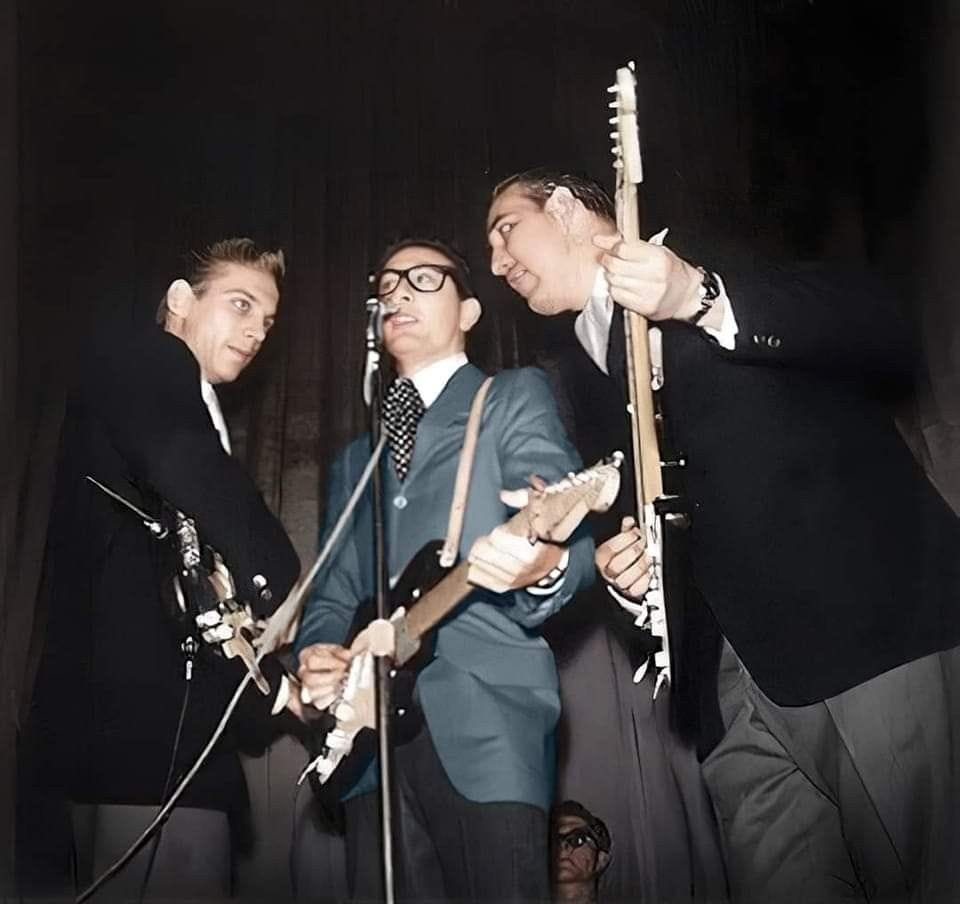
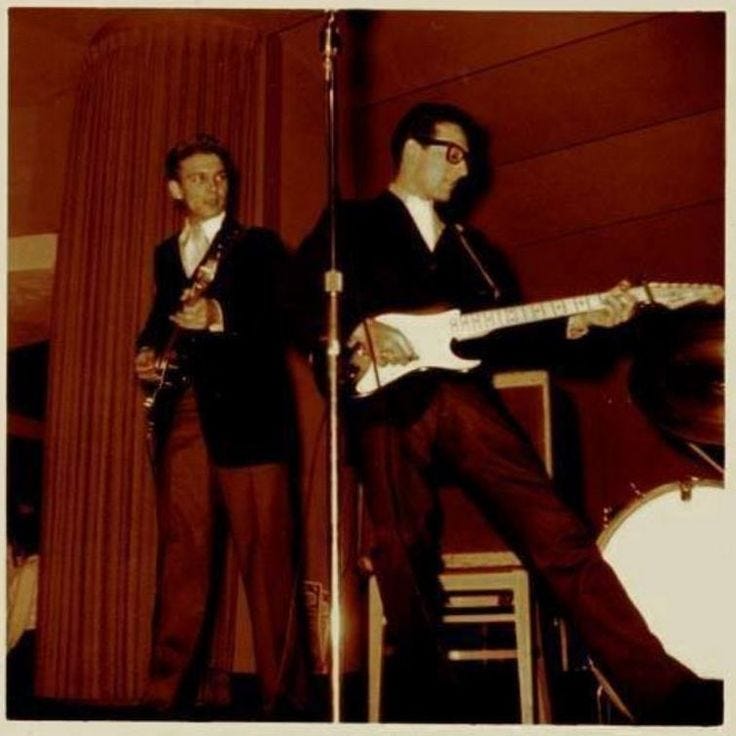
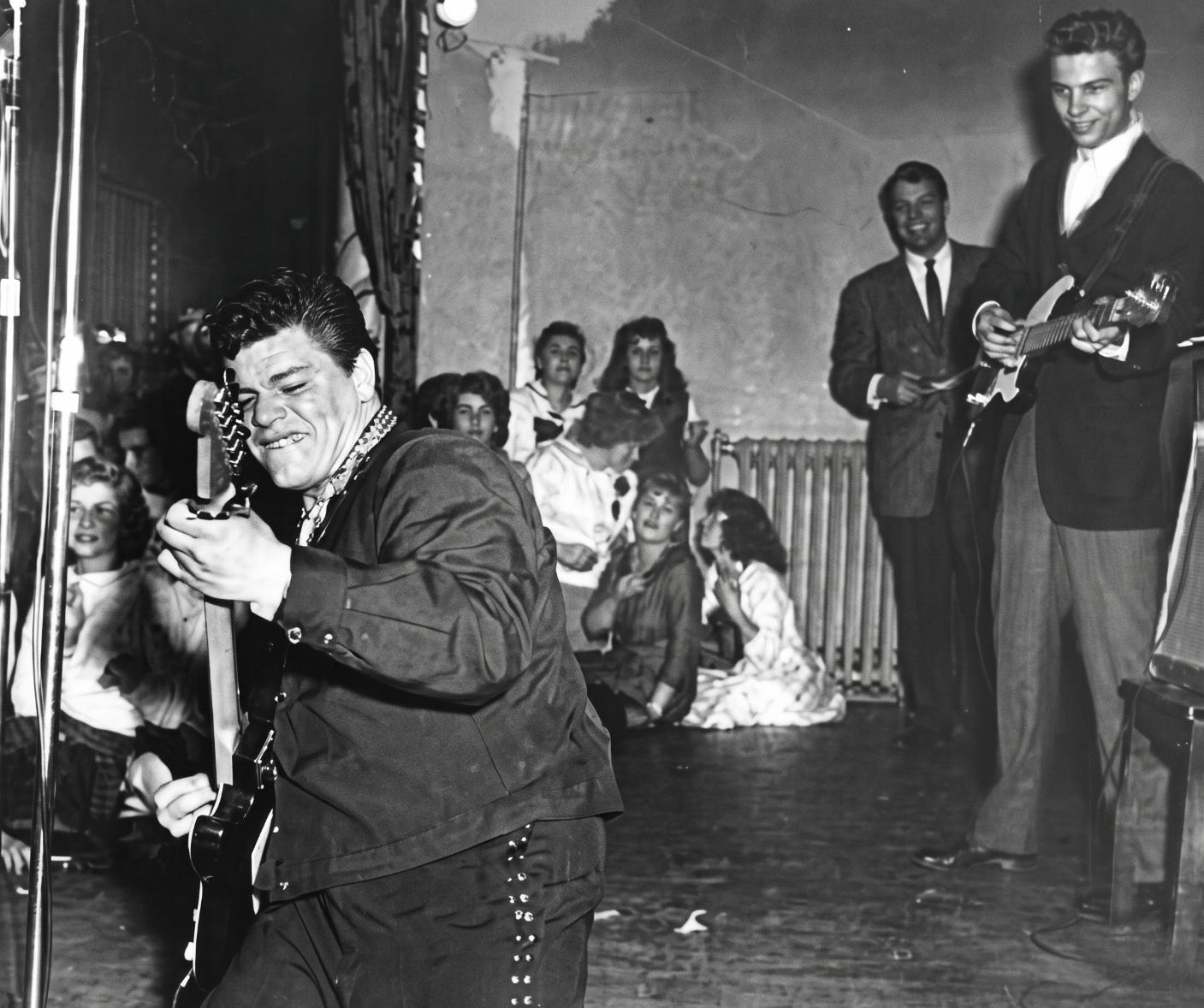
The tour was hell from the first mile. Twenty-four dates across the upper Midwest in the dead of winter, crammed into a bus that had no reliable heat, in temperatures that would drop to forty below on the open plains between venues. The routing made no geographic sense — the promoters had scheduled the dates without looking at a map, zigzagging the musicians back and forth across a region that in January of 1959 was experiencing one of the deadliest winters in decades.
The bus broke down in Wisconsin in the middle of the night. The musicians built fires from newspapers to stay warm until help arrived. Carl Bunch, Holly’s drummer, ended up in a hospital with frostbite on both feet and had to leave the tour. Other musicians rotated in to fill his spot on drums, night after night. The Big Bopper — J.P. “The Big Bopper” Richardson, who had scored a novelty hit with “Chantilly Lace” and was traveling with the tour — was battling the flu. Everyone was sick, or close to it, or had been.
And every night, they played.
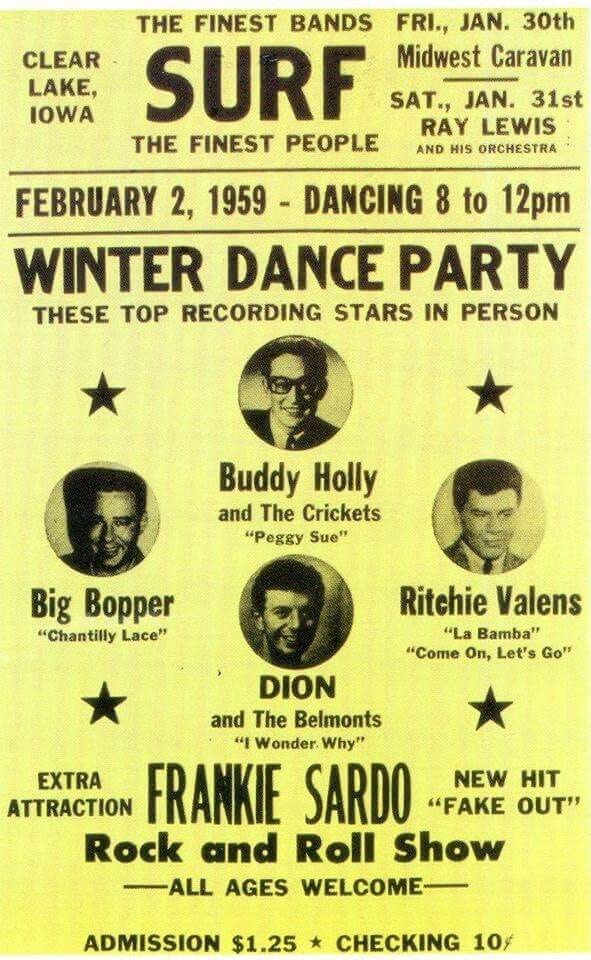
On February 2, 1959, they rolled into Clear Lake, Iowa. It wasn’t even originally on the schedule — the Surf Ballroom had been added as a last-minute stop by the promoter to fill an open date. The town had never been part of the plan. It was just somewhere to put a night they couldn’t afford to leave empty.
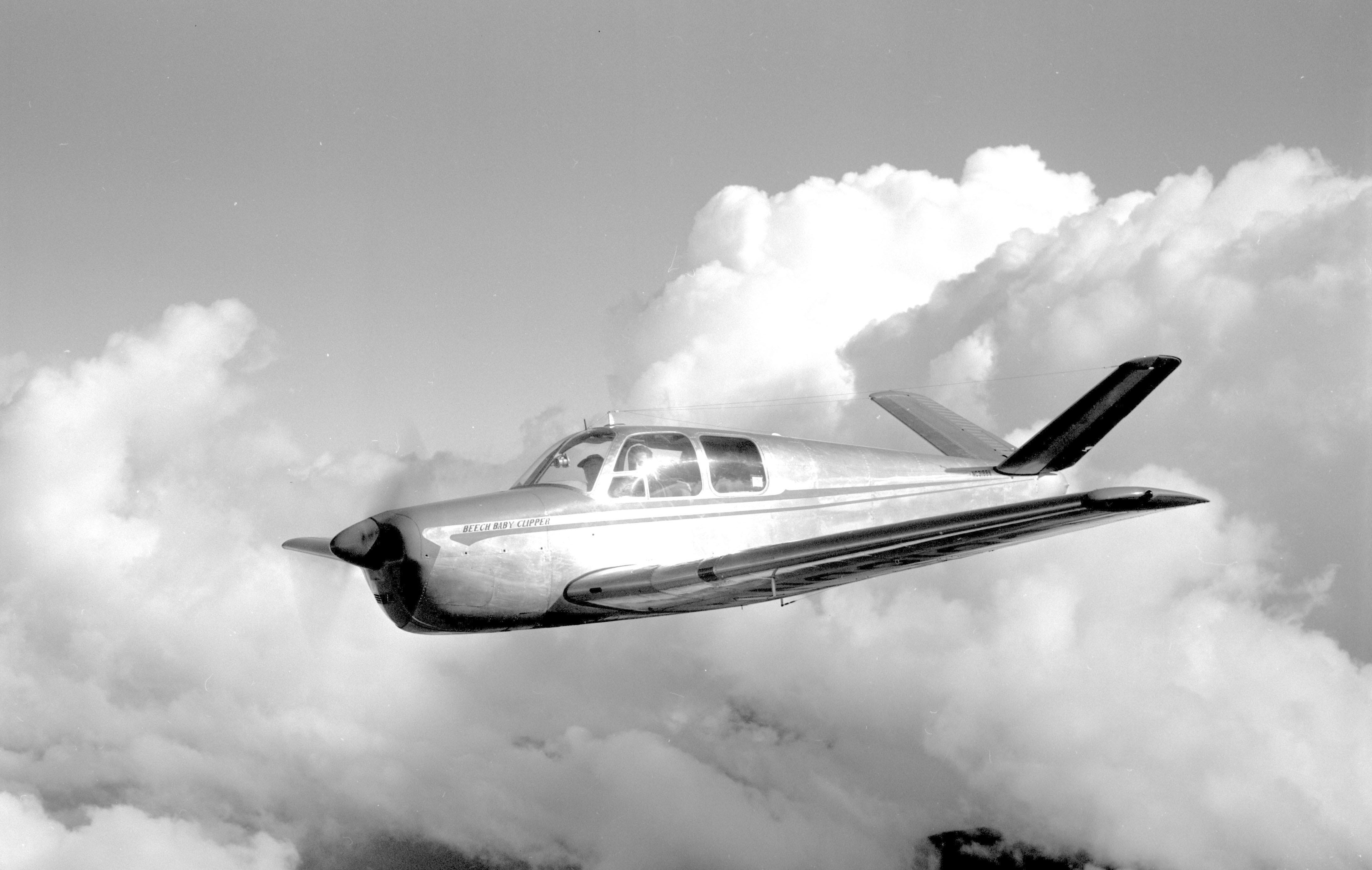
Holly had had enough of the buses. Somewhere between the broken heater and Carl Bunch’s frostbitten feet and six hundred miles between gigs, he’d made a decision. After Clear Lake, he was chartering a plane. A four-seater Beechcraft Bonanza, piloted by a twenty-one-year-old named Roger Peterson, would fly him and two bandmates ahead to Moorhead, Minnesota — a straight shot north instead of another miserable overnight bus crawl. At $36 a seat, the equivalent of around $400 today, it was expensive. But it meant laundry. It meant a real bed. It meant arriving ahead of the bus and having a few hours that weren’t the inside of that freezing, rattling machine.
He offered the seats to Waylon Jennings and Tommy Allsup. They both took them.
The Seat
What happened next is one of those pivots that history records with almost brutal efficiency, stripping away everything human about it until it becomes just a fact: Waylon Jennings gave up his seat on the plane.
But there’s a man behind that fact, and that was J.P. Richardson, and he weighed over two hundred and fifty pounds and had the flu and had not slept in what felt like a geological age. He found Waylon between sets that night at the Surf Ballroom and made his case. He was sick. He couldn’t get comfortable on the bus. He needed rest. He wasn’t asking as a star pulling rank — he was asking as one miserable human being to another.
Waylon gave him the seat.
Tommy Allsup’s seat went to Ritchie Valens — but not without a fight. Valens had never flown before. He was seventeen years old, had just had the biggest hit of his life with “La Bamba,” and was terrified of small planes. Allsup was stubborn about giving up his spot. Eventually they flipped a coin. Valens won. He is reported to have said, “That’s the first time I’ve ever won anything in my life.”
Waylon found Buddy after the sets were done. Holly was leaning back against the wall in a cane-bottom chair, in the loose, comfortable posture of a man who was already thinking about the plane ride, about the hotel bed, about tomorrow being slightly more bearable than today had been. He was laughing.
“So you’re not going with us tonight on the plane, huh?” Holly said. “Well, I hope your ol’ bus freezes up. It’s forty below out there and you’re gonna get awful cold.”
Waylon grinned. “Well,” he said, “I hope your ol’ plane crashes.”
They laughed. They said goodbye. Buddy Holly walked out into the Iowa winter darkness, and Waylon Jennings watched him go.
The Cornfield
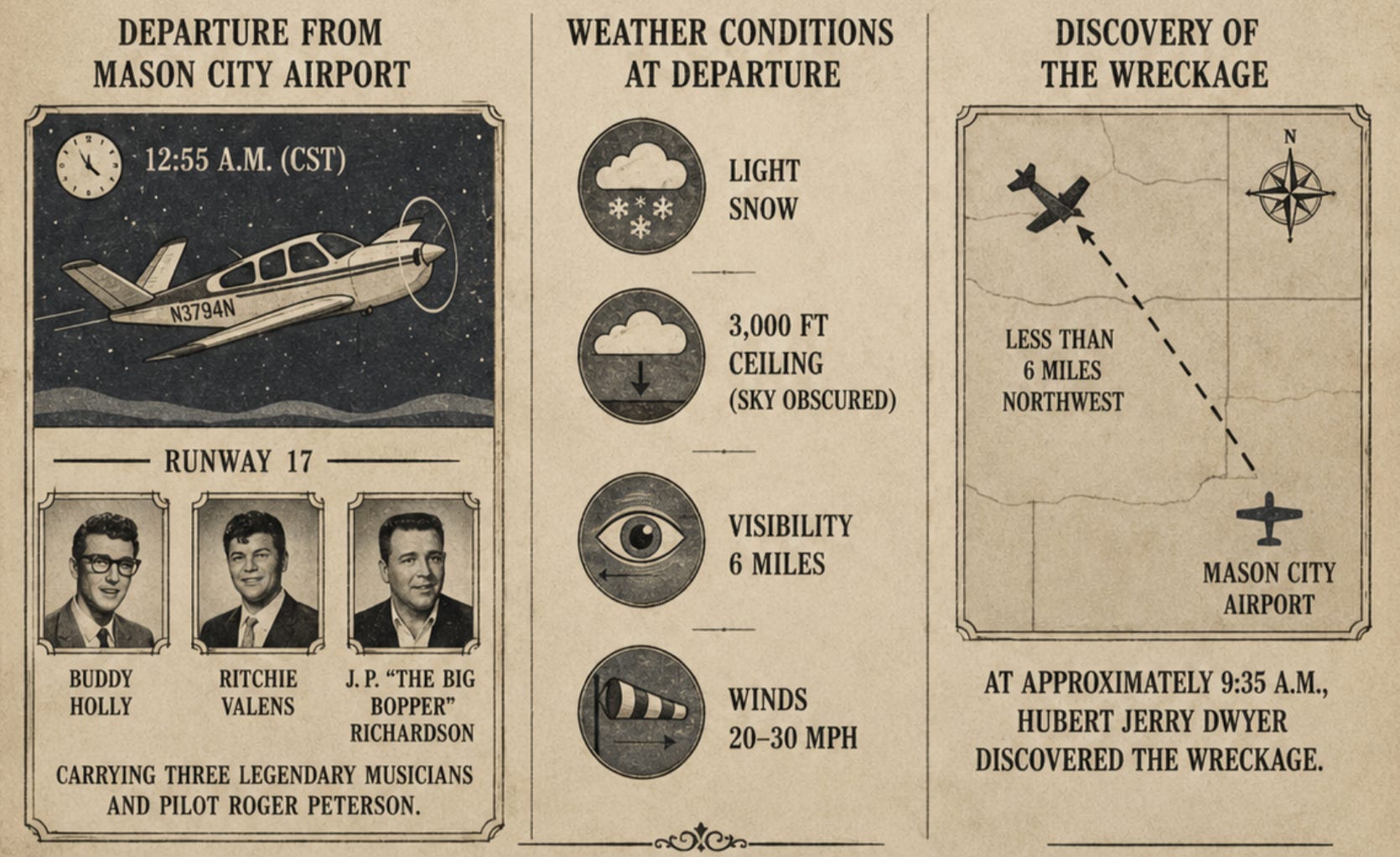
The Beechcraft Bonanza took off from Mason City Municipal Airport at 12:55 in the morning of February 3, 1959. The temperature was fifteen degrees. The winds were thirty-six miles per hour. Light snow was falling. A cold front was dropping down from western Minnesota, with a secondary front across North Dakota. The weather briefing given to pilot Roger Peterson was incomplete — the Civil Aeronautics Board would later find that the severity of the conditions had not been adequately communicated, and that Peterson, young and instrument-inexperienced, may not have fully understood what he was flying into.
The owner of the flying service watched the plane take off. He watched the taillight arc upward and then, slowly, begin to descend. He watched it disappear.
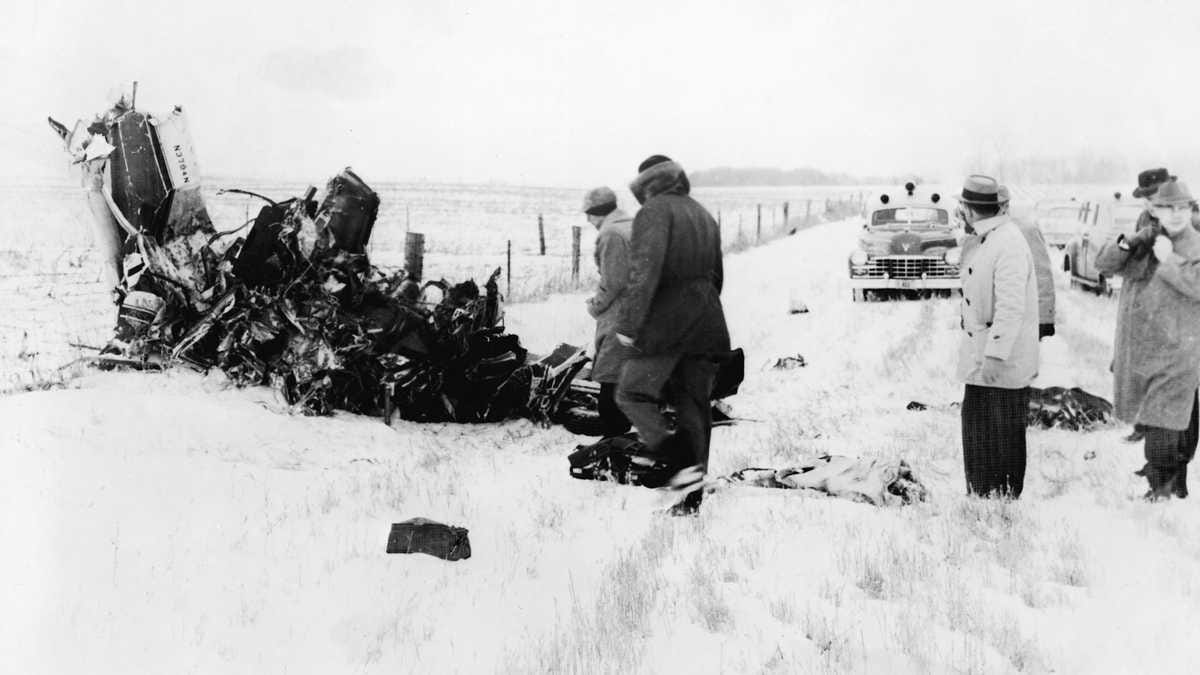
Five minutes after takeoff, Peterson failed to make expected radio contact. Five minutes after that, he still hadn’t. The wreckage was found at sunrise the next morning — in a cornfield, six miles northwest of the airport. The plane had gone in at full speed. There was no survival. Buddy Holly was twenty-two. Ritchie Valens was seventeen. The Big Bopper was twenty-eight. Roger Peterson was twenty-one.
Within minutes of the Clear Lake police announcement, people were calling to ask if they could buy Buddy Holly’s glasses.
The Weight of a Joke
The remaining musicians on the Winter Dance Party played in Moorhead, Minnesota that same day. The day of the crash. There was no pause, no acknowledgment, no permission to grieve. The promoter forced them to play. The venues tried to steal their share of the gate. Waylon Jennings stood on those stages and sang Buddy Holly’s songs, and no one gave him a single hour to sit down with what had happened.
“I was out there all alone,” he wrote, “lost and scared to death. I had no clue.”
He finished the remaining two weeks of the tour. When it was over, he went to New York, put Buddy Holly’s guitar and amplifier in a locker at Grand Central Terminal, mailed the keys to Maria Elena Holly, and took the train back to Lubbock. Buddy Holly was buried on February 7, while Waylon was still on the road — he couldn’t even attend the funeral. He returned to KLLL. He tried to work. He held the radio microphone and talked into the static. He stared at the records.
He did not perform for two years.
“God almighty, for years I thought I caused it,” he said in an interview decades later. “I was so afraid for many years that somebody was going to find out I said that. Somehow I blamed myself. Compounding that was the guilty feeling that I was still alive.”
The logic of survivor’s guilt is not reasonable. It knows that. It doesn’t care. It just asks the same question over and over, in different weather, at different hours of the night: Why would he die and not me? I hadn’t contributed anything to the world at that time compared to Buddy. Why would he die and not me?
It took him a long time to find an answer. Shooter Jennings, years later, offered one version of it: his father had to live with purpose because he survived. He had to become someone worth surviving for.
When Waylon was offered a spot in the reformed Crickets — essentially handed the chance to step into the aftermath, to continue carrying the name — he turned it down. He had no intention, in those early grief-soaked months, of ever playing again. He went home. He sat with it.
What a Man Does With a Ghost
He came back. He always was going to — that was the irony of it, that the same stubbornness that had made him leave school at sixteen, that had made him keep playing long after the polite thing would have been to give up, was exactly the stubbornness that eventually dragged him back to music. He moved to Arizona. He formed a band. He played clubs in Scottsdale and Tempe six nights a week, sometimes two shows a night, learning the full range of what he could do, building the sound from the ground up.
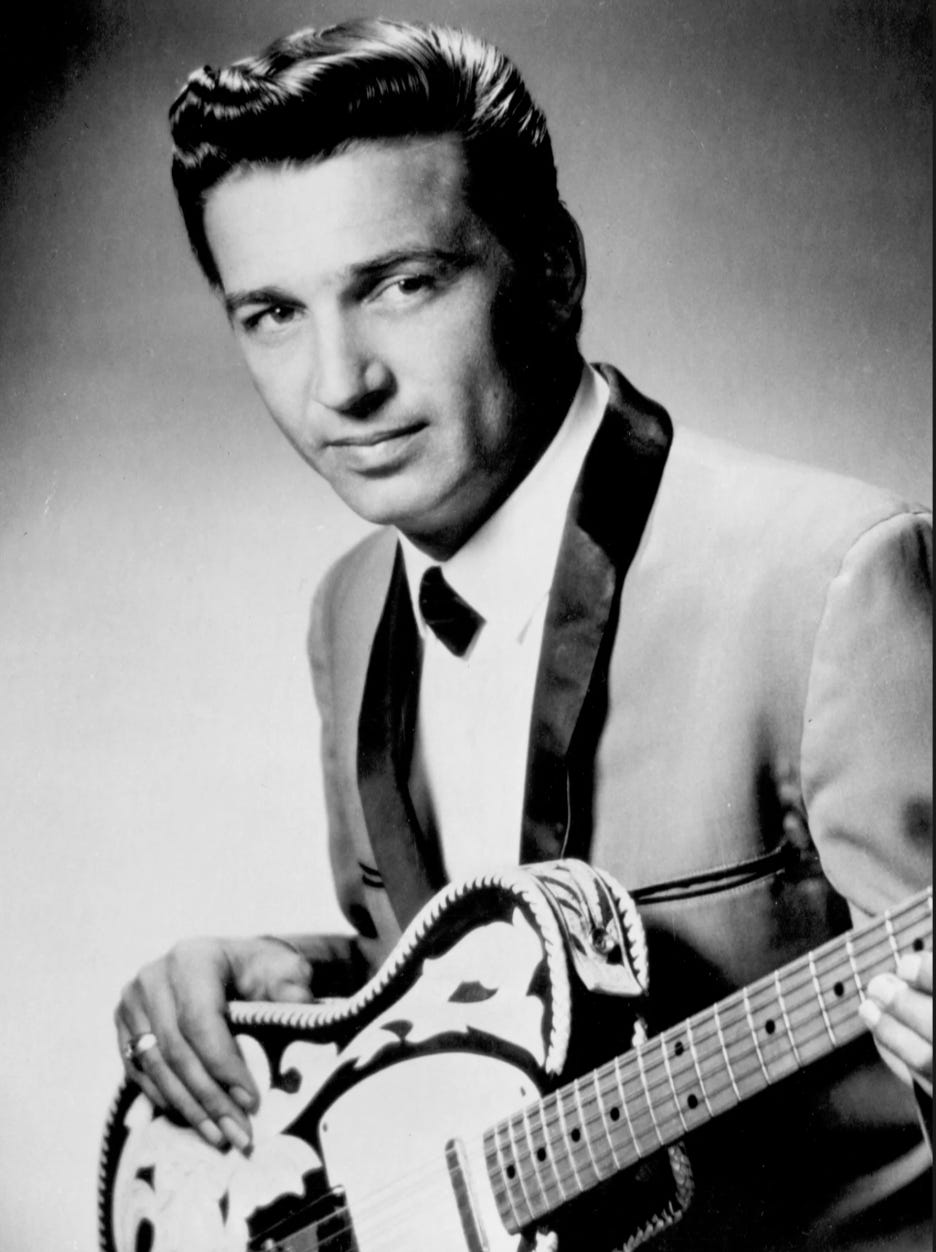
Bobby Bare heard him and told Chet Atkins — the same Chet Atkins who had been signing artists to RCA Victor out of Nashville. Waylon moved to Nashville in 1965. He became roommates with Johnny Cash, which he later described as being like a sitcom where he was supposed to handle the cleaning and Cash did the cooking. He worked under the Nashville Sound for a decade, making records that didn’t quite fit what Nashville wanted and that he knew it. He had some hits. He had more friction. He watched the industry try to smooth him down and he let them try for a while, because he was still the kid from Littlefield who didn’t have a lot of confidence yet, still the man who had watched his best friend walk into a blizzard and hadn’t been able to make it mean anything yet.
Then, in 1972, he started fighting back.
The outlaw country revolution that Waylon Jennings would come to embody — Honky Tonk Heroes in 1973, Dreaming My Dreams in 1975, Wanted: The Outlaws in 1976, the first country album ever certified platinum — was not a marketing concept. It was a theology. It was a man who had been told his whole life what shape to be taking the lesson that Buddy Holly had tried to teach him on the floor of that Lubbock radio station and finally, at nearly forty years old, applying it at full force.
Don’t ever let people tell you you can’t do something. Never put limits on yourself.
He named one of his sons Buddy. He wrote “Old Friend” for Holly — people talk about you after all this time / you were many things to many people / but you were a friend of mine. He carried the lesson everywhere he went. He carried the guilt too. The two were inseparable, which is maybe the only way that kind of grief ever makes sense — you have to carry both, or the weight of it crushes you.
In 1979, when a promoter organized a tribute concert at the Surf Ballroom for the twentieth anniversary of the crash, Waylon Jennings was the first person they called. He said no. He had bad memories. He didn’t want to go back to Clear Lake. Twenty years later, and the mention of that dance hall in Iowa was still enough to close him down.
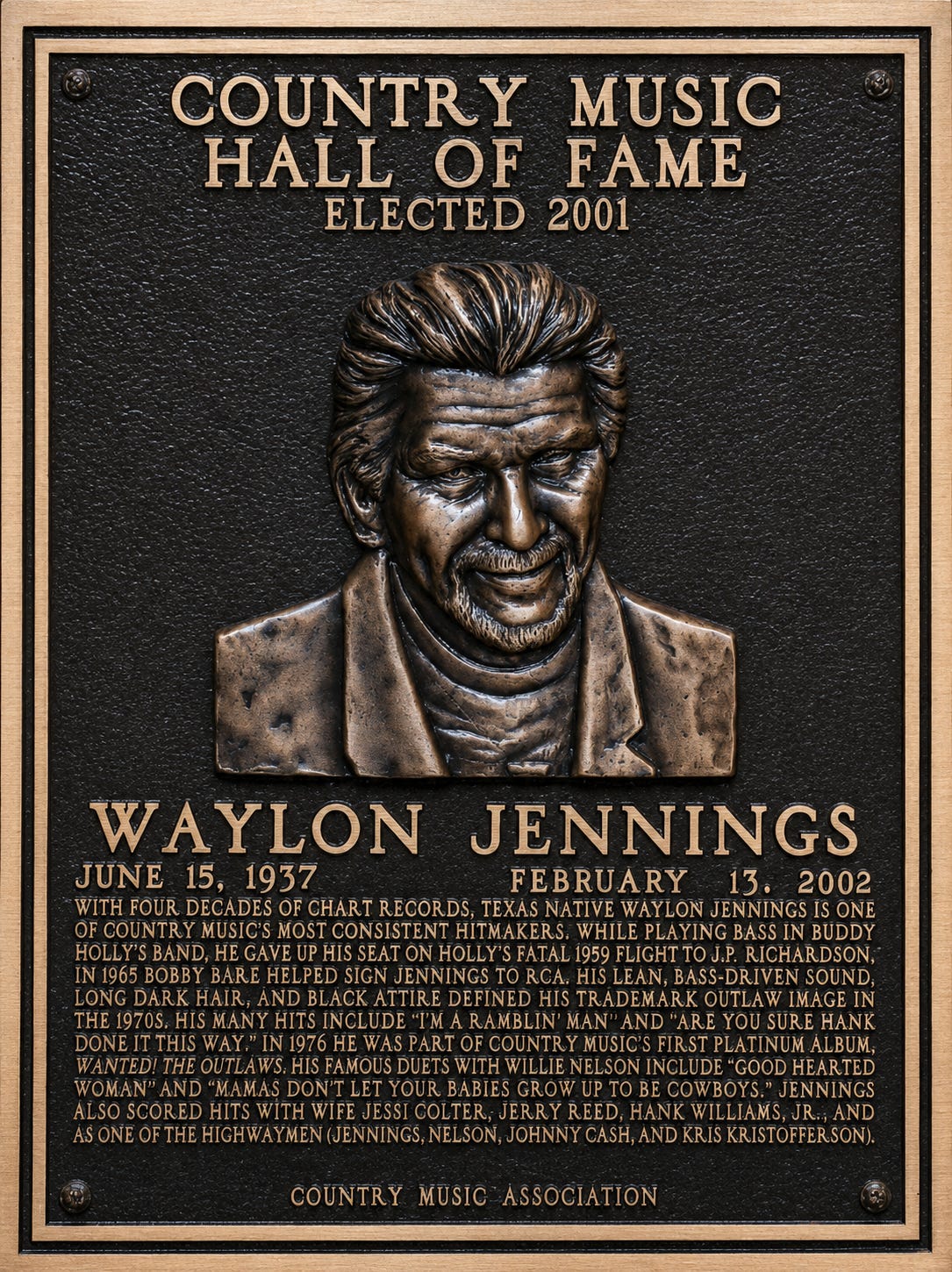
He was inducted into the Country Music Hall of Fame in 2001. He was too sick to attend — diabetes had been taking him apart for years — and sent his son Shooter in his place. He died on February 13, 2002. He was sixty-four years old. Let that sink in. He was sixty-four years old. That fact depresses me even more.
What the Joke Meant
I can’t speak for the ladies, but I have been around enough male musicians to know that we talk a lot of shit all of the time. That’s all that’s said between male musicians. So, two good friends would be saying this type of stuff to each other all of the time.
But, I have thought about that last exchange more times than I can count. Two men in a doorway in Clear Lake, Iowa, at the end of a hard night on a hard tour, making the dark joke that men make when they don’t know what else to do with their emotions and instabilites on the road. Neither one of them knew it was the last time they would be able to make a joke like that. That’s the thing about last times — they almost never announce themselves.
Waylon Jennings carried that joke for forty-three years. He woke up with it. He walked out on stages with it. He cut records with it. He got clean and relapsed and got clean again, and that joke was there through all of it, that terrible friendly joke that was supposed to mean nothing and ended up meaning everything.
But here is what I keep coming back to: the joke was the last real thing they said to each other. Not a farewell speech. Not a proclamation. Two friends, laughing in a doorway. I hope your ol’ plane crashes. Said the same way you say anything to someone you expect to see next week. Said by a man who was still so young that he believed, on some level, that the people he loved were not going to die.
That belief ended in a cornfield six miles from Mason City, Iowa, at approximately one o’clock in the morning of February 3, 1959. And out of the ruin of it, over the next forty years, came some of the most honest and uncompromising country music ever recorded.
Every song Waylon Jennings made after that night was, in some way, an answer to the question he kept asking himself in the dark. Why would he die and not me?
The answer was: so you could do this. So you could go to Nashville and kick down the door. So you could refuse the Nashville Sound and take the hit and keep going. So you could stand in front of a microphone and tell the truth about what this music actually is and where it comes from and what it costs.
Buddy Holly gave Waylon Jennings two weeks to learn the bass guitar. Waylon Jennings spent the rest of his life learning what to do with the life that came after.
A MESSAGE FROM THE AUTHOR:
My name is Zachariah Malachi. I’m a full-time, self-employed honky tonk musician in Nashville, Tennessee. This Substack Publication was created for the purpose of sharpening my mind on more Nashville and Country Music history to share with the honky tonk patrons downtown during my shows - but I wanted more folks to benefit from the research so - it’s my gift to the country music fans of the world. Subscribe and come along for the ride.
That's some damned good writing, Zachariah! Thanks!
Enjoyed this piece. Anything about Waylon is worth the read but bless his heart . . . you really brought it home about what he went through. We lost him too young.