


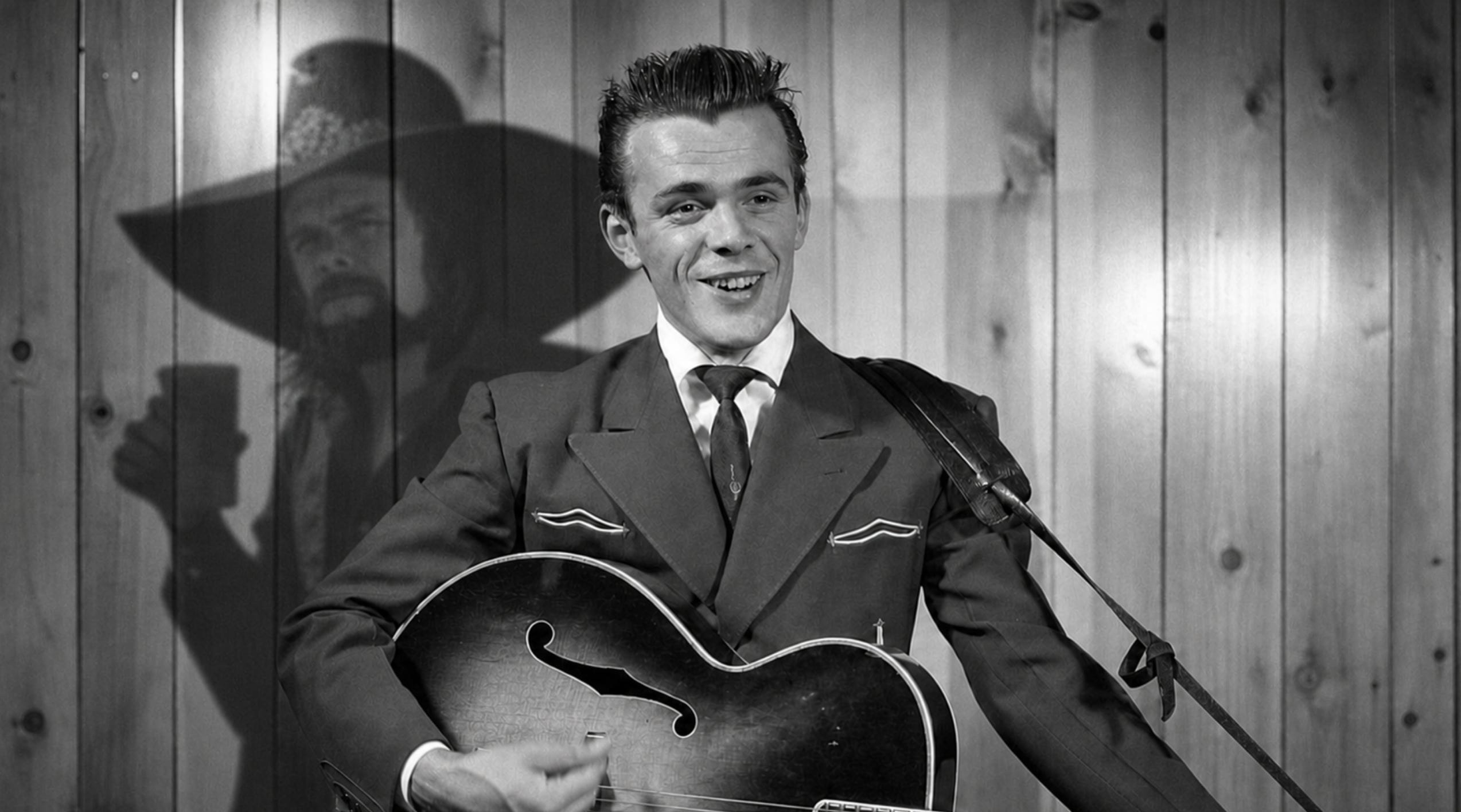
I have never been able to find a real, solid biography of Johnny Paycheck. There are a lot of obituaries, liner notes, a Mike Judge cartoon, and a hundred articles that get from Greenfield, Ohio to “Take This Job and Shove It” in two paragraphs. That sort of thing. Nearly all of them tell the same story that anyone knows.. that a sideman named Donny Young turned into a star named Johnny Paycheck sometime around 1965, as if the first twenty-seven years of his life were not formative at all.
Between 1958 and 1964 he made a string of records under a name nobody remembers, worked for four of the biggest bandleaders in country music, and was, by the time anyone heard of him, one of the most experienced failures in town.
I don’t mean to say that in a harsh way, but Johnny made some wild moves (mistakes?) in his career.
This article covers the first half of that: Greenfield, the Navy, and the Decca years. The sideman years and the man who finally found him get their own article. I’ve held this to what can be checked against newspapers, court records, obituaries, and the records themselves. A lot of colorful stories circulate about these years, most of them traceable to one set of liner notes and one man’s memory, and I’ve left those out. What’s here is thinner than the legend, and it’s true.
Greenfield
Donald Eugene Lytle was born on May 31, 1938 in his parents’ house, a working-class neighborhood of Greenfield, Ohio, a town of a few thousand people in Highland County, an hour east of Cincinnati. His father was Chester Eugene Lytle, born 1915. His mother was Chloie Mae Woodland, born 1919, which made her nineteen when she had him. The Greenfield Daily Times ran the birth in its “Introducing” column that same day.
Greenfield in 1938 is not an obvious place for a country singer to come from until you look at a map of the radio dial. WLW in Cincinnati was the most powerful station in the country and it ran country music all night. WSM and the Opry came in clear on Saturdays. King Records, the biggest independent country label in America, was in Cincinnati, and so was the Jimmie Skinner Music Center, which mailed hillbilly records to every crossroads in the Ohio Valley. Southern Ohio was, in every way that mattered, the northern edge of the South. The people had come up from Kentucky and West Virginia for factory work and brought their music with them.
His mother gave him a guitar when he was six. By nine, he was entering talent contests around the area. At fifteen, he left home, and the Associated Press obituary describes what followed in one line: riding the rails as a drifter, playing bars and clubs, billing himself as “The Ohio Kid.”
He’d dropped out of school in junior high. He was small, five foot five as a grown man, with a high, piercing voice that could cut through a bar. He said later that he got his GED in jail, which tells you where the formal education stopped and where it picked back up.
That’s the whole of what can be verified about Johnny Paycheck’s childhood, thusfar. Shame since he is such a giant in the biz. Everything else you’ll read about.. the bars he supposedly worked at thirteen, the towns he hit on the freights - is most likely going to be forever left in our minds to ponder.
Portsmouth Naval Prison
Sometime in the mid-1950s, after lying about his age by at least one local account, he enlisted in the United States Navy.
It’s difficult to imagine a person less suited to follow rules - except maybe Jones.
In 1956, he was in a fight with a superior officer and fractured the officer’s skull. He was court-martialed. While the charges were pending he escaped from custody twice. He was convicted and sentenced, according to his Washington Post obituary, to eighteen years, and sent to the Portsmouth Naval Prison on Seavey Island in Kittery, Maine, the castle-looking fortress on the Piscataqua River that sailors called the Alcatraz of the East. Remember the Clint Eastwood film? Classic. Anyways—
Eighteen years for a barroom-style assault sounds impossible until you remember that military justice in 1956 didn’t need to answer to anybody, and that hitting an officer was, in the Navy’s eyes, the next thing to mutiny. The Post says the sentence was reduced on appeal and that he was released in 1959.
The dates settle part of it. His first Decca single was reviewed in a Virginia newspaper in December 1958, which means he was out, in Nashville, signed, and recorded by the fall of that year. So whatever the appeal paperwork said, he served roughly two years, and the Navy was done with him before he turned twenty-one.
I want to sit on that for a second before moving on, because every account of Paycheck’s later life treats his temper as a personality flaw. Which, it was. It was also a thing that had cost him two years in a federal fortress before he’d ever cut a record, and it never stopped costing him. The man who fired a .22 in a Hillsboro bar in 1985 was the same eighteen-year-old who fractured an officer’s skull in 1956. Nashville got the whole package.
Donny Young
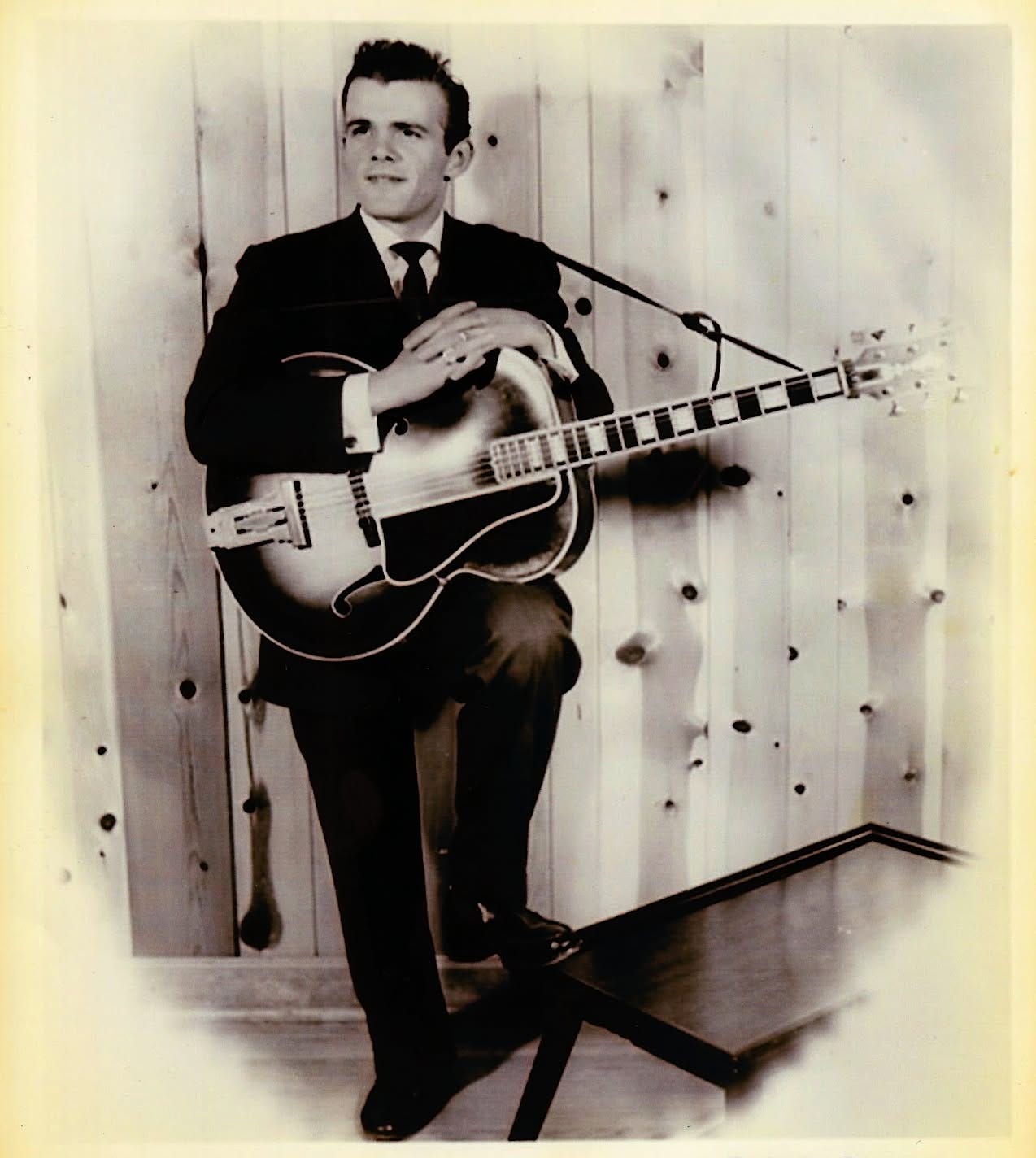
He arrived in Nashville around 1958 with nothing, which was normal, and a voice, which was anything but normal.
Buddy Killen heard him first. Killen was running Tree Publishing, which was then a small house and is now Sony Music Publishing, and he signed the kid to a songwriting deal. Tree demos went to producers, and Killen landed him a contract with Decca, whose Nashville office was run by Owen Bradley out of the Quonset hut on 16th Avenue. In 1958 Bradley was in the middle of inventing the Nashville Sound with Chet Atkins.
Somebody decided that Donald Lytle wasn’t a name you put on a record, and he became Donny Young. His first Decca single came out in November 1958: “It’s Been a Long, Long Time for Me,” his own song, backed with “On This Mountain Top.” The label credits another Tree demo singer named Roger Miller alongside him. Two unknowns, both about to be famous, neither about to be famous too incredibly soon.
Decca put out four Donny Young singles between 1958 and 1961. “The Old Man and the River,” a Roger Miller song, came in the spring of 1959. Then “Shakin’ the Blues,” written by George Jones, which is as hard a honky tonk record as anyone made in Nashville that decade and which now shows up on rockabilly compilations because collectors don’t know what else to call it. Its flip side, “Miracle of Love,” is reported to have made the Cashbox country chart in 1960, in the top 35, which if accurate is the closest Donny Young ever got. Then a last single in July 1961, and Decca let him go.
There’s an irony here I didn’t see until I lined the dates up. Owen Bradley, the man who years later would be critical of what Lloyd Green was doing on the Little Darlin’ sessions (that’s coming up), was the first producer who ever believed in Johnny Paycheck. He gave him four singles and the best musicians in town. The records were good. They didn’t sell. And Bradley, who had built the Nashville Sound on the theory that the market wanted something smoother, drew the conclusion from Donny Young’s failure that the market was right.
Along the way he’d worked the Opry package shows. A May 1959 ad for a touring show billed as coming direct from the Grand Ole Opry lists him alongside George Morgan, Bill Anderson, Eddie Noack, and Roger Miller. Five years later, in April 1964, an Opry ad in a North Dakota paper was still calling Donny Young “the nation’s newest singing sensation.” He’d been the newest singing sensation for six years by then.
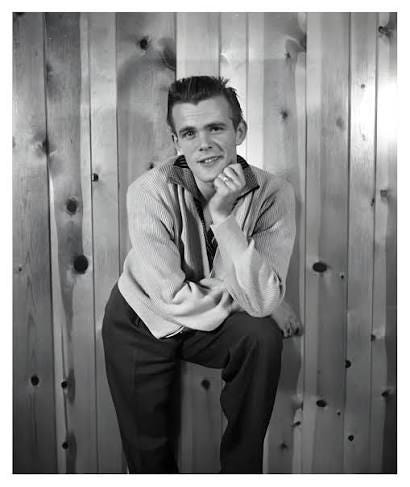
So that’s where Donny Young stood in the summer of 1961. Twenty-three years old, two years of federal prison behind him, four singles on the biggest country label in America produced by the most powerful man in Nashville, and nothing to show for it but a stack of unsold 45s.
Anyone else would have gone home. What he did instead was pick up a bass and go to work for other people, which is the part of the story that made him. That’s the next go ‘round.
ABOUT THE AUTHOR:
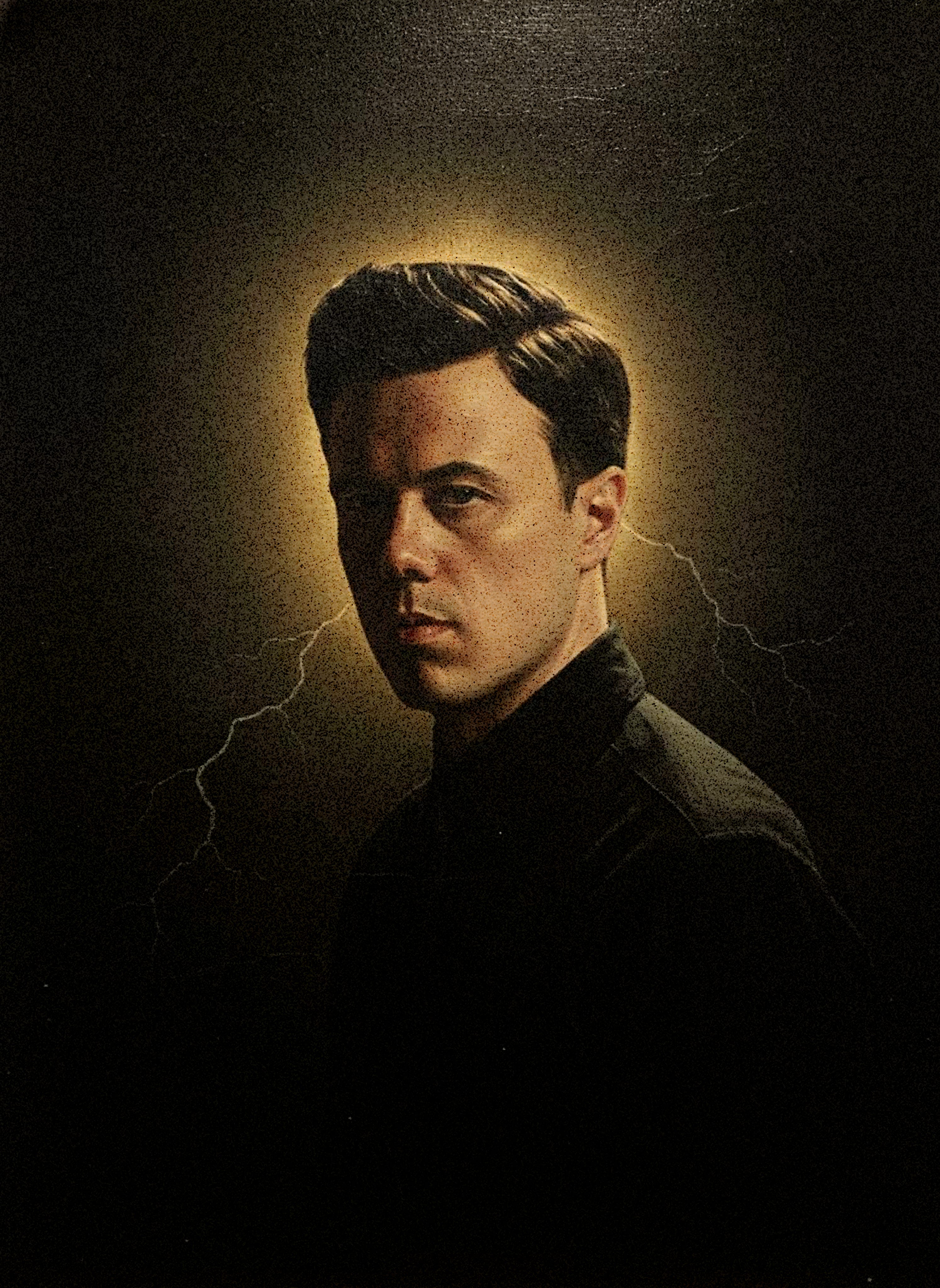
My name is Zachariah Malachi. I’m a full-time, self-employed honky tonk musician in Nashville, Tennessee. This Substack Publication was created for the purpose of sharpening my mind on more Nashville and Country Music history to share with the honky tonk patrons downtown during my shows—but I wanted more folks to benefit from the research, so it’s my gift to the country music fans of the world AND the people who WANT to be. Subscribe and come along for the ride.
Fascinating article. Your substacks are brilliant!
A pal from work had a brother who played in Paycheck’s band. He had some stories about life on the road. Most folks today have little or no idea of what it was like back in that time.